
TL;DR
- Widowmaker requires exceptional precision and map knowledge to excel as a long-range specialist
- Her grappling hook provides essential mobility but has lengthy cooldowns requiring strategic use
- Positioning and rotation are critical for survival due to low health pool and limited escape options
- Master both automatic and scoped fire modes for optimal damage output in different situations
- Team communication and target prioritization maximize her one-shot elimination potential
Widowmaker represents the pinnacle of precision-based damage dealing in Overwatch 2, demanding exceptional mechanical skill and tactical awareness. Unlike other DPS heroes who rely on sustained damage or area control, her effectiveness hinges entirely on landing critical headshots from advantageous positions. Mastering her requires understanding sightlines, enemy movement patterns, and when to engage or disengage from combat scenarios.
As a long-range specialist, Widowmaker thrives when controlling key angles that overlook objective zones. Her ability to eliminate targets instantly creates immense space denial, forcing opponents to alter their approach routes and positioning. This psychological pressure complements her raw damage output, making her invaluable for breaking entrenched defenses. However, her low health pool of 175 HP means positioning errors often result in immediate elimination.
Successful Widowmaker play involves constant assessment of sightline value versus vulnerability. High-ground positions typically offer the best sightlines but may leave you exposed to flankers. Understanding each map’s verticality and rotation paths separates competent snipers from exceptional ones.
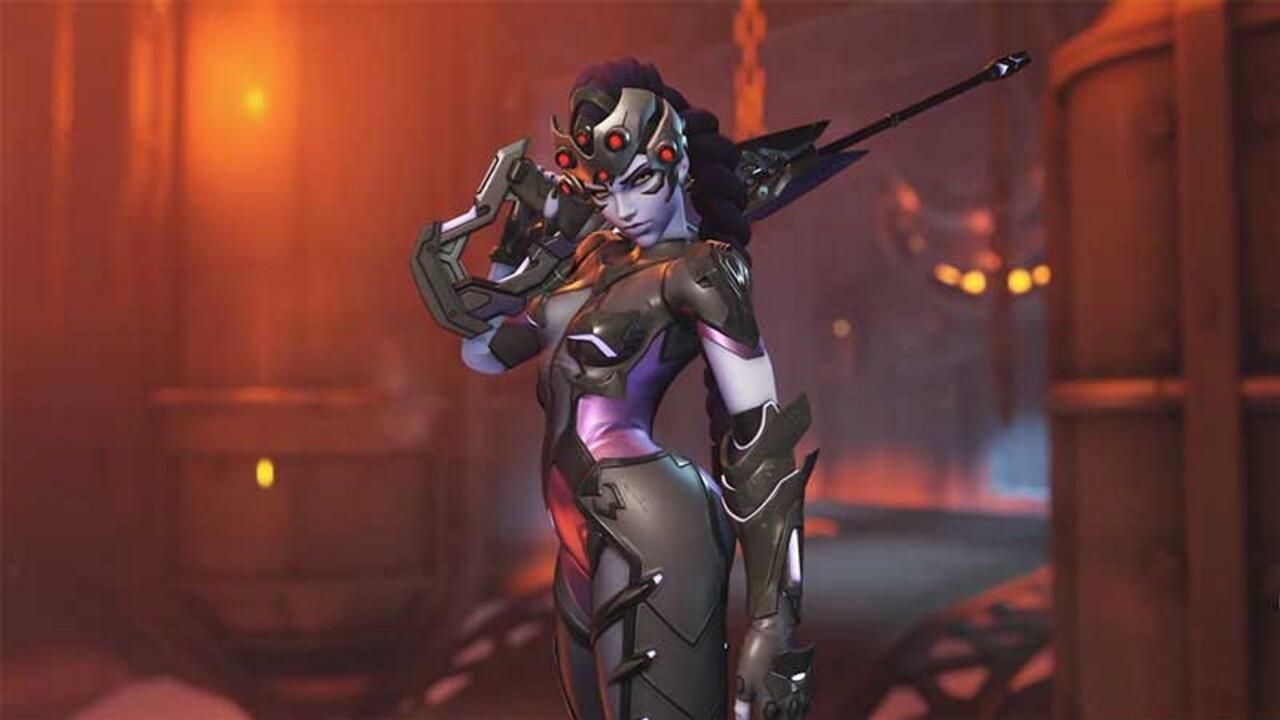
Strategic positioning combined with precise aim transforms Widowmaker into a game-changing asset for any team composition.
Widowmaker’s kit centers around her versatile Widow’s Kiss weapon system, which offers both close-range automatic fire and precision scoped shooting. The automatic mode fires rapid bursts ideal for self-defense against flankers, though its significant bullet spread limits effectiveness beyond close quarters. Meanwhile, her scoped mode charges over 1.5 seconds to deliver up to 120 damage on body shots and 300 on critical hits—enough to eliminate most non-tank heroes with a single headshot.
- Widow’s Kiss (automatic): Delivers rapid-fire bursts optimal within 15 meters but suffers from substantial spread beyond this range
- Widow’s Kiss (scope): Requires charge time but provides pinpoint accuracy with massive damage potential at any distance
- Grappling Hook: Launches to targeted surfaces with 12-second cooldown, enabling vertical mobility and rapid repositioning
- Venom Mine: Deploys trap dealing 15 initial damage plus 75 poison damage over 3 seconds, excellent for area denial and flank detection
- Infra-Sight: Reveals all enemy positions through walls for 15 seconds, shared with your entire team for coordinated pushes
The grappling hook serves as both escape tool and positioning enhancer, but its lengthy cooldown demands thoughtful usage. Advanced players use it preemptively to reach new angles rather than reactively when already under attack. Combining hook movements with crouch spamming makes you harder to hit during transitions between positions.
Venom mine provides crucial intelligence about flank routes when placed at choke points or behind your position. The audio cue when triggered alerts you to approaching threats, giving precious seconds to react or reposition. Against dive compositions, place mines at your feet to discourage close-range engagements.
Infra-Sight represents one of Overwatch’s most powerful informational ultimates. Timing its activation just before team fights maximizes its value, allowing your team to focus priority targets and avoid ambushes. Combining it with other vision-based abilities like Hanzo’s Sonic Arrow creates near-perfect enemy tracking.
Developing consistent aim requires dedicated practice using both custom games and training range exercises. Focus on tracking and flick shots equally, as different situations demand different aiming techniques. For beginners, concentrate on landing consistent body shots before progressing to headshot precision—even 120 damage significantly pressures healers and forces defensive cooldowns.
Map knowledge proves equally important as raw aiming skill. Study each map’s sightlines from both offensive and defensive perspectives. Identify positions that offer multiple escape routes while maintaining valuable angles on objectives. Avoid overly obvious sniper nests that enemies will pre-aim or flank routinely.
Common positioning mistakes include remaining in one location too long, neglecting flank protection, and choosing positions with limited retreat options. Advanced players rotate between 2-3 strong positions per fight, making their presence unpredictable while maintaining offensive pressure.
Effective practice routines should include 15-minute warmups using Aim Lab or Kovaak’s, followed by custom games against AI with headshot-only settings enabled. Gradually increase bot speed and movement randomness as your accuracy improves. Consistent daily practice yields better results than occasional extended sessions.
Crosshair placement anticipates enemy head level at common engagement distances. Keep your crosshair positioned where enemies will appear rather than adjusting when they arrive. This pre-aiming technique significantly reduces reaction time requirements.
You can see how all heroes, including this one, stack up in our Overwatch 2 tank tier list, DPS tier list, and support tier list. Where did your favorite land?
Widowmaker’s survival depends entirely on anticipating threats before they materialize. Constantly monitor kill feed and team composition to identify which enemies pose the greatest danger. Against dive heroes like Winston or Genji, maintain greater distance and conserve grappling hook for emergency escapes.
When confronted by flankers, your first response should be evasion rather than confrontation. Use venom mine detonations as early warning systems, and never challenge close-range specialists like Reaper or Tracer unless absolutely necessary.
Grappling hook mastery involves understanding its maximum range and viable surfaces. Practice hooking to unconventional spots that provide cover during the ascent. Many maps contain small ledges and architectural details that offer partial protection while moving.
Position rotation should occur during natural combat lulls rather than under direct pressure. Move after securing eliminations, during enemy respawn waves, or when your team creates distraction opportunities.
Against enemy snipers, avoid predictable peek patterns and use crouch spamming to make your head movement erratic. The sniper duel often favors whoever lands the first shot, so make your appearances brief and unpredictable.
Advanced escape techniques include hook-canceling by meleeing immediately after launch to shorten distance, and using environmental objects to break line of sight during retreats.
Widowmaker’s greatest impact comes from coordinated team play rather than individual performance. Communicate your sightlines and intended targets so teammates can capitalize on your picks. Call out when you’ve forced key defensive abilities like Zarya’s bubbles or Ana’s sleep dart.
Target prioritization should focus on eliminating supports first, then damage dealers, while occasionally pressuring tanks to build ultimate charge. Against shield compositions, focus on angles that bypass barriers rather than attempting to break them directly.
Infra-Sight activation timing should coordinate with team push initiatives. Using it during overtime or final point defenses can completely shut down enemy advancement attempts.
When countered by dive compositions, coordinate with your team for protection. Position near supports who can assist you, and communicate when you’re under pressure so off-tanks can peel accordingly.
Even when not securing eliminations, Widowmaker provides value through space creation. Simply maintaining presence in a threatening position forces enemies to use limited resources and alter their approach routes.
Understanding your role within different team compositions is crucial. With brawl comps, focus on creating initial picks before engagements. With poke comps, maintain sustained pressure from multiple angles. With dive comps, target isolated enemies your team is engaging.
Action Checklist
- Complete 15-minute aim training routine focusing on flick and tracking exercises
- Identify 3 strong sniper positions on your current map with multiple escape routes
- Practice grappling hook movements between unconventional spots in custom games
- Set up venom mines at flank routes and practice immediate repositioning when triggered
- Coordinate Infra-Sight usage with two team fight initiations
No reproduction without permission:SeeYouSoon Game Club » Overwatch 2 – Widowmaker Hero Guide Master precision sniping and positioning strategies to dominate as Widowmaker in Overwatch 2