
TL;DR
- Push mode centers on controlling a neutral robot that moves faster on cleared paths
- Flanking tactics are exceptionally effective due to map design with multiple routes
- Mobile heroes like Sombra and Wrecking Ball excel at objective control and disruption
- Strategic ultimate usage during critical pushes or robot reclamation maximizes impact
- Maintaining robot momentum outweighs individual eliminations for victory conditions
Mastering Overwatch 2’s Push mode requires deep understanding of its unique mechanics that differentiate it from traditional objective-based gameplay.
Push introduces a symmetrical neutral objective where both teams compete to escort a robot along winding paths toward enemy territory. The robot begins centrally positioned and requires team presence within its proximity to initiate movement, similar to payload escort mechanics but with crucial distinctions in spawn behavior and victory determination.
The core victory condition hinges on which team achieves greater territorial advancement with the robot by match conclusion, or instantly if either squad successfully escorts to the final destination point. Unlike payload scenarios where spawn points progressively advance with objective movement, Push maintains fixed spawn locations regardless of robot positioning. This creates strategic depth around regrouping efficiency and map control maintenance.
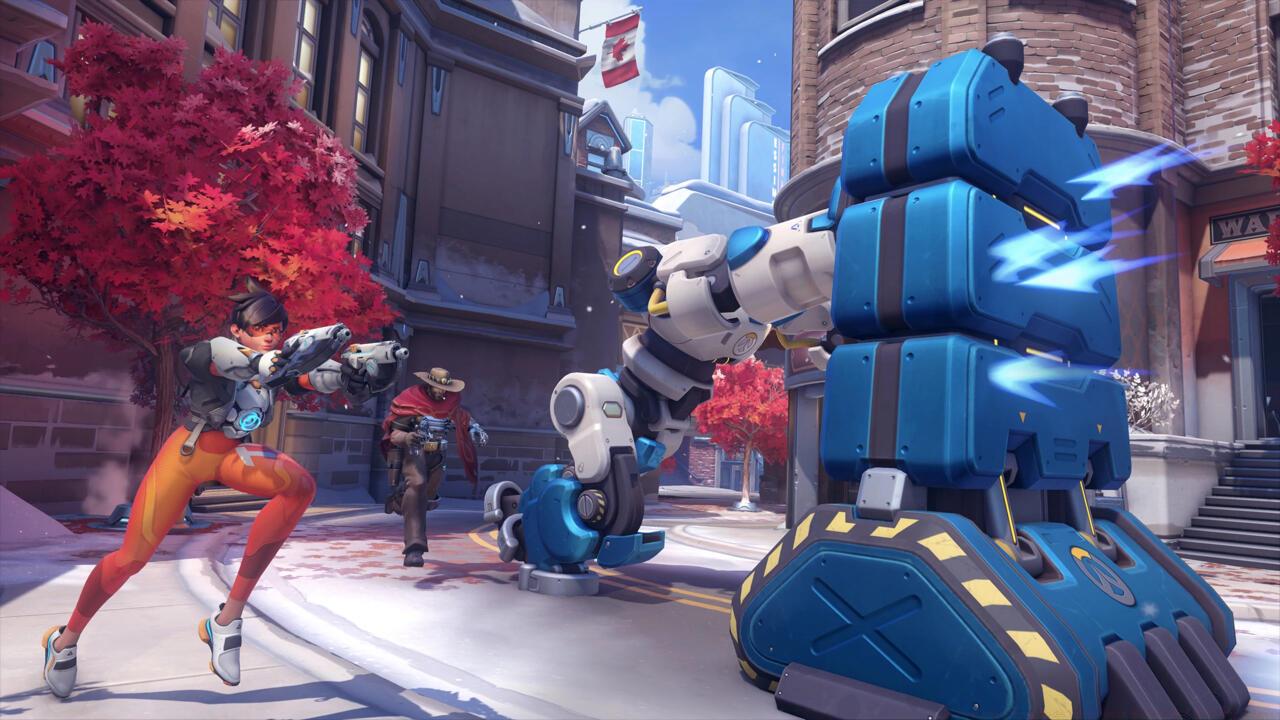
The Push robot provides dynamic cover that can be leveraged during team fights and positional advances.
Effective Push gameplay blends elements from Control and Payload modes while introducing unique strategic considerations around path optimization and tempo control.
The primary objective revolves around maximizing robot control duration through tactical positioning and coordinated assaults. When deploying as a full team, implement split approaches: have your tank spearhead the primary advance with one support and damage dealer, while the remaining duo utilizes secondary routes for flanking maneuvers. The architectural layout of Push maps inherently favors flanking tactics over frontal engagements, providing superior angles for disruption and pick opportunities.
Upon securing robot control, maintain forward momentum with partial team escort while deploying mobile damage specialists to intercept approaching enemies. Since victory depends on territorial advancement rather than elimination counts, preserving robot progression often outweighs committing to full team fights. Each additional meter gained creates valuable time buffers for regrouping before opponents can reclaim and reverse advancement.
Ultimate ability management demands careful consideration in Push scenarios. The most impactful applications involve either reclaiming robot control through initiation ultimates or securing final objective pushes when nearing victory conditions. Match-ending opportunities frequently emerge when combining multiple ultimates during critical advancement phases.
Hero selection significantly influences Push mode effectiveness, with mobility, disruption capability, and sustain determining optimal choices.
High-mobility damage dealers like Sombra, Genji, and Tracer excel due to rapid repositioning abilities and flanking potential. Their capacity to quickly return to contested points following respawns provides consistent pressure on objective control. Disruption specialists such as Wrecking Ball create separation opportunities and divert enemy attention from primary objectives.
Tank selections should prioritize heroes with strong area denial and displacement capabilities. Sigma’s kinetic grasp and accretion provide excellent robot area control, while D.Va’s mobility and defense matrix enable flexible positioning. Support choices should complement mobile compositions with Lucio’s speed boost and Brigitte’s area denial proving particularly effective for maintaining advancement momentum.
Understanding hero synergies becomes crucial—pairing dive tanks with mobile supports creates cohesive units capable of sustaining pressure while minimizing vulnerability during transitions between map sections.
Strategic positioning and environmental utilization separate proficient Push players from exceptional performers.
- While the robot navigates winding primary routes, each map contains direct pathways through interior spaces that enable faster repositioning to active engagements.
- These secondary routes create abundant flanking opportunities against opponents focused on primary advancement paths.
- Areas previously traversed by the robot allow accelerated movement during reclamation attempts, as the barrier-clearing process completes during initial advancement. This acceleration mechanic rewards teams that regain control after temporary losses.
- High ground positions overlooking robot paths provide significant tactical advantages for controlling advancement and disrupting enemy escort formations.
- Understanding choke point locations and alternative routes enables predictive positioning and ambush opportunities against advancing opponents.
Common positioning errors include overcommitting to flanks during critical robot advancement phases and failing to utilize the robot as dynamic cover during team engagements. Advanced players master stalling techniques at critical map sections to maximize territorial gains during control periods.
Action Checklist
- Analyze map layout during initial spawn to identify primary flanking routes and shortcut opportunities
- Coordinate split team approach with tank-led frontal advance and support/damage flanking pairs
- Assign mobile heroes to intercept approaching enemies during robot escort phases
- Time ultimate usage for robot reclamation attempts or final objective pushes
- Utilize cleared path acceleration during robot reclamation to rapidly regain lost territory
No reproduction without permission:SeeYouSoon Game Club » Overwatch 2 Push Mode Tips: Best Heroes And More Strategies Master Overwatch 2's Push mode with advanced strategies, hero selections, and tactical positioning techniques