
TL;DR
- Activate search mode via the magnifying glass icon to begin foraging for survival resources
- Collect sticks, stones, and chipped stones to craft primitive weapons and tools for early game survival
- Forage insects and edible plants as emergency food sources when supplies are scarce
- Improve your foraging skill to increase detection range and find higher quality items
- Combine foraging with other survival skills for maximum efficiency in the zombie apocalypse
Foraging represents one of the most crucial survival skills in Project Zomboid’s early game, providing players with essential crafting materials for basic equipment and emergency sustenance when traditional supplies run low. This fundamental activity becomes increasingly valuable as you progress through the apocalyptic landscape of Kentucky.
During the initial stages of your Project Zomboid experience, resource scavenging becomes a daily necessity. However, foraging elevates this basic activity into a specialized skill that improves with consistent practice. For survivors struggling to locate quality gear through conventional looting, mastering foraging techniques can literally mean the difference between life and death in hostile environments.
The foraging process in Project Zomboid operates with straightforward mechanics, assuming you avoid interruptions from the wandering undead. Click the magnifying glass icon positioned on the left-hand interface panel to activate the “Investigate Area” window. This dedicated screen serves as your primary foraging interface, displaying environmental details critical for successful resource gathering.
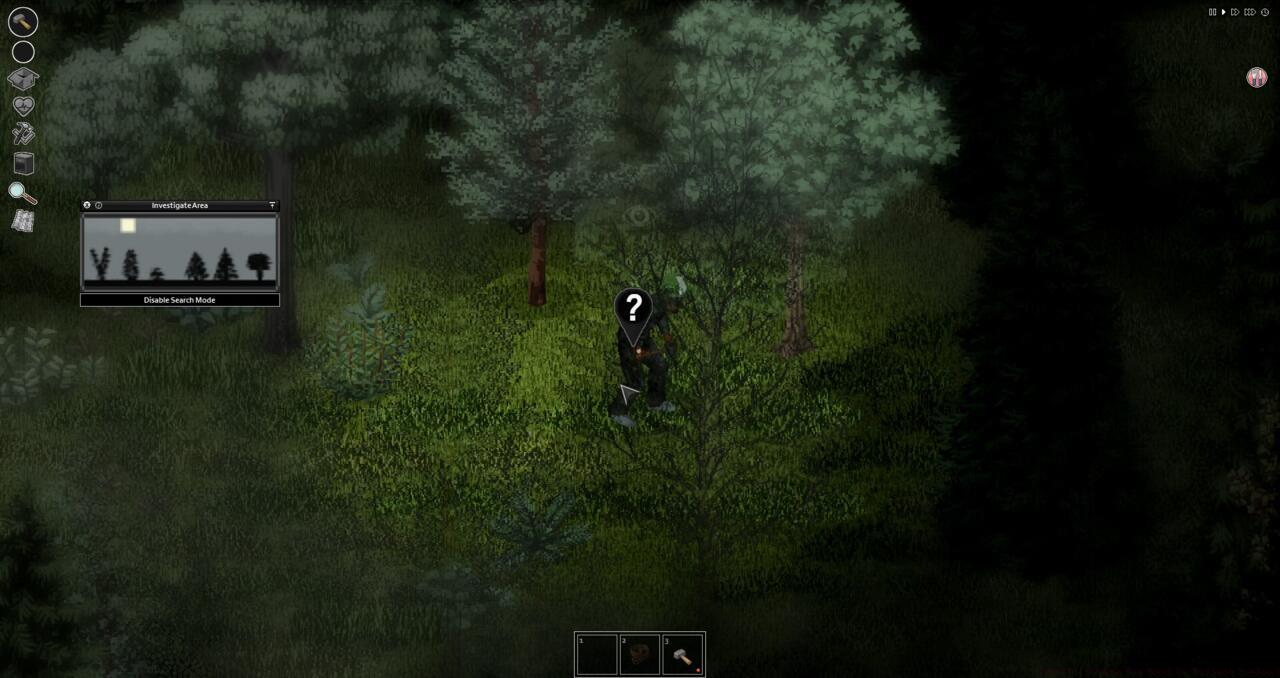
Visual confirmation of successful foraging appears as a ground-level question mark symbol.
To initiate the foraging sequence, select the “Enable Search Mode” option located at the bottom of the investigation window. This mode significantly narrows your visual range since you’re concentrating on ground-level exploration. Once activated, begin moving through the environment until the distinctive eye icon materializes above your character’s head. This visual indicator signals discovered materials—remain stationary until the eye becomes solid and a downward-pointing arrow emerges. You’ve now successfully foraged your first item.
The strategic value of foraging becomes immediately apparent when examining the resources it provides. Systematic foraging, particularly within heavily vegetated forests or expansive plains, yields critical materials including twigs, sturdy sticks, and chipped stones. When combined with basic binding materials like twine or torn rags, these readily available components transform into functional tools such as stone knives or primitive axes.
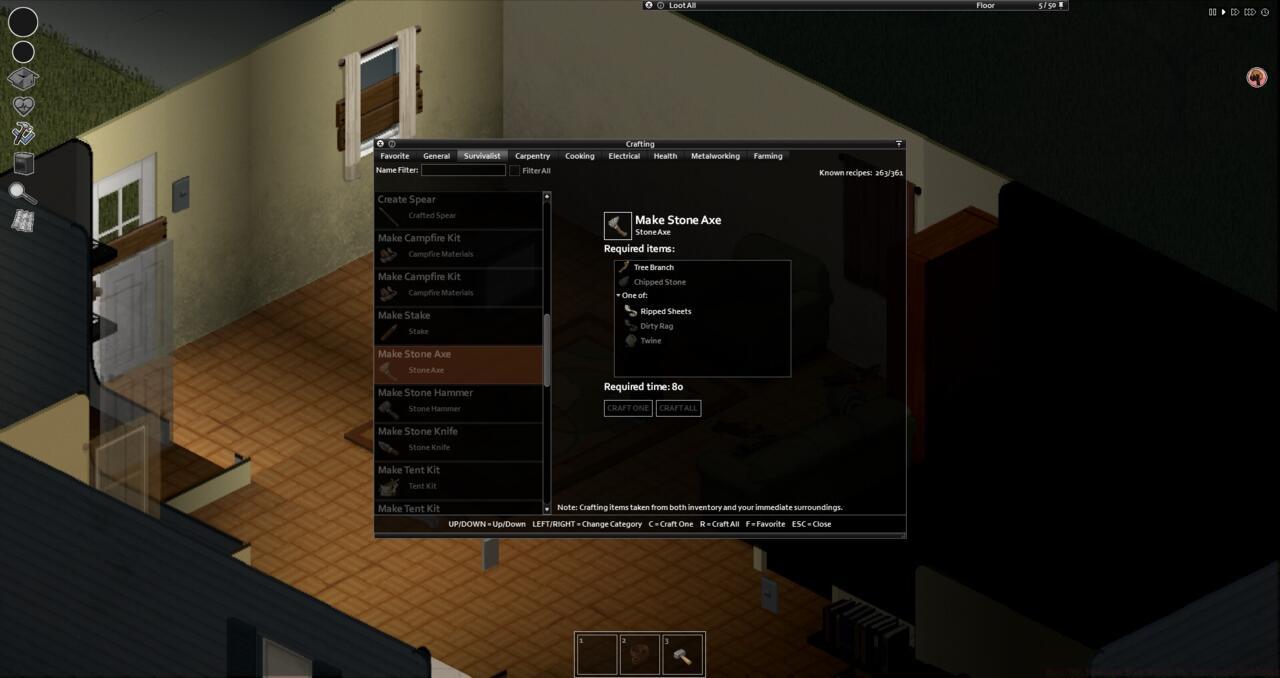
Primitive stone implements offer limited durability but serve as emergency weapons when properly crafted.
These rudimentary tools feature limited durability but prove invaluable for basic crafting requirements or defensive measures against zombie threats. For survivors seeking more substantial armaments, our comprehensive weapons unlock guide provides detailed strategies for locating firearms throughout Knox County.
Additionally, foraging provides access to unconventional food sources, though your character may display dissatisfaction with the menu. Ground-dwelling insects like crickets and cockroaches frequently appear during searches, and while consuming them raw proves unpleasant, they’re substantially preferable to facing starvation. You can prepare any discovered insects using heat sources such as campfires or conventional ovens. Exercise caution during cooking to prevent burning—charred insect remains offer minimal nutritional value and significant disgust penalties.
Beyond basic sustenance, foraging reveals medicinal plants like wild garlic and lemongrass that provide minor health benefits. Different seasons affect available flora, with spring offering the most diverse selection of edible plants and herbs for survival purposes.
Foraging proficiency develops through consistent practice, with each skill level providing tangible benefits. As your foraging skill increases from level 0 to 10, your detection radius expands by approximately 150%, dramatically improving efficiency. Higher skill levels also increase the likelihood of discovering rare items like chipped stones (essential for tool crafting) and specialized herbs with unique properties.
Environmental factors significantly impact foraging success rates. Rainy conditions temporarily boost detection chances by 15-20%, while searching during nighttime hours reduces effectiveness by nearly 40% without adequate lighting. Different biomes offer specialized resources—forests provide abundant wood materials, while urban areas might yield manufactured items despite lower overall yields.
Common foraging mistakes include moving too rapidly through search areas (which cancels detection progress) and neglecting to check your character’s moodles. Fatigue, stress, and depression all negatively impact foraging efficiency, sometimes reducing success rates by up to 50% when all negative moodles are active.
Foraging serves as a vital complementary skill in Project Zomboid’s early survival phase, though it’s not absolutely mandatory for short-term survival. New players should consult our class selection guide to understand how different professions interact with foraging mechanics. For comprehensive survival strategies, our complete gameplay guide offers detailed progression pathways for long-term survival planning.
Optimal foraging strategy involves systematic area coverage rather than random wandering. Establish search patterns that maximize ground coverage while maintaining awareness of zombie threats. Always forage with an escape route in mind, as the reduced visibility in search mode increases vulnerability to surprise attacks.
Action Checklist
- Access foraging interface by clicking the magnifying glass icon on left panel
- Activate ‘Enable Search Mode’ and move slowly through vegetated areas
- Collect sticks, stones, and chipped stones for primitive tool crafting
- Forage insects and edible plants as emergency food sources when supplies diminish
- Practice foraging in different environments and weather conditions to improve skill progression
No reproduction without permission:SeeYouSoon Game Club » How To Forage For Food In Project Zomboid Master Project Zomboid foraging to craft essential tools and survive the apocalypse with expert strategies