
Master all 12 Tainted Grail endings with expert strategies and consequences for your Avalon journey
Understanding the Final Choice Mechanics
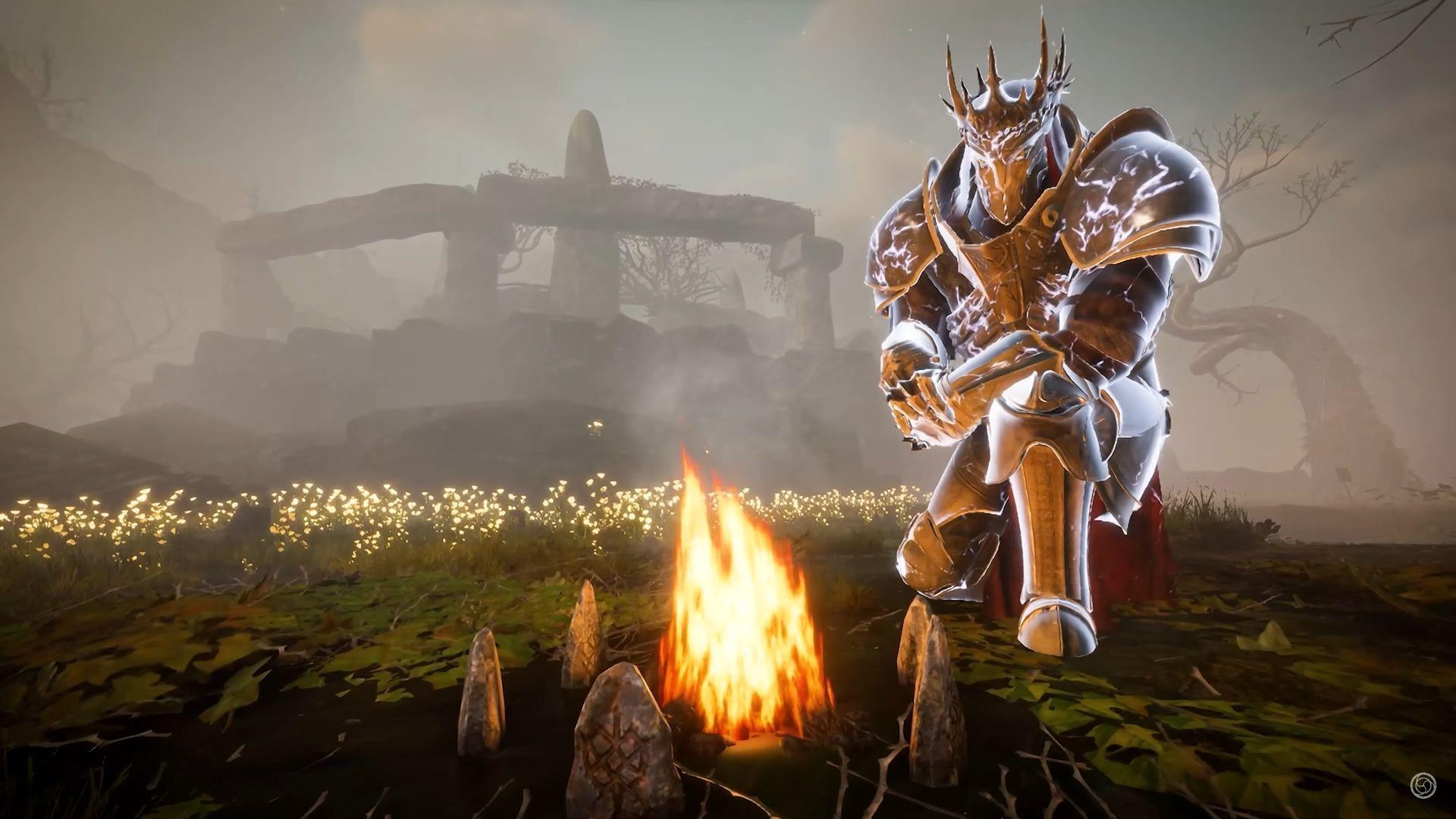
Tainted Grail The Fall of Avalon presents players with twelve distinct narrative conclusions at the current development stage, each fundamentally reshaping how your adventure concludes. The storyline converges toward a climactic decision point—one that receives no guidance, explanation, or foreshadowing. Once you encounter Human King Arthur and approach the mystical chalice, the responsibility falls entirely upon your shoulders.
Following your dialogue with Arthur, proceed to the right side of the chamber. You’ll discover a shimmering portal that requires your direct interaction. Stepping through transports you outside the fractured castle ruins where Orin awaits. He passionately appeals for assistance in restoring Arthur completely, imploring you to contemplate this resurrection path. Enter the castle interior, converse with Caradoc, then advance beyond him taking the left passage. You’ll have one final audience with Arthur where he reiterates his desire for release. From this pivotal moment, approach the Grail to initiate the ending sequence. Press the E key to interact—the game provides no guidance or restrictions, placing the ultimate decision squarely in your hands.
These twelve distinct conclusions represent the full spectrum of narrative possibilities in Tainted Grail The Fall of Avalon.
Related reading: Complete breakdown of all Tainted Grail The Fall of Avalon character classes and specializations
Primary Endings: Three Core Paths
Selecting the path of resurrection with Orrin results in Arthur’s return against his explicit wishes. Caradoc immediately reacts with hostility, drawing his bow and initiating combat. This confrontation becomes manageable through strategic jump-dodging of his projectile attacks. Upon defeating him, acquire his Superior Bow and the distinctive Wolf’s Howl sword as combat rewards.
With Caradoc neutralized, the Grail materializes. Interact with it to finalize the resurrection ceremony. Arthur returns physically restored and prepared to reign, while your character exits the narrative—your purpose fulfilled. Avalon conforms to your definitive decision. Camelot experiences resurgence, yet emerges fundamentally transformed from its former incarnation.
Choosing the Life Spindle option triggers the Grail’s recognition of your transformative intent, announcing a long-anticipated metamorphosis. However, your resolution faces immediate opposition from Caradoc, who interjects with determined resistance. He draws his weapon and assaults without hesitation. This concluding battle proves relatively straightforward—maintain evasive maneuvers against ranged attacks while closing distance for melee engagement. After prevailing, claim Caradoc’s Superior Bow and unique Wolf’s Howl blade as trophies.
Post-combat, the ritual commences. Arthur’s essence transfers into the Life Spindle, irrevocably rewriting Avalon’s destiny. The Grail pronounces its ultimate verdict. This outcome doesn’t restore the original Avalon—it generates something entirely novel. With the supernatural ‘weirdness’ now controlled rather than rampant, it transforms into a phenomenon for scholarly examination rather than terror. The landscape stabilizes, death and insanity recede, and the profound affliction haunting the realm finally resolves.
Arthur’s legacy gradually fades from collective memory, his mythological significance no longer essential for world preservation. A more enlightened Avalon emerges—imperfect yet integrated. The supernatural elements persist but now operate within comprehensible parameters. For the first time in generations, Avalon experiences genuine liberation.
Opting to terminate Arthur aligns with Caradoc’s conviction that the destructive cycle must cease. Arthur expresses gratitude and encourages victory in the ensuing conflict. Overcoming him enables ritual completion, effectively shattering the recurring pattern. This selection produces a monarchless future where the throne remains vacant. The kingdom descends into indeterminacy, lacking clear governance or direction; nevertheless, this represents one conclusion where the oppressive cycle finally breaks.
Choosing to absorb Arthur’s soul means directly assuming his authority. Arthur surrenders his essence willingly and advises learning from his errors. You ascend to rulership but establish your own governing principles. Avalon evolves not as Arthur’s domain but as your personal kingdom. The narrative remains intentionally ambiguous regarding your reign—it could manifest as righteous or tyrannical, sagacious or impulsive. This represents one conclusion granting control without moral commentary on your governance approach.
Successor Endings: Choosing Avalon’s Future
When selecting the option to distribute Arthur’s soul rather than retaining or utilizing it personally, you encounter a definitive quintet of decisions, each symbolizing an alternative future for Avalon. These choices activate following Arthur’s concluding statements and an interaction prompt.
Arthur manifests and declares with serene acceptance. You then receive confirmation to Execute him (press E)—the ritual advances, drawing Arthur’s essence into the Grail. The narration commences identically regardless of your selected successor.
Subsequently, the Grail unveils divergent conclusions in Tainted Grail The Fall of Avalon based on your designated heir:
Captain Breandan: Bestowing the soul upon Captain Breandan establishes Avalon as a realm prioritizing autonomy, commerce, and secular legal frameworks. While this generates economic prosperity and technological advancement, it simultaneously erodes the kingdom’s ethical and spiritual foundations. Advancement occurs at the expense of faith and customs, with ambition progressively escalating.
Erfyr the Blacksmith: Directing the soul to Erfyr institutes a collective governance system where hierarchical authority dissolves and cooperative labor prevails. Superficially equitable, this structure grants citizens increased autonomy over their existences. However, established power structures don’t disappear—they adapt and maintain clandestine influence while feigning systemic transformation.
Lord Yvain: Selecting Lord Yvain, descendant of Palamedes, places noble lineage in power lacking leadership competence. Public confidence rapidly deteriorates, and when his reign inevitably collapses, minimal mourning occurs. His demise initiates widespread chaos as Avalon loses directional clarity, with the resulting power vacuum igniting civil unrest.
One-Eye: Transferring the soul to One-Eye precipitates the Round Table’s dissolution. He consolidates Avalon under Dal Riata tribal jurisprudence. This represents a monumental cultural shift. Indigenous tribes receive overdue recognition and justice, while Camelot and the capital endure challenging adaptation. Stability returns, but at the price of ethnic friction and societal disruption.
Gerf’hanr: Choosing Gerf’hanr relocates the kingdom’s core to the Mathair Mines. He governs applying Dal Riata tenets while attempting unification through these ancestral roots. Although numerous supporters endorse this transition and embrace the emergent power nexus, Camelot resists. The former capital struggles with diminished prestige, generating persistent tension between traditional and innovative power centers.
Fionola: Entrusting Arthur’s soul to Fionola guides Avalon toward embracing the supernatural ‘weirdness’ and its bizarre new lifeforms. Many inhabitants willingly transform, merging with the unknown. However, dissent emerges through silent resistance movements among those refusing to abandon their human identity.
Morgan’s Child: Delivering Arthur’s soul to Morgan’s offspring rebirths Avalon under their administration—efficient, absolute, and inflexible. Some perceive this as deliverance; others as despotism. Regardless, Avalon ceases fluctuating between destinies. It achieves stability, though potentially sacrificing liberty.
The Beggar: Casting Arthur’s soul to an indigent represents ultimate rejection of all visionary ambitions. Without leadership or purpose, Avalon disintegrates into anarchy. A land formerly molded by legends now decays under someone who never sought authority, signaling mythological conclusion.
Character Epilogues and World Consequences
With One-Eye and Breandan governing collaboratively, southern territories achieved stabilization. Transportation routes reopened, agricultural zones received protection, and the region proclaimed independence from Camelot. The Menhir remained stationed in Cuanacht, though Yvain’s unsuccessful grail expedition left both Cuanacht and Camelot directionless. Supported by roused giants, the Dal Riata captured Camelot. Their indigenous traditions proliferated throughout the land—unwelcome among certain populations yet unstoppable in dissemination.
Fearghas, designated Galahad the Loyal, established a potent coalition with Breandan and the Forlorn Swords. Under One-Eye’s administration, southern provinces thrived, and the Dal Riata eventually unified preparatory to territorial expansion.
Neante departed accompanying Yvain. Her ultimate destiny remains undocumented, though her courage persists in memory. Erfyr, despite advanced age, likewise followed Yvain. He earned respect through unwavering dedication. Maggot remained in Cuanacht and, via perseverance and established trust, initiated development of a neo-druidic tradition grounded in ancient practices.
Cillian resided in Camelot, maintaining low visibility until his enigmatic disappearance. Fabius and Lile withdrew from ecclesiastical involvement and ultimately separated. Gradually, both faded from communal recollection.
When corporate interests compromised her medical facility, Ailei abandoned it. She subsequently launched an independent practice, administering healthcare according to her principles.
Helmi reorganized the Volker, though their berserkers soon became feared for escalating insanity. Yngvi survived and methodically commenced Thued reconstruction during peacetime. Stron’er reunited the Ulfr, integrating them with the Forlorn Swords. Glyrna guided the Sveinn toward deeper isolation. Their ceremonies grew more archaic, sanguinary, and tradition-bound.
The Bee Queen’s progeny now propagates unrestrictedly, encumbering southern regions with your unfulfilled pledge. Sagremor’s corpse succumbed to Mycelium fungal spores, initiating gradual mycological dominion that permeated the kingdom.
Having commanded the Children of Morgan, you reconfigured Avalon covertly before ultimately dissolving the organization. Morgan, perpetually patient, receded from visibility. You emancipated the foredwellers conditional upon their knowledge abandonment. One succumbed to madness, the other transmitted their expertise.
You and Alisa constructed tranquil coastal existence—until your treachery destroyed it. Alisa prospered independently, her craftsmanship achieving fame. Beor departed, resentful and devastated. Cillian vanished anew, presently recalled solely through anxious, subdued references.
O Cuinn never abandoned your memory. Years later, he visited your gravesite clandestinely, addressing you with fidelity transcending mortality itself.
Advanced Strategies and Pro Tips
Combat Optimization Against Caradoc: The confrontation with Caradoc represents a critical juncture for multiple ending paths. Master the timing of dodge-roll maneuvers to evade his arrow volleys efficiently. His attack patterns follow predictable rhythms—observe his animation cues for optimal counter-attack windows. Consider equipping armor with ranged damage resistance to mitigate his bow attacks. For melee specialists, closing distance rapidly while utilizing environmental cover proves most effective.
Choice Preparation Strategies: Your final decision carries irreversible consequences. Before reaching the chalice, ensure you’ve completed companion questlines that might influence available options. Certain endings require specific faction reputations or completed story arcs. Document your choices throughout the game, as previous decisions can unlock or restrict certain conclusion paths. Maintain multiple save files before critical story junctions to explore alternative outcomes.
Secret Requirements and Hidden Conditions: Several endings have subtle prerequisites beyond the obvious choice. The ‘perfect’ stabilization ending often requires specific artifact collections or solving obscure puzzles scattered throughout Avalon. Pay attention to lore documents and environmental storytelling—they frequently hint at unconventional solutions. Some character-specific endings demand maximum relationship development through consistent dialogue choices and completed personal missions.
Post-Ending Content Considerations: While Tainted Grail doesn’t traditionally continue after the credits, your ending selection influences New Game+ opportunities if available. Certain conclusions provide unique starting bonuses or altered world states for subsequent playthroughs. The developmental nature of the game means additional endings and refinements may emerge in future updates, so maintain flexibility in your approach.
That concludes our comprehensive examination of Tainted Grail The Fall of Avalon’s narrative conclusions.
Further exploration: Availability and performance analysis of Tainted Grail The Fall of Avalon on Xbox Game Pass subscription service
No reproduction without permission:SeeYouSoon Game Club » Tainted Grail The Fall of Avalon: All endings explained Master all 12 Tainted Grail endings with expert strategies and consequences for your Avalon journey