
Master the Autódromo Hermanos Rodríguez with this optimized F1 25 setup for maximum speed and cornering grip
Understanding Mexico’s High-Altitude Challenge
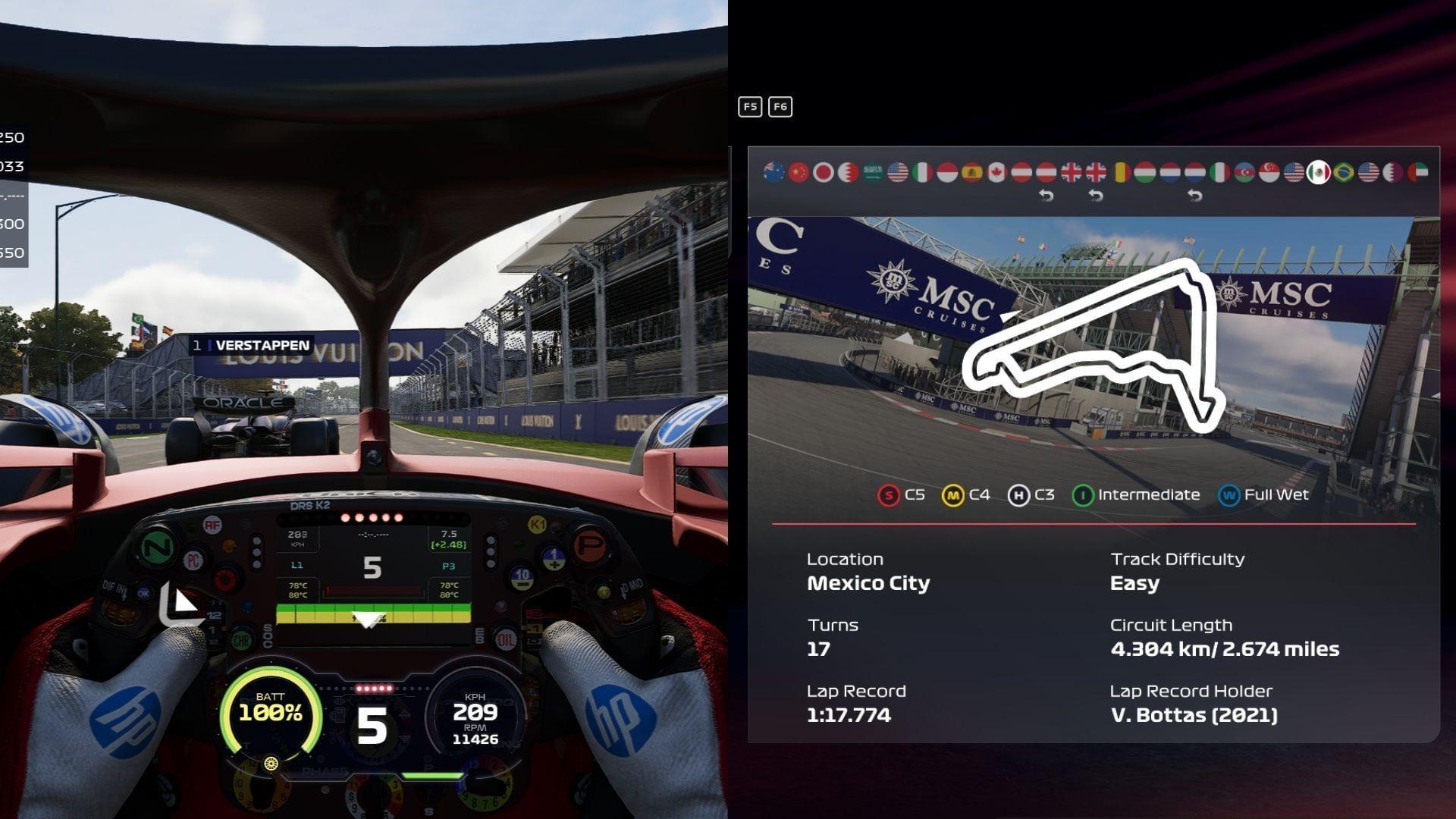
The Autódromo Hermanos Rodríguez presents one of the most unique challenges in F1 25 due to its extreme 2,200-meter altitude. This Mexico City circuit’s thin air significantly reduces downforce and engine power, demanding specialized car configurations that differ from conventional setups.
Located in Ciudad Deportiva, this track’s high elevation affects every aspect of vehicle performance. The reduced air density means your car generates approximately 20% less downforce while experiencing decreased engine combustion efficiency. These conditions necessitate a carefully balanced approach to mechanical grip and power delivery.
Success at the Mexican GP requires understanding how the three distinct sectors interact with your car’s setup. The long start-finish straight demands low drag, while the technical stadium section tests low-speed mechanical grip. Finding the right compromise between these conflicting requirements is essential for competitive performance.
Optimized Setup Configuration Breakdown
Here’s the comprehensive car setup that addresses the Mexican GP’s unique demands:
- Differential Adjustment On Throttle: 100% – This aggressive setting maximizes traction out of slow-speed corners where mechanical grip is crucial
- Differential Adjustment Off Throttle: 20% – The conservative off-throttle setting maintains stability during braking and corner entry
- Front Anti-Roll Bar: 4 – Soft front anti-roll bar improves mechanical grip through the stadium section’s tight corners
- Rear Anti-Roll Bar: 21 – Stiff rear setting prevents excessive weight transfer and maintains rear stability
- Front Right Tyre Pressure: 24.1 psi – Balanced front pressures ensure consistent turn-in response
- Front Left Tyre Pressure: 24.1 psi – Symmetrical front pressures maintain handling balance
- Rear Right Tyre Pressure: 22 psi – Lower rear pressures increase contact patch for better acceleration
- Rear Left Tyre Pressure: 22 psi – Matching rear pressures optimize traction out of corners
This configuration specifically targets the altitude-induced challenges by prioritizing mechanical grip over aerodynamic performance. The differential settings work in harmony to provide maximum traction while maintaining stability through the circuit’s mixed-speed corners.
Advanced Driving Techniques and Strategies
Mastering the Mexican GP requires adapting your driving style to complement this optimized setup. Focus on carrying maximum speed through Sector 1’s flowing corners, using the balanced anti-roll bars to maintain momentum without overstressing the tires.
In Sector 2, the key is precise braking points and early throttle application. The 100% on-throttle differential will help rotate the car through the slower corners, but requires careful modulation to avoid wheelspin. Common mistakes include over-slowing for corners and being too aggressive with throttle application on exit.
Sector 3 between turns 12-16 demands the most precision. The stadium section’s combination of low-speed corners requires maintaining minimum speed while preserving tire life. The optimized tire pressures provide the necessary grip without overheating, crucial for maintaining performance throughout the race stint.
Advanced players should experiment with brake bias adjustments to fine-tune corner entry characteristics. Moving brake bias slightly rearward (52-54%) can improve rotation in the slow corners while maintaining stability under heavy braking zones.
Performance Validation and Fine-Tuning
This F1 25 setup for the Mexican GP delivers the ideal balance between straight-line speed and cornering capability. The low-drag configuration paired with optimized mechanical settings ensures stable performance despite the altitude challenges.
To validate your setup, focus on these key performance indicators: consistent 320+ km/h through the speed trap, stable rotation through Turns 4-6 complex, and minimal tire temperature variation throughout the lap. The rear tire pressures specifically help combat the reduced downforce by maximizing mechanical grip.
For wet conditions, increase front and rear tire pressures by 1.0-1.5 psi to maintain temperature in cooler conditions. The reduced air density means tires cool faster, requiring additional pressure to maintain optimal operating windows.
Also read: Best F1 25 Marina Bay Street Circuit Setup for the Singapore GP
- F1 25 overhauls My Team, retires the “Owner Driver”
- F1 25 review: A Formula One game that knows where it’s going
- Best Autodromo Jose Carlos Pace Setup for the Brazilian GP
- Best Zandvoort Setup for the Netherlands GP
No reproduction without permission:SeeYouSoon Game Club » Best F1 25 Autódromo Hermanos Rodríguez Setup for the Mexican GP Master the Autódromo Hermanos Rodríguez with this optimized F1 25 setup for maximum speed and cornering grip