
Master the Zandvoort circuit with optimized F1 25 car setup, tire management strategies, and advanced racing techniques
Understanding Zandvoort’s Technical Challenges
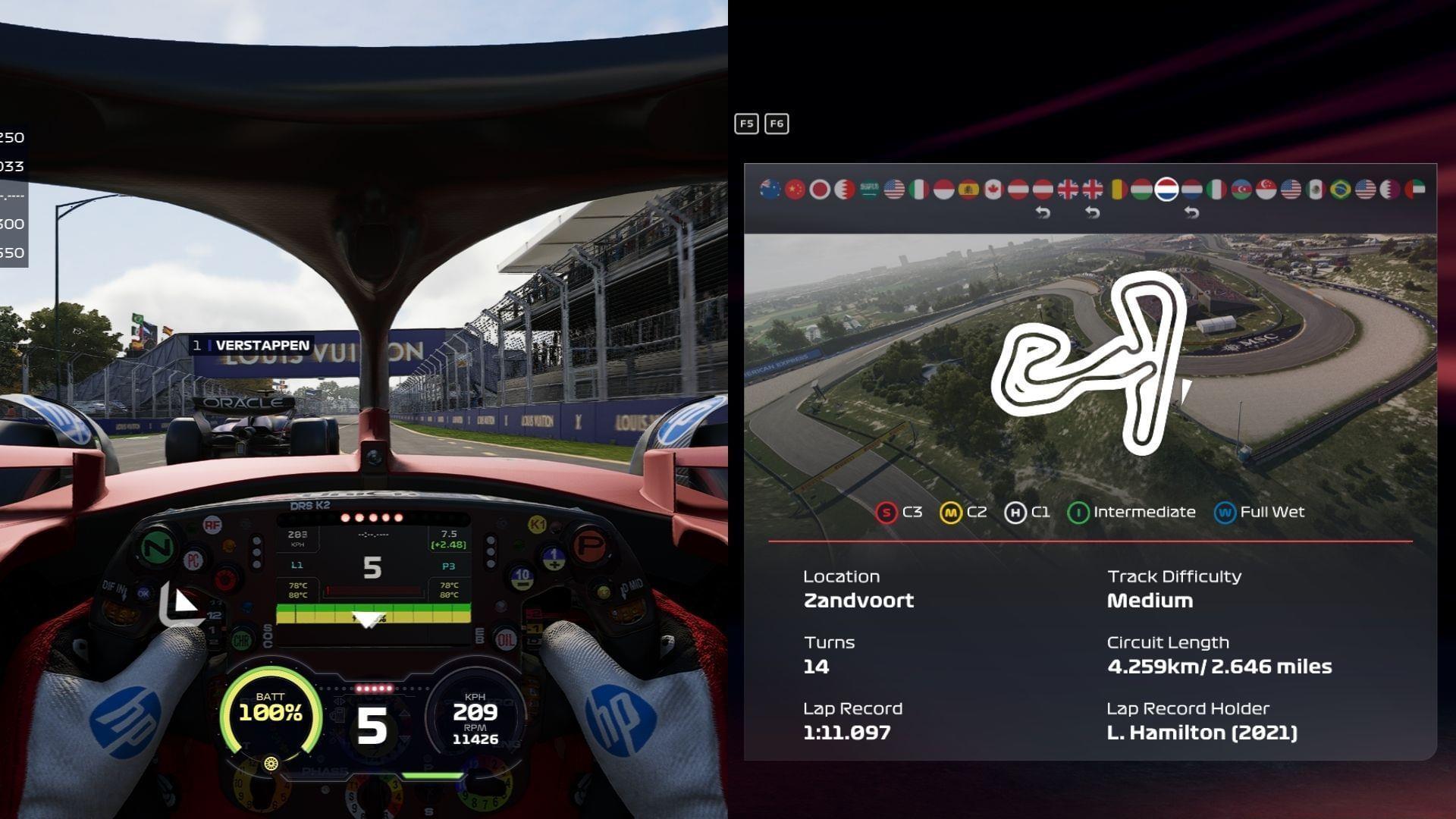
The Zandvoort circuit in F1 25 presents one of the season’s most technically demanding races, featuring a unique combination of high-speed banked corners and tight technical sections that test driver skill and car setup precision. Located along the Dutch coastline, this historic track challenges competitors with elevation changes and narrow racing lines that leave minimal room for error.
Zandvoort’s signature corners include the famous Tarzanbocht at turn 1, which serves as the primary overtaking opportunity, followed immediately by the steeply banked turn 3 (Hugenholtzbocht) that allows for incredible cornering speeds. The Arie Luyendykbocht completes the technical trio, demanding precise braking and traction control. These elements combine to create a circuit where optimized setup translates directly to lap time improvements.
The LIDAR-powered recreation in F1 25 delivers unprecedented accuracy, capturing every nuance of the track’s surface and banking angles. This technological advancement means setups must account for subtle elevation changes and camber variations that previous game versions might have overlooked. Understanding these track characteristics forms the foundation for developing a competitive car configuration.
Optimized Car Setup Configuration
Here’s the meticulously tested car configuration that delivers optimal performance at Zandvoort:
- Differential Adjustment On Throttle: 100% – Maximizes traction exiting slow corners while maintaining stability
- Differential Adjustment Off Throttle: 20% – Provides rotational stability during braking and corner entry
- Front Anti-Roll Bar: 8 – Balances responsiveness with mechanical grip through technical sections
- Rear Anti-Roll Bar: 21 – Controls rear stability while allowing progressive power application
- Front Right Tyre Pressure: 24.1 psi – Maintains optimal contact patch through left-hand dominant corners
- Front Left Tyre Pressure: 24.1 psi – Balances tire temperatures across the axle
- Rear Right Tyre Pressure: 20.9 psi – Prevents overheating during sustained high-load corners
- Rear Left Tyre Pressure: 20.9 psi – Ensures consistent rear grip through acceleration zones
This configuration creates the ideal compromise between mechanical grip and aerodynamic efficiency that Zandvoort demands. The differential settings provide the necessary rotation through the circuit’s mixed-corner sequences while maintaining traction out of slower sections. The tire pressure configuration specifically addresses the circuit’s asymmetric loading, with lower rear pressures helping manage thermal degradation during prolonged high-speed corners.
The suspension geometry works synergistically with Zandvoort’s unique characteristics. The front anti-roll bar setting ensures responsive turn-in without sacrificing mechanical grip, while the stiffer rear configuration maintains stability over the notorious curbs at turns 3 and 14. This combination allows drivers to attack the banking with confidence while preserving tire life for the race’s duration.
Advanced Racing Techniques and Pit Strategy
Mastering Zandvoort requires adapting your driving style to complement the car setup. Approach turn 1 with controlled trail braking to rotate the car while maintaining momentum through the exit. The banked turn 3 allows for earlier throttle application than visual cues might suggest – trust the downforce and use approximately 75% throttle mid-corner, building to full power as you exit.
Tire preservation becomes crucial during race conditions. The sustained lateral loads through turns 3, 7, and 14 generate significant heat, particularly in the front left tire. Manage this by slightly reducing steering input in faster corners and avoiding aggressive curb strikes that induce sudden temperature spikes. For qualifying sessions, consider increasing front tire pressures by 0.3-0.5 psi to enhance responsiveness, then revert to race pressures for the Grand Prix.
Pit strategy at Zandvoort typically favors a one-stop approach due to the circuit’s moderate tire wear and limited overtaking opportunities. However, safety car periods can dramatically alter strategy – have alternative pit lane timing prepared. The optimal window for pit stops falls between laps 15-25 for medium compounds, adjusting based on tire wear indicators and track position battles.
Common Mistakes and Performance Optimization
Many drivers struggle with Zandvoort’s unique challenges by making avoidable setup and driving errors. The most common mistake involves running excessive front wing, which creates understeer through the circuit’s critical high-speed sections and overheats front tires. Instead, prioritize rear stability and trust the mechanical grip provided by the optimized suspension settings.
Advanced players can extract additional performance through subtle setup adjustments. If experiencing traction issues exiting turn 1, reduce rear anti-roll bar to 19 while increasing off-throttle differential to 25%. For better high-speed stability, consider raising front ride height by 1-2 clicks while maintaining the recommended tire pressures. These micro-adjustments can provide the final tenths needed for pole position.
Weather conditions significantly impact Zandvoort’s behavior. During wet conditions, increase all tire pressures by 1.0-1.5 psi to improve heat retention and reduce the risk of aquaplaning. The banked corners become particularly treacherous in the rain – reduce differential on-throttle to 85% and brake earlier than your dry racing line would suggest.
Also read: Best Circuit de Barcelona-Catalunya Setup for the Spanish GP
- F1 25 overhauls My Team, retires the “Owner Driver”
- F1 25 review: A Formula One game that knows where it’s going
- Best F1 25 Autodromo Jose Carlos Pace Setup for the Brazilian GP
No reproduction without permission:SeeYouSoon Game Club » Best F1 25 Zandvoort Setup for the Netherlands GP Master the Zandvoort circuit with optimized F1 25 car setup, tire management strategies, and advanced racing techniques