
Master Monza’s high-speed challenges with a detailed F1 25 Italian GP car setup guide, including advanced tuning strategies.
Conquering the Temple of Speed: F1 25 Italian Grand Prix Guide
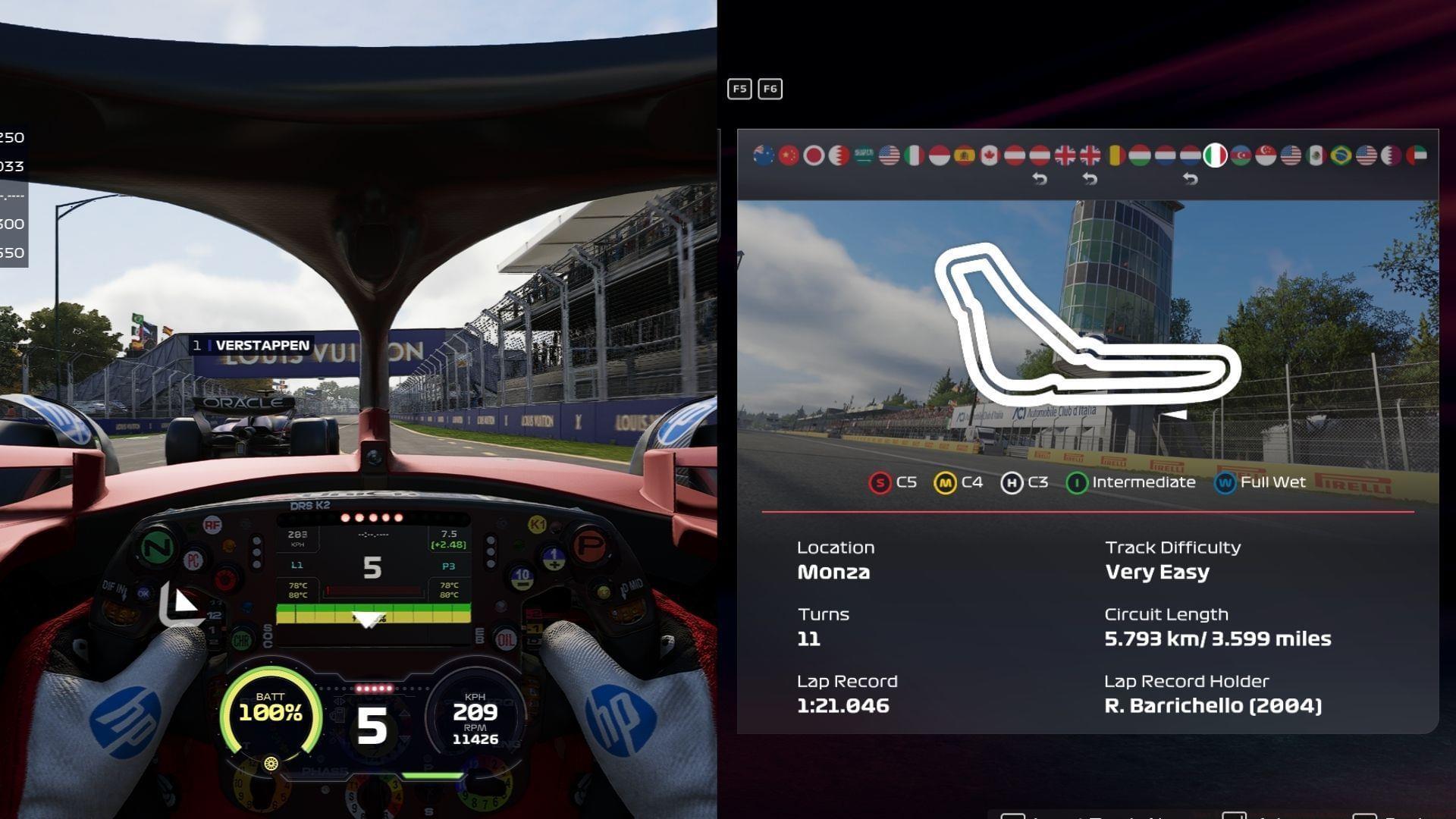
The Autodromo Nazionale Monza, host of the F1 25 Italian Grand Prix, represents the ultimate test of straight-line speed and bravery. Known as the ‘Temple of Speed’, this historic circuit near Milan features long straights punctuated by heavy braking zones into tight chicanes. Success here requires a car tuned for minimal drag and maximum stability under braking, making setup choices absolutely critical for securing pole position and race victory.
Note: For other gaming challenges, you might seek solutions elsewhere, but for mastering F1 25, you’re in the right place.
Thanks to advanced LIDAR scanning and visual enhancements in F1 25, the Monza circuit is recreated with punishing accuracy. This fidelity means the game’s physics model rewards a hyper-aggressive setup philosophy focused on power delivery and late braking capability. Your virtual car must be configured to exploit every kilometer per hour on the straights while remaining composed through the iconic Variante Rettifilo and Parabolica corners.
From the explosive start down to the first chicane, to the final run out of the Parabolica onto the main straight, Monza is a circuit of extremes. It punishes any setup that sacrifices top speed for cornering grip. Therefore, your configuration must maximize power application and torque transfer while providing the driver with confidence to brake millimeters from the limit. A finely tuned machine here doesn’t just gain time; it dominates the entire event.
Here is the optimized, race-winning car setup for the Italian Grand Prix in F1 25:
This configuration strikes the perfect balance for Monza’s unique demands. The high on-throttle differential setting (100%) ensures immediate power transfer to the track when you exit corners, minimizing wheelspin and maximizing acceleration onto the long straights. Conversely, the low off-throttle setting (20%) allows the rear wheels to rotate at different speeds during corner entry, promoting rotation and helping the car turn into the chicanes more easily.
The anti-roll bar settings—8 at the front and 21 at the rear—create a car that is responsive to initial steering input but stable under heavy braking and over the notorious curbs. This stiff rear bar reduces body roll, keeping the rear tires firmly planted for better traction on exit. The tyre pressure split (higher front, lower rear) is designed to manage the thermal load across a lap, ensuring the rear tires, which do most of the accelerating, remain in their optimal temperature window for grip.
Precision throttle control paired with this low-drag, minimal downforce setup guarantees stability and balance every time you exit a corner. The car will feel responsive to your inputs without becoming nervous or sacrificing control over Monza’s aggressive curbing and sharp directional changes. This setup grants you the confidence to push the limits lap after lap.
Advanced Driving Techniques & Common Pitfalls at Monza
Simply copying the setup is only half the battle. Applying the correct driving techniques is what transforms a good lap into a great one.
Mastering the Braking Zones: Monza’s chicanes require you to brake at the absolute limit while turning in. Practice trail-braking—gradually releasing the brake pressure as you turn—to help rotate the car into the Variante Rettifilo and Ascari chicane. With the differential off-throttle set to 20%, the car will be more willing to rotate, but you must be smooth.
Exploiting the Curbs: Monza’s lap time is found in how aggressively you use the curbs, particularly in the second part of the Lesmo corners and through Ascari. The stiff anti-roll bar setup helps the car remain stable over these bumps. However, be precise; hitting the curbs too aggressively or at the wrong angle can unsettle the car and cause a spin.
The Parabolica: This final long, sweeping right-hander is where races are won and lost. Carry as much entry speed as possible, focus on hitting the apex, and then progressively apply the throttle. The 100% on-throttle differential will hook up powerfully, but apply power too early or too aggressively, and you’ll slide wide, ruining your run onto the main straight.
Common Mistakes to Avoid:
For setups at other technical circuits: Best F1 25 Circuit de Barcelona-Catalunya Setup for the Spanish GP
No reproduction without permission:SeeYouSoon Game Club » Best F1 25 Autodromo Nazionale Monza Setup for the Italian GP Master Monza's high-speed challenges with a detailed F1 25 Italian GP car setup guide, including advanced tuning strategies.