
TL;DR
- Leads require only String and Slimeballs but offer essential mob control
- String can be farmed from spiders, cobwebs, or cats with varying efficiency rates
- Slimeballs drop from slimes in swamps or underground with strategic farming methods
- Proper lead usage prevents mob wandering and enables organized animal transport
- Advanced techniques include temporary tethering and decorative applications
Mastering mob control becomes essential in Minecraft when creatures persistently wander from designated areas. Whether managing escaped livestock or transporting horses across biomes, implementing reliable restraint systems prevents frustrating losses. The game’s Lead item serves as your primary solution for anchoring animals securely.
Minecraft’s Lead functions as a versatile tethering tool with dual applications. While occasionally utilized in balloon crafting recipes, its core purpose involves restraining mob movement. Nearly all creatures respond to leashing, though domestic animals like cows, sheep, and horses provide the most practical usage scenarios for this mechanic.
Strategic Benefit: Leads transform chaotic mob management into organized systems. By preventing animals from straying during construction projects or while establishing new farms, you maintain control over your resources. This proves particularly valuable when relocating multiple animals across long distances without risking dispersion.
Creating a Lead demands minimal components but requires understanding precise crafting patterns. You’ll need access to a crafting table along with two specific resources arranged in exact formation.
Crafting Requirements:
- Position one Slimeball precisely in the center crafting grid slot
- Arrange four String pieces with three occupying left-side positions and the final piece placed in the bottom-right corner
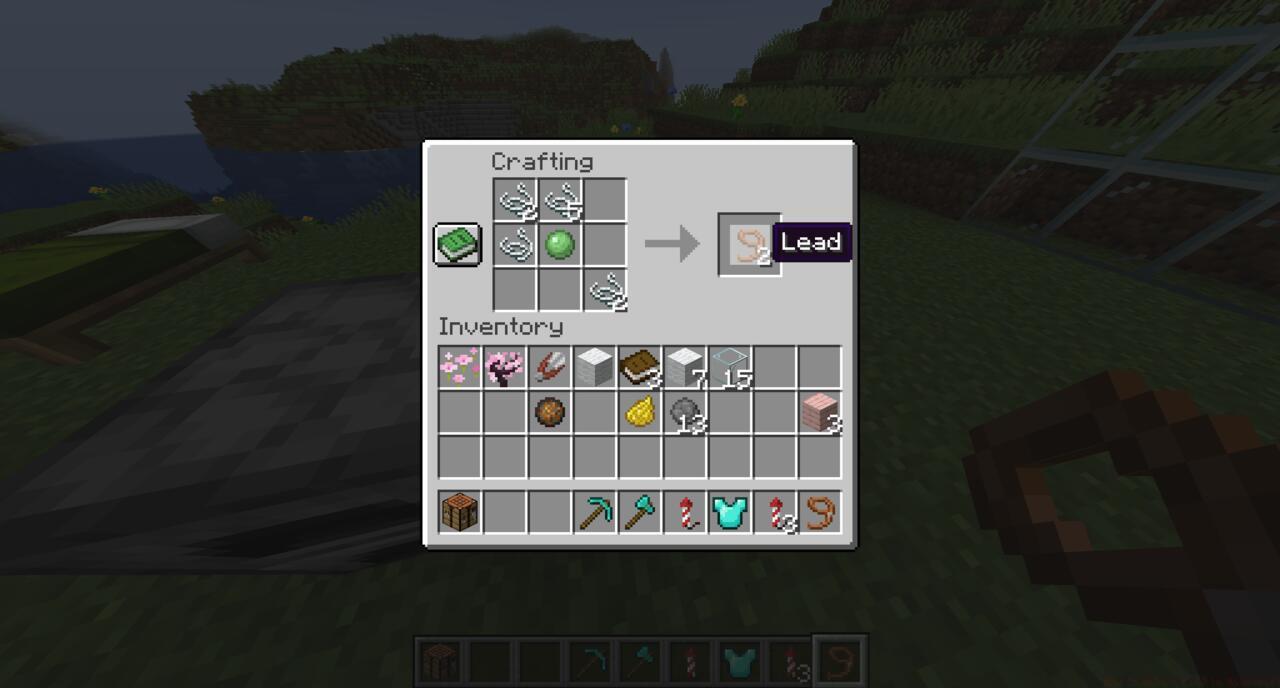
The recipe for a Lead
Common Mistake: Many players incorrectly place String in adjacent slots rather than the specific left-column and bottom-right positions required. This precise arrangement is non-negotiable for successful Lead production.
Since String cannot be manufactured through crafting, you must employ multiple acquisition methods. Each approach offers different efficiency levels depending on your current resources and game stage.
Primary Methods:
- Spider Hunting: Defeating spiders yields 0-2 String pieces consistently
- Cobweb Mining: Destroying spider-spun cobwebs with shears provides immediate String
- Fishing: Angling can produce String as treasure with approximately 15% probability
- Feline Friends: Tamed cats may gift String during morning routines or drop it upon death
Efficiency Analysis: Spider elimination remains the most reliable String source, providing predictable yields. Cobweb destruction offers rapid accumulation if you locate abandoned mineshafts or stronghold libraries. For early-game players, feline companionship provides passive String income without combat risks.
Pro Tip: Establish a spider spawner farm for automated String production. This advanced setup generates continuous String supplies while you focus on other projects, dramatically improving resource efficiency.
Slimeballs originate primarily from defeating slime mobs, though alternative methods exist. Understanding slime spawning mechanics significantly improves your collection rates.
Optimal Locations:
- Swamp Biomes: Slimes spawn frequently at night during specific moon phases, making swamps the most accessible hunting grounds.
- Underground Chambers: Below layer 40, slimes generate in designated “slime chunks” regardless of biome
Collection Strategy: Slimes undergo size reduction when damaged, eventually dissolving into smaller variants. Large slimes drop multiple Slimeballs upon defeat, while medium and small slimes yield fewer. Persistent elimination of larger slimes maximizes your Slimeball returns per encounter.
Alternative Method: Deconstructing Slime Blocks returns nine individual Slimeballs, providing an efficient conversion method if you possess excess blocks.
Advanced Technique: Identify slime chunks using online tools or careful observation, then create dedicated farming platforms. These controlled environments allow systematic slime elimination and Slimeball collection without random exploration.
Beyond basic animal restraint, Leads enable sophisticated Minecraft mechanics that enhance both functionality and creativity.
Transportation Systems: Connect multiple animals in caravan formations for efficient mass relocation. This approach proves invaluable when establishing new bases or populating extensive farms.
Temporary Anchoring: Secure leads to fences or walls to create temporary holding pens during construction or reorganization projects.
Creative Applications: Utilize leads for decorative purposes by tethering mobs in specific arrangements or creating dynamic displays.
Pro Strategy: Always carry 2-3 leads during exploration. Unexpected animal discoveries or emergency containment situations frequently arise, and preparedness prevents missed opportunities.
For comprehensive guidance on other essential Minecraft mechanics, explore our Complete Guide to master all aspects of gameplay.
More Minecraft Guides:
Action Checklist
- Gather 4 String from spiders, cobwebs, or cats
- Collect 1 Slimeball from swamp or underground slimes
- Arrange materials in crafting table with Slimeball center, String left and bottom-right
- Test lead on desired mob and secure to fence if needed
- Implement advanced uses like animal caravans or decorative displays
No reproduction without permission:SeeYouSoon Game Club » How To Make A Lead In Minecraft Master Minecraft Lead crafting with expert tips for mob management and resource gathering