
TL;DR
- Spiders remain the most efficient string source, dropping 0-2 pieces per kill
- Cobweb breaking and cat gifts provide alternative acquisition methods
- String enables creation of bows, fishing rods, leads, and wool blocks
- Bedrock Edition allows cobweb-to-string conversion in crafting tables
- Tripwire traps and villager trading unlock advanced gameplay mechanics
String represents one of Minecraft’s most versatile crafting components, serving as the foundation for numerous essential survival tools and mechanisms. This comprehensive guide explores optimized farming techniques and detailed crafting applications to maximize your resource efficiency in Mojang’s sandbox universe.
Understanding string’s diverse applications transforms your gameplay experience, enabling everything from basic weapon crafting to complex redstone contraptions. We’ll examine proven acquisition strategies and provide step-by-step crafting instructions for all major string-based items.
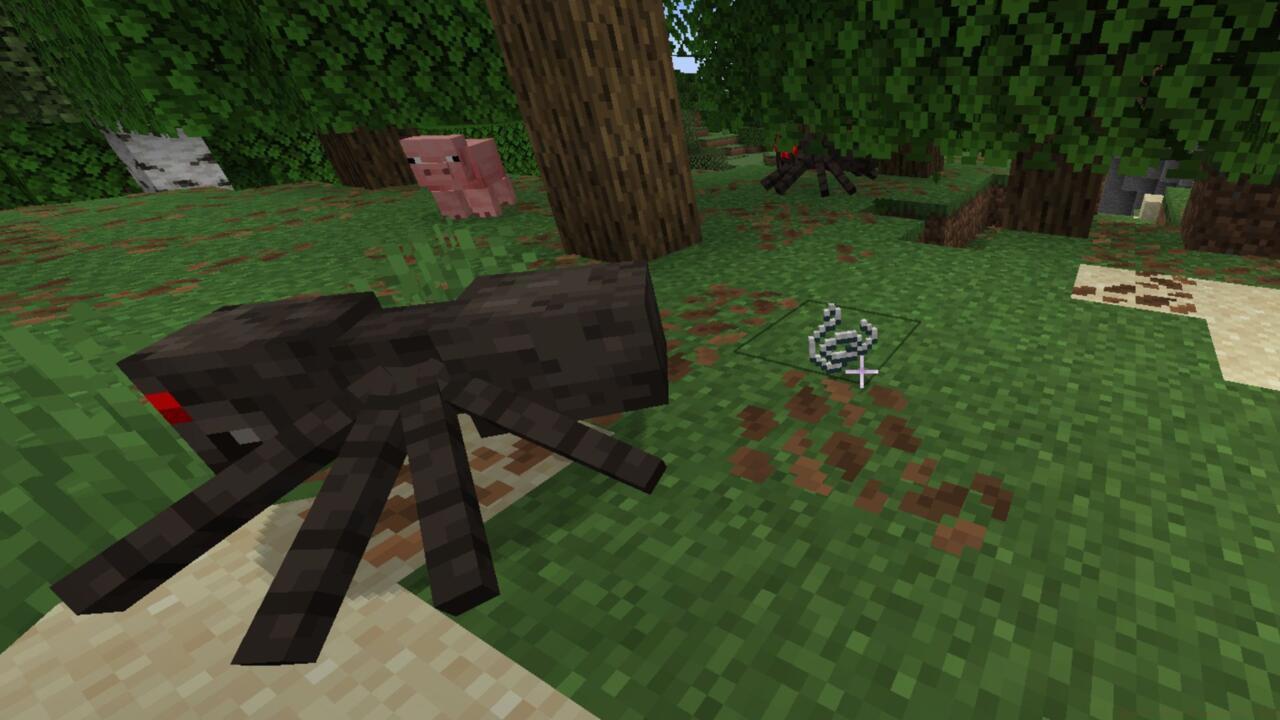
Spiders drop string when killed
How to find string in Minecraft
Spider encounters provide the most reliable string farming method, with each defeated spider yielding 0-2 string pieces. Their distinctive chittering sounds serve as effective audio cues for locating hostile mobs in dark environments. These arachnid adversaries predominantly spawn in light-level zero areas, particularly within underground caverns and beneath dense forest canopies where darkness persists.
Beyond spider combat, several alternative acquisition methods exist for resource diversification. Breaking cobwebs with shears yields string directly, while fishing offers occasional string as junk loot. Structure exploration reveals string in jungle temples, desert pyramids, and dungeon chests. Tamed cats periodically deliver string “gifts,” though this behavior reflects their perception of your survival capabilities rather than random generosity.
Pro Tip: Create an automated spider farm by constructing dark room spawners with water channels to collect drops. This method can generate hundreds of string per hour with minimal player intervention.
.jpg)
You can use string to craft wool in the absence of sheep
String crafting recipes
String’s crafting utility varies significantly between Minecraft editions. Java Edition prohibits direct string crafting, while Bedrock Edition permits cobweb conversion at crafting tables. This versatile material facilitates creation of numerous vital implements including wool blocks, looms, animal leads, fishing apparatus, ranged weapons, and structural scaffolding.
Wool
Wool creation requires four string units arranged in a 2×2 square within the crafting interface’s lower left quadrant. This provides crucial building and decorative options when sheep resources prove scarce.
Loom
Loom construction combines two string strands with wooden planks. Position one plank centrally with another directly to its left, then place both string segments above these wooden components to complete the banner customization station.
Fishing rod
Fishing rod assembly utilizes three sticks in diagonal formation from bottom-left to top-right crafting slots. Attach two string lengths along the right-side vertical column to create this essential food-gathering tool.
Lead
Lead crafting demands five string segments configured in specific arrangement. Create a 2×2 string block in the grid’s upper left section, then position the final string unit in the bottom-right corner to produce this mob-control device.
Bow
Bow fabrication employs three string strands vertically aligned along the crafting table’s right edge. Complement these with three sticks placed in top-center, middle-left, and bottom-center positions for ranged combat capability.
Advanced string applications include villager trading with fishermen professionals and sophisticated trap mechanisms. Converting string to tripwire enables perimeter security systems that activate when entities cross the connection. These contraptions can trigger trapdoors for automated mob farming or create player-versus-player ambush scenarios. Multiplayer survival demands tripwire awareness—carry shears to safely disarm encountered traps.
Common Mistake: Beginners often waste string on unnecessary wool crafting when sheep farming proves more resource-efficient. Always assess your biome’s natural resources before committing string to non-essential crafts.
Mastering string utilization extends beyond basic crafting to encompass sophisticated gameplay enhancements. Tripwire hook connections create versatile detection systems for both security and automation purposes. These mechanisms prove particularly valuable when designing mob farms or protecting bases from intruders.
Villager trading represents another strategic string application. Fisherman villagers offer valuable emerald exchanges for string, creating economic opportunities within village economies. The recently added crossbow recipe further expands string’s combat applications, requiring additional string components alongside sticks and iron.
Optimization Tip: Combine string acquisition methods for maximum efficiency. Use spider farming for bulk collection while supplementing with cat gifts and structure looting. This diversified approach ensures consistent string supplies regardless of your current gameplay phase.
For comprehensive Minecraft mastery, explore our Complete Guide for foundational strategies. Weapon specialists should consult our Weapons Unlock guide for combat optimization, while class-based gameplay benefits from our Class Guide for role-specific tactics.
Action Checklist
- Establish spider farm in dark biome for continuous string production
- Craft essential tools: bow (3 string), fishing rod (2 string), lead (5 string)
- Explore structures for bonus string loot
- Set up tripwire security systems around your base perimeter
No reproduction without permission:SeeYouSoon Game Club » How To Find Minecraft String Master string farming techniques and essential crafting recipes to enhance your Minecraft survival experience