
TL;DR
- Craft candles using honeycomb and string with specific crafting table placement
- Dye candles in 16 colors using dyes positioned beneath them in crafting grid
- Light candles with flint and steel, extinguish with water or repeated interaction
- Place up to four candles per block or single candle on cakes for celebrations
- Candles provide safe ambient lighting without fire spread risks to nearby blocks
Minecraft candles serve as versatile decorative elements that enhance building aesthetics while providing subtle illumination. These atmospheric light sources create mood settings ranging from cozy interiors to spooky haunted houses, offering lower light levels than torches for nuanced ambiance. Available in multiple colors through dyeing processes, candles transform ordinary spaces into immersive environments. Their unique capability to adorn birthday cakes adds celebratory functionality beyond standard lighting applications.
Strategic candle placement enables builders to craft specific atmospheres without overwhelming brightness. Unlike conventional light sources, candles maintain visual appeal while serving practical purposes. Their flame mechanics introduce dynamic elements to static builds, creating living environments that respond to player interactions.
Creating candles requires precise material combination: one honeycomb positioned centrally with string directly above it in the crafting grid. This specific arrangement ensures proper candle formation, requiring careful attention to placement orientation. The crafting process yields single candles regardless of material quantities used.
Honeycomb acquisition demands bee nest management strategies. Establishing bee farms near flower biomes accelerates honeycomb production through systematic harvesting. String collection benefits from spider spawner utilization or abandoned mine exploration where cobwebs abound. Efficient material gathering transforms candle production from occasional crafting to systematic building resource.
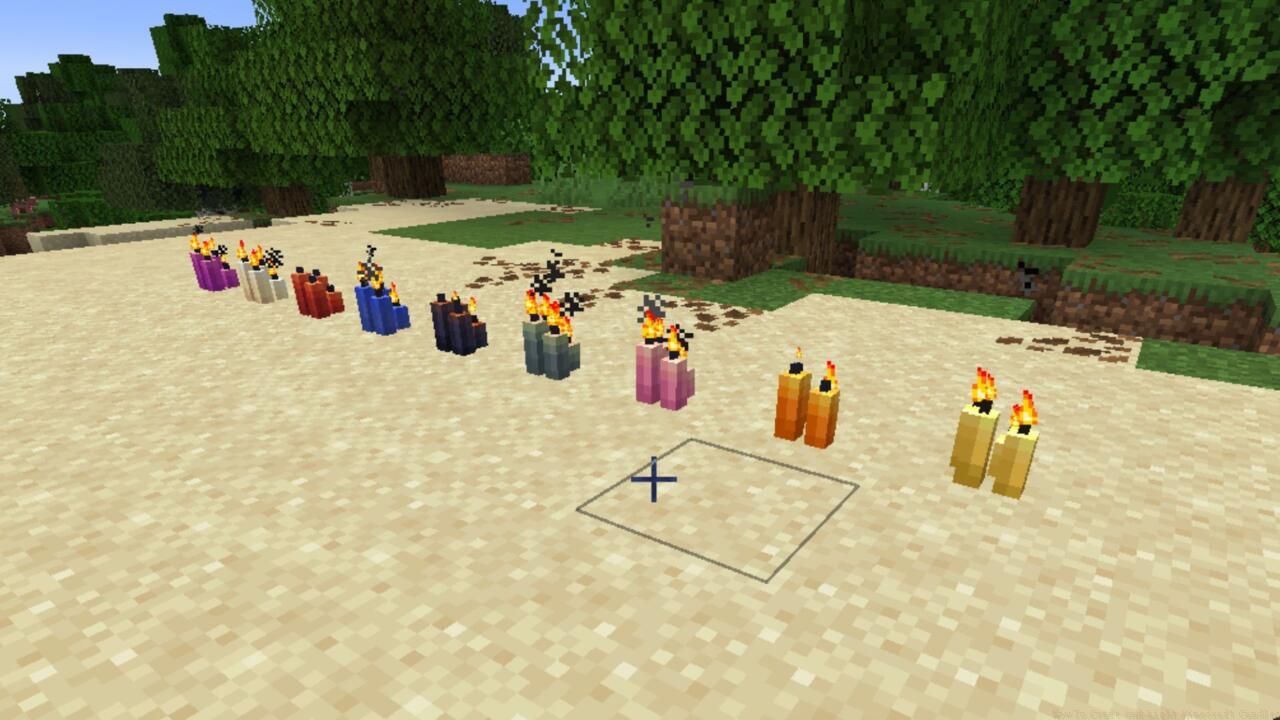
Candles can be dyed a variety of colors
Advanced players optimize honeycomb yields through bee breeding programs and automated collection systems. Strategic hive placement near base perimeters ensures consistent material access while maintaining ecosystem balance. Proper tool preparation, including shears with durability enhancements, maximizes harvesting efficiency during collection cycles.
Candle customization begins with standard candle creation followed by strategic dye application. Position the undyed candle in the upper-right crafting square with your chosen dye directly beneath it. This configuration transforms plain candles into vibrant colored versions while preserving their fundamental properties.
The dye spectrum encompasses sixteen distinct colors: white, orange, light blue, blue, magenta, pink, purple, lime, yellow, gray, light gray, cyan, brown, green, black, and red. Each hue offers distinct atmospheric qualities, with lighter shades providing brighter illumination and darker tones creating moodier settings.
- White – Pure brightness for elegant interiors
- Orange – Warm glow for cozy spaces
- Light blue – Cool tones for aquatic themes
- Blue – Deep ambiance for mystical areas
- Magenta – Vibrant accents for artistic builds
- Pink – Soft lighting for romantic settings
- Purple – Royal elegance for grand structures
- Lime – Fresh energy for natural environments
- Yellow – Classic candlelight for traditional designs
- Gray – Neutral tones for industrial aesthetics
- Light gray – Subtle illumination for minimalist spaces
- Cyan – Refreshing glow for modern architecture
- Brown – Earthy warmth for rustic constructions
- Green – Natural harmony for garden areas
- Black – Dramatic contrast for gothic builds
- Red – Passionate intensity for fiery themes
Dye preparation strategies vary from flower farming to mineral processing. Establish dedicated dye crop fields near water sources for efficient colorant production. Utilize bone meal acceleration to rapidly grow specific flowers, ensuring consistent dye supplies for large-scale candle projects.
Illuminating candles requires flint and steel activation through right-click interaction. The ignition process features a brief animation before the flame stabilizes, creating realistic lighting transitions. Strategic placement allows grouping up to four candles on single blocks, while cakes accommodate only one candle for celebratory purposes.
.jpg)
Light a candle using a flint and steel
Extinguishing methods include water application or repeated flint and steel use. Water dousing temporarily renders candles unlightable until they dry completely, requiring careful moisture management. Over-saturation extends the drying period, temporarily disabling lighting functionality.
Do candles set fire to wood?
Candle flames exhibit unique safety characteristics: they never spread to adjacent blocks regardless of material flammability. This allows wooden structure integration without combustion risks, enabling elaborate builds combining candles with wood elements. The non-melting property regarding snow makes candles ideal for icy biomes and winter-themed constructions.
Advanced lighting strategies involve creating candle patterns that guide players through complex builds. The subtle illumination works perfectly for pathway marking in dark environments while maintaining aesthetic coherence. Unlike torches, candles don’t disrupt snowy accumulations, preserving winter landscape integrity.
Mastering candle mechanics involves understanding their nuanced interactions with game environments. The light level of three makes them perfect for mood setting without overwhelming brighter sources. Their compact size enables intricate decorative patterns impossible with bulkier lighting options.
Common mistakes include improper dye placement during customization and excessive water use during extinguishing. Always position dyes beneath candles in the crafting grid, and use minimal water for flame suppression to maintain relight capability.
Optimization strategies include creating candle production stations near bee farms and dye preparation areas. This centralized approach streamlines the crafting process for large-scale building projects. Time estimates for establishing efficient candle production systems range from 2-4 hours depending on resource availability and existing infrastructure.
For comprehensive building guidance, explore our Complete Guide for strategic insights. Weapon enthusiasts should consult the Weapons Unlock guide for combat preparation, while class specialists will benefit from our Class Guide for role optimization.
Candle integration elevates ordinary builds to extraordinary creations through careful placement and color coordination. Their unique properties make them indispensable for players seeking to create immersive, atmospheric environments that tell visual stories through light and shadow.
Action Checklist
- Gather honeycomb from bee nests using shears and string from spiders or cobwebs
- Craft basic candles using honeycomb center, string top placement
- Collect or create dyes from flowers, squid, or other sources
- Dye candles using upper-right candle, beneath dye configuration
- Place and light candles using flint and steel, grouping up to four per block
- Experiment with color combinations and placement patterns for optimal aesthetics
No reproduction without permission:SeeYouSoon Game Club » How To Craft And Light Minecraft Candles Master Minecraft candle crafting, dyeing, and lighting techniques for perfect atmospheric builds