
TL;DR
- Access Skatepedia via main menu settings to view complete trick database with detailed controls
- Basic grabs require LT/L2 + RT/R2 mid-air, while advanced variations add directional stick inputs
- Master timing and board positioning to avoid early releases that cancel trick scoring
- Progress systematically from basic to advanced categories for optimal learning curve
- Combine grabs with flip tricks and grinds to maximize multiplier scoring potential
Grab tricks represent the pinnacle of aerial skateboarding expression in Skate, delivering both visual spectacle and substantial score multipliers. While the tutorial introduces fundamental flip tricks and grinds, these foundational moves barely scratch the surface of what’s possible when you take flight.
Grab mechanics serve as the cornerstone of high-scoring combos in San Vansterdam, allowing players to dramatically boost their multiplier while showcasing technical prowess. These aerial maneuvers not only look impressive during replays but become essential for overcoming progressively difficult challenges as you advance through the game’s ranking system.
Many players experience confusion after completing the introductory phase, finding themselves unprepared for the complex aerial techniques required for advanced competitions. This knowledge gap often stems from the game’s deliberate pacing, which introduces complexity gradually rather than overwhelming newcomers.
The Skatepedia functions as your comprehensive digital trick encyclopedia, containing meticulously documented instructions for every aerial maneuver in the game. This invaluable resource becomes accessible immediately after completing the tutorial phase, providing on-demand guidance for mastering Skate’s extensive trick library.
Navigate to the Skatepedia by selecting the settings cog icon positioned in the screen’s upper-right corner, then choosing the trick database from the main menu options. Within this organized repository, you’ll discover categorized sections covering flip techniques, grinding maneuvers, off-board mechanics, and the crucial grab trick compendium.
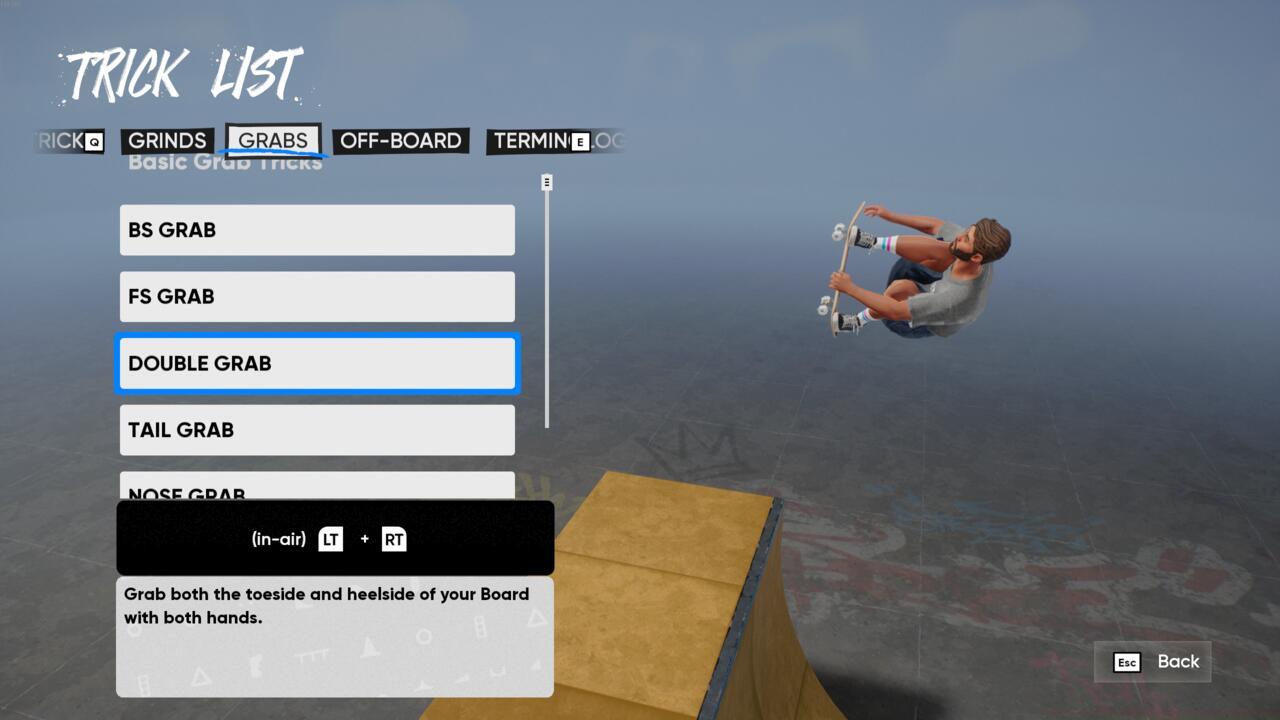
The Skatepedia section on grab tricks
Grab tricks receive detailed classification across multiple specialized categories: Basic Grab Techniques, Modified Grab Variations, One-Foot Maneuvers, No-Foot Tricks, Ground Grabs, Hand Plants, and Foot Plant techniques. The developers have indicated additional grab variations will appear during early access, ensuring the trick library continues expanding.
When examining any trick within the Grabs section, hovering reveals comprehensive details including precise control inputs and execution requirements. The fundamental grab technique consistently involves maintaining pressure on both LT/L2 and RT/R2 triggers while airborne, creating the basic board-contact foundation.
Advanced variations introduce directional right stick movements during the aerial phase, while elite-level tricks demand specific stick positioning before launch combined with trigger activation. Understanding these control layers separates casual players from leaderboard contenders.
We strongly recommend beginning with Basic Grab Tricks to establish solid mechanical fundamentals before progressing to complex variations. After mastering the ten techniques in this foundational category, gradually introduce more advanced maneuvers from other sections.
Here’s the essential starting point for basic grab mastery:
Critical Timing Insight: Initiate grab inputs at the peak of your jump rather than during ascent or descent. Early activation often results in awkward animations, while late attempts may not register before landing.
Avoid This Common Mistake: Many players release triggers prematurely, canceling the trick before scoring registration. Maintain grip until your wheels make contact with the landing surface for maximum point accumulation.
Once comfortable with basic grabs, explore Modified Grab Tricks that incorporate directional stick inputs for enhanced style points. These variations typically combine trigger holds with subtle stick movements to create more complex aerial presentations.
One-Foot and No-Foot categories introduce advanced technical challenges that significantly boost multiplier potential when executed cleanly. These maneuvers require precise timing and often work best when incorporated into longer trick combinations.
For competitive scoring, practice linking grab tricks with flip techniques during the same jump sequence. This advanced approach maximizes your multiplier by stacking multiple trick types within a single aerial phase.
Pro Tip: Experiment with different grab durations – shorter holds work well for technical lines, while extended grabs create dramatic replay moments. Adjust your approach based on whether you’re pursuing high scores or cinematic footage.
Ground Grab and Hand Plant techniques open additional scoring opportunities beyond traditional aerial maneuvers, allowing creative expression during transitions and ramp interactions. Mastering these alternative grab styles provides tactical advantages in specific competition types.
As you progress through Skate’s challenges, remember that consistent grab trick execution often determines victory in high-stakes competitions. For broader gameplay mastery, consult our Complete Guide covering fundamental mechanics and progression systems.
Action Checklist
- Access Skatepedia via settings cog and study basic grab techniques
- Practice Double Grab timing in controlled environments
- Master peak-jump trigger activation for consistent trick registration
- Experiment with directional stick inputs for modified grab variations
- Combine grabs with flip tricks in extended aerial sequences
No reproduction without permission:SeeYouSoon Game Club » How To Do Grab Tricks And Combos In Skate Master Skate's aerial grab tricks with expert techniques, common pitfalls, and score optimization strategies