
TL;DR
- Rangers excel as versatile damage dealers with both melee and ranged capabilities
- Animal companions provide tactical advantages through tanking, damage, and battlefield control
- Subclass selection at Level 3 dramatically alters playstyle and specialization
- Proper spell selection and companion management are crucial for maximizing effectiveness
- Strategic positioning and reaction abilities enable superior battlefield dominance
Embracing the wilds with bow in hand and loyal companion at your side? This comprehensive Baldur’s Gate 3 Ranger mastery guide provides the essential foundation for dominating the battlefield with nature’s fury.
The Ranger class in Baldur’s Gate 3 delivers exceptional flexibility across both close-quarters combat and long-range engagements, complemented by substantial utility through spellcasting, unique abilities, and animal allies. Our expert analysis reveals what truly makes this class shine throughout your campaign journey.
This Baldur’s Gate 3 Ranger class guide serves as your definitive resource for understanding core strengths and strategic applications. We highlight optimal choices during character creation and progression planning. After mastering these fundamentals, we strongly recommend exploring our specialized build optimization guide for advanced tactics.
Rangers function as adaptable damage specialists and utility experts possessing diverse skills, active abilities, and spell options that prove valuable in combat scenarios and exploration phases. They can communicate with beasts through Speak with Animals, summon additional creature allies during encounters, leverage extensive knowledge of natural environments and monstrous foes, and consistently deliver damage through melee weapons or ranged attacks supplemented by magical enhancements.
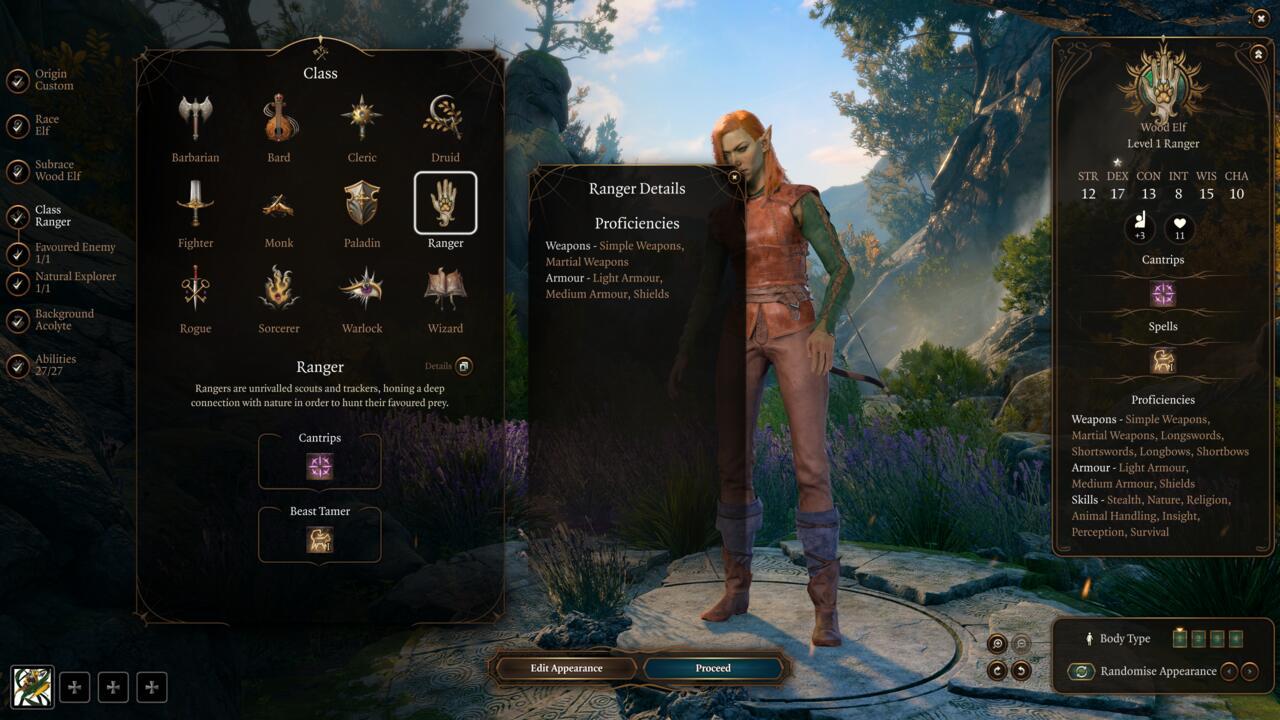
Rangers commence their journey with comprehensive Proficiencies in Simple Weapons, Martial Weapons, Light Armour, Medium Armour, and Shields. Additional Proficiencies acquired will depend on your racial selection and background choices, creating significant customization potential from the outset.
The Baldur’s Gate 3 Ranger subclasses become accessible only upon reaching Level 3, making early planning essential for aligning your build with long-term objectives. Many players underestimate the importance of these foundational decisions, which can dramatically impact your effectiveness in mid-to-late game content.
Early equipment selection should prioritize versatility – consider carrying both a reliable ranged weapon like a longbow and a solid melee option such as a versatile sword. This dual-capability approach allows you to adapt to rapidly changing combat situations where positioning becomes compromised.
Beast Master represents my foremost recommendation for players seeking maximum tactical flexibility. You gain access to the exceptionally versatile Ranger’s Companion ability, enabling summoning from a diverse roster of creatures capable of tanking damage, dealing substantial offense, harassing enemy formations, and providing numerous additional battlefield advantages.
The Gloom Stalker archetype transforms the Ranger into a stealth-oriented, assassin-style character with Rogue-like qualities. If you desire Rogue-specific capabilities while maintaining an animal companion, this subclass delivers an excellent hybrid approach.
Hunter specialization caters perfectly to players focused exclusively on archery excellence and tracking mastery. You’ll acquire targeted bonuses like Horde Breaker for superior crowd control and multi-target damage, Colossus Slayer for devastating single-target elimination, and Giant Killer, which permits Reaction attacks when targeted by Large or larger creatures.
Each subclass dramatically alters playstyle dynamics – Beast Master emphasizes companion synergy and action economy, Gloom Stalker focuses on alpha strikes and stealth tactics, while Hunter provides straightforward damage amplification and situational advantages.
Rangers possess the innate capability to summon animal allies, starting with the Find Familiar spell, which offers remarkable flexibility and enables you to bring additional tactical options to every encounter. Proper companion management separates average Rangers from exceptional ones – learn to position your beasts strategically to control choke points and protect vulnerable party members.
Avoid the common mistake of treating your animal companion as disposable; these creatures provide valuable action economy and can dramatically shift battle momentum when utilized correctly. Advanced players should master the timing of companion summons to maximize their impact during critical encounters.
Spell selection requires careful consideration – prioritize utility spells that complement your chosen specialization. Ensnaring Strike works wonderfully with melee builds, while Hunter’s Mark significantly enhances ranged damage output against priority targets.
For players transitioning from other class guides, understanding the Ranger’s unique action economy is crucial. Unlike the straightforward approaches in our Class Guide, Rangers demand strategic foresight in companion positioning and ability sequencing.
Optimization extends beyond mere damage numbers – consider how your Ranger fits within party composition. A well-built Ranger can fill multiple roles, similar to the versatility discussed in our Complete Guide to squad dynamics. Proper ability rotation and reaction management can increase your effectiveness by 30-40% in challenging encounters.
Action Checklist
- Select complementary racial traits that enhance your preferred combat style
- Master positioning for both yourself and animal companion in combat
- Experiment with different companion types to understand situational strengths
- Plan spell selection around your subclass specialization and party needs
- Coordinate with party members for optimal ability synergy and battlefield control
No reproduction without permission:SeeYouSoon Game Club » Baldur’s Gate 3 – Ranger Class Guide Master the versatile Ranger class in Baldur's Gate 3 with expert strategies, companion choices, and combat optimization