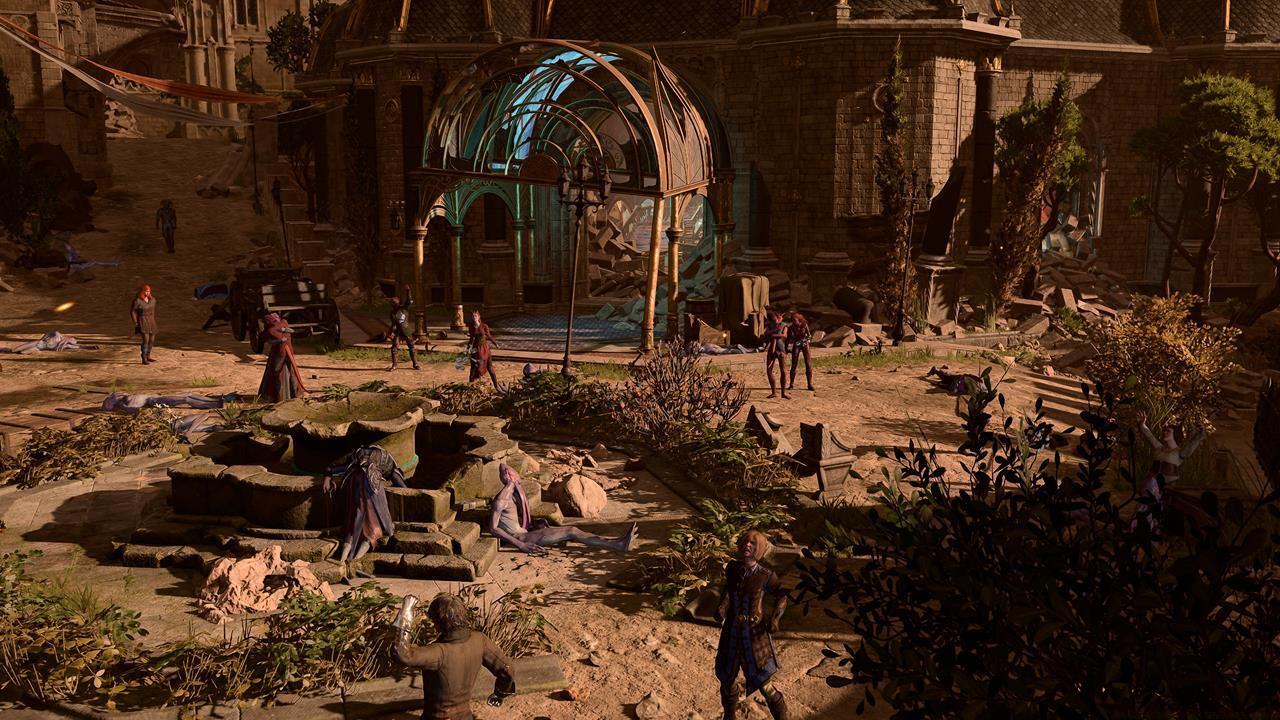
Your final choice with the Crown of Karsus determines the main ending path (good, evil, or alternative)
Companion quest completions and relationship status significantly impact individual endings
The Netherese bomb ending allows skipping the final battle entirely with specific Gale requirements
Dark Urge players can achieve the good ending by resisting murderous impulses
Multiple hidden factors and potential bugs can affect which scenes trigger in the finale
Experience the culmination of your epic adventure through Faerûn as you approach Baldur’s Gate 3’s dramatic conclusion.
The sheer volume of potential endings in Baldur’s Gate 3 is staggering, with countless variations reflecting the hundreds of decisions you’ve made across your lengthy campaign. Securing specific outcomes proves challenging yet achievable through deliberate planning. These conclusions directly stem from your actions throughout the journey, including companion mission resolutions, romantic relationships, and critical narrative turning points. Our comprehensive guide examines the diverse Baldur’s Gate 3 conclusions we’ve discovered. Please note that this article contains significant spoilers regarding the game’s finale.
Following your victory over the Netherbrain in the climactic confrontation, you face a pivotal decision concerning the fate of the Crown of Karsus:
Good ending – Direct the Netherbrain to annihilate itself along with all Illithid parasites.
Evil ending – Subjugate the Netherbrain and ascend as the Absolute ruler.
Note that selecting the malevolent path may present the opportunity to eliminate your Mind Flayer ally. The determination of who undergoes Illithid transformation is covered in our How to Free Orpheus guide.
The Good Ending
The benevolent conclusion in Baldur’s Gate 3 witnesses the Netherbrain plummet into the ocean before detonating spectacularly. With the Mind Flayer forces thrown into chaos, the citizens mobilize, eradicating the remaining threats. Your complete party observes from the docks as sunset transitions into farewells and fresh starts. Subsequent sequences involve individual resolutions for most companions, which we explore in greater depth in the Character Conclusions segment.
Strategic Note:Dark Urge characters who successfully resisted their homicidal tendencies, alongside those who ordered the Netherbrain’s self-destruction, will also experience this outcome.
The people rejoice!
The Evil Ending and Bhaal’s Influence
To achieve the malevolent Baldur’s Gate 3 conclusion, your protagonist must dominate the Netherbrain to become the Absolute. This decision potentially necessitates eliminating a Mind Flayer companion (such as the Emperor, Orpheus, or potentially Karlach). Your remaining party members express disbelief at your actions, but you quickly establish mental dominance over them as well. In the background, additional Illithids ascend while more Nautiloid vessels materialize. This marks the dawn of a new Illithid Empire under your command.
Critical Note 1: Characters not aligned with Bhaal or Dark Urge players who refused the deity’s offering will simply declare: “In my name.” However, those maintaining allegiance to the murder deity will proclaim: “In Bhaal’s name.”
Critical Note 2: You will not experience companion sequences at the waterfront, the Withers interaction, or intimate moments with your romantic partner.
A throne for the Absolute Bhaalspawn.
The Netherese Bomb Ending – Skip the Final Battle
This alternative Baldur’s Gate 3 conclusion enables complete avoidance of the ultimate confrontation. While exact prerequisites remain partially unclear, completing Gale’s narrative arc appears essential. Here are the specific steps we followed:
We accomplished the Wizard of Waterdeep objectives and encountered Elminster.
We studied the ancient texts within the Sorcerous Sundries Vault.
Subsequently, we consulted with Mystra, who demanded possession of the Crown of Karsus.
We included Gale in the final encounter.
As the party prepared to ascend the Netherbrain’s central structure, Gale indicated he could completely obliterate the entity utilizing the Netherese Orb. We responded with: “If this is genuinely your desire…”
Gale ascends solo to the summit and activates the Weave-constructed explosive within his torso. This resembles the sudden conclusion option available in Act 2 preceding your confrontation with Ketheric Thorm. Regardless, the team observed the cataclysmic event from the safety of the harbor.
Technical Consideration: Gale’s harbor sequence (from the positive ending) still activates despite his apparent demise in the detonation. Nevertheless, other characters acknowledge his heroic sacrifice. This may constitute a programming anomaly.
Companions watch in the distance after Gale goes boom.
These sequences constitute integral components of the Baldur’s Gate 3 conclusions. These involve the various scenes accessible to players, presuming you selected the virtuous path by eliminating the Netherbrain.
The Emperor
In Free Orpheus, we chose to emancipate the Githyanki prince. The Emperor disapproved of this decision, aligning himself with the Netherbrain’s army. We were compelled to eliminate him during the ultimate battle, alongside his additional Dream Guardian manifestations.
Lae’zel and Orpheus
Within the Free Orpheus narrative branch, we determined that Orpheus should undergo Mind Flayer transformation. However, an alternative route exists where another party member (either your character or Karlach) becomes an Illithid, permitting Orpheus to retain his Githyanki identity.
Should Orpheus exist as a Mind Flayer, he commissions Lae’zel to assume his legacy and command his draconic forces. She must mobilize the Githyanki populace to overthrow the dominion of his mother Vlaakith. Orpheus additionally requests merciful execution via his own blade, since returning to his people as an Illithid proves impossible.
If Lae’zel consents to this course, you may either terminate Orpheus or convince him to survive and witness Githyanki ascendancy.
Alternatively, you can persuade Lae’zel that she possesses autonomy over her destiny. Orpheus faces no alternative and ultimately takes his own life.
Illithid Orpheus wants Lae’zel to lead the rebellion, though you can convince her to follow her own path.
Gale
Regardless of whether Gale sacrificed himself utilizing his “chest explosive,” you still receive his concluding sequence. He inquires about your preference regarding the Crown of Karsus. You may instruct him to deliver it to Mystra, employ it for personal power acquisition, or abandon it permanently lost.
Astarion
Astarion experienced a brief sequence where he suddenly suffered severe solar burns. He then rapidly retreated, with a companion observing that this likely marked the final daylight sighting of him. We cannot definitively confirm, but this outcome potentially connects to the resolution within Cazador’s Dungeon. During our playthrough, we discouraged Astarion from contemplating the ascension ritual to achieve Vampire Ascendant status. Possibly this explains his current vulnerability. Alternatively, it might simply result from the elimination of everyone’s cerebral parasites.
Gallery
Left: You still get Gale’s harbor scene if you make him go kablooey; Right: Astarion needs sunblock.
Karlach and Wyll
Karlach experiences one of the most emotionally powerful moments during the Baldur’s Gate 3 conclusion. In our campaign, we did not romance Karlach, though we partially repaired her Infernal Engine mechanism. Unfortunately, it maintained instability, and she recognizes her impending demise. Her remaining alternative involves returning to the infernal realms of Avernus.
However, we also successfully concluded Wyll’s storyline:
We accepted Mizora’s contractual offer: she assists in locating Wyll’s father, but simultaneously claims Wyll’s immortal essence.
We rescued Duke Ravengard from the submerged prison facility, and we uncovered the secret within the Wyrmway.
Upon returning to our encampment, Wyll faced the decision between assuming the ducal title of Baldur’s Gate or becoming the designated Blade of Avernus.
As the Blade of Avernus, Wyll can propose that Karlach venture back to the hells. He pledges to safeguard her against Zariel’s forces throughout their journey.
Gallery
Left: Karlach is slowly engulfed by the flames; Right: Wyll says that he can protect her even in hell.
Lover: Shadowheart
We encountered a concluding romantic sequence with our character’s partner, given that we romanced Shadowheart throughout our adventure. This outcome may be influenced by your determinations within the Gauntlet of Shar, Nightsong encounter, and the House of Grief. Specifically in our experience, we implemented the following:
We preserved Nightsong and influenced Shadowheart to renounce Shar. She subsequently dedicated herself to Selune’s service.
Within the House of Grief, we convinced her to maintain her parents’ survival, notwithstanding Shar’s malignant curse.
During the finale, Shadowheart expressed intentions to construct a residence for her parents, and she desires our character’s continued companionship.
Potential Technical Issue: We’ve received reports regarding a programming flaw that inhibits this sequence activation. We successfully triggered this following the positive conclusion, where we (a) completed the final confrontation conventionally/did not select the Gale Netherese nuclear bypass, (b) encouraged Lae’zel to determine her own destiny/caused Orpheus’s death, and (c) permitted Karlach to perish rather than accompanying her to Avernus. When utilizing backup save data to implement alternative choices for those scenarios, we failed to activate this Shadowheart sequence. We cannot verify whether this results from specific factor combinations or if those elements caused the complication.
Shadowheart wants to move in together, even though she hasn’t even taken you out to dinner yet.
Withers
Following all preceding sequences, you observe Withers as he derides the Dead Three deities: Bane, Bhaal, and Myrkul. He additionally comments that they perhaps assumed he wouldn’t detect their conspiracies. Regardless of Withers’s true nature, he’s evidently been combating these divine entities for an extended duration.
Raphael
As supplementary information, we didn’t achieve an outcome involving Raphael seizing control over the Nine Hells. We’re aware of the Deal with the Devil arrangement where he provides the Orphic Hammer in return for the Crown of Karsus. Regrettably, we couldn’t advance that narrative thread. Instead, we pilfered the Orphic Hammer from the House of Hope, and we eliminated Raphael during combat. For those interested in observing this alternative, you can view footage from content creator Ghosty21Gaming.
This concludes our examination of Baldur’s Gate 3 endings. Several elements remain undocumented, including narrative resolutions for Jaheira, Minsc, and Halsin. We cannot determine whether truly no distinctive sequences involve them, since they merely contributed occasional commentary and observations.
Baldur’s Gate 3 overflows with engaging content and hidden discoveries. You’ll undoubtedly participate in an expedition requiring innumerable hours to finish. For additional guidance, explore our comprehensive Complete Guide to enhance your gaming experience.
Early Game Decisions That Matter
Your ending begins taking shape from the earliest hours of gameplay. Key decisions in Act 1 regarding companion recruitment, ethical choices in encounters, and early relationship building create foundational elements that influence your final options. Building trust with specific characters through consistent alignment with their values creates opportunities that may not otherwise exist during the finale.
Companion Quest Requirements
To unlock specific companion endings, ensure you complete their personal questlines:
Lae’zel: Complete her Githyanki creche mission and make choices aligned with either Vlaakith or Orpheus throughout the campaign
Gale: Progress through his Wizard of Waterdeep objectives and engage with Mystra’s storyline
Shadowheart: Navigate her Shar/Selune conflict through key decisions in the Gauntlet of Shar and House of Grief
Karlach: Repair her Infernal Engine and explore all dialogue options regarding her past
Wyll: Balance his contractual obligations with Mizora against his heroic aspirations
Common Pitfalls to Avoid
Many players encounter frustration when their desired endings fail to materialize due to overlooked requirements:
Ensure you bring required companions to specific story moments
Complete side quests that influence companion attitudes and world state
Maintain consistent ethical alignment rather than fluctuating between moral extremes
Save frequently before major decisions to experiment with different outcomes
Pay attention to companion approval ratings throughout your journey
Action Checklist
Complete all companion personal questlines before the final battle
Make consistent ethical choices aligned with your desired ending path
Save before major Act 3 decisions to test different outcomes
Bring required companions to specific story moments for their conclusions
Experiment with different Illithid transformation choices