
TL;DR
- Each Galarian bird flees to different regions after initial Dyna Tree Hill encounter
- Articuno uses clone illusions requiring careful observation of wing movements
- Zapdos tires during pursuit allowing strategic interception opportunities
- Moltres follows predictable flight paths enabling calculated cut-off maneuvers
- Preparation with status effects and Ultra Balls significantly improves catch success
The Crown Tundra expansion for Pokémon Sword and Shield introduces stunning regional variants of the classic Legendary bird trio, each with unique Galarian forms that require specialized hunting techniques. Unlike their original counterparts, these elusive creatures present distinct challenges that test both your tracking skills and battle preparation.
Your initial encounter with all three Galarian birds occurs at Dyna Tree Hill in the southern Crown Tundra, where they collectively flee to separate regions across Galar. This dispersal pattern means you’ll need to revisit previous game areas and employ region-specific strategies for each Legendary. Understanding their individual behaviors and preferred habitats is crucial for successful capture.
Strategic planning before engagement significantly increases your chances of adding these powerful Pokémon to your collection. Proper team composition and item preparation can make the difference between repeated frustration and efficient capture.
Galarian Articuno presents the most complex capture challenge among the trio, remaining within Crown Tundra but employing sophisticated deception tactics. This Psychic/Flying type typically appears on cliffs near Snowslide Slope, particularly above the Regice ruins, where its illusionary abilities create significant obstacles.
When approaching Articuno, it generates two perfect clones that rotate in a circular formation with the genuine article. The critical distinguishing factor is the real Articuno’s distinctive wing flap just before the spinning begins. Observing this subtle animation cue requires patience and sharp attention to detail.
Selection accuracy is paramount—correct identification initiates battle while mistakes trigger immediate relocation to areas like Old Cemetery. Implementing a strategic save point when first spotting the Legendary allows reset attempts without extensive re-tracking. Advanced hunters recommend positioning yourself at optimal angles to better observe the wing movement clues during the rotation sequence.

Galarian Articuno
Common mistakes include rushing the identification process and failing to observe the full rotation cycle. Experienced players suggest watching at least two full rotations before committing to an approach, as the wing flap pattern becomes more apparent with repeated observation.
Galarian Zapdos offers the most straightforward hunting experience, roaming the original Wild Area with predictable movement patterns that allow strategic interception. This Fighting/Flying type typically patrols the outskirts of Motostoke, making fast travel to the city entrance an efficient starting point for encounters.
Upon detection, Zapdos immediately initiates a high-speed ground pursuit requiring bicycle engagement. The key capture mechanic involves persistence rather than pure speed—Zapdos experiences periodic fatigue cycles causing temporary slowdowns every 8-10 seconds. These fatigue windows provide crucial interception opportunities.
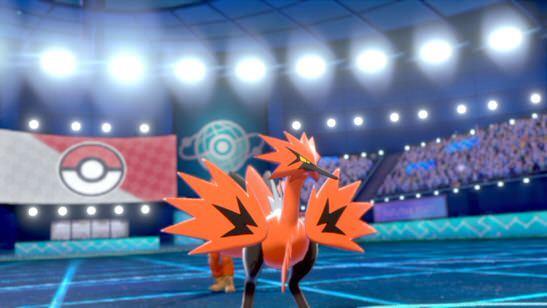
Galarian Zapdos
Advanced pursuit tactics include anticipating directional changes and using terrain features to cut off escape routes. The area surrounding Motostoke’s entrance provides relatively open terrain that minimizes obstructions during chase sequences. Maintaining visual contact is essential, as losing sight triggers immediate respawn at a different location.
Strategic positioning near choke points like bridges or narrow paths can force encounters when Zapdos tires. Many hunters successfully employ a pincer strategy by coordinating with NPCs or using environmental obstacles to limit mobility options.
Galarian Moltres combines straightforward location identification with challenging aerial pursuit mechanics. This Dark/Flying variant circles the Isle of Armor in a predictable flight pattern that passes directly by the Master Dojo, making fast travel to this location your most reliable encounter method.
The Legendary’s high-speed aerial movement requires immediate bicycle engagement and strategic path prediction. Successful interception often involves calculating its flight trajectory and positioning yourself at optimal interception points ahead of its path.
If Moltres evades initial capture attempts, patient hunters can wait outside the Master Dojo for its return. The complete lap around the island takes approximately 3-4 minutes, providing regular reappearance opportunities without extensive searching.
Galarian Moltres
Advanced interception techniques include using the terrain’s elevation changes to gain temporary aerial advantage and anticipating its turning points around island landmarks. The coastal areas often provide clearer sightlines for maintaining visual contact during extended pursuits.
Common errors include chasing directly behind rather than cutting across corners and failing to account for its acceleration patterns after turns. Experienced hunters recommend studying its complete flight circuit once before attempting serious interception.
Strategic preparation before engaging any Galarian Legendary bird dramatically improves capture success rates. Each variant possesses unique type combinations requiring specific counter strategies—Galarian Articuno’s Psychic/Flying typing makes it vulnerable to Ghost, Dark, Electric, Ice, and Rock moves, while Galarian Zapdos’s Fighting/Flying type is weak to Flying, Psychic, Fairy, and Electric attacks. Galarian Moltres’s Dark/Flying combination creates vulnerabilities to Fairy, Electric, Ice, and Rock-type moves.
Status condition implementation proves crucial for overcoming their exceptionally low catch rates. Paralysis and sleep not only increase capture probability but also limit their ability to flee or use disruptive moves. Stocking ample Ultra Balls is essential, with experienced hunters recommending a minimum of 30-40 for each Legendary encounter.
Save point utilization remains a critical risk mitigation strategy—creating a save when first spotting each bird allows resetting if you accidentally knock them out or they escape. The Legendaries will respawn if defeated, but recapturing requires repeating the entire tracking process.
Team composition should include Pokémon with False Swipe to ensure HP reduction without knockout risk, and those capable of inflicting reliable status conditions. For more comprehensive team building strategies, check out our Class Guide for optimal character selection.
Advanced hunters recommend preparing specific counter-teams for each bird rather than a generic catching team. This specialized approach accounts for their different move pools and behavioral patterns during battle sequences.
Action Checklist
- Encounter all three at Dyna Tree Hill to trigger regional dispersal
- Prepare catching team with False Swipe users and status move specialists
- Stock 30+ Ultra Balls and status healing items
- Track Articuno at Snowslide Slope, observe wing flaps to identify real bird
- Pursue Zapdos outside Motostoke, exploit fatigue cycles for interception
- Intercept Moltres at Master Dojo, use terrain for aerial advantage
- Save before each encounter and apply status conditions before capture attempts
No reproduction without permission:SeeYouSoon Game Club » Crown Tundra Legendary Pokemon: How To Catch Galarian Articuno, Zapdos, And Moltres Guide Master the hunt for Galarian Legendary birds with expert tracking strategies and battle preparation tips