
TL;DR
- Dark Urge offers unique narrative depth with violent compulsions and moral dilemmas
- Strategic gameplay requires balancing violent impulses with party management and quest progression
- Companion relationships are significantly impacted by Dark Urge choices and actions
- Optimized character builds can maximize Dark Urge’s combat effectiveness while managing consequences
- Multiple playthrough approaches allow for redemption arcs or full embrace of violent nature
Embrace the compelling darkness within through Baldur’s Gate 3’s Dark Urge origin, a character defined by violent impulses and mysterious backstory elements that significantly alter your gameplay experience.
Baldur’s Gate 3 presents players with diverse origin character options, each offering distinct narrative pathways and gameplay mechanics. While custom characters provide complete creative freedom and companion origins deliver predefined personalities, the Dark Urge stands apart as a uniquely challenging experience. This particular origin features a protagonist haunted by violent compulsions and guided by sinister influences, creating a narrative filled with moral complexity and unexpected consequences. Our comprehensive analysis explores the strategic implications and gameplay considerations when selecting this dark path, while noting that significant plot revelations will be discussed throughout this guide.
Mastering the Dark Urge requires careful consideration of combat tactics, dialogue choices, and party management. Unlike standard characters, your violent impulses will frequently present opportunities for both strategic advantage and narrative consequence.
Combat Optimization Strategies: The Dark Urge’s unique abilities often provide combat advantages through enhanced damage output or special actions. However, these benefits come with significant risks to party cohesion and quest progression. Strategic players should prioritize abilities that maximize damage while minimizing collateral damage to essential NPCs and story-critical characters.
Dialogue and Choice Management: Your conversations will frequently include Dark Urge-specific options that can dramatically alter quest outcomes. These choices often provide shortcuts through intimidation or violence but may lock you out of valuable rewards or alternative solutions. For comprehensive character optimization, consult our Class Guide to understand how different class combinations interact with Dark Urge mechanics.
Companion Relationship Dynamics: Party members react uniquely to Dark Urge actions, with some characters showing understanding while others may permanently leave your party after particularly violent episodes. Managing these relationships requires careful observation of companion approval meters and strategic choice sequencing.
Experienced players can leverage the Dark Urge’s unique mechanics for maximum gameplay efficiency while navigating the complex narrative consequences.
Build Recommendations: Certain character classes synergize exceptionally well with Dark Urge mechanics. Rogues and Barbarians benefit from the enhanced damage capabilities, while spellcasters can utilize the narrative flexibility for creative problem-solving. Understanding weapon proficiency and ability score distribution becomes crucial when building an effective Dark Urge character. For detailed weapon strategies, our Weapons Unlock guide provides valuable insights.
Early Game Progression: The initial hours with a Dark Urge character present unique challenges and opportunities. Strategic players should focus on establishing key relationships early while carefully managing violent outbursts to avoid critical story blockages. Time management becomes essential when balancing compulsive actions with main quest progression.
Endgame Considerations: As your journey progresses, the consequences of Dark Urge choices accumulate significantly. Late-game narrative branches diverge dramatically based on how you’ve managed your violent impulses throughout the campaign. Multiple playthrough approaches allow for either redemption arcs or full embrace of your dark nature, each offering distinct endings and gameplay experiences. For broader strategic context, our Complete Guide offers additional gameplay frameworks.
Baldur’s Gate 3 Dark Urge Origin Guide
This comprehensive guide explores the Dark Urge origin’s unique mechanics and narrative depth in Baldur’s Gate 3. Unlike standard characters, this origin features a protagonist haunted by violent compulsions rooted in a mysterious bloody past. The experience diverges significantly from conventional playthroughs, presenting moral extremes ranging from calculated malevolence to genuinely disturbing brutality.
Expect numerous fatalities throughout your journey, many affecting your party members directly. The Dark Urge is exclusively tied to The Haunted One background, which shapes your character’s motivations and available inspiration sources. For deeper background mechanics, consult our Haunted One guide to understand how this origin influences roleplaying opportunities.
Alfira the Bard and Your First Meeting With Scleritas Fel
Characters embodying the Dark Urge display distinctive sinister expressions when encountering specific dialogue choices, particularly those with sadistic undertones. Initially subtle, these manifestations escalate dramatically during a random camp rest event. Tiefling bard Alfira requests overnight sanctuary, only to be discovered brutally dismembered upon waking. You face critical choices: conceal the evidence, cleanse the bloodstains, or confess to your companions.
Shortly after this incident, your enigmatic “butler” Scleritas Fel materializes during another rest period. He claims to have anticipated your resurgence despite your complete memory loss regarding your shared history. This encounter initiates the core Dark Urge narrative, introducing exclusive dialogue trees and story developments. Importantly, you retain agency to resist many violent impulses, making restraint a central theme of this origin’s journey.


Left: Alfira the Bard; Right: Scleritas Fel
Miscellaneous Murders: Dark Urge Events
Below are some examples of key events where you could kill someone as a Dark Urge player in Baldur’s Gate 3:
- Gale – During Gale’s initial appearance requiring portal assistance, Dark Urge characters can visualize severing his arm—a thought that manifests physically, permanently removing him from your campaign.
- Nettie’s bird – Within the Druid Grove, you may elect to torment the avian patient under Nettie’s care.
- Minthara – Following romantic progression that enables romance Minthara, you can fracture her cervical vertebrae post-intimacy.
- Pixie – Upon acquiring a Moonlantern for Shadow-Cursed Lands protection, you discover an imprisoned fey creature. Upon release, you may opt to compress her physically.


Left: You can kill Gale; Right: You can kill Minthara.
Important Decision: Isobel and Last Light Inn
A pivotal choice emerges during Act 2 when Scleritas Fel designates cleric Isobel as your next target. She maintains the protective ward safeguarding Last Light Inn, the Harper faction’s operational base. You must decide between executing your mission mandate or completely avoiding this violent act.
Eliminating Isobel collapses the curse-repelling barrier. Numerous NPCs perish or mutate into shadow-corrupted entities, blocking completion of essential questlines:
- Dammon the Blacksmith becomes incapable of repairing Karlach’s Infernal Engine.
- The comatose soldier dies, potentially obstructing full recruitment and romancing Halsin.
- Should Jaheira uncover your role in Isobel’s death, she becomes emotionally devastated. After eliminating the corrupted entities, she turns hostile, forcing lethal confrontation and preventing recruit Jaheira.
Alternatively, similar devastation occurs later if you permit Shadowheart to destroy the Nightsong. Permitting this action allows the shadow curse to infiltrate the inn beyond Isobel’s capacity to contain. Jaheira dies off-camera as a result.
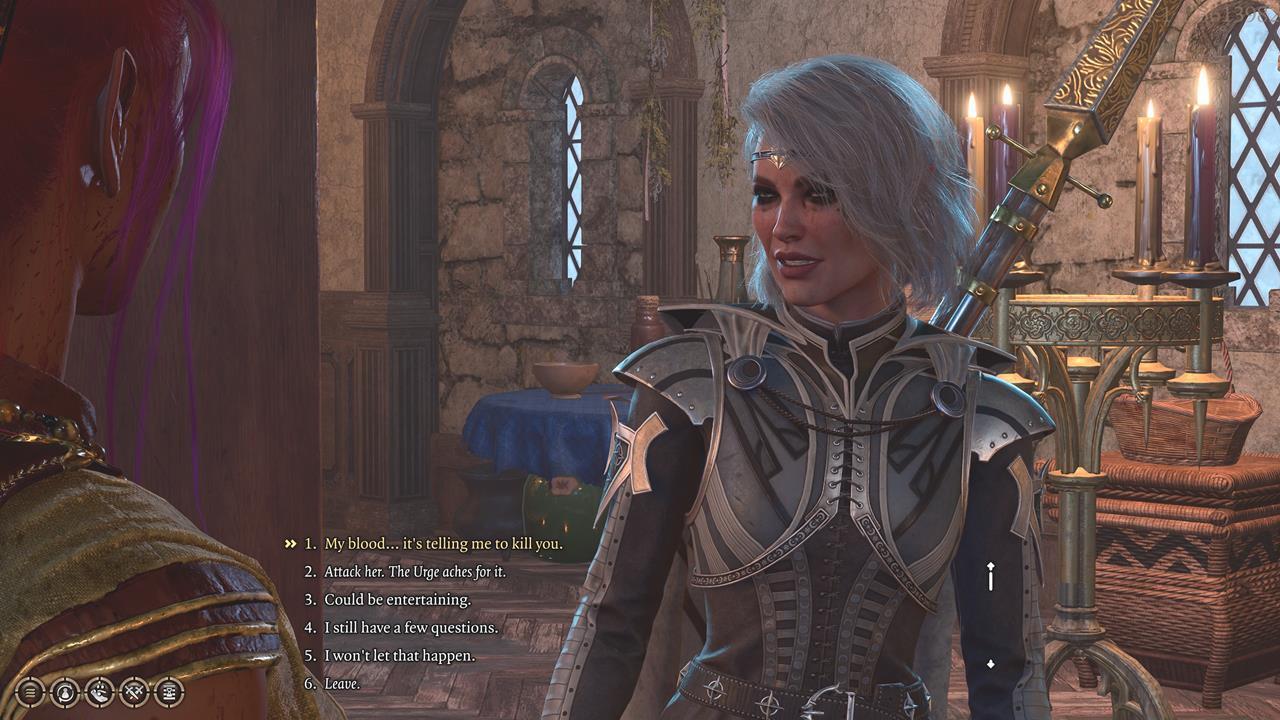
Isobel’s death, along with the inhabitants of Last Light Inn, has dire consequences.
Important Decision: Your Lover
The Dark Urge narrative introduces another crucial scenario, provided Isobel survives. This development involves your active romantic interest (such as Karlach or Shadowheart).
Scleritas Fel warns that during sleep you’ll lose volition and slaughter your partner. To prevent this tragedy, you must rouse your companion. However, this triggers the Dark Urge’s dominance attempt, requiring multiple successful resistance checks. Two primary outcomes emerge.
Failure: You Lost Control of the Dark Urge
- This transpires upon failing the initial saving throw (Wisdom 14).
- Your protagonist viciously executes their partner, then mourns over the remains.
- Come morning, surviving companions confront you about the escalating body count. Attempting a Deception 30 check typically fails.
- This culminates in combat against all camp companions. Your character will likely perish (particularly when Lae’zel and Karlach initiate assaults). This represents game termination, emphasizing the critical nature of successful saving throws.
Success: You Managed to Control the Dark Urge Temporarily
- Succeeding in the initial saving throw results in your character awakening restrained.
- Your romantic partner commits to assisting you, necessitating three additional successful saving throws (Wisdom 18). You receive bonuses reflecting your partner’s faith in your capacity for restraint.
- This resolution concludes major Dark Urge incidents for this narrative chapter.
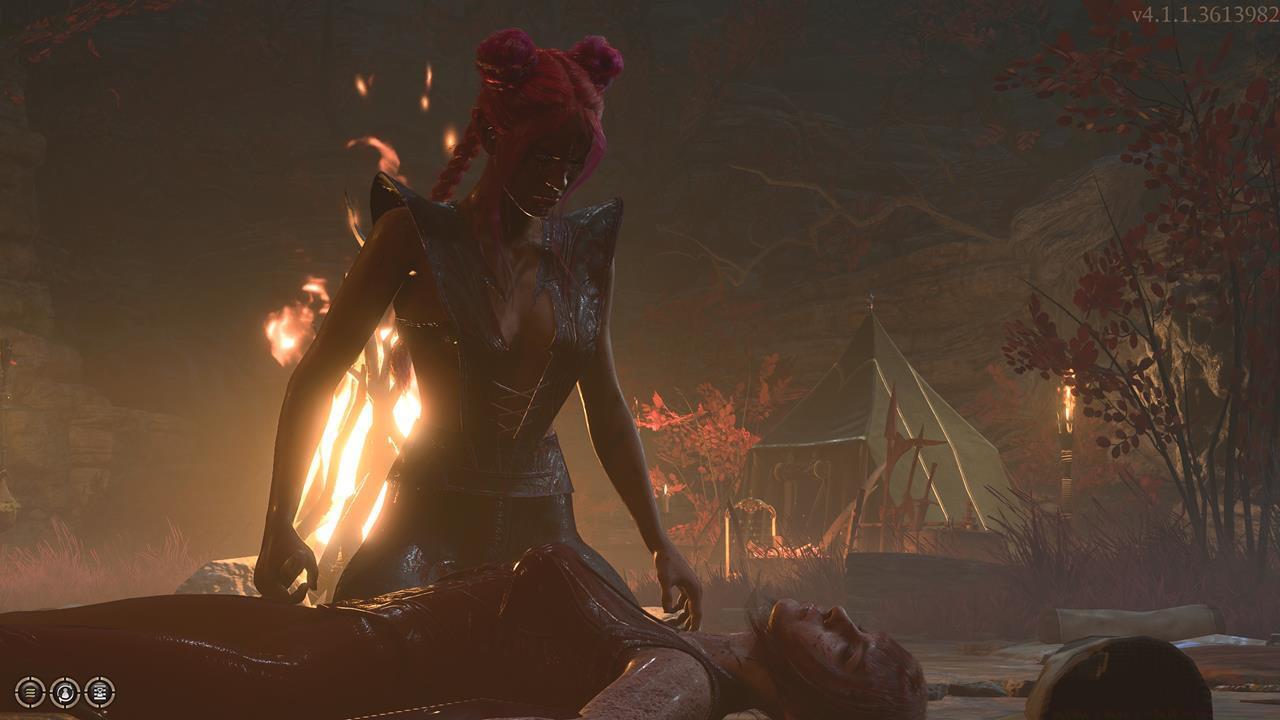
I want that butler and the Dark Urge revenge, you and me could write a bad romance.
Rewards: Deathstalker Mantle and Slayer Form
Embracing the Dark Urge origin provides distinctive gameplay advantages. Consider these two prominent examples:
- Cloak: The Deathstalker Mantle – This item typically appears during Act 1, though activation conditions remain somewhat ambiguous. It may relate to Druid Grove assault completion given the substantial enemy casualties involved. The cloak’s Shadow Itself perk grants two-turn invisibility following enemy eliminations.
- Transformation: Slayer – This ability generally unlocks after the Isobel/Last Light Inn objective. Alternatively, it may activate if Isobel survives but Shadowheart destroys Nightsong. This transformation enables mutation into a terrifying aberrant being featuring multi-strike claw attacks and hemorrhage-inducing pincer strikes.

The Slayer Form is one particular reward if you give in to the murderous intent of the Dark Urge.
Spoilers: Act 3 – The True Nature of the Dark Urge
We now venture into significant spoiler territory, so proceed with appropriate caution. These narrative developments occur during the game’s concluding act. Correspondingly, we’ve excluded imagery to preserve discovery enjoyment.
Early in Act 3, successfully resisting the Dark Urge triggers a dream sequence. This occurred in our campaign since we preserved Isobel and succeeded in saving throw attempts preventing lover homicide.
Scleritas Fel reprimands your perceived foolishness, revealing the Dark Urge protagonist’s true identity as a Bhaalspawn. You retain options to accept your inherent nature or persist in resistance. Regardless, this positions you for confrontation with your subsequent antagonist: Orin the Red who, similarly, represents another Bhaalspawn descendant.
Following this dream revelation, Jaheira—if surviving and party-recruited—discovers your concealed heritage. You can persuade her regarding your sincere efforts to combat these compulsions. Additionally, you may inquire about her historical experiences with previous Bhaalspawn companions from earlier titles. This encompasses questions about whether her associate achieved lasting contentment, or if a butler previously visited their encampment attempting to seduce the veteran champion (eliciting amusement from our team).
A Tribunal and a Battle
While investigating Lower City districts, you must investigate various murders. Subsequently, you’ll request audience with the Murder Tribunal, overseen by Sarevok. Series veterans will recall him as the primary antagonist from the original Baldur’s Gate installment. Available choices include:
- With Jaheira present, you may designate her as sacrificial tribute to gain Sarevok’s favor. You must then execute Valeria, the homicide investigator. This action establishes you as a Bhaal devotee.
- You can deceive Sarevok into believing Jaheira serves your interests, though Valeria’s elimination remains necessary.
- The ultimate alternative involves slaying Sarevok, either within his throne chamber or ritual sanctum. This yields valuable equipment while preventing innocent and companion fatalities. We selected this narrative branch for our continued playthrough progression.
Later within sewer/undercity regions, you confront Orin the Red, representing one of the campaign’s three primary antagonists. Revelation occurs that the Dark Urge protagonist originally served as Bhaal’s designated champion. Orin betrayed you, usurping your position, leading to your initial capture by Mindflayers. Your confrontation with Orin manifests as solitary combat. Should allies attempt intervention, numerous cultists reinforce the engagement.
Accept or Reject a Blessing
Upon defeating Orin, you liberate a previously captured squad member. Bhaal subsequently assumes control over Scleritas Fel. You then encounter another significant narrative crossroads:
- Accept Bhaal’s blessing.
- Reject Bhaal completely.
Accepting Bhaal’s endowment grants Power Word: Kill and the Slayer Form (if previously unobtained). Regrettably, assuming you’ve recruited Jaheira and Minsc, they express disapproval, given their historical opposition to Bhaal’s legions. They ambush you during temple departure, forcing their elimination. Remaining companions, including Orin’s designated captive, disagree with your decision but temporarily remain in your party.
Rejecting Bhaal’s endowment prompts immediate character execution. Fortunately, an external entity intervenes—specifically Withers (the class respec skeletal entity). Having confronted genuine evil reminiscent of legendary heroes, he resurrects your character, enabling adventure continuation. The distinction now involves liberation from internal Dark Urge compulsions. This represents arguably one of gaming’s most compelling redemption narratives, and certainly merits experiential engagement.
These insights derive from our Dark Urge playthrough experiences in Baldur’s Gate 3. We’ll periodically refresh this guide, so maintain vigilance for updates.
Baldur’s Gate 3 overflows with activities and concealed content. You’ll undoubtedly participate in adventures consuming innumerable completion hours. For supplementary guidance, explore our Complete Guide for additional strategic frameworks. Weapon enthusiasts should consult our Weapons Unlock guide, while strategic planners may benefit from our Class Guide for optimal party composition.
Alfira the Bard and Your First Meeting With Scleritas Fel
Your journey as a Dark Urge character begins with two pivotal introductions that establish the tone for your entire playthrough. Alfira the bard represents one of the first moral tests you’ll encounter – her musical talents and gentle nature create an immediate emotional connection that makes subsequent decisions particularly challenging. Meanwhile, Scleritas Fel serves as your personal tempter, appearing at key moments to encourage your darkest impulses. This mysterious figure provides crucial context for understanding the source of your violent compulsions.
Pro Tip: Pay close attention to dialogue options with both characters, as they establish relationship dynamics that influence later narrative branches. Many players miss subtle cues in these early conversations that foreshadow major plot developments.
Miscellaneous Murders: Dark Urge Events
Throughout your adventure, random murder events will trigger based on your location, story progression, and accumulated corruption level. These spontaneous violent outbursts cannot be entirely prevented, but their frequency and severity can be managed through strategic decision-making. Common triggers include visiting specific areas, completing certain quests, or reaching new character levels.
Avoid This Mistake: Don’t assume these events are completely random – they follow predictable patterns based on your choices. Keeping a journal of when murders occur can help you identify patterns and potentially avoid future incidents.
Important Decision: Isobel and Last Light Inn
The confrontation with Isobel at Last Light Inn represents one of the most significant branching points in the Dark Urge narrative. Your choice here determines whether you maintain some semblance of control or fully embrace your destructive nature. This decision has cascading effects on companion relationships, available quests, and the overall tone of your campaign. The outcome affects how NPCs interact with you for the remainder of the game.
Strategic Insight: Players aiming for a redemption arc should prepare for this encounter by completing specific side quests that strengthen their resistance to dark impulses. The decision cannot be reversed once made.
Important Decision: Your Lover
Your romantic relationship becomes a crucial battleground for controlling the Dark Urge. The intimacy and emotional connection make these scenes particularly intense, as you risk harming someone you’ve developed genuine feelings for throughout your journey.
Failure: You Lost Control of the Dark Urge
Succumbing to your violent impulses with your romantic partner creates permanent narrative consequences. This path locks you into a more malevolent playthrough and alters how all companions perceive your character. The emotional weight of this failure can fundamentally change your motivation for continuing the story.
Success: You Managed to Control the Dark Urge Temporarily
Successfully resisting the urge to harm your lover represents a major victory in your struggle against inner darkness. This achievement provides temporary respite and demonstrates that control is possible, though the struggle continues. This success unlocks unique dialogue options and strengthens your relationship.
Advanced Technique: Building high approval with your romantic partner before these scenes significantly increases your chances of success. Specific gift items and completed companion quests provide additional resistance bonuses.
Rewards: Deathstalker Mantle and Slayer Form
Successfully navigating the Dark Urge storyline without completely surrendering to corruption unlocks two of the game’s most powerful rewards. The Deathstalker Mantle provides exceptional stealth capabilities and unique combat advantages that synergize with various playstyles. Meanwhile, the Slayer Form represents a dramatic physical transformation that fundamentally alters combat mechanics and character capabilities.
Mechanics Breakdown: The Deathstalker Mantle offers +2 to Stealth checks and allows temporary invisibility after scoring a killing blow. The Slayer Form provides massive stat bonuses but comes with significant roleplaying consequences that affect all social interactions.
Spoilers: Act 3 – The True Nature of the Dark Urge
Act 3 revelations completely recontextualize your character’s journey and motivations. Without spoiling specific plot details, understanding these revelations early helps you make more informed decisions throughout earlier acts. The truth about your origins explains why the Dark Urge manifests so powerfully and provides clues about potential resolutions.
Optimization Tip: Certain choices in Acts 1 and 2 create better narrative coherence when these revelations occur. Planning your character development around these eventual disclosures enhances the overall storytelling experience.
A Tribunal and a Battle
The tribunal sequence represents the culmination of your Dark Urge narrative arc, forcing you to confront the consequences of all previous decisions. This multi-stage encounter combines dialogue challenges, moral choices, and intense combat scenarios that test your resolve and character development. The outcome determines which ending variations become available.
Time Estimate: Most players require 45-60 minutes to complete the tribunal sequence, with additional time for preparation and recovery. Don’t attempt this section without adequate resources and party preparation.
Accept or Reject a Blessing
The final major decision in the Dark Urge storyline involves accepting or rejecting a divine blessing that could either cure your condition or amplify its power. This choice cannot be undone and creates permanent character changes that carry into subsequent playthroughs if you choose New Game Plus.
Common Mistake: Many players make this decision based solely on immediate power considerations without understanding the long-term narrative implications. Consider how this choice aligns with your character’s overall journey.
For comprehensive guidance on character development strategies, check out our Class Guide to optimize your build for managing the Dark Urge mechanics effectively.
The Slayer Form represents a significant gameplay reward for those who fully embrace the homicidal impulses of the Dark Urge origin character. This powerful shape-shifting ability dramatically alters combat dynamics and narrative progression.
Warning: We’re now entering major spoiler territory covering late-game content. Proceed with caution if you wish to preserve story surprises. These developments occur exclusively during the final act. We’ve deliberately excluded visual content to maintain narrative integrity.
During the initial segments of Act 3, you’ll experience an intense dream sequence provided you successfully resisted the Dark Urge’s compulsions earlier. In our playthrough, we achieved this by preserving Isobel’s life and succeeding on critical saving throws to avoid murdering romantic companions.
Scleritas Fel, your enigmatic butler, will openly criticize your resistance, revealing the shocking truth that your Dark Urge character is actually a Bhaalspawn—a direct descendant of the god of murder. You maintain agency to either fully surrender to your inherent nature or persist in battling these dark impulses. Regardless of your choice, this revelation directly sets up your inevitable confrontation with Orin the Red, who shares your Bhaalspawn heritage.
Following this pivotal dream sequence, Jaheira—if she survived previous encounters and joined your party—will uncover your dangerous secret. Through persuasive dialogue, you can assure her of your commitment to resisting these murderous urges. You can also inquire about her historical experiences with another Bhaalspawn companion from earlier Baldur’s Gate titles. These conversations may include questions about whether her former ally achieved lasting peace or if similar supernatural temptations plagued their journey (we found the butler reference particularly amusing).
While conducting investigations throughout the Lower City district, you’ll need to examine multiple homicide crime scenes. Soon after, you’ll gain access to an audience with the clandestine Murder Tribunal, overseen by the legendary Sarevok. Series veterans will immediately recognize him as the primary antagonist from the original Baldur’s Gate game. Your available approaches include:
Combat Optimization: The Slayer Form’s multi-hit claw attacks synergize exceptionally well with area control abilities. The bleeding effect from pincers creates excellent combo opportunities with spells that capitalize on damaged enemies. Time your transformation during challenging boss encounters or when surrounded by multiple adversaries.
Decision Timing: Critical story decisions regarding the Murder Tribunal cannot be reversed once made. We recommend creating separate save files before these pivotal moments. The Bhaal worshiper path permanently locks you into specific narrative outcomes.
Companion Management: Jaheira’s survival through earlier acts dramatically expands your available choices. Her historical knowledge provides unique dialogue options and alternative solutions to conflicts.
Risk Assessment: Embracing the Dark Urge fully provides immediate power boosts but may alienate certain companions. Resisting requires careful resource management and preparation for challenging combat scenarios.
Action Checklist
- Analyze class compatibility with Dark Urge mechanics before character creation
- Establish save points before major story decisions to explore consequence variations
- Monitor companion approval metrics after Dark Urge actions to prevent party dissolution
- Experiment with dialogue options to understand narrative branching possibilities
- Plan multiple playthrough approaches to experience both redemption and full-darkness narratives
- Prepare for Alfira’s inevitable camp death and plan your response strategy
- Manage Scleritas Fel interactions carefully to understand your character’s backstory
- Decide Isobel’s fate at Last Light Inn – consider long-term companion implications
- Prepare Wisdom saving throws for romantic partner crisis (Wisdom 14 then Wisdom 18)
- Choose between embracing Bhaal’s blessing or pursuing redemption in Act 3
- Document all murder event triggers and patterns in a gameplay journal
- Build high approval with your romantic partner before critical decision points
- Prepare specific resistance strategies for the Isobel encounter at Last Light Inn
- Complete side quests that provide dark urge resistance bonuses
- Analyze the mechanical benefits and narrative consequences of the Deathstalker Mantle vs Slayer Form
- Complete Isobel/Last Light Inn storyline while making key choices about Nightsong
- Successfully pass saving throws during Dark Urge temptation scenes
- Experience Act 3 dream sequence and manage Jaheira’s discovery of your secret
- Investigate Lower City murders thoroughly before Tribunal meeting
- Choose your Murder Tribunal path carefully after considering long-term consequences
- Master Slayer Form combat mechanics in controlled encounters before major battles
No reproduction without permission:SeeYouSoon Game Club » Baldur’s Gate 3 – Dark Urge Origin Guide