
TL;DR
- Wine triples base fruit value and requires 7 days in kegs with specific crafting materials
- Aging wine in cellar casks can double its value but requires significant time investment
- Fruit quality doesn’t affect wine value, making expensive base fruits most profitable
- The Artisan profession provides 40% bonus to all wine sales
- Optimal keg placement and production scheduling maximizes efficiency and profit margins
Transforming your harvested crops into artisan beverages represents one of the most lucrative economic strategies available to Stardew Valley farmers. While multiple processing options exist, converting fruits into premium wine consistently delivers exceptional return on investment when executed systematically.
The artisan goods economy in Stardew Valley offers substantial profit amplification opportunities, with fruit-based wine production standing as the premier revenue generation method. This processing approach demands specific equipment investments and temporal commitment, but yields dramatic price appreciation, particularly when scaled to industrial production levels. This comprehensive guide details the complete winemaking process from basic setup to advanced optimization techniques.
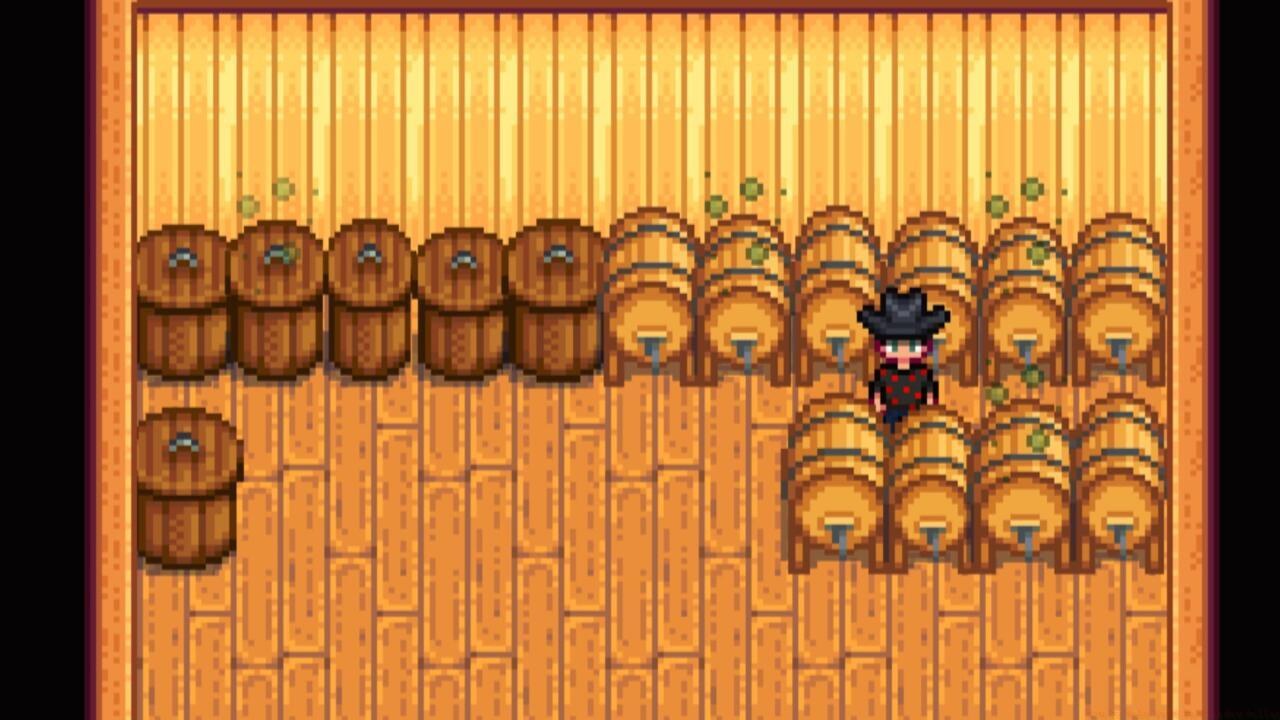
Proper keg placement and organization significantly impacts production efficiency.
Inserting any fruit variety into a properly constructed keg initiates a seven-day fermentation cycle culminating in finished wine.
The winemaking process involves placing fruits into kegs and allowing seven full days for complete fermentation and processing. Crafting a functional keg requires gathering 30 wood units, 1 copper bar, 1 iron bar, and 1 oak resin, with fabrication capability unlocking at farming skill level 8. Every fruit variety converted to wine achieves exactly triple its base market value regardless of original quality.
All fruit varieties produce standard quality wine initially, meaning utilizing gold or iridium quality fruits provides no economic advantage. When vegetables undergo keg processing, they transform into vegetable juice, while specific crops like hops become pale ale. Selecting the Artisan profession during skill specialization increases all wine values by an additional 40% at point of sale.
Winemaking sophistication escalates dramatically upon acquiring the cellar expansion, available through the third-tier house upgrade. This underground space accommodates aging casks that progressively enhance wine quality through extended maturation periods. Silver quality achievement demands 14 days aging, Gold quality requires 28 days, while premium Iridium quality necessitates 56 complete days of controlled aging. Silver quality wine commands 25% higher value, Gold quality increases by 50%, and Iridium quality doubles the base wine price. While the extensive time requirements present complex economic calculations, high-volume producers find cask utilization economically justified, though wine hoarding before cask availability proves inefficient.
Strategic Cellar Management: The cellar provides 33 cask placement spaces initially. Optimized cask arrangement allows access to all containers without obstruction. Many experienced vintners recommend dedicating cellar space exclusively to your most valuable wines, such as Ancient Fruit or Starfruit varieties, to maximize return on time investment. Remember that casks only function within the cellar environment and cannot be utilized elsewhere on your farm.
Aging Economics Analysis: While Iridium quality wine delivers 100% value increase, the 56-day maturation period means each cask produces approximately 6.5 cycles annually. Compare this to regular wine production that yields 52 cycles yearly. The decision to age depends on your available keg capacity and cash flow requirements.
Understanding which fruits deliver maximum economic returns forms the foundation of profitable winemaking operations. Below you’ll find a strategic assessment of fruit values and seasonal considerations for optimized production scheduling.
High-Value Priority Fruits:
- Ancient Fruit (base 550g → wine 1,650g, 2,310g with Artisan)
- Starfruit (base 750g → wine 2,250g, 3,150g with Artisan)
- Pomegranate (base 140g → wine 420g, 588g with Artisan)
- Peach (base 140g → wine 420g, 588g with Artisan)
Seasonal Production Planning: Spring offers rhubarb and strawberries, summer brings starfruit and red cabbage, while fall provides pumpkins and bok choy. Greenhouse cultivation enables year-round ancient fruit production, making it the ultimate long-term investment.
Common Planning Mistakes: Many new vintners underestimate the oak resin requirement for keg production. Start tapping oak trees immediately, as resin accumulation often becomes the bottleneck in production scaling. Another frequent error involves improper crop rotation planning, leaving kegs idle between seasonal transitions.
Keg Farm Design Principles: Efficient keg placement significantly impacts operational workflow. Many players dedicate sheds or barns to keg operations, with optimal layouts allowing maximum density while maintaining access. A fully upgraded shed accommodates 67 kegs when arranged properly, creating a compact production facility.
Production Pipeline Optimization: Establish a continuous harvesting and processing cycle by staggering fruit planting dates. This ensures consistent keg utilization rather than processing peaks and valleys. For large-scale operations, consider dedicating specific sheds to different fruit types based on their growth cycles.
Economic Scaling Calculations: With 100 kegs operating continuously, ancient fruit wine generates approximately 231,000g weekly with the Artisan profession. This represents one of the most profitable activities available in Stardew Valley’s endgame economy.
Resource Management Tips: Always maintain a wood stockpile for keg construction—each keg requires 30 wood. Copper and iron bars become more accessible as you progress in mining, but oak resin often remains the limiting factor in expansion.
Integration with Other Game Systems: Your winemaking operation benefits significantly from complementary skills. For comprehensive farm management strategies, consult our Complete Guide to balanced economic development.
Action Checklist
- Reach Farming Level 8 and collect oak resin from taped trees
- Craft initial keg set (start with 10-20 units)
- Plant high-value fruits (Ancient Fruit, Starfruit) for maximum ROI
- Upgrade house to unlock cellar and install casks
- Select Artisan profession at level 10 Farming for 40% value boost
No reproduction without permission:SeeYouSoon Game Club » How To Make Wine In Stardew Valley Master wine production in Stardew Valley with advanced strategies for maximum profit and efficiency