
TL;DR
- Complete 10 trader quests for a free bicycle with 9 storage slots
- Vehicle magazines unlock crafting: 20 for minibike, 45 for motorcycle, 70 for 4-wheeler, 100 for gyrocopter
- Wheels can be looted, purchased from traders, or crafted with specific resources
- Grease Monkey skill reduces crafting costs but should be a mid-game investment
- Prioritize bicycle first, then focus on magazine collection for vehicle progression
Navigating the expansive Navezgane map becomes significantly more efficient once you master the vehicle progression system in 7 Days to Die. Understanding the different acquisition methods and their requirements will save you valuable time during your survival journey.
The early game transportation bottleneck can be broken through strategic planning. While exploring on foot provides thorough looting opportunities, it exposes you to unnecessary risks and consumes precious daylight hours that could be spent on base building or resource gathering.
Your first major vehicle milestone comes from completing trader quests. After finishing 10 missions for Rekt, you’ll receive a fully functional bicycle as a guaranteed reward. This two-wheeled transport provides nine additional storage slots and enables faster map traversal without requiring any fuel consumption, making it ideal for early to mid-game exploration.
Beyond the free bicycle, the vehicle crafting system operates through magazine progression. Reading 20 vehicle magazines unlocks minibike crafting, while 45 magazines are needed for the larger motorcycle. Advanced vehicles require even more knowledge: 70 magazines for the 4-wheeler ATV and 100 magazines for the ultimate gyrocopter, which provides aerial mobility.
As you accumulate enough vehicle magazines to access higher-tier transports like the 4-wheeler, you’ll likely have gathered sufficient components through natural scavenging. Wheels typically represent the most challenging component to acquire in sufficient quantities for these advanced vehicles.
Wheels serve as the fundamental crafting component for constructing any ground vehicle in the apocalypse. Developing multiple acquisition strategies ensures you won’t face transportation bottlenecks when ready to build.
The most accessible method for obtaining wheels involves systematic looting. You can discover wheel parts randomly while searching containers, but the most reliable looting method involves disassembling wrecked vehicles using a wrench tool. This approach yields consistent results while also providing other valuable automotive components.
- Wheel components can be randomly discovered during container looting or systematically obtained by dismantling cars with the wrench tool
- Traders occasionally stock wheel parts, though availability fluctuates based on game stage and trader level
- Direct crafting at the workbench requires specific resources: 3 forged iron, 24 scrap polymer, 2 oil, 16 coal, and 1 acid bottle per tire
For players struggling to find complete wheels, consider focusing on wrench proficiency and targeting vehicle-rich areas like parking lots and gas stations. The mechanical parts and electrical components gathered simultaneously will prove valuable for other crafting projects.
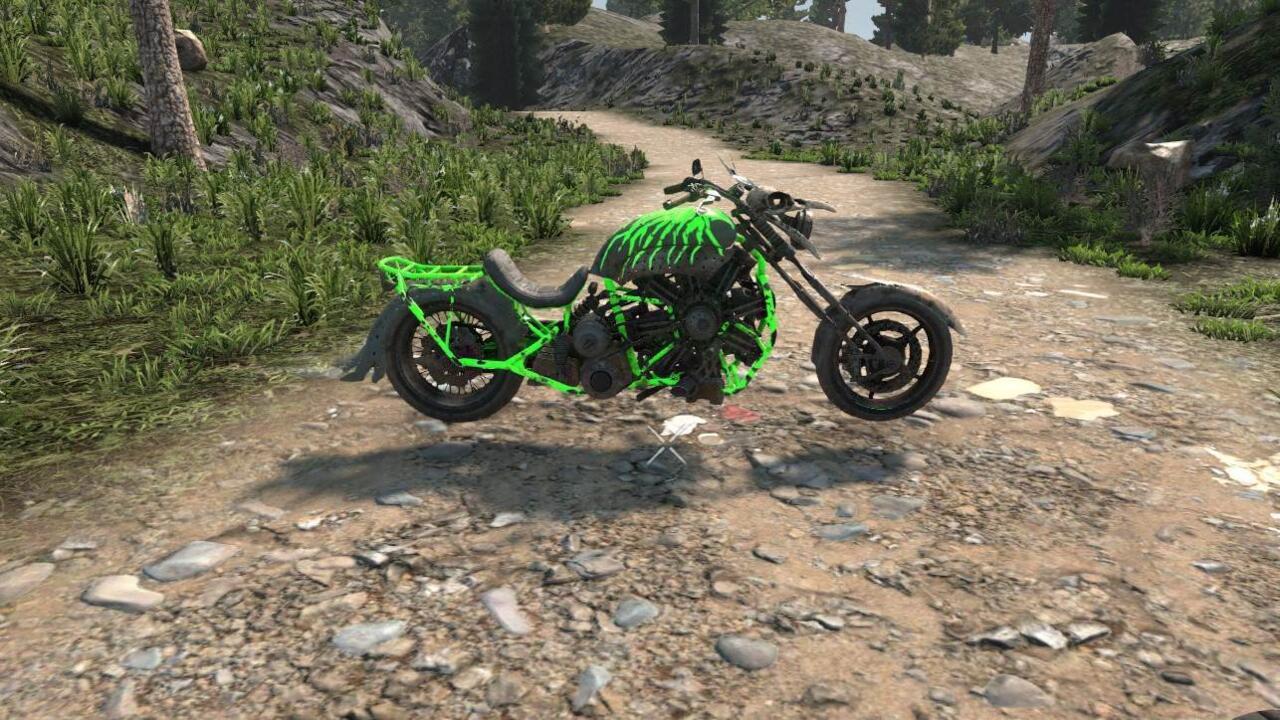
Large motor bike – A mid-game vehicle requiring 45 vehicle magazines to craft
Understanding the resource investment for wheel crafting helps prioritize gathering operations. The coal requirement makes mountain biomes particularly valuable for vehicle-focused players, while urban areas provide better access to scrap polymer from office chairs and other sources.
The Grease Monkey skill tree offers substantial benefits for vehicle-focused players, but requires careful investment timing. This specialization reduces material costs for crafting vehicle components, making advanced transportation more accessible.
Investing points into Grease Monkey should typically occur after establishing solid survival fundamentals. Once you have reliable food sources, secure base defenses, and basic weaponry, then consider allocating points to streamline your vehicle production.
Common mistakes include prioritizing Grease Monkey too early, leaving players vulnerable to basic survival challenges. Alternatively, delaying investment too long can waste resources that could have been saved through earlier skill acquisition.
Optimization for advanced players involves synchronizing magazine collection with resource gathering. While working toward the 70 magazines needed for the 4-wheeler, simultaneously stockpile wheels, engines, and batteries so construction can begin immediately upon unlocking the recipe.
Time estimates for vehicle progression: expect 4-6 hours to complete 10 trader quests for the bicycle, 8-12 hours to gather 45 magazines for the motorcycle, and 15-20 hours for the 70 magazines required for the 4-wheeler, depending on loot luck and gameplay efficiency.
For players seeking comprehensive gameplay strategies, our Complete Guide covers additional mechanics that complement vehicle strategy. Understanding Class Guide selections can influence your mobility needs, while proper Weapons Unlock progression ensures you’re adequately equipped for the journeys between locations.
Action Checklist
- Complete 10 trader quests from Rekt to obtain the free bicycle
- Systematically loot vehicle magazines while using the bicycle for exploration
- Use wrench tool on wrecked cars in parking lots to gather wheels and components
- Check trader inventories regularly for wheel parts and vehicle components
- Invest in Grease Monkey skill after establishing basic survival infrastructure
- Craft higher-tier vehicles as magazine requirements are met
No reproduction without permission:SeeYouSoon Game Club » 7 Days To Die – How To Get Wheels And Craft Vehicles Master vehicle crafting in 7 Days to Die with expert strategies for wheels, bicycles, and advanced transportation