
TL;DR
- The Depths mirror Hyrule’s surface geography but require specialized lighting and navigation tools
- Lightroots function as underground fast travel points and map revealers when activated
- Brightbloom Seeds provide temporary illumination while Poes offer collectible rewards
- Gloom poses serious health threats requiring careful movement planning
- Strategic resource management is essential for extended underground expeditions
Venture into the mysterious underground realm of The Legend of Zelda: Tears of the Kingdom, where darkness conceals both danger and discovery. This comprehensive guide provides essential strategies for navigating the treacherous Depths and utilizing Chasm entrances effectively.
The Depths constitute Tears of the Kingdom’s expansive subterranean world, accessible exclusively through Chasm openings scattered across Hyrule’s surface. These geological fissures present unique environmental challenges alongside significant exploration opportunities. Our expert guidance will help you overcome the darkness and uncover the secrets hidden below.
Gaining entry to the Depths requires locating Chasms within the Surface region. These appear as massive ground fractures emitting ominous red Gloom liquid. When approaching a Chasm, leap downward and build momentum during descent. Crucially, deploy your paraglider moments before impact to avoid taking fall damage upon landing.
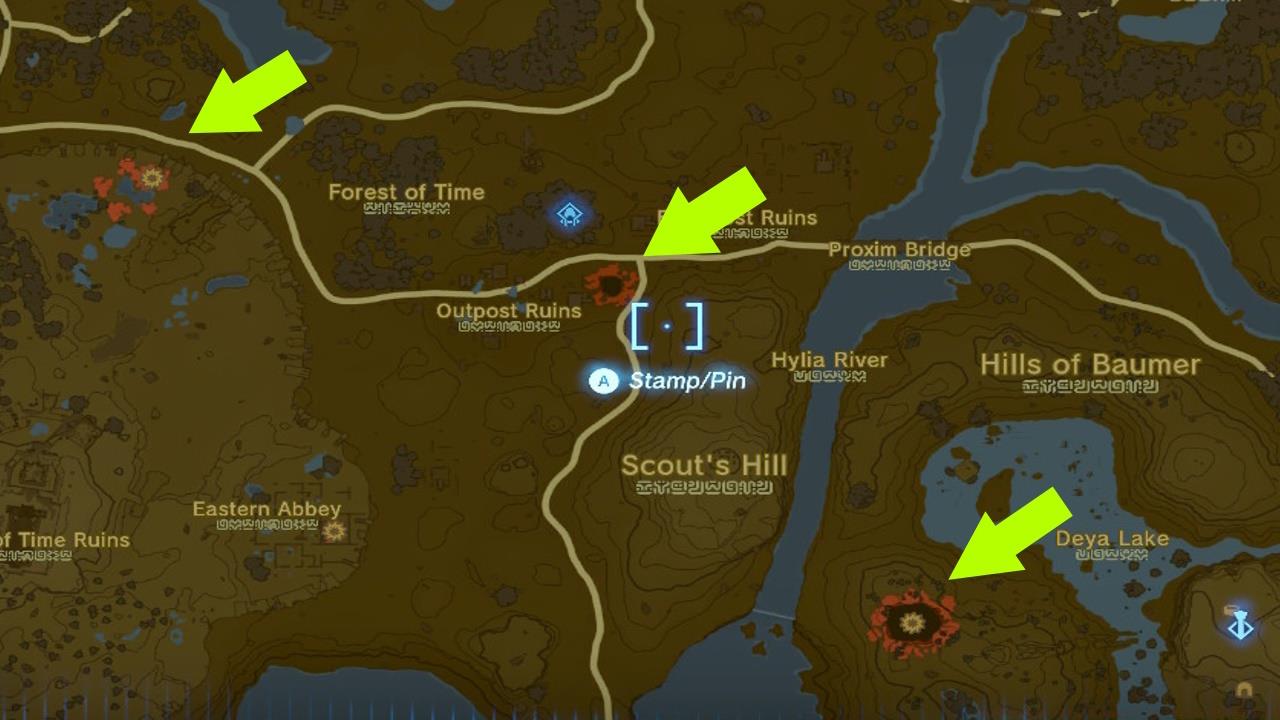
Surface map areas often contain multiple Chasm entrances leading to distinct underground zones.
Access your Depths map by pressing the D-pad downward. This underground realm mirrors Surface geography in scale and layout, creating a massive parallel world to explore. The mirrored structure provides navigational advantages for players familiar with Hyrule’s topography.
Strategic Chasm selection allows targeted exploration of specific Depths regions. Each entrance connects to predetermined underground areas, enabling planned expedition routes rather than random exploration.
Initial descent into the Depths reveals near-total darkness that severely limits visibility. This oppressive blackness creates constant tension and apprehension. Fortunately, multiple illumination methods exist to pierce the shadows.
- Lightroots – These vital structures serve as the Depths equivalent of Skyview Towers. Although they don’t propel Link skyward, they establish fast travel destinations and uncover map sections. Activated zones emit significantly brighter ambient light compared to unexplored territories.
- Brightbloom Seeds – Always stockpile substantial quantities of these luminous seeds before underground ventures. They can be manually tossed or fused to arrow tips. Upon contacting solid surfaces, they generate substantial illumination spheres.
- Poes – These ethereal manifestations represent departed spirits, appearing as hovering blue flames. While providing minimal actual light, they mark stable ground and potential interest locations. Collect them for trade with Bargainer Statues to acquire exclusive rewards.
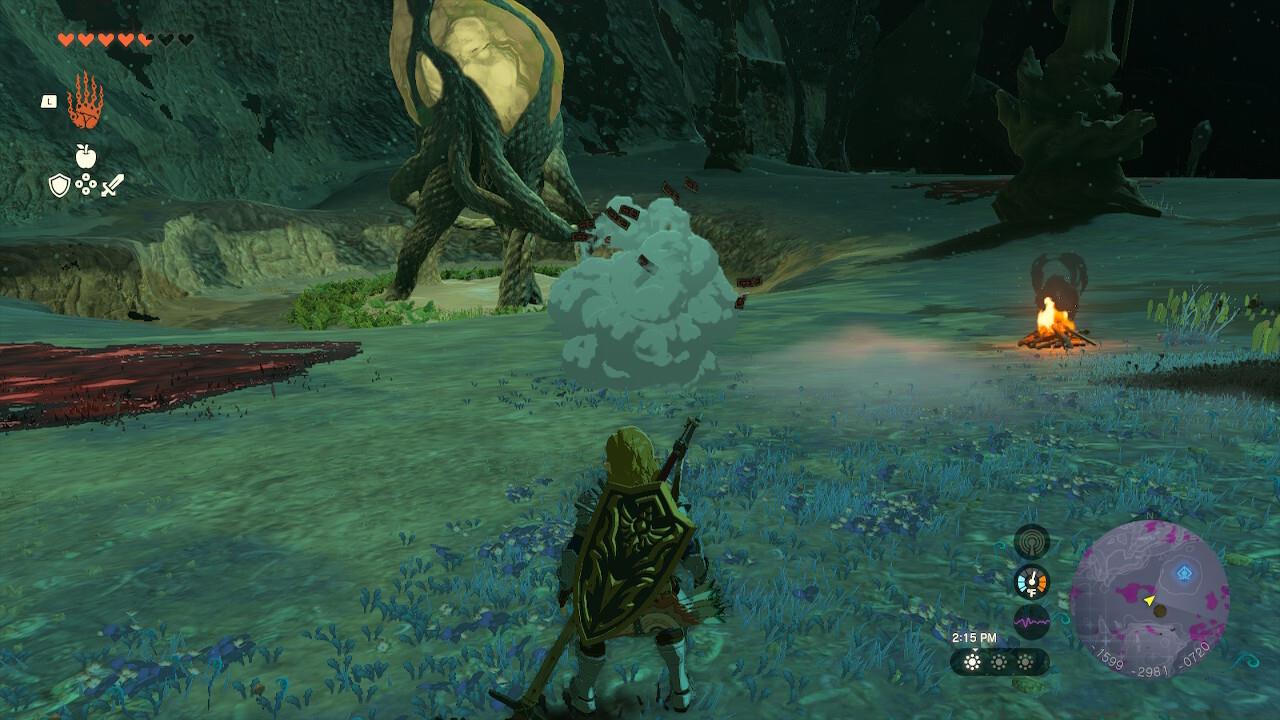
Similar to Surface Tower activation, systematic Lightroot discovery is essential for comprehensive Depths navigation.
Mastering illumination resource management separates successful explorers from those who become lost in darkness. Prioritize Lightroot activation while using Brightbloom Seeds for interim lighting between major waypoints. Poe collection should occur opportunistically rather than as primary navigation aid.
Advanced players should note that Lightroot positions directly correspond to Surface Tower locations. This geographical relationship enables strategic planning by comparing Surface and Depths maps simultaneously.
The Depths present unique environmental hazards beyond mere darkness. Gloom represents the most immediate threat—a crimson substance that inflicts persistent health damage and temporarily reduces maximum hearts. Avoid direct contact whenever possible and plan routes that circumvent heavily contaminated areas.
Gloom inflicts progressive health deterioration requiring immediate evacuation from affected zones.
Resource conservation proves critical for extended Depths expeditions. Brightbloom Seeds offer temporary lighting but consume inventory space. Strategic placement—illuminating key pathways and intersections—maximizes their effectiveness while minimizing consumption.
Bargainer Statue orientations provide directional cues to significant locations and boss encounter areas.
Common exploration mistakes include inadequate resource preparation, reckless Gloom exposure, and haphazard navigation. Avoid these by planning expedition routes in advance, carrying surplus illumination materials, and maintaining awareness of escape routes to the surface.
Time investment for comprehensive Depths exploration typically ranges 15-25 hours depending on playstyle. Focus initially on establishing fast travel network through Lightroot activation before undertaking thorough resource collection and side quest completion.
For players transitioning from other gaming experiences, the Depths navigation system shares conceptual similarities with underground mechanics in our Battlefield 6 Complete Guide, though with greater emphasis on environmental adaptation.
Action Checklist
- Stockpile 50+ Brightbloom Seeds before major Depths expeditions
- Activate 3-5 Lightroots to establish initial fast travel network
- Map escape routes to nearest Chasms before venturing into new territories
- Collect 100+ Poes for Bargainer Statue rewards
- Follow Bargainer Statue directions to locate Master Kohga encounter zones
No reproduction without permission:SeeYouSoon Game Club » Zelda: Tears Of The Kingdom – Depths And Chasms Guide Master Zelda: Tears of the Kingdom's underground with expert navigation, lighting strategies, and resource management techniques