
TL;DR
- Remedy shifted from licensed music to custom-created songs specifically for Alan Wake 2’s narrative
- Creative director Sam Lake provided original poetry and writings as lyrical starting points
- Fried Music studio hosted production camps with 20+ artists creating story-integrated tracks
- Custom music eliminates streaming copyright issues that plagued previous Remedy titles
- The approach ensures authentic gaming experiences for both players and content creators
The musical landscape of Alan Wake 2 represents a fundamental shift from its predecessor’s approach. While the original game featured iconic licensed tracks from legendary artists including David Bowie and Nick Cave, the sequel embraces a completely original musical direction. Remedy partnered with Helsinki’s Fried Music studio to commission bespoke compositions from international artists, crafting chapter-ending songs that are intrinsically woven into the survival-horror narrative fabric.
This strategic pivot emerged from overwhelmingly positive feedback about Finnish rock band Poets of the Fall’s inclusion in earlier titles. “The reception was so encouraging that I began envisioning a much more ambitious musical framework,” explained creative director Sam Lake. “We decided to collaborate with exceptionally talented musicians worldwide to produce custom songs that would serve as narrative extensions, directly referencing the game’s fiction and lore.
For dedicated Remedy enthusiasts, David Bowie’s “Space Oddity” during Alan Wake’s credits became an iconic pairing with the game’s surreal atmosphere. However, these licensed tracks couldn’t achieve the deep narrative integration possible with songs specifically crafted for Alan Wake 2, particularly when lyrics drew directly from Lake’s personal writings and poetic archives.
Lake approached the songwriting process with creative freedom rather than professional musical expertise. “I found liberation in presenting my poems to musicians and asking them to transform the words into songs,” he revealed. “Some collaborations yielded excellent results immediately, while others required more conceptual development. Much of my poetry was written specifically for this project, though I also revisited my personal archives for suitable material that could be adapted.
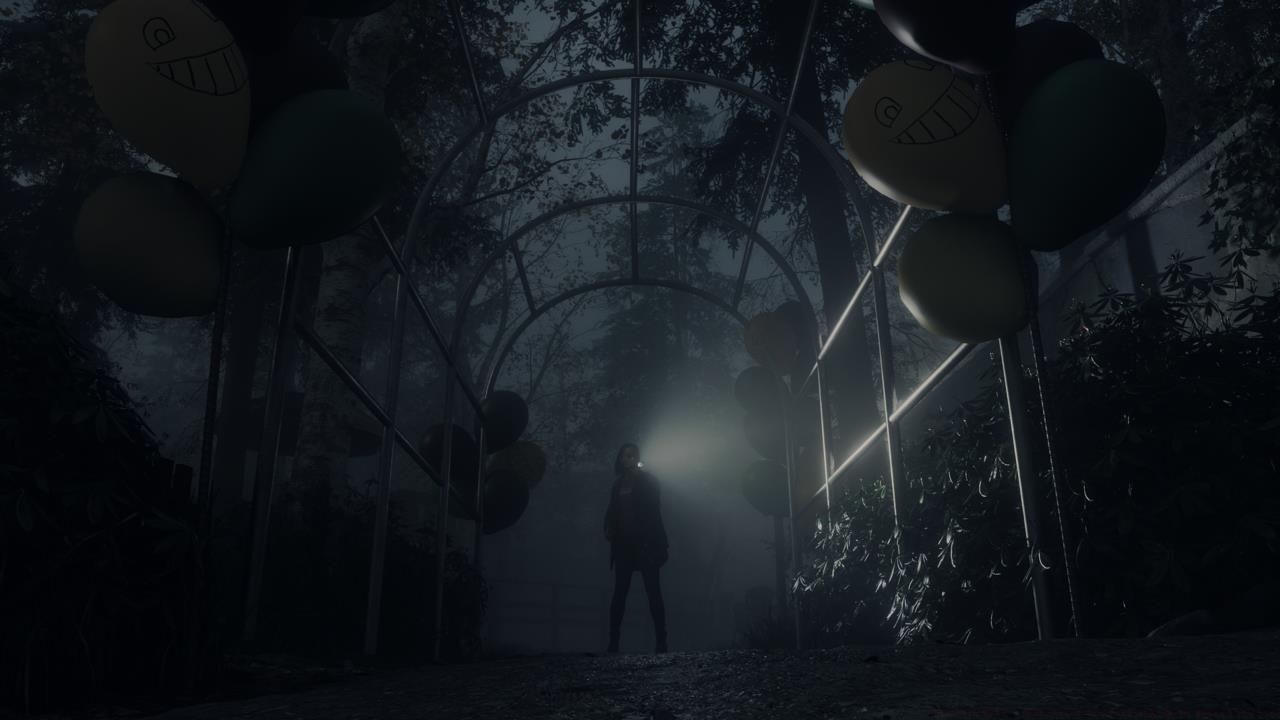
The songs, like some quirky citizens of Bright Falls, aren’t always meant to add to the horror.
The songwriters involved in the project found Lake’s pre-existing lyrical material invaluable. “In typical co-writing scenarios, lyric development consumes the majority of our time,” noted singer-songwriter Teemu Brunila, former lead vocalist of pop rock band The Crash. “Having established narrative elements and ready-made lyrical starting points dramatically accelerated our creative process.
Maintaining game development secrecy necessitated in-person collaboration, with participating artists initially unaware their work would feature in a video game. The process unfolded through song production “camps”—standard practice for Fried Music studio, though novel for a game development client. Approximately twenty musical collaborators participated, working across different studio spaces to develop songs inspired by what Fried Music founder Jukka Immonen described through hand gestures as a substantial collection of Lake’s writings.
Producer and songwriter Jurek Reunamäki characterized the experience as creatively luxurious. “As writers and producers, we had access to this treasure trove of dark, Lovecraftian-inspired poetry that we could draw direct inspiration from or incorporate lines directly into our compositions,” he explained. “This resource made the entire creative workflow remarkably smooth and productive.
Beyond creative considerations, this custom music approach delivers significant practical benefits regarding music streaming rights management. Navigating music licensing complexities has previously caused temporary delisting of some Remedy titles during rights renegotiations. Through their partnership with Fried Music and its artist network, Remedy has secured a future where Alan Wake 2 avoids music licensing complications entirely.
This strategic move means content creators won’t need to activate streamer-friendly modes that disable these musical elements to prevent copyright strikes. “Contemporary game consumption patterns have evolved significantly,” remarked principal audio designer Ville Sorsa. “The original Alan Wake’s licensed music approach would be unsustainable today given current streaming landscape challenges. Our custom music strategy ensures players experience Alan Wake 2 authentically, with all musical components intact, because we maintain ownership of these rights.
For gamers interested in tactical military shooters, our Complete Guide to Battlefield 6 offers comprehensive strategies for mastering large-scale combat. Similarly, understanding weapon systems is crucial—check our Weapons Unlock guide for optimal loadout configuration. When preparing for matches, reviewing our Class Guide provides essential insights for selecting the right specialist for each engagement scenario.
Action Checklist
- Analyze narrative themes to identify musical integration opportunities
- Establish collaborative frameworks between writers and musicians early in development
- Secure rights ownership through custom compositions to avoid streaming complications
- Implement production camps or similar intensive collaboration sessions
No reproduction without permission:SeeYouSoon Game Club » The Alan Wake 2 Soundtrack Was Custom-Made To Expand The Lore How Remedy's custom music approach in Alan Wake 2 transforms storytelling and solves licensing challenges