
TL;DR
- Flask upgrades are essential for surviving PoE 2’s escalating difficulty curve
- Multiple acquisition methods include enemy drops, vendor purchases, and special events
- Evaluate flasks beyond names by analyzing charge capacity and restoration values
- Strategic flask management significantly impacts build performance and survivability
- Advanced players optimize flask usage through timing and complementary affixes
Your healing and mana flasks serve as critical survival tools in Path of Exile 2, providing essential health restoration and magical energy recovery during intense combat encounters. Unlike permanent equipment upgrades, these consumable items require strategic replacement throughout your journey to maintain combat effectiveness against increasingly dangerous foes.
When beginning your Path of Exile 2 adventure, you receive basic Lesser Life and Mana Flasks that provide minimal restoration capabilities. These entry-level items prove adequate for initial zones but become dangerously insufficient as enemy damage output escalates rapidly. The game’s difficulty curve demands proactive flask management to prevent becoming overwhelmed by powerful adversaries and environmental hazards.
Fortunately, Path of Exile 2 implements streamlined upgrade mechanics that allow players to systematically enhance their restoration capabilities. Understanding these systems early prevents frustrating deaths and ensures smooth progression through challenging content.

Flasks provide essential protection and resource regeneration during combat encounters.
Path of Exile 2 offers multiple pathways to acquire superior flasks, though all methods ultimately involve replacing your current equipment rather than enhancing existing items. This replacement system encourages continuous loot evaluation and strategic inventory management throughout your gameplay experience.
As you eliminate enemies throughout Wraeclast, defeated foes may drop enhanced Life or Mana Flasks with varied statistical profiles. Each discovered flask presents unique trade-offs between restoration potency and charge efficiency. For instance, an upgraded Mana Flask might provide substantially more magical energy per use but deplete faster due to reduced charge capacity.
Flasks appear as random loot drops with varying rarities and attributes.
Vendor interactions present another reliable upgrade source, particularly when you possess surplus currency or unwanted equipment. Many merchants stock rotating flask inventories that may contain superior options not yet found through combat. This method proves especially valuable when struggling with specific content gaps in your current flask lineup.
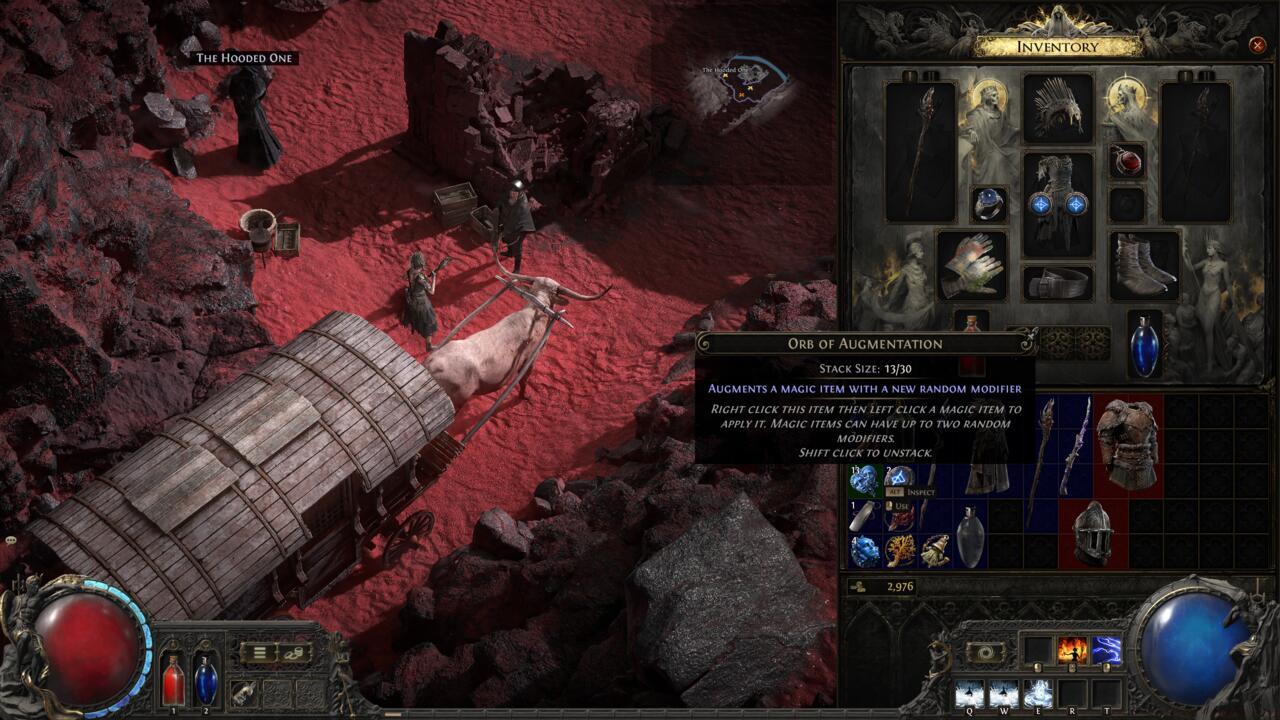
Currency items facilitate vendor transactions for acquiring better flask options.
Identifying superior flasks extends beyond simple name recognition, requiring careful analysis of multiple statistical factors. The adjective prefix provides initial quality indication—’Grand Life Flask’ typically outperforms ‘Greater Life Flask’—but comprehensive assessment demands evaluating charge mechanics and restoration values simultaneously.
Flasks operate on a charge-based system where each use consumes predetermined charge units. Maximum charge capacity determines how many uses you gain before requiring replenishment through combat. Balancing restoration amount against charge efficiency becomes crucial for sustained performance during extended engagements.
Enhanced flask variants like Prudent Lesser Life Flask demonstrate measurable improvements over baseline equipment.
Advanced players should prioritize flasks that complement their specific build requirements and playstyle preferences. Aggressive characters may favor higher instant restoration, while tactical players might prefer sustained regeneration effects. Understanding these nuances separates competent adventurers from truly dominant ones.
Charge recovery rate represents another critical factor often overlooked by novice players. Some flasks regenerate charges faster during combat, enabling more frequent usage during difficult boss encounters or elite monster packs.
Mastering flask utilization requires understanding optimal usage timing and situational awareness. Consuming restoration flasks preemptively before major damage events often proves more effective than reactive usage after health depletion. This proactive approach significantly enhances survivability against burst damage mechanics.
Common mistakes include hoarding inferior flasks due to attachment or misunderstanding upgrade mechanics. Regularly compare new finds against equipped items, prioritizing statistical improvements that align with your current challenges and future content expectations.
For advanced optimization, consider flask affixes that provide secondary benefits beyond basic restoration. Some modifiers offer movement speed bonuses, damage reduction, or elemental resistances that can dramatically improve overall combat performance when timed correctly.
Endgame content demands meticulously optimized flask setups where every charge usage provides maximum value. Professional players often customize their flask configurations for specific boss encounters or map modifiers, demonstrating the system’s strategic depth beyond simple health management.
Action Checklist
- Evaluate current flask stats after each major zone completion
- Check vendor inventories whenever visiting towns for potential upgrades
- Test new flask acquisitions in safe areas before relying on them in dangerous content
- Balance flask charge capacity against restoration values for your playstyle
- Create specialized flask setups for challenging boss encounters
No reproduction without permission:SeeYouSoon Game Club » Path Of Exile 2: How To Upgrade Healing And Mana Flasks Master Path of Exile 2 flask management with advanced upgrade strategies and optimization techniques