
TL;DR
- Palworld features three de facto starters: Cattiva, Chikipi, and Lamball, each with unique strengths
- Work Suitability skills are species-inherent and crucial for early base development efficiency
- Partner Skills provide combat advantages while Passive Skills add randomized strategic depth
- Early game success depends on matching starter choice to your preferred playstyle
- Strategic capture order can significantly accelerate your early progression timeline
Unlike traditional creature-collector games, Palworld revolutionizes the starter selection process by eliminating the conventional mentor figure and predetermined choices. This open-world survival crafting hybrid throws players directly into an environment teeming with diverse Pals, each with distinct capabilities and roles beyond simple combat.
Palworld merges survival mechanics with creature collection, creating a complex ecosystem where your first Pal choice impacts both combat effectiveness and base development efficiency. The game’s multi-genre approach means veterans of Pokemon or Breath of the Wild will encounter unexpected strategic layers that demand careful consideration from the very beginning.
The absence of a Professor Oak equivalent means technically any Pal could become your starter, but practical constraints guide you toward three specific low-level options. These Pals spawn exclusively at levels 1 and 2, making them the most accessible choices for new trainers starting their adventure.
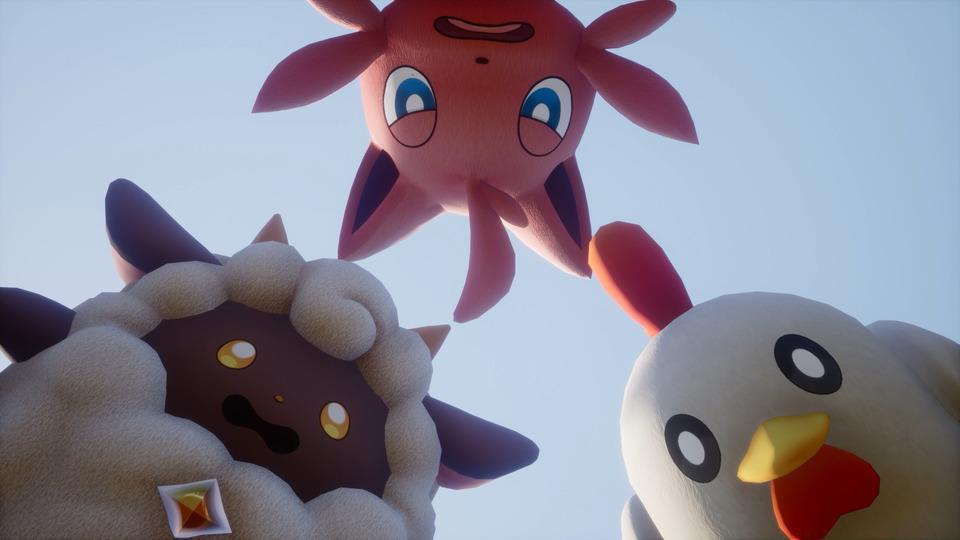
Clockwise from the top, that’s Cattiva, Chikipi, and Lamball.
Attempting to capture higher-level Pals immediately presents significant challenges, as your capture success rate depends heavily on level differentials. Without adjusting game difficulty settings, which we explore in our Palworld tips and tricks, focusing on the designated starter trio provides the smoothest onboarding experience.
Your initial Pal Sphere deployment represents a critical strategic decision that shapes your early game trajectory. Each Pal species possesses unique inherent abilities alongside randomized traits that add layers of complexity to the selection process.
Partner Skills remain consistent across all members of a species, providing reliable combat or utility advantages you can plan around. These skills unlock immediately upon capturing your first specimen of that Pal type, giving you predictable tools for overcoming early challenges.
Passive Skills introduce randomization, meaning two players capturing the same Pal species might receive different bonus attributes. This element of chance encourages strategic adaptation and potentially rewards players who capture multiple specimens seeking optimal trait combinations.
Statistical attributes for Attack, Defense, and Work Speed feature moderate randomization within species-specific ranges, while Work Suitability skills remain completely fixed per species. This balance between predictability and variation creates meaningful decision points without complete randomness.
Active Skills represent your Pal’s combat arsenal, with one skill available immediately upon capture and additional abilities unlocking through level progression. Understanding skill trees and evolution paths becomes crucial for long-term planning.
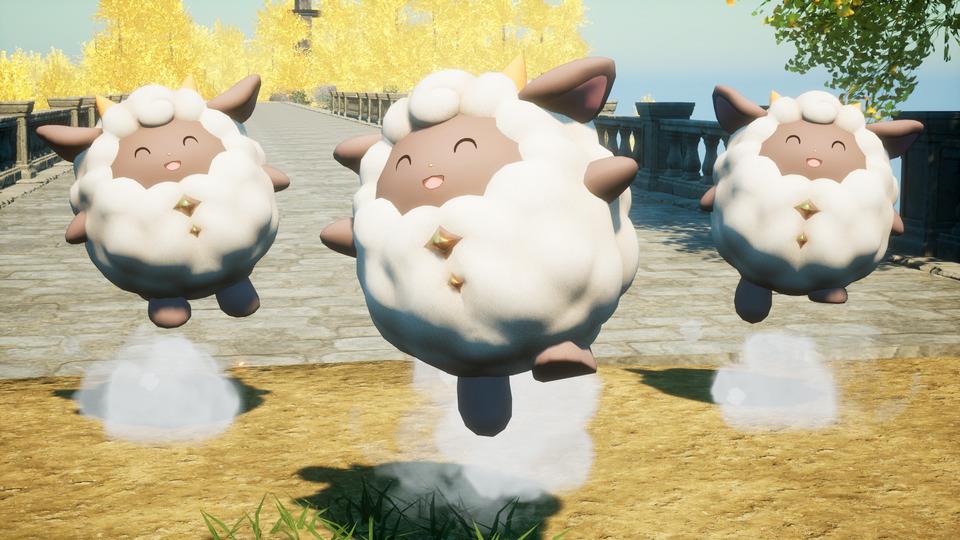
Lamball is the fluffiest of the starter Pals, and the best one too, we say.
Choosing between Cattiva, Chikipi, and Lamball requires understanding how each aligns with different playstyles and early-game priorities. Your selection should reflect whether you prioritize combat dominance, resource generation, or balanced progression.
Combat-focused players benefit from Pals with strong offensive Partner Skills and combat-oriented Active Skills. Base-building enthusiasts should prioritize Work Suitability combinations that accelerate resource production and construction efficiency.
Early game progression considerations include capture order strategy – some players benefit from capturing multiple starter Pals in sequence rather than committing to just one. This approach diversifies your early capabilities while maintaining focus on level-appropriate targets.
Avoid the common mistake of overvaluing combat stats while neglecting Work Suitability, as base development provides crucial resources for sustaining your adventure. Another frequent error involves attempting to capture higher-level Pals too early, wasting valuable Pal Spheres and time.
Resource management during the starter phase significantly impacts your mid-game momentum. Efficient early Pal deployment can reduce grinding time by 30-40% compared to suboptimal choices, based on community gameplay data.
Seasoned players can leverage deeper mechanical understanding to optimize their starter selection beyond surface-level attributes. Skill synergy between your chosen Pal and early-game equipment choices creates powerful combinations that accelerate progression.
Long-term planning considerations involve looking beyond immediate needs to how your starter fits into your eventual team composition. Some Pals provide better transitional value as you replace them with stronger alternatives.
Resource management insights reveal that certain starter Pals generate passive income through ranch assignments, while others excel at specific crafting tasks. Understanding these economic advantages helps prioritize which Pal to capture first based on your resource needs.
Advanced capture techniques include weakening higher-level Pals before attempting capture, though this requires careful health management to avoid fatal outcomes.
Strategic base placement near starter Pal spawn locations can reduce travel time and increase capture efficiency during your initial hours. This geographical optimization often gets overlooked by new players focused solely on creature attributes.
Action Checklist
- Analyze your preferred playstyle – combat focus vs base building priority
- Scout the starting area to identify all three starter Pal spawn locations
- Capture your primary starter based on Partner Skill alignment with your goals
- Evaluate captured Pal’s Passive Skills and plan secondary captures accordingly
- Assign your starter to appropriate base tasks matching their Work Suitability
- Develop a progression timeline for when to replace your starter with stronger Pals
No reproduction without permission:SeeYouSoon Game Club » Palworld – Best Starter Pal To Pick Master Palworld's starter selection with strategic insights for early-game success and base building