
TL;DR
- Back 4 Blood’s campaign structure allows strategic breaks between levels without losing progress
- Card system enables specialized builds that dramatically alter gameplay mechanics and combat effectiveness
- Combat Knife upgrade transforms bash into lethal attack with health recovery potential
- Tool Kits provide access to bonus content and essential resources throughout missions
- Cooperative play rewards Supply Points while solo mode offers limited progression opportunities
Mastering Back 4 Blood begins with understanding how to pace your gameplay sessions effectively. Unlike many modern games with continuous progression systems, this cooperative shooter respects your time through intelligent checkpoint design.
For veterans of the Left 4 Dead series, the core loop will feel familiar yet enhanced. You still coordinate with three other survivors to battle through zombie hordes toward safe room objectives. However, Back 4 Blood introduces revolutionary mechanics that demand strategic planning beyond simple survival. The game is available across multiple platforms including PC, PlayStation, and Xbox systems, plus Xbox Game Pass. For deeper dives into character progression, consult our specialized guides on unlocking cleaners and essential card selections.
The narrative unfolds across four distinct acts, with three containing multiple challenging levels. A complete campaign run typically requires 15+ hours, though many players underestimate the importance of strategic breaks. The game’s structure permits pausing your progression at natural stopping points without penalty.
Whether tackling the solo narrative or cooperative campaigns, your advancement automatically saves upon completing each level. This design enables responsible gaming habits—you can safely exit to address real-world needs, hydrate, or simply prevent fatigue. Exiting runs also creates opportunities to invest accumulated Supply Points into Supply Lines, unlocking additional cards for future attempts.
Back 4 Blood’s defining innovation lies in its card system, which offers unprecedented customization of your cleaner’s capabilities. This mechanic transforms the game from a simple shooter into a deeply strategic experience.
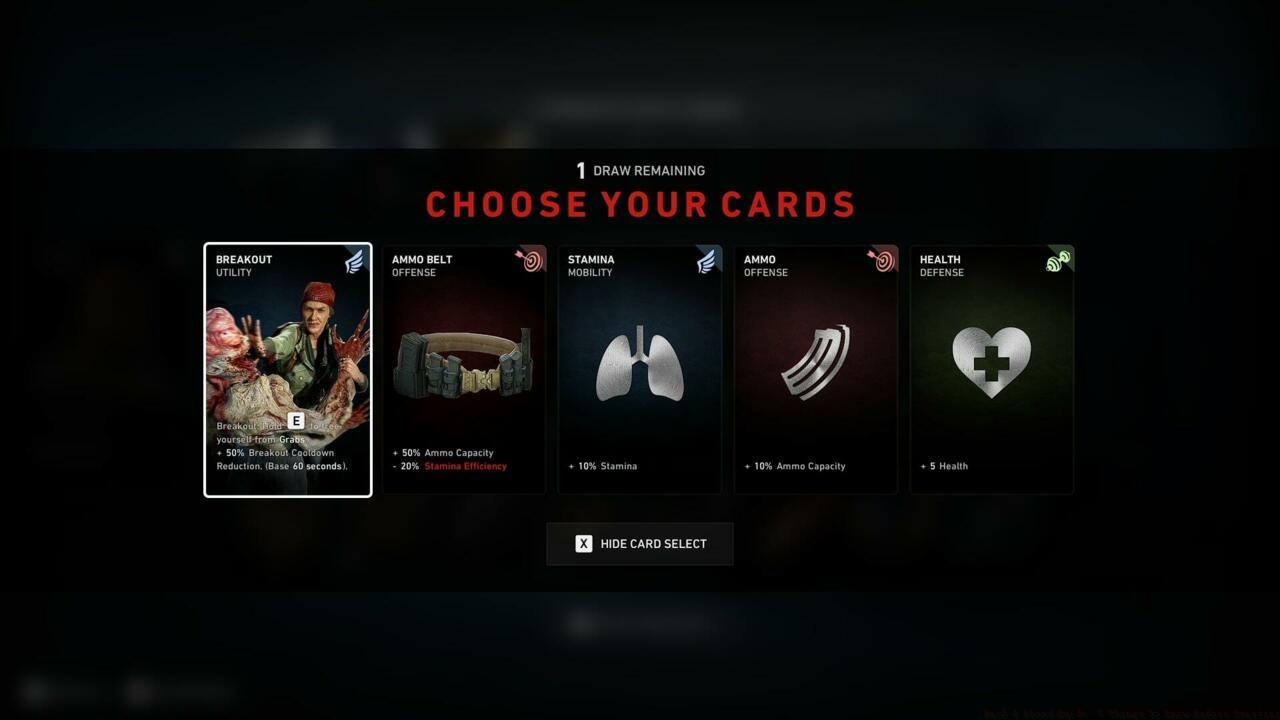
Strategic card selection can completely redefine your combat role and effectiveness.
The card system serves as Back 4 Blood’s signature feature, enabling players to apply diverse enhancements and occasionally trade-offs to their characters. Each card provides specific advantages that, when combined strategically, create specialized builds tailored to your playstyle. The key lies in curating a synergistic 15-card deck that complements your preferred weapons and team role.
A prime example involves constructing a hip-fire specialist build utilizing cards that eliminate Aim Down Sights functionality. These cards substantially boost reload velocity, melee combat tempo, weak point targeting precision, and overall shot grouping. Essentially, this creates an ideal configuration for shotgun enthusiasts who complement their primary weapon with close-quarters melee options.
Strategic card selection requires understanding both immediate benefits and long-term build synergy. Avoid the common mistake of choosing cards in isolation—each selection should contribute to an overarching strategy. Advanced players often create multiple specialized decks for different act types and difficulty settings.
Optimizing your basic combat actions provides substantial survival advantages, particularly when facing overwhelming numbers of Ridden.
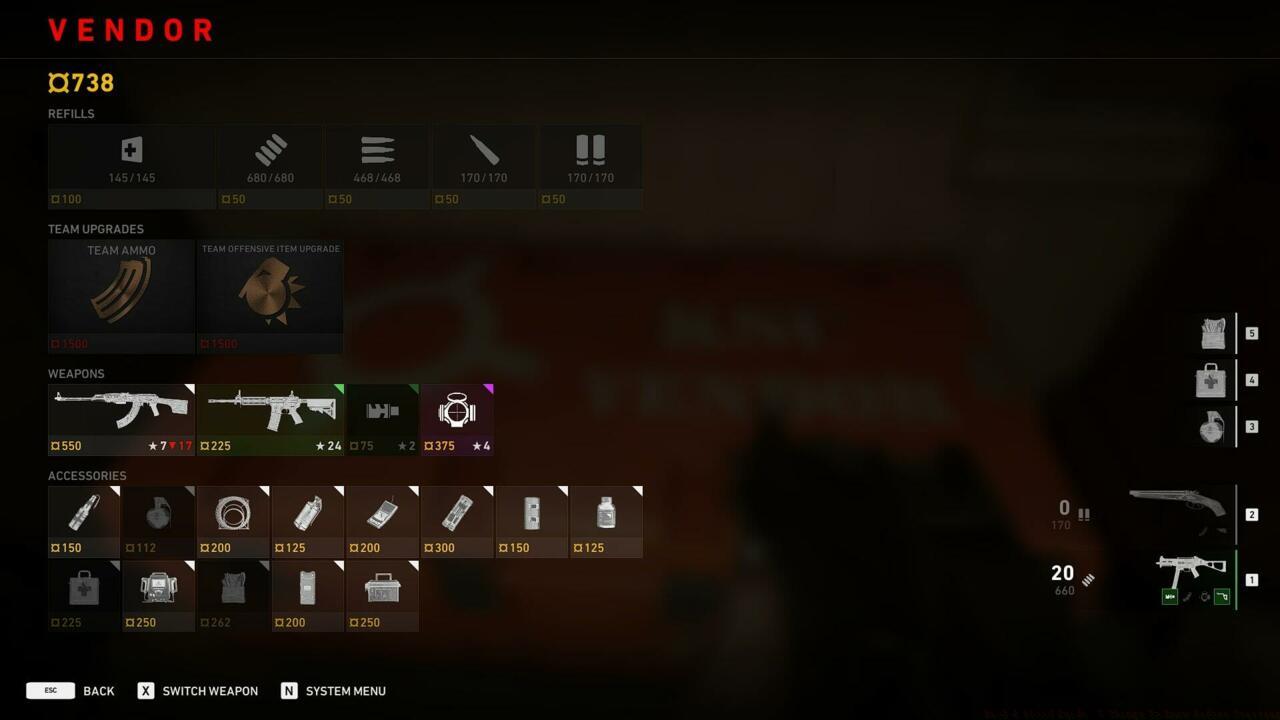
Vendor locations offer opportunities to enhance your melee capabilities mid-campaign.
The standard bash maneuver allows players to temporarily repel enemies with a forceful shove during reload sequences. This creates valuable breathing room in tight situations, though its non-lethal nature limits effectiveness. Fortunately, strategic card selection can transform this defensive action into an offensive asset.
The Combat Knife card represents one of the few universally valuable additions to any deck. Since decks contain 15 card slots, dedicating just one to upgrade your bash into a swift knife strike delivers exceptional value. This enhanced attack instantly eliminates standard Ridden with single strikes, and when combined with melee healing cards that restore two health points per kill, it becomes a sustainable health regeneration method.
Many players underestimate the combat knife’s utility until experiencing higher difficulties where every health point matters. The transformation from push to kill fundamentally changes how you approach crowd control and resource management during intense combat scenarios.
Effective team coordination separates successful runs from failed attempts in Back 4 Blood’s challenging environments.
Contextual communication options enable precise coordination without voice chat requirements.
Back 4 Blood’s ping system provides comprehensive communication tools that transcend language barriers. This feature allows players to mark enemy positions, highlight resources, designate objectives, and coordinate movements efficiently. The system includes contextual commands that adapt based on what you’re targeting—whether highlighting special Ridden, ammunition caches, or defensive positions.
Advanced communication involves not just identifying threats but also coordinating team responses. Marking a Tallboy should immediately trigger positioning adjustments, while highlighting medical supplies ensures efficient resource distribution. Teams that master these communication protocols consistently achieve better results with fewer resources expended.
Proper equipment management often determines mission success in Back 4 Blood’s resource-scarce environments.
Tool Kits provide access to valuable resources and alternate routes throughout campaigns.
Tool Kits represent one of the most versatile and valuable resources available to cleaning teams. These multi-purpose tools unlock secured doors, weapon caches, emergency medical supplies, and environmental shortcuts. Their versatility makes them priority purchases at vendor locations between missions.
Strategic Tool Kit deployment requires understanding mission layouts and potential rewards. Experienced players coordinate which team members carry kits and establish priority targets for their usage. Unlocking the right door at the right time can provide game-changing advantages like superior positioning, additional resources, or escape routes during horde events.
While Back 4 Blood offers solo play options, the game’s design strongly incentivizes cooperative multiplayer experiences.
Solo campaign participation excludes players from earning the primary progression currency.
The most significant limitation of solo play involves the exclusion from Supply Point rewards. These points serve as the primary progression currency, enabling card unlocks and character enhancements. Without this reward system, solo players face significantly slower progression and limited access to the game’s customization options.
Cooperative play not only accelerates progression but also enables specialized team compositions. Coordinated teams can assign specific roles—medic, damage dealer, crowd controller, scout—creating synergistic combinations that overcome challenges more efficiently. The dynamic interplay between different cleaner abilities and card builds creates emergent strategies impossible in solo configurations.
For players seeking to maximize their efficiency and enjoyment, cooperative play delivers substantially superior experiences across all measurable dimensions.
Action Checklist
- Plan strategic breaks between levels to manage fatigue and spend Supply Points
- Construct specialized card decks focused on specific weapon types and team roles
- Upgrade bash with Combat Knife card and pair with melee healing for sustainability
- Master ping system communication for efficient team coordination
- Always carry Tool Kits for bonus content access and emergency resources
- Prioritize cooperative play over solo for progression acceleration
No reproduction without permission:SeeYouSoon Game Club » Back 4 Blood Guide: 5 Things To Know Before Starting Master Back 4 Blood with essential strategies for card builds, combat efficiency, and team coordination