
TL;DR
- Always scan damaged parts first to identify specific repair requirements before using resources
- Prioritize unlocking the Liberator tool for field part replacement and Matter Regenerator for automated garage repairs
- Upgrade from crude to advanced alloys to significantly reduce damage frequency and repair costs
- Master the synergy between Friendly Dumpster part generation and Matter Deconstructor recycling
- Develop strategic resource allocation between immediate repairs and long-term part replacement
Maintaining your vehicle in optimal condition is crucial for surviving the treacherous roads of Pacific Drive. Your car serves as both transportation and sanctuary through hazardous environments filled with anomalies and obstacles.
Before diving into repair methodologies, it’s essential to understand your vehicle’s structural composition. Your car comprises multiple independent components:
- Doors – Five total entry points: front-left (driver’s side), front-right (passenger side), rear-left, rear-right, and the trunk access.
- Panels – Five protective surfaces: front-left, front-right, rear-left, rear-right, and the hood covering.
- Wheels – Four wheels providing mobility across varied terrain.
- Bumpers – Front and rear impact absorption systems.
- Critical Systems – Engine and battery housed under the hood, dual headlight assemblies, windshield and window glass.
- Attachments – Customizable additions like Side Racks, available after unlocking the Fabrication Station blueprint.
Each component maintains independent health points (HP) and sustains damage separately. During frontal collisions, expect the front bumper, headlights, and windshield to bear the brunt of impact. However, certain environmental anomalies can simultaneously damage multiple vehicle sections. You face strategic decisions between repairing damaged components or crafting complete replacements based on available resources.
Pro Tip: Components marked with the “Peculiar” modifier offer superior durability but cannot be repaired once damaged. They remain functional until their HP depletes completely.
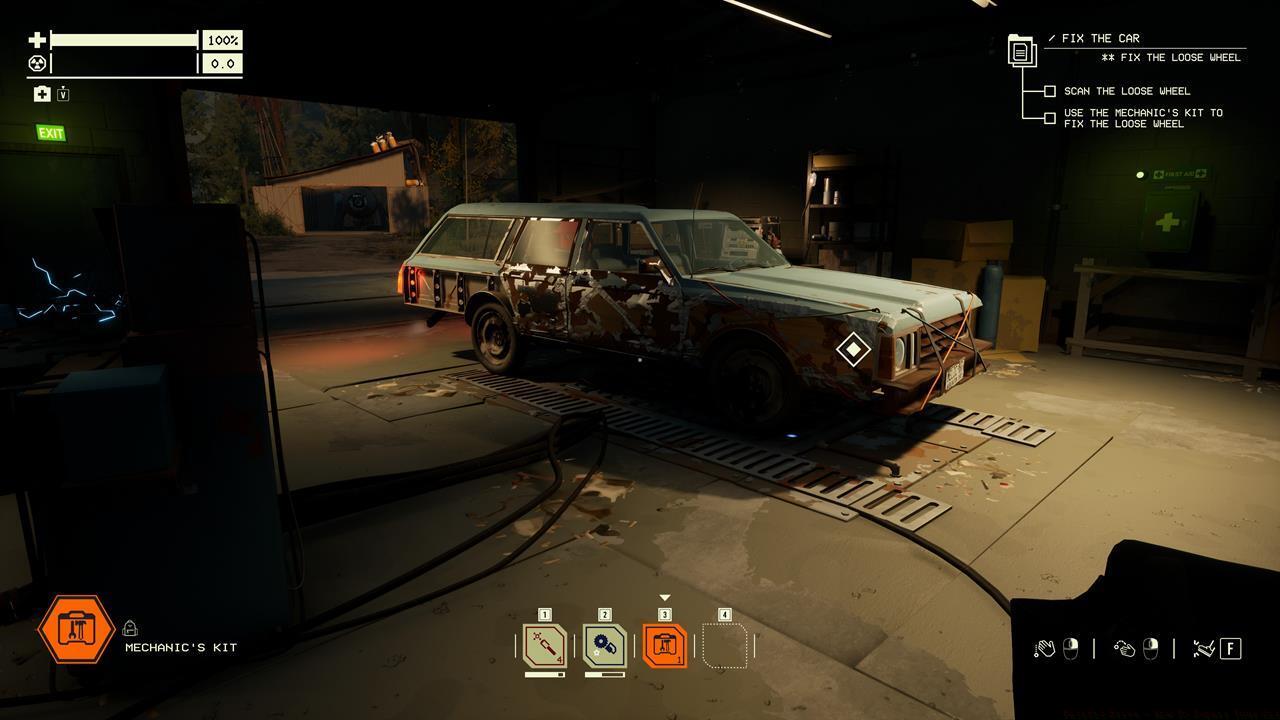
Take care of your car and it will take care of you.
Proper diagnosis precedes effective repair in Pacific Drive. Before committing resources to fix damage, employ the scanning system by pressing and holding the “C” key while targeting affected components. This reveals the specific repair item required and prevents wasteful application of incorrect solutions.
Scanning provides critical intelligence about damage severity and required intervention type. The system displays whether you need Repair Putty, specialized kits, or if replacement represents the only viable option.
Common Mistake: Many players waste valuable Repair Putty on electrical system failures when an Electrician’s Kit is actually required.
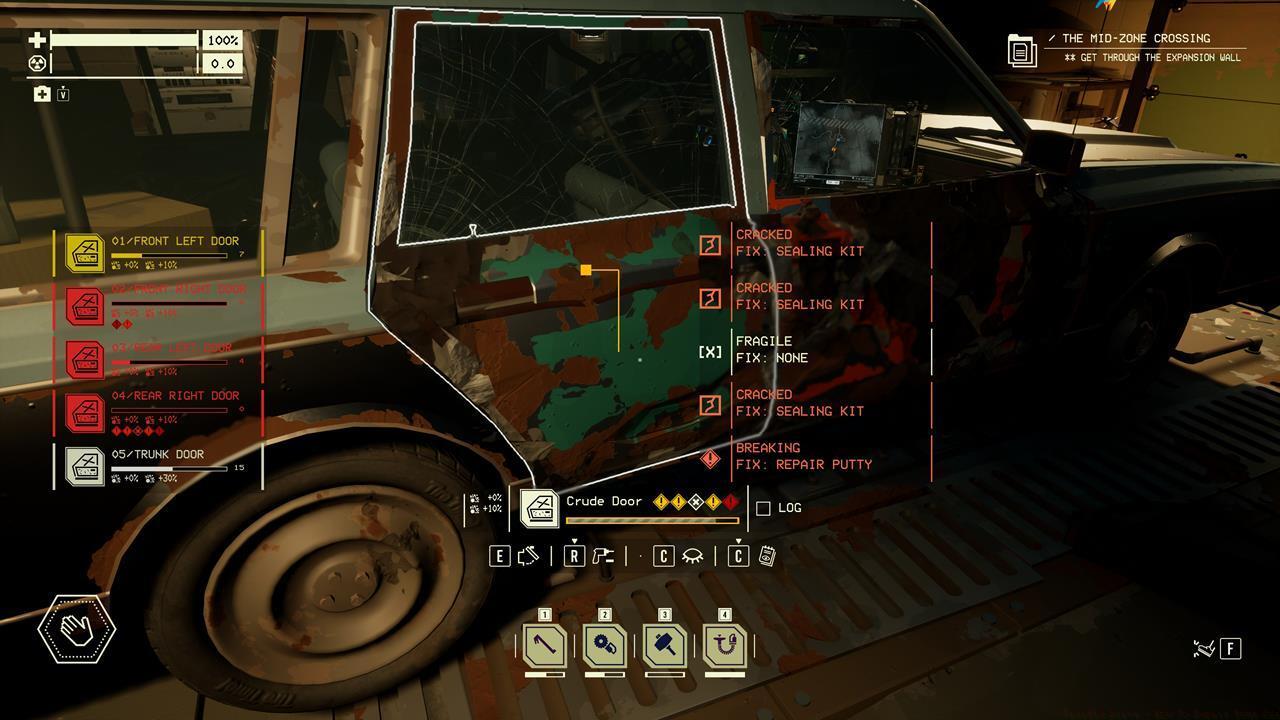
Scan a damaged part to know which item needs to be used.
Blueprint availability directly impacts repair capabilities. If scanning indicates no available solution, you likely haven’t unlocked the necessary Fabrication Station blueprint. Prioritize blueprint acquisition based on your most frequent damage types.
Advanced Technique: Develop the habit of scanning all visible damage after each significant impact or anomaly encounter before continuing your journey.
Pacific Drive offers diverse repair methodologies through craftable consumables, each addressing specific damage types. Understanding tool specialization prevents resource waste and ensures efficient repairs.
Consumable items fall into several functional categories with distinct applications:
- Repair Putty – Applies gradual restoration to damaged components; functions similarly to healing mechanics. Severe damage or high-end alloys may require multiple applications for complete repair.
- Electrician’s Kit – Corrects short-circuited electrical systems including headlights and engine components.
- Sealing Kit – Addresses penetrative damage including tire punctures, windshield cracks, and fluid leaks.
- Battery Jumper – Emergency starting device for malfunctioning engines.
- Mechanic’s Kit – Versatile tool for mechanical failures affecting engines, headlights, or wheel assemblies.
Most repair tools are single-use consumables crafted at workbenches or discovered in environmental containers. The notable exception is Repair Putty, which provides multiple applications per unit.


Zap a circuit with the Electrician’s Kit (left) and smear a glop of Repair Putty (right).
Resource Management Tip: Always carry 2-3 Repair Putty units as your primary field repair solution, supplemented by specialized kits for electrical and mechanical failures.
Your Auto Shop garage provides sophisticated repair infrastructure that dramatically improves maintenance efficiency. The Friendly Dumpster represents your primary source for replacement components, generating semi-random materials and parts that often match your current needs.
Strategic dismantling of severely damaged parts via the Matter Deconstructor can trigger the Friendly Dumpster to produce corresponding replacements. This creates a sustainable part regeneration cycle.
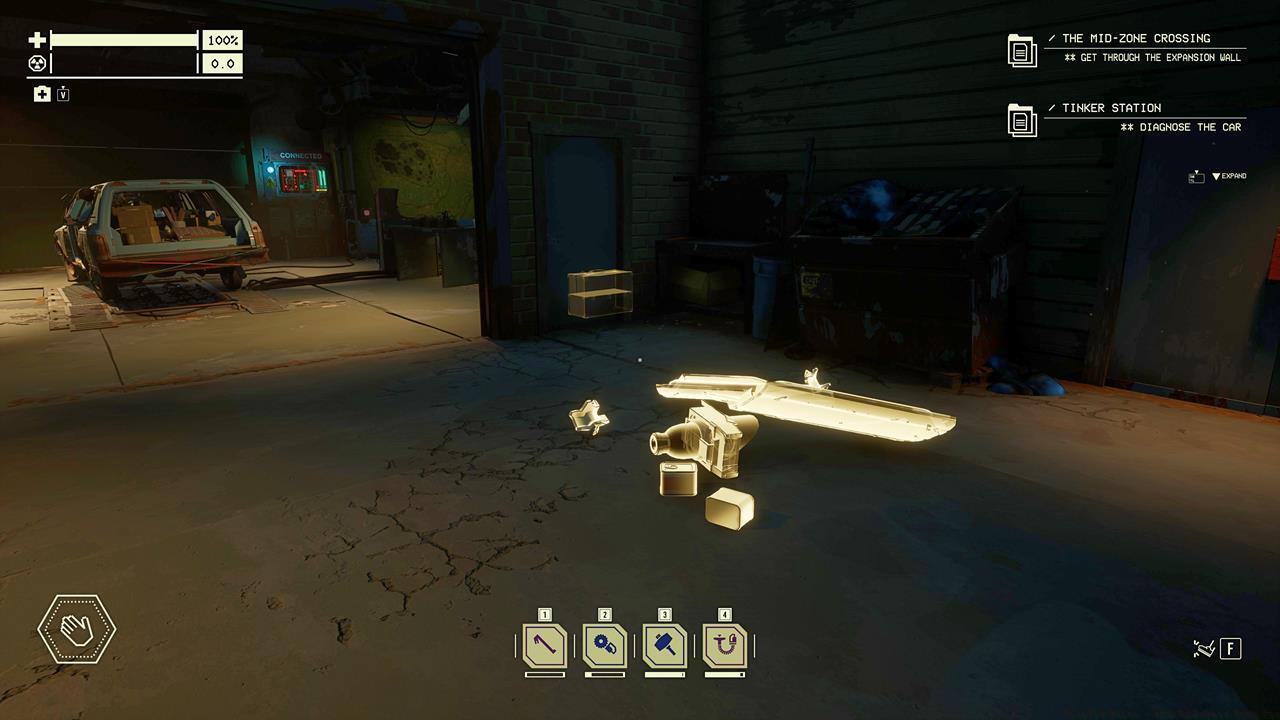
The Friendly Dumpster might just have the replacement parts that you need.
The Matter Regenerator, unlocked through Fabrication Station blueprints, offers automated part restoration during expeditions. Place damaged components inside before departing, and upon safe return via Gateway, they’ll likely be fully restored.
Advanced Strategy: Combine Matter Regenerator usage with Friendly Dumpster interactions for maximum part availability.
Later campaign progression unlocks the Repair Station, which automatically regenerates component HP between runs, eliminating maintenance overhead.
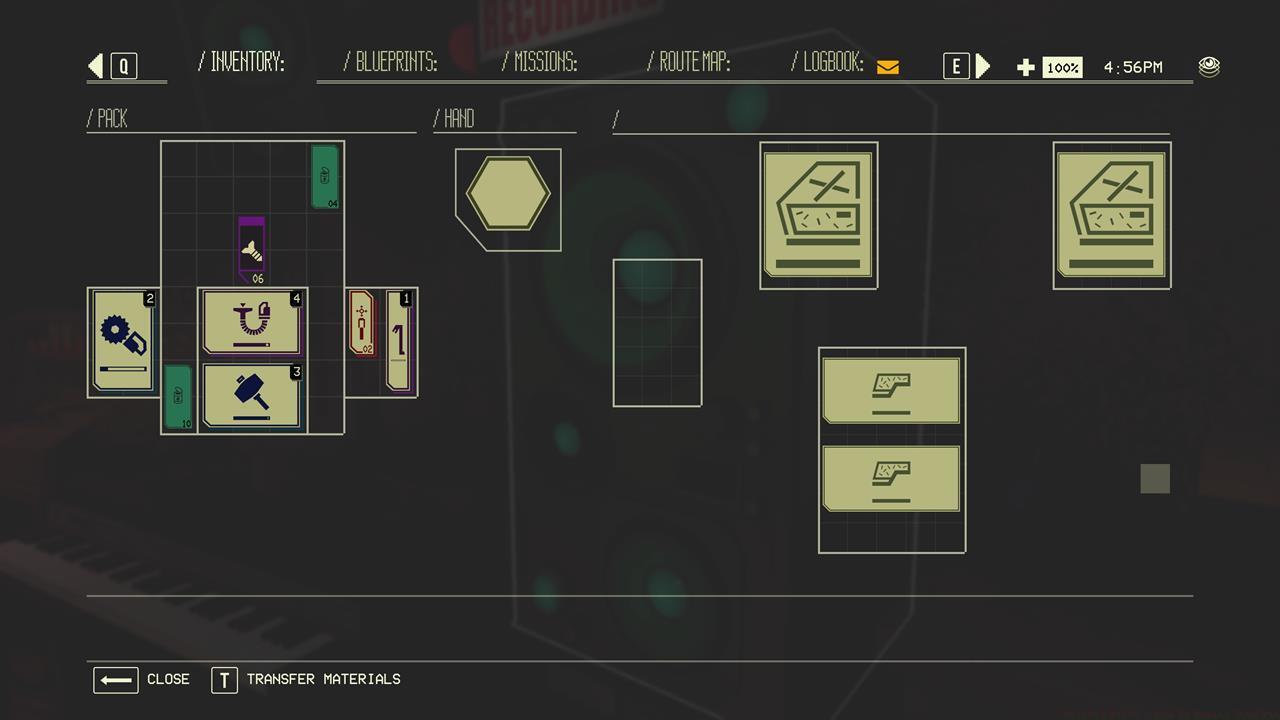
The Matter Regenerator repairs parts while you’re out on another trek.
Optimization Tip: Always interact with the Friendly Dumpster multiple times during garage visits to maximize part acquisition opportunities.
Field repairs present unique challenges requiring specialized tools and preparation. Early-game limitations mean part replacement during expeditions typically requires carrying spares in your trunk or locating them in environmental containers.
The Scrapper tool, available from early stages, only permits dismantling abandoned vehicle parts into resources like Scrap Metal.
The Liberator tool dramatically expands field repair capabilities once unlocked and crafted. This advanced implement allows complete removal of components from abandoned vehicles, including Steel Panels, Armored Doors, and other upgrades.
Field Protocol: When encountering abandoned vehicles with superior components, use the Liberator to harvest them for immediate installation on your own vehicle.
Emergency Preparedness: Always maintain at least one spare wheel and panel in your trunk alongside standard repair consumables.
Vehicle durability evolves significantly through material progression. Early-game crude components (Crude Panels, Crude Doors) sustain frequent damage and require constant maintenance.
Mid-to-late game advancement unlocks advanced alloy blueprints through the Fabrication Station. These superior materials offer substantially increased HP and impact resistance.
Strategic Upgrade Path: Prioritize unlocking and crafting intermediate alloys before pursuing top-tier materials to balance performance gains with resource investment.
Higher-tier components not only withstand more damage but also require less frequent repairs, creating a positive resource feedback loop.
As you progress through Pacific Drive’s challenging environments, comprehensive vehicle maintenance becomes increasingly critical. For broader survival strategies, consult our beginner’s guide covering fundamental mechanics and progression systems.
Pacific Drive transports players through the ominous Pacific Northwest, where supernatural forests, toxic wetlands, and lethal anomalies create constant survival challenges. For extended expedition success, explore our additional resources on fuel acquisition methods and illumination system crafting for enhanced navigation and safety.
Action Checklist
- Scan all damaged components before repair attempts to identify correct solutions
- Unlock and craft the Liberator tool for field part replacement capabilities
- Establish garage repair cycle using Matter Deconstructor and Friendly Dumpster synergy
- Prioritize advanced alloy blueprints for durability improvements
- Maintain emergency spare parts inventory and repair consumables for field operations
No reproduction without permission:SeeYouSoon Game Club » Pacific Drive – How To Repair Your Car Master Pacific Drive vehicle maintenance with comprehensive repair strategies, advanced tools, and damage prevention techniques