
TL;DR
- Complete Village Quests first to build skills before tackling multiplayer Hub Quests
- Always eat meals for stat boosts and utilize supply box items for every hunt
- Test all weapon types in Training Area to find your optimal combat style
- Assign spare Buddies to expeditions for passive resource gathering
- Master endemic life usage for temporary combat advantages and healing
Embarking on your Monster Hunter Rise journey requires understanding several foundational systems that will determine your success rate. While the game offers more accessibility than previous entries, strategic preparation remains crucial for efficient monster hunting.
New hunters often underestimate the importance of proper quest selection and preparation. Monster Hunter Rise features two distinct quest types that serve different purposes and difficulty levels. Understanding when to tackle each type can dramatically improve your progression speed and resource acquisition.
Understanding Quest Structure
Village Quests function as the single-player campaign, designed specifically for newcomers with scaled-down monster health and damage. These missions provide the ideal training ground to learn combat mechanics without pressure. Hub Quests, conversely, are balanced for multiplayer cooperation even when played solo, featuring significantly tougher monsters that require advanced tactics and fully upgraded gear.
Preparation Essentials
Never depart on a hunt without visiting the canteen first. Consuming meals provides temporary stat boosts, resistance bonuses, and special skills that can turn difficult encounters into manageable battles. The Dango meals system offers various combinations that cater to different playstyles and monster matchups.
Supply boxes located at each quest’s starting camp contain complimentary items that refresh between missions. These typically include First-Aid Meds, rations, and sometimes traps or ammunition depending on the quest type. Seasoned hunters know to always check these containers since the free resources can conserve your personal inventory for emergencies.
Weapon selection represents one of the most critical decisions in Monster Hunter Rise, with fourteen distinct types offering completely different playstyles. Each weapon category features unique mechanics, combo routes, and silkbind attacks that dramatically alter combat approaches against various monsters.
Weapon Proficiency
The Training Area provides a risk-free environment to experiment with every weapon type against stationary targets. Spend at least 15-20 minutes testing movesets, wirebug techniques, and basic combos before committing upgrade materials. Many hunters discover their preferred weapon differs significantly from their initial choice after proper testing.
Subquests offer secondary objectives during main hunts that provide additional rewards and Kamura Points. These optional tasks often involve gathering specific items, hunting small monsters, or using certain items, and can be completed simultaneously with your primary target. Always activate available subquests since they represent efficient bonus rewards for actions you’d likely perform anyway during the hunt.
Buddy System Optimization
Your Palico and Palamute companions provide invaluable support during hunts, but spare Buddies can generate passive income and resources through the Meowcenaries system. Dispatch unused Buddies on expeditions to gather materials you might need for crafting, upgrading gear, or meal ingredients. This system ensures you’re constantly acquiring resources even during downtime.
Endemic Life Utilization
The environments of Monster Hunter Rise contain various endemic life forms that provide temporary combat advantages. Creatures like the Wirebug enable enhanced mobility, while others offer attack boosts, healing, or defensive buffs. Learning spawn locations for these creatures can provide crucial advantages during difficult encounters.
Advanced hunters should master the art of endemic life gathering routes, planning their paths through maps to collect key buffs before engaging major monsters. This preparation often makes the difference between a challenging hunt and a comfortable victory, especially when facing unfamiliar creatures or tackling higher difficulty content.
Village Quests Vs. Hub Quests
Monster Hunter Rise structures its content through two distinct progression paths that new players must understand from the outset. The single-player focused Village Quests serve as your introduction to the game’s mechanics and narrative, while Hub Quests provide the multiplayer experience with scaled difficulty.
Village Quests function as the primary story campaign, accessible exclusively through Hinoa in Kamura Village’s central area. These missions are deliberately designed for solo play, featuring gradually increasing challenge levels that teach core hunting mechanics without overwhelming newcomers. Completing these missions unlocks narrative progression and prepares you for more difficult challenges.
Hub Quests represent the cooperative multiplayer component, assigned by Minoto within the Gathering Hub. While technically playable solo, these quests feature monster health pools and damage output balanced for 2-4 players, making them substantially more demanding when attempted alone. A common mistake is jumping into Hub Quests too early without proper gear preparation.
Progression through both systems relies on completing Key Quests marked with distinctive icons, which then unlock Urgent Quests that advance your Hunter Rank upon completion.
Critical insight: Your Village and Hub Ranks develop independently, requiring separate advancement. However, achieving Village Rank 4 unlocks Special License Tests that can boost your Hub Rank if significantly behind, providing a catch-up mechanism for players who focus on single-player content initially.
Always Grab A Meal Before A Quest
Strategic meal planning at Kamura’s tea shops provides essential temporary buffs that significantly impact hunt success rates. The Bunny Dango system allows selection of three different flavor combinations per mission, each offering percentage-based activation chances for various enhancements.
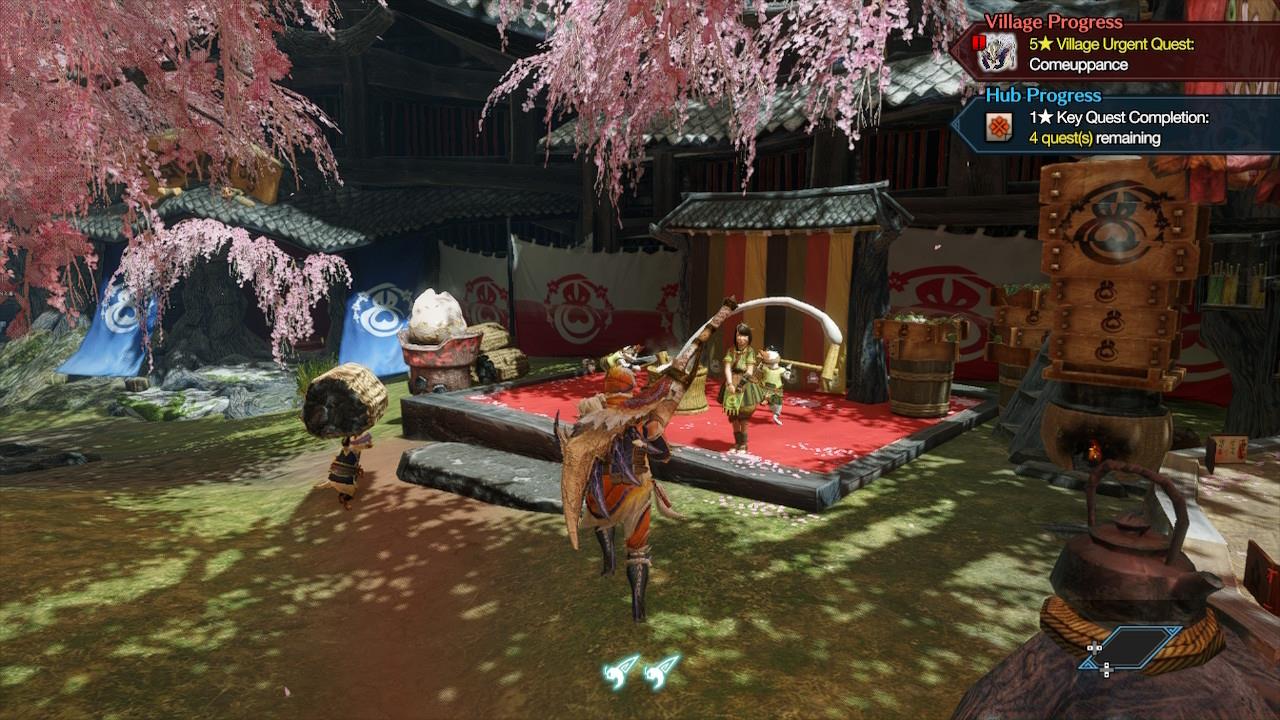
The canteen
Bunny Dango buffs range from straightforward stat increases (health, stamina) to economic advantages (higher zenny rewards, bonus materials). Optimal strategy involves mixing dango flavors to maximize the probability of multiple buffs activating simultaneously.
As you advance through Hunter Ranks, the canteen expands its menu with specialized dango tailored to specific environments and monster types. For example, anti-poison dango becomes invaluable when hunting venomous creatures like Rathian.
Take Items From The Supply Box
Every expedition location features a strategically placed base camp containing essential amenities, including the crucial supply box. This resource provides complimentary items that disappear post-mission, making them essentially free temporary assets.
Standard supplies include first-aid meds for health restoration and rations for temporary stamina expansion. Advanced players recommend creating a pre-mission checklist that includes supply box consultation as a non-negotiable step.
Load Up On Subquests
Beyond primary objectives, Hinoa and Minoto offer rotating subquests that provide supplemental rewards during normal gameplay. These secondary objectives typically involve material collection or specific monster elimination.
Maintaining five active subquests maximizes efficiency, as many complete naturally during standard hunting activities. The rewards system prioritizes Kamura Points and Armor Spheres, the latter being essential for upgrading armor defense values. Optimization tip: Rotate subquests based on your current hunting targets to minimize additional effort.
Put Your Spare Buddies To Work
While only two companions accompany you actively, the Buddy Plaza enables recruitment of numerous reserve Palamutes and Palicoes. Even unused buddies provide value through the Meowcenaries and Argosy systems for passive resource acquisition.
The Meowcenaries service, accessible through Felyne Chief Kogarashi, deploys four-buddy squads on gathering expeditions for modest Kamura Point investments.
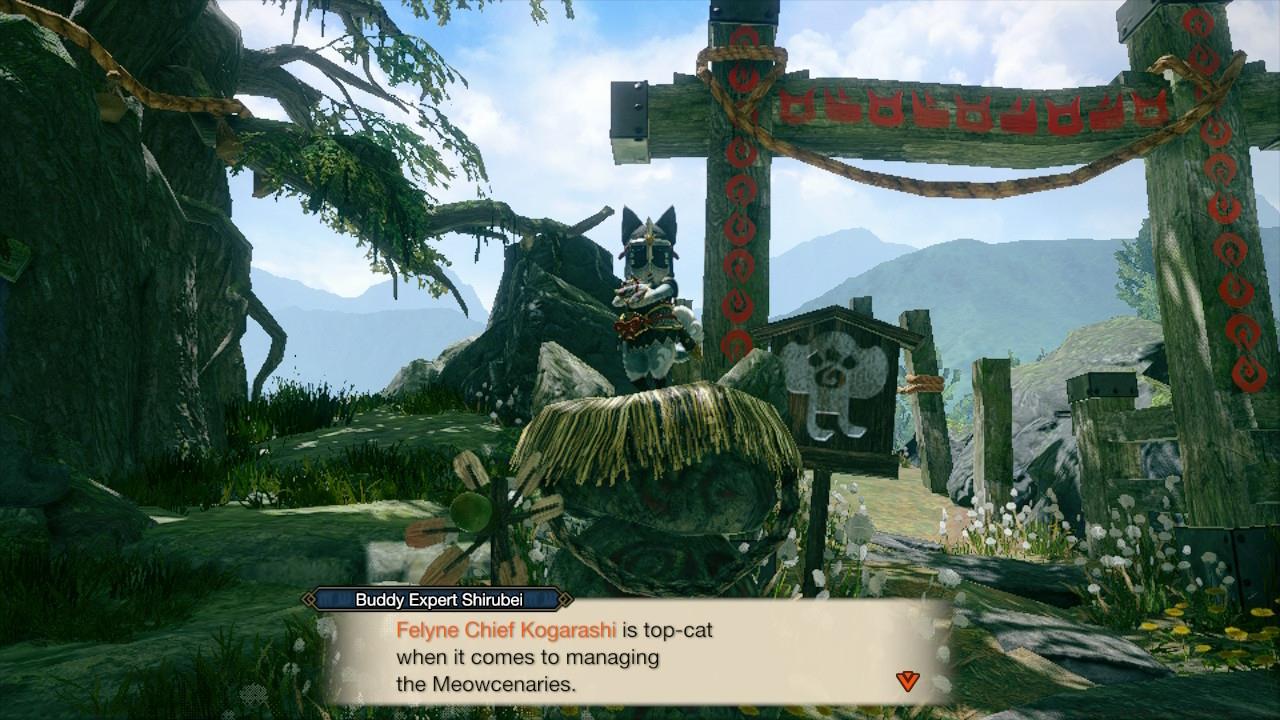
Speak to Kogarashi to send buddies on Meowcenary missions
Different gathering routes yield specialized material types, allowing targeted acquisition of scarce resources. The Argosy complements this through buddy-based bartering for specific item categories.
Additionally, the Buddy Dojo under Shirubei’s management provides efficient leveling for up to six reserve companions simultaneously. Each training session corresponds to one quest duration, providing experience gains and potential skill acquisition without active involvement.
Try Out Weapons At The Training Area
With 14 distinct weapon types featuring unique movesets and combat philosophies, weapon selection significantly impacts hunting effectiveness. The training area provides a risk-free environment for experimentation and mastery.
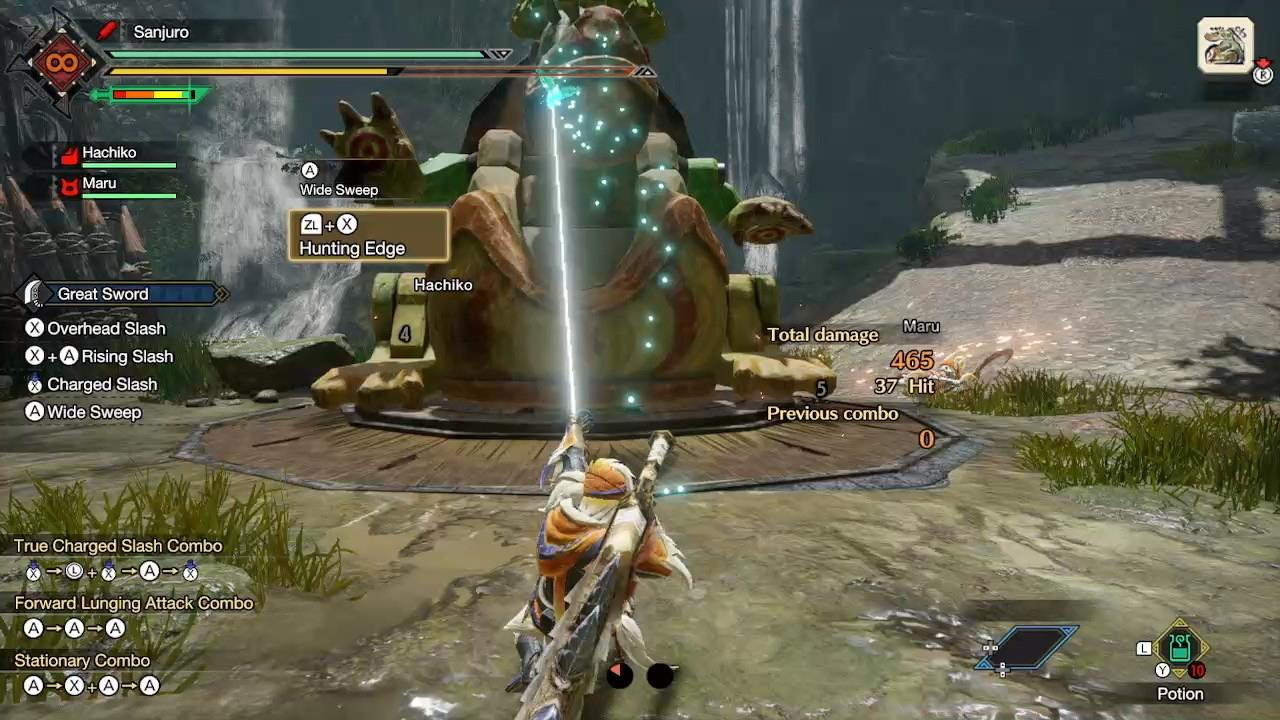
Battling the Toadversary in the training area
Accessible via the Buddy Plaza boat, this specialized zone features the Toadversary training dummy with customizable AI patterns and attack behaviors.
While the game provides a long sword initially, your item box contains one of each weapon type from the beginning, encouraging comprehensive testing. Advanced players recommend spending 15-20 minutes with each weapon type before committing to primary specialization.
The training area also serves as the ideal location for Wirebug proficiency development. The surrounding cliff formations enable practical application of aerial mobility and wall-running techniques essential for advanced combat.
Utilize Endemic Life
Each hunting ground contains diverse endemic life species that provide temporary combat advantages when utilized strategically.
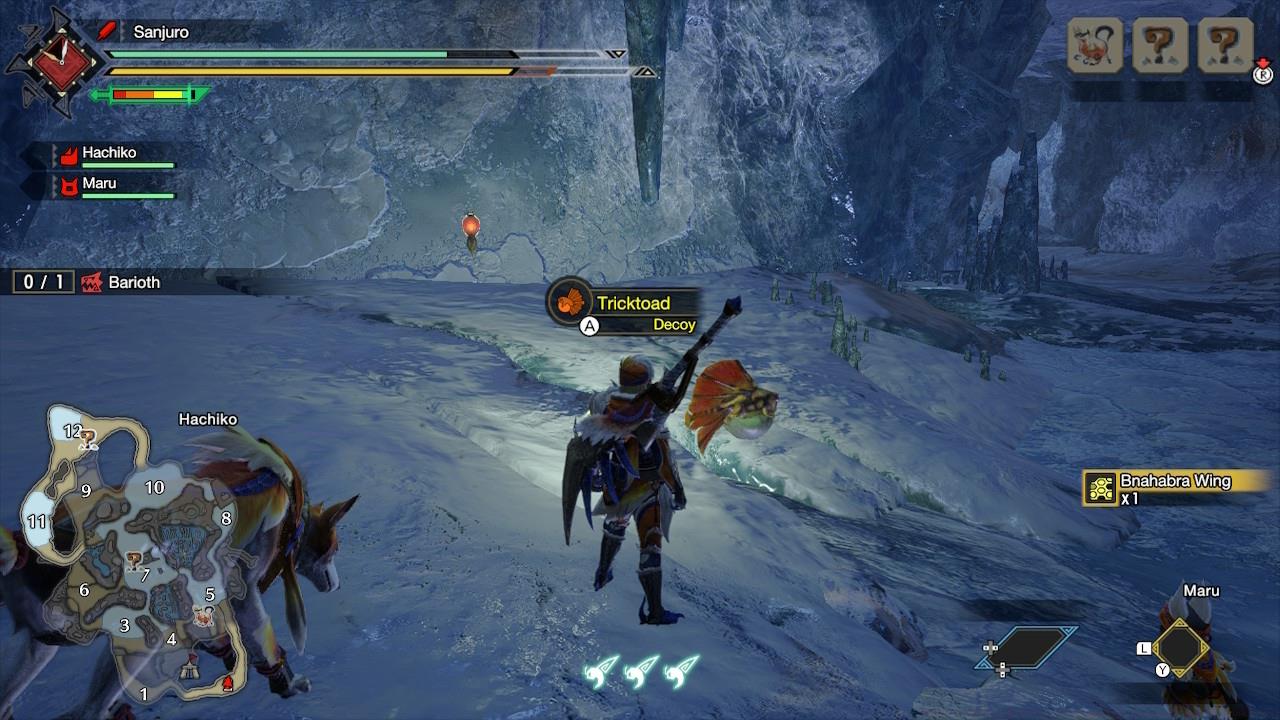
A truckload, one of the endemic life you can find in Monster Hunter Rise
Strategic endemic life usage can dramatically alter battle dynamics. The Tricktoad, for instance, creates effective diversionary tactics when facing aggressive monsters, while Vigorwasps provide crucial mid-fight healing without consuming inventory items.
Mastering The Wirebug
The Wirebug revolutionizes Monster Hunter mobility, enabling rapid traversal and sophisticated combat maneuvers. Mastery requires understanding both basic and advanced applications across different combat scenarios.
With weapon sheathed, execute angled launches (ZR+X) or forward propulsion (ZR+A) for positioning advantages.
Wall-running represents another critical Wirebug application: launch toward vertical surfaces while holding sprint to initiate horizontal movement, though this rapidly depletes stamina reserves.
During combat with drawn weapons, Silkbind attacks deliver substantial damage through weapon-specific special moves. Additionally, the Wirebug enables rapid recovery from monster attacks using ZR+B to break falls and maintain offensive pressure.
Motley Mix It Up
Beyond standard dango, Kamura’s canteens offer Motley Mix for converting surplus materials into usable consumables. This process yields Dango Tickets that enhance buff activation probabilities when redeemed for complimentary meals.
Switch Up Your Switch Skills
Progression unlocks Switch Skills—alternate attack patterns reminiscent of Hunter Arts from previous titles. Each weapon category features distinct Switch Skill options that dramatically alter combat approaches and require experimentation to optimize for individual playstyles.
The Great Wirebug
Senior Hunter Hanenaga periodically provides Great Wirebugs, the oversized variants enabling access to otherwise unreachable map regions.
Strategic placement at jewel lily locations launches hunters to elevated areas containing rare materials and strategic vantage points.
Wyvern Riding
Wyvern Riding represents a paradigm-shifting mechanic, allowing temporary monster control through two primary activation methods: sufficient Silkbind attack connections or inter-monster conflict provocation.
When monsters display the weakened glowing state, pressing A nearby initiates riding sequences. This advanced tactic enables both direct damage through wall collisions and strategic monster-versus-monster combat for softening resilient targets. Additionally, attacked monsters during riding sequences drop bonus crafting materials.
Monster Hunter Rise is available on Nintendo Switch, with PC release scheduled for 2022. Additional resources include comprehensive buddy management guides and monster-specific combat strategies available through our Complete Guide to battlefield strategy games.
Monster Hunter Rise Guides And News
- How To Kill Every Monster
- Essential Beginner And Advanced Tips
- How To Set Up Multiplayer
- + Show More Monster Hunter Rise Guides And News Links (7)
- Weapons Explainer – Which Weapon Is Right For You?
- Best Weapons For Beginners
- Buddy Explainer: How Palamutes And Palicoes Work
- Rampage Quest Tips And Explainer
- Amiibo Guide
- All The Best Armor We’ve Crafted (So Far)
Monster Hunter Rise structures player advancement through two distinct quest pathways that cater to different playstyles and experience levels. Understanding these systems early will dramatically improve your hunting efficiency and enjoyment.
Village Quests function as Monster Hunter Rise’s dedicated single-player narrative campaign. These missions are exclusively accepted from Hinoa in Kamura Village’s central area and serve as the primary method for experiencing the game’s storyline. Designed specifically for solo play, these quests gradually introduce mechanics and monster behaviors, making them ideal for newcomers learning core combat systems and exploration fundamentals. The carefully calibrated difficulty curve ensures players develop essential skills before facing more demanding challenges.
Hub Quests represent the game’s multiplayer-focused content ecosystem, managed by Minoto at the Gathering Hub west of Yomogi’s tea shop. While technically accessible solo, these missions feature significantly enhanced monster health pools and damage output balanced for cooperative play. Attempting Hub Quests alone requires advanced combat proficiency and thorough preparation, as the encounters assume multiple hunters will be coordinating attacks and sharing aggro management.
Progression through both quest lines follows a structured advancement system centered around Key Quests and Hunter Ranks. Completing specific Key Quests—identifiable by distinctive icons in mission listings—triggers Urgent Quests that serve as rank promotion tests. Successfully clearing these pivotal missions elevates your Hunter Rank, unlocking access to more formidable monsters and increasingly complex hunting scenarios that test your mastery of game mechanics.
Village and Hub Ranks maintain complete separation in progression tracking, requiring independent advancement through each system. However, strategic players can leverage Special License Tests available upon reaching Village Rank 4 to accelerate Hub Rank progression. These exclusive tests automatically promote your Hub Rank when completed, but only activate when a substantial disparity exists between your Village and Hub advancement levels.
Consistent pre-hunt preparation separates successful hunters from frustrated ones. The game’s canteen system provides temporary statistical advantages that can determine mission outcomes, especially during challenging encounters.
Bunny Dango consumption before departing on expeditions offers diverse combat enhancements with clearly communicated activation probabilities. The twin tea shops—located in western Kamura Village and within the Gathering Hub—serve identical menus featuring three-slot dango skewers. Each flavor combination carries specific buff potential ranging from health and stamina boosts to improved reward acquisition and material gathering rates. As you advance through Hunter Ranks, additional dango varieties become available, enabling more specialized meal planning based on target environments and monster weaknesses.
Every hunting locale features strategically positioned base camps equipped with essential amenities including rest tents and mission-critical supply boxes. These containers hold valuable consumables like first-aid meds for health restoration and rations for temporary stamina expansion. These resources remain completely free for the taking but disappear after mission conclusion, creating zero-cost opportunities for statistical advantages. Multiplayer parties should coordinate supply distribution to ensure optimal team resource allocation.
Advanced hunters should prioritize dango combinations that complement their weapon choice and playstyle. For example, bow users benefit tremendously from stamina-enhancing dango, while great sword wielders might prefer attack-boosting varieties. The activation percentage system allows for calculated risk-taking—sometimes opting for one high-probability buff proves more valuable than three low-chance enhancements.
Right from your initial adventure in Monster Hunter Rise, you’ll discover a complete arsenal of weapon types available in your item storage. This immediate access allows thorough experimentation at the training grounds before committing to any single weapon for actual monster encounters. Accessible via the vessel in Buddy Plaza, this specialized area features the Toadversary—a sophisticated mechanical training dummy with customizable AI behavior and attack patterns. Adjusting these parameters helps you develop muscle memory for each weapon’s unique combos and timing requirements.
Many newcomers underestimate the importance of mastering multiple weapon types early on. The training area provides the perfect low-risk environment to understand weapon reach, attack speed, and stamina consumption. Spending just 15-20 minutes with each weapon can dramatically improve your hunting success rate when facing different monster types and combat scenarios.
The Wirebug represents Monster Hunter Rise’s most significant gameplay innovation, revolutionizing both combat and exploration. When your weapon is stored, execute angled aerial launches (ZR + X) or forward projections (ZR + A) for rapid repositioning. This tool also enables wall-running mechanics—approach any vertical surface while holding the sprint button to traverse horizontally, though this rapidly drains your stamina reserve and concludes with an automatic dismount when exhausted.
During active combat with your weapon drawn, Wirebugs empower Silkbind attacks—devastating special maneuvers unique to each of the fourteen weapon categories. These techniques deliver substantial damage while creating strategic openings. Additionally, Wirebugs provide crucial recovery options; when knocked airborne by monster assaults, pressing ZR + B instantly stabilizes your landing. Mastering these inputs typically requires 2-3 hours of dedicated practice but becomes instinctive through repetition.
Advanced players should practice combining Wirebug moves with weapon attacks for seamless combat flow. A common mistake is overusing Wirebugs and depleting stamina at critical moments—always monitor your gauge during intense encounters.
Every hunting ground in Monster Hunter Rise contains diverse wildlife, including special creatures classified as endemic life. These organisms provide temporary combat enhancements when collected; for example, clothflies grant defensive buffs while vigorwasps restore health points. Strategic gathering of these creatures can mean the difference between victory and carting during challenging encounters.
A truckload, one of the endemic life you can find in Monster Hunter Rise
Certain endemic life species offer tactical advantages in monster confrontations. The Tricktoad emits pheromones that redirect monster aggression, creating valuable distraction opportunities when you’re under pressure. Seasoned hunters consistently scan their surroundings for these biological assets, incorporating them into their overall combat strategy for maximum efficiency.
Many hunters overlook the strategic placement of endemic life spawns. These creatures typically reappear in fixed locations, so memorizing high-value spawn points in each map can provide consistent access to their benefits throughout extended hunts.
Beyond the popular Bunny Dango, Kamura Village’s culinary establishments serve Motley Mix—a unique dish that transforms surplus materials like raw meat into usable consumables including rations. This efficient recycling system not only clears inventory space but also rewards you with Dango Tickets from Yomogi with each order. Redeem these tickets for complimentary Bunny Dango servings with enhanced activation probabilities for beneficial effects.
As you advance through Monster Hunter Rise’s progression system, you’ll gain access to Switch Skills—alternative combat techniques that modify your moveset, reminiscent of Hunter Arts from Monster Hunter Generations Ultimate. Every weapon category features distinctive Switch Skill sets unlocked through gameplay advancement, with variations significant enough to fundamentally alter combat approaches.
Complementing your standard Wirebugs, the game introduces Great Wirebugs—oversized variants distributed periodically by Senior Hunter Hanenaga. Deploy these at locations marked by glowing jewel lilies to reach elevated zones inaccessible through conventional means. These secluded areas frequently contain valuable resources like rare crafting components, making Great Wirebug utilization essential for comprehensive resource gathering.
Optimization tip: Always carry 3-5 Great Wirebugs for exploration missions. These specialized tools often lead to hidden areas containing endemic life spawns and mining nodes that refresh between quests, providing renewable sources of premium materials.
Action Checklist
- Complete 3-4 Village Quests to understand basic mechanics
- Test all 14 weapon types in Training Area for 15 minutes each
- Always eat Dango meals before quests and check supply boxes
- Assign spare Buddies to Meowcenary expeditions between hunts
- Master endemic life gathering routes on each map
- Complete Village Quests to Hunter Rank 4 before attempting Hub Quests
- Establish pre-mission routine: canteen meal → supply box → subquest activation
- Deploy reserve buddies through Meowcenaries and Argosy daily
- Spend 15 minutes in training area testing three different weapon types
- Practice Wirebug wall-running and Silkbind attacks until muscle memory develops
- Master Wyvern Riding activation through Silkbind attacks
- Complete Village Quests first to master core mechanics before attempting Hub challenges
- Utilize Special License Tests at Village Rank 4 to accelerate Hub progression
- Always consume strategically selected Bunny Dango before quests based on your weapon and target monster
- Thoroughly loot base camp supply boxes and coordinate distribution in multiplayer sessions
- Focus on Key Quests marked with special icons to unlock Urgent Quests for rank promotion
- Spend 15-20 minutes with each weapon type in training area before hunts
- Practice Wirebug recovery (ZR+B) until it becomes muscle memory
- Memorize 3-5 key endemic life spawn locations in each map
- Experiment with all Switch Skills for your main weapon to optimize playstyle
- Use Motley Mix regularly to convert spare materials and accumulate Dango Tickets
No reproduction without permission:SeeYouSoon Game Club » Monster Hunter Rise Guide: Essential Beginner And Advanced Tips