
TL;DR
- Lava farms use dripstone mechanics to generate renewable lava from source blocks
- Each cauldron takes approximately 19 minutes to fill, requiring multiple units for efficiency
- Powered rail automation systems dramatically improve collection speed and convenience
- Non-flammable materials are essential to prevent catastrophic base destruction
- Strategic placement and proper block selection optimize production rates significantly
Lava serves numerous essential functions in Minecraft, from fuel sources to defensive structures, yet natural deposits often lie inconveniently distant from established bases. Establishing a reliable renewable lava source transforms your resource management capabilities.
Creating sustainable lava generation requires understanding Minecraft’s dripstone mechanics combined with proper safety protocols. Many players discover the hard way that flammable materials near lava create devastating fire hazards. My initial attempt resulted in incinerating an entire tower level that took my team seven days to construct. Learn from these costly errors by implementing proper construction techniques from the outset.
The core principle involves utilizing pointed dripstone, cauldrons, and fire-resistant blocks to facilitate lava dripping from source blocks into collection vessels. With each cauldron requiring roughly 19 minutes to reach capacity, establishing multiple collection points becomes essential for practical lava production rates.
Successful lava farming requires authentic source blocks—stationary lava, not flowing variants—positioned above your cauldron array. While most stone variants work effectively, glass provides visibility benefits for monitoring lava flow. Wood-based materials present unacceptable fire risks and must be avoided entirely. This guide demonstrates constructing an optimized farm incorporating powered rail systems beneath for maximum collection efficiency.
Drawing inspiration from JC Playz’s YouTube expertise, this design accelerates lava harvesting through automated transportation. Essential materials for constructing this advanced lava farm include:
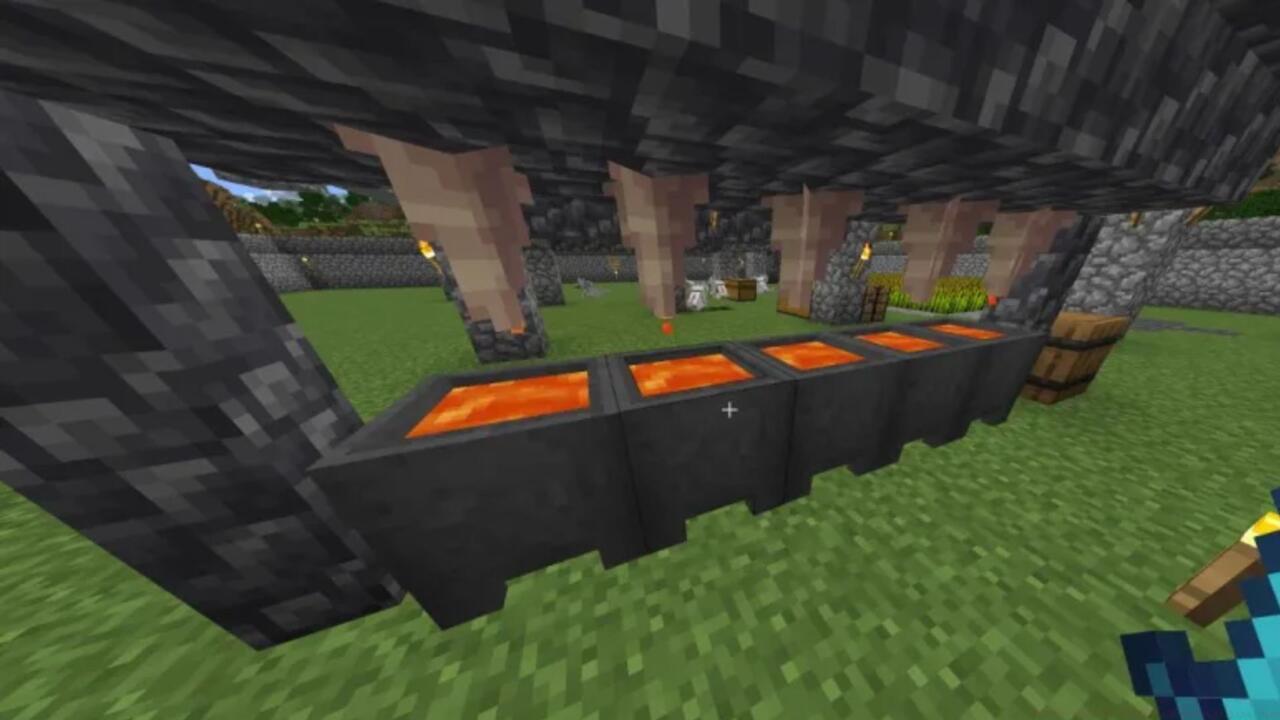
A simple lava farm
Begin construction by positioning a stone block with an attached lever and adjacent powered rail. This configuration controls rail activation states. Extend this with nine standard rails continuing the pathway.
1-3screen.jpg)
The start of the Minecraft lava farm rails
Connect subsequent rail segments: ten rails returning toward the lever, then another ten reversing direction, repeating this pattern until achieving five parallel rail lines. This creates the foundation for efficient lava transportation.
Minecraft farms can be automated with rails
Terminate each rail line with additional powered rails connected to lever-controlled stone blocks. This rail network streamlines collecting all generated lava. Next, construct a floating stone block above the initial non-powered rail by stacking four blocks then removing the lower three.
Create a 8×5 stone block grid
Transform this foundation into a solid 8×5 stone block platform, creating the structural base for your dripstone array and cauldron placement.
Add dripstone to the lower level of stone
Add cauldrons above the rail sections
Add source blocks of lava to the top of the farm
Strategic cauldron placement significantly impacts production efficiency. Position cauldrons directly beneath dripstone tips with exactly one air block separation. Multiple source blocks feeding individual dripstone clusters maximize output without additional space requirements.
Common construction errors include insufficient fireproofing, improper dripstone alignment, and inadequate collection system capacity. Ensure your rail network can handle maximum production rates by testing with temporary lava containers before finalizing construction.
Advanced players can incorporate hopper minecart systems beneath cauldrons for fully automated collection. This eliminates manual intervention while providing centralized storage. Consider building multiple vertical layers of dripstone arrays to scale production exponentially within the same footprint.
Production timing varies based on several factors: dripstone length (longer stalactites produce faster), world tick rates, and chunk loading status. For consistent output, build your farm within constantly loaded chunks near spawn or use chunk-loading devices.
Alternative designs include open-air versions for easier access or completely enclosed structures for aesthetic integration into bases. Each design presents trade-offs between accessibility, safety, and visual appeal.
Action Checklist
- Construct 8×5 stone platform with rail system beneath
- Install dripstone stalactites on lower platform level
- Position cauldrons beneath dripstone tips with one air gap
- Place lava source blocks above dripstone clusters
- Test rail automation system and fireproof all adjacent structures
No reproduction without permission:SeeYouSoon Game Club » How To Make An Infinite Minecraft Lava Farm Master Minecraft lava farming with dripstone mechanics, automated rail systems, and safety protocols for efficient renewable resource collection