
TL;DR
- Beds provide spawn point reset, health regeneration, and time acceleration capabilities
- Crafting requires three wool blocks and three wood planks arranged in specific patterns
- Strategic wool collection and plank production methods significantly reduce crafting time
- Proper bed placement and color customization enhance gameplay efficiency and aesthetics
- Advanced techniques include multi-bed strategies and emergency shelter integration
Understanding the multifaceted benefits of beds transforms your Minecraft survival experience from basic endurance to strategic mastery. These essential items serve three critical functions that dramatically improve your gameplay efficiency and safety.
When you first materialize in a new Minecraft realm, establishing a reliable spawn location becomes your immediate priority. Beds enable you to designate a safe respawn point, eliminating the frustration of reappearing in random, potentially dangerous locations after unfortunate encounters. The health regeneration aspect proves equally vital—sleeping instantly restores your health bar to maximum capacity, conserving precious food resources that would otherwise be consumed for gradual healing.
The time acceleration feature represents perhaps the most underutilized bed benefit. By sleeping through the night, you bypass the most hazardous period when hostile mobs spawn abundantly, effectively reducing your exposure to threats while maintaining game progression. This strategic time management allows you to focus on daylight activities like resource gathering and base building.
Mastering bed construction requires precise understanding of both material acquisition and crafting mechanics. The recipe demands three wool blocks positioned horizontally across the crafting grid’s center row, complemented by three wood planks arranged identically along the bottom row. This specific configuration cannot be altered without compromising the final product.
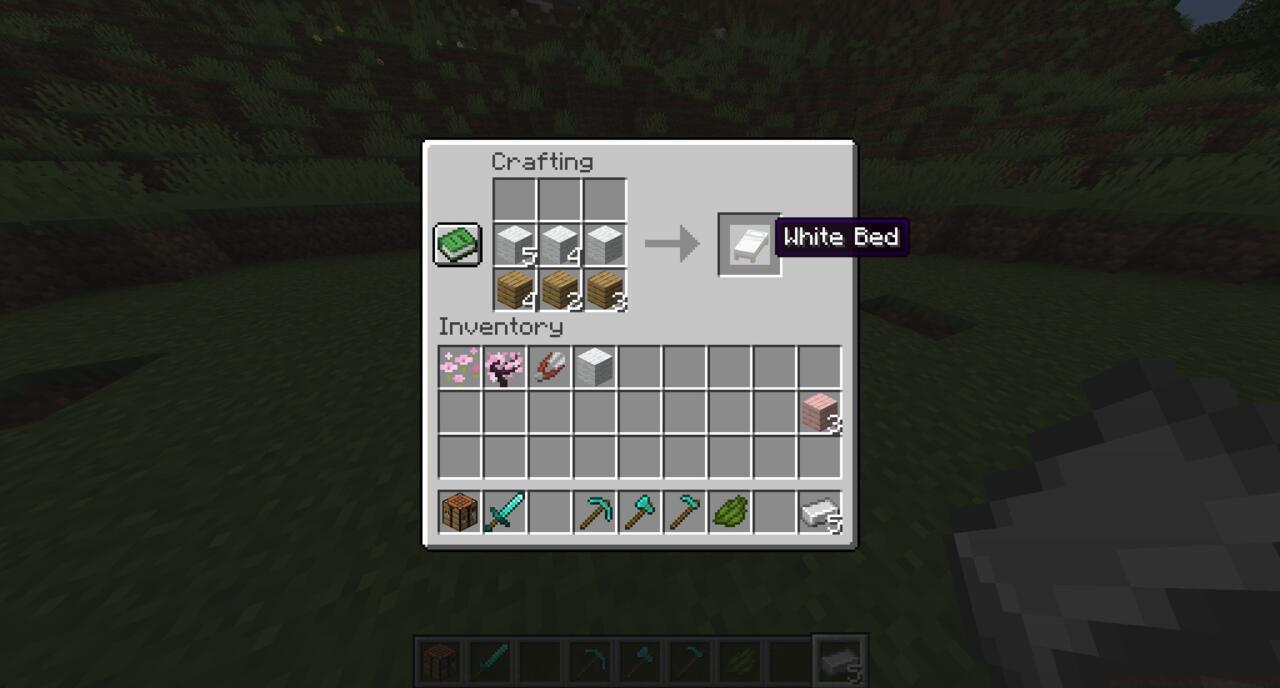
The precise arrangement for bed crafting requires careful placement of materials
Wood plank acquisition begins with identifying any tree variety—oak, birch, spruce, jungle, acacia, or dark oak. Using your fists or an axe, harvest at least three wood logs, then access your inventory crafting grid to convert each log into four planks. For optimal efficiency, create a crafting table immediately to process multiple logs simultaneously.
Wool collection presents greater complexity, requiring either sheep hunting or shearing. While eliminating sheep yields one to three wool blocks, shearing living sheep provides renewable wool without animal loss. Strategic biome exploration in plains, forests, or savannas increases sheep encounter probability. Critical insight: all wool must share identical coloration, though white wool can be dyed post-acquisition using various floral and mineral pigments.
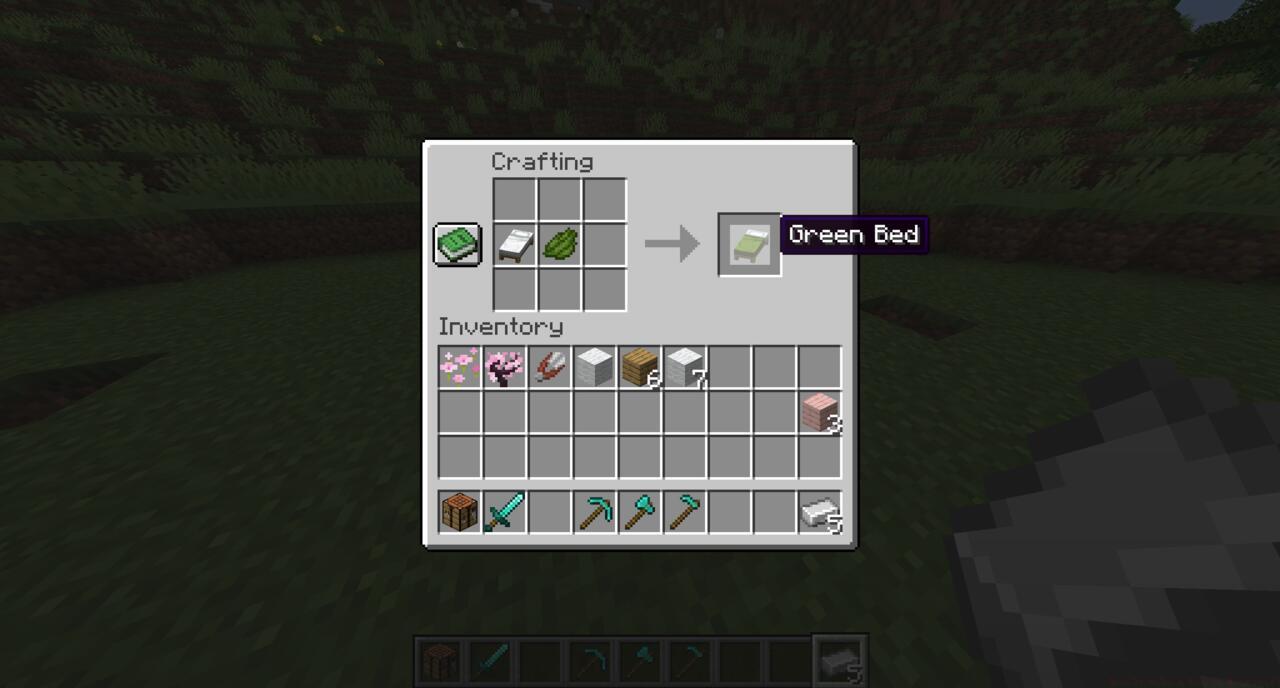
Colored beds offer aesthetic customization while maintaining identical functionality
Advanced players employ sheep breeding strategies, using wheat to propagate flocks near their base, ensuring consistent wool availability. This approach eliminates risky exploration missions and establishes sustainable resource production.
Beyond basic functionality, beds enable sophisticated gameplay strategies that separate novice survivors from seasoned veterans. Strategic placement considerations include positioning beds in secure, well-lit locations to prevent mob interruptions during sleep attempts.
Common crafting errors to avoid: mixing wool colors invalidates the recipe, insufficient headspace above the bed prevents usage, and attempting sleep during thunderstorms or with hostile entities nearby proves futile. Always ensure two blocks of vertical clearance and complete perimeter security.
Multi-bed strategies involve placing secondary beds at strategic resource locations—mine entrances, farming outposts, or exploration waypoints. This network approach minimizes travel time when respawning becomes necessary. Advanced technique: carry a bed during extensive explorations to establish temporary spawn points, dramatically reducing potential progress loss.
Integration with emergency shelter construction represents expert-level bed utilization. When caught outdoors at nightfall, rapidly construct a minimal 3×3 shelter with your bed as centerpiece, creating an instant safe zone.
For players seeking to expand their Minecraft expertise beyond survival basics, our Complete Guide offers comprehensive strategic frameworks applicable across gaming domains.
Expand Your Gaming Mastery:
Action Checklist
- Gather three wood logs from any tree variety and convert to planks
- Locate and collect three identically colored wool blocks from sheep
- Arrange materials in crafting table: wool center row, planks bottom row
- Place bed in secure, well-lit location with two-block headspace clearance
- Establish secondary bed network at strategic resource locations
No reproduction without permission:SeeYouSoon Game Club » How To Make A Bed In Minecraft Master Minecraft bed crafting with expert strategies for survival, spawn management, and time optimization