
TL;DR
- Supplies serve as universal currency while Flowers enable cosmetic customization through clothing dyes
- Wood types (Bamboo, Yew, Wax) progressively enhance bow power with distinct collection methods
- Metal resources (Iron, Steel, Gold) exclusively upgrade Katana and Tanto combat effectiveness
- Mongol territory liberation provides the most reliable Gold source for end-game upgrades
- Strategic resource allocation prevents wasting materials on rarely used equipment
Ghost of Tsushima presents a sophisticated crafting system where strategic resource management directly impacts your combat effectiveness and progression speed. Understanding the four primary material categories—wood, metal, cloth, and goods—enables you to make informed decisions about which upgrades to prioritize based on your playstyle.
Many players fall into the trap of immediately spending resources whenever the game prompts them, often resulting in wasted materials on equipment they rarely utilize. A deeper comprehension of each resource’s function and optimal acquisition methods ensures you maximize your investment in Jin’s arsenal development.
This comprehensive breakdown not only details each resource’s purpose but also provides advanced collection strategies that can save you hours of unnecessary farming. For broader gameplay guidance, consult our Complete Guide to master fundamental mechanics.
The goods category encompasses three distinct resource types with specialized functions that support different aspects of your progression. Unlike other materials, these resources serve both practical and aesthetic purposes throughout your journey across Tsushima.
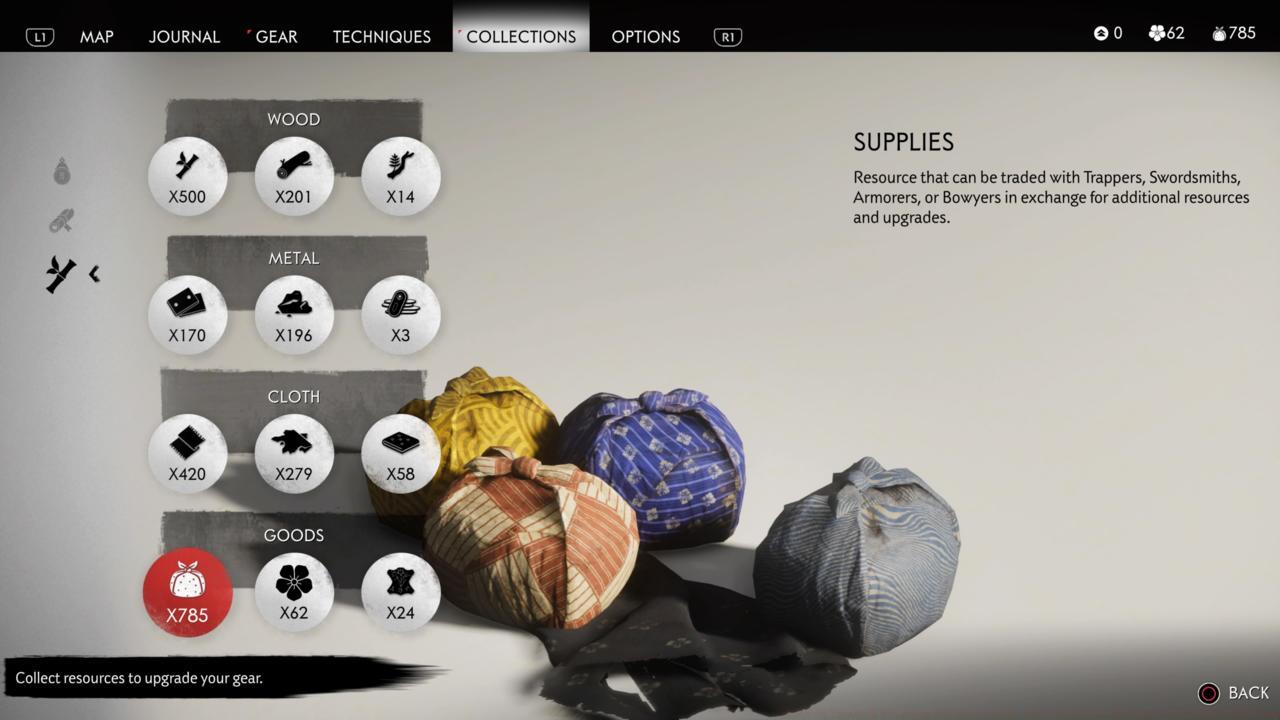
Supplies function as the game’s primary currency system, appearing abundantly throughout settlements, abandoned buildings, and Mongol camps. These essential items enable ammunition purchases and transaction-based upgrades from merchants, making them fundamental to all equipment enhancement. Without adequate Supplies, even the most extensive collection of other crafting materials remains unusable for upgrades.
Flowers provide exclusively cosmetic value, serving as currency for clothing dyes at merchants. These vibrant resources typically spawn in open fields and mountainous terrain rather than structured settlements. For efficient farming, mount your horse and systematically traverse the Toyotoma region marshes east of Umugi Cove, where they appear in concentrated clusters.
Predator Hides exclusively enhance ammunition capacity when traded to Trappers. Acquire these from aggressive wildlife including bears, wild boars, and Mongol war dogs—though canines only appear within occupied territory patrol routes. This specialization means you should prioritize hunting these creatures when ammunition limitations hinder your preferred combat approach.
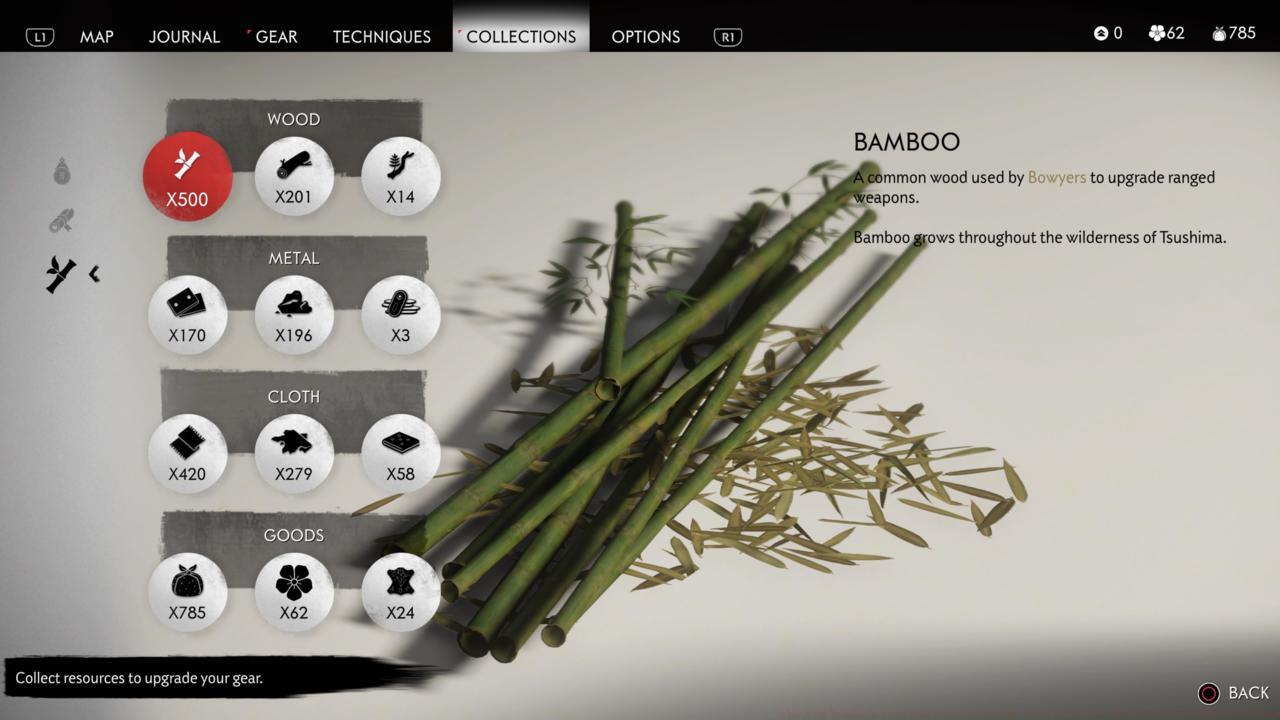
Wood resources specifically enhance your archery capabilities through progressive bow upgrades. The three wood varieties—Bamboo, Yew Wood, and Wax Wood—represent ascending tiers of enhancement materials required for maximum bow performance.
Bamboo and Yew Wood populate forested regions throughout Tsushima, typically appearing near dense tree clusters and wooded pathways. Early-game upgrades primarily utilize these more accessible materials before introducing higher-tier requirements.
Wax Wood presents the most specialized acquisition challenge, appearing exclusively as Shinto Shrine completion rewards. These sacred locations scattered across the island provide both spiritual reflection and essential upgrade components. For comprehensive shrine locations, reference our dedicated guide to optimize your collection route efficiency.
Advanced players should note that fully upgrading all bow types requires substantial investment across all three wood categories. Strategic collection during main story progression prevents tedious end-game farming sessions. Consider aligning shrine visits with nearby objectives to minimize backtracking across the expansive game world.
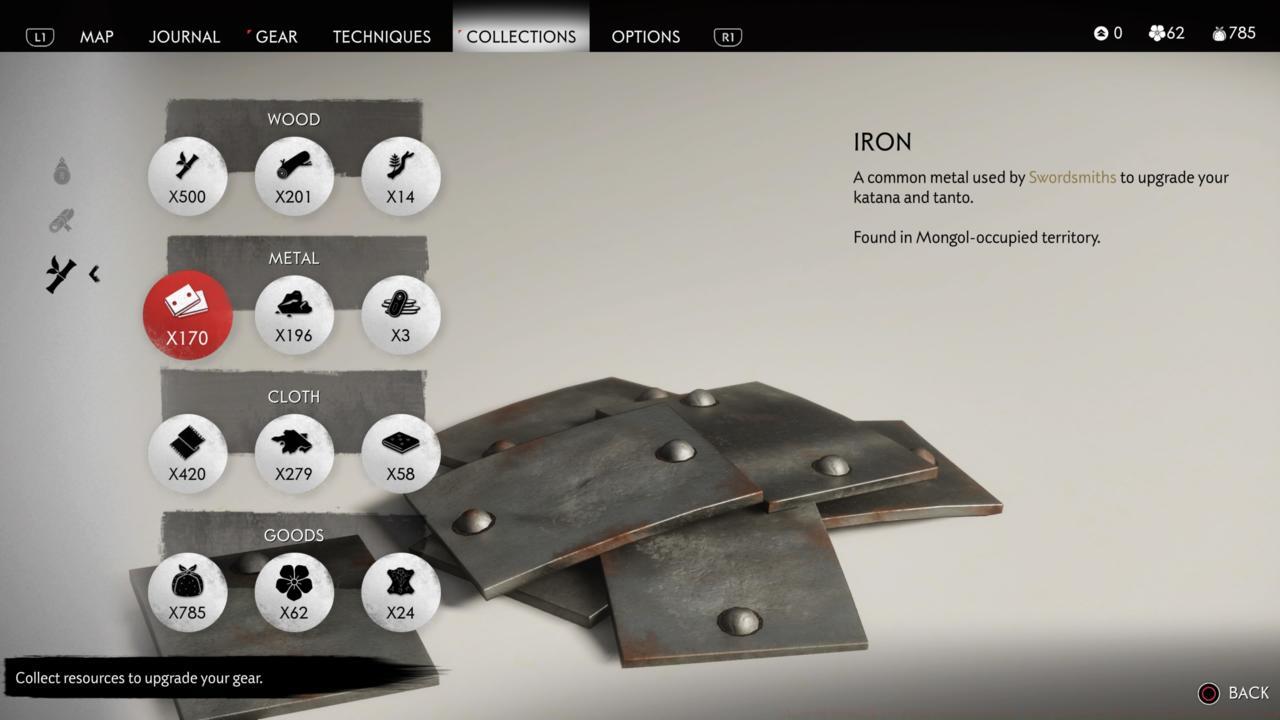
Metal resources represent the most combat-critical crafting materials, directly enhancing your primary melee weapons’ damage output and effectiveness. The three metal types—Iron, Steel, and Gold progressively upgrade both your Katana and Tanto throughout the game.
These valuable materials spawn exclusively within Mongol-occupied territories, including invaded villages, agricultural settlements, and military encampments. You’ll typically discover them scattered throughout tents, storage areas, and occasionally as random ground loot in these hostile zones.
Liberating occupied territories provides the most reliable method for acquiring Gold, the rarest metal variant essential for end-game upgrades. Each liberated area typically rewards 3-5 Gold units, making systematic territory clearance the optimal progression strategy. For weapon-specific enhancement guidance, our Weapons Unlock guide offers complementary strategic insights.
Seasoned players recommend prioritizing metal collection above other resources during the mid-game, as enhanced weapon performance significantly impacts combat efficiency against tougher Mongol forces. Balance exploration with targeted liberation to maintain upgrade momentum.
Mastering Ghost of Tsushima’s resource system requires understanding optimal upgrade sequences and efficient farming methodologies. Many intermediate players mistakenly distribute resources evenly across all equipment, resulting in underpowered essential gear during critical story moments.
Priority Upgrade Strategy: Focus metal resources on your primary Katana first, as melee combat remains central throughout the experience. For ranged specialists, prioritize bow upgrades using available wood stocks while maintaining sufficient Supplies for ammunition replenishment.
Common Collection Mistakes: Avoid spending Predator Hides on ammunition types you rarely utilize. Similarly, don’t invest heavily in outfit upgrades until you’ve secured your preferred armor set—consult our Class Guide for complementary equipment selection strategies.
Efficiency Optimization: Combine resource collection with main objective completion by scanning environments while traveling. Utilize Guiding Wind navigation to nearby points of interest when inventory runs low on specific materials.
Time Management: Dedicated farming sessions typically require 1-2 hours for substantial resource accumulation. Schedule these during natural progression breaks rather than interrupting critical story moments for optimal gameplay flow.
Action Checklist
- Prioritize Katana upgrades using metal resources before investing in secondary equipment
- Systematically liberate Mongol territories to accumulate Gold for end-game enhancements
- Farm Flowers in Toyotoma marshes while mounted for efficient cosmetic collection
- Complete Shinto Shrines systematically to stockpile Wax Wood for bow upgrades
- Align Predator Hide collection with your preferred ammunition types to avoid wasted resources
No reproduction without permission:SeeYouSoon Game Club » Ghost Of Tsushima Crafting Resource Guide: What Each Item Upgrades And Where To Get Them Master Ghost of Tsushima's resource system with expert strategies for efficient collection and smart upgrades