
TL;DR
- Merchants unlock around 50% through Antiquity Age via ‘Trade Opportunity’ notifications
- Produce merchants in 3-4 turns or purchase for 400 gold in cities/towns
- Trade route options expand with map exploration and leader interactions
- Strategic merchant placement across settlements maximizes route diversity and range
- Resource specialization and diplomatic benefits create compounding economic advantages
Merchants represent pivotal economic agents within your Civilization 7 empire, functioning as mobile conduits for resource acquisition and diplomatic outreach. Understanding their operational mechanics separates prosperous civilizations from stagnant ones.
Resources constitute the lifeblood of settlement advancement in Civilization VII. Beyond enhancing essential statistics like food production and research output, they facilitate diplomatic leverage with adjacent leaders. A diverse resource portfolio translates directly to enhanced economic resilience and growth potential.
Establishing trade routes through merchant units provides the most efficient method for accessing resources beyond your immediate territorial control. These specialized units, producible or purchasable in urban centers, initiate commercial exchanges that deliver both tangible resources and intangible diplomatic benefits.
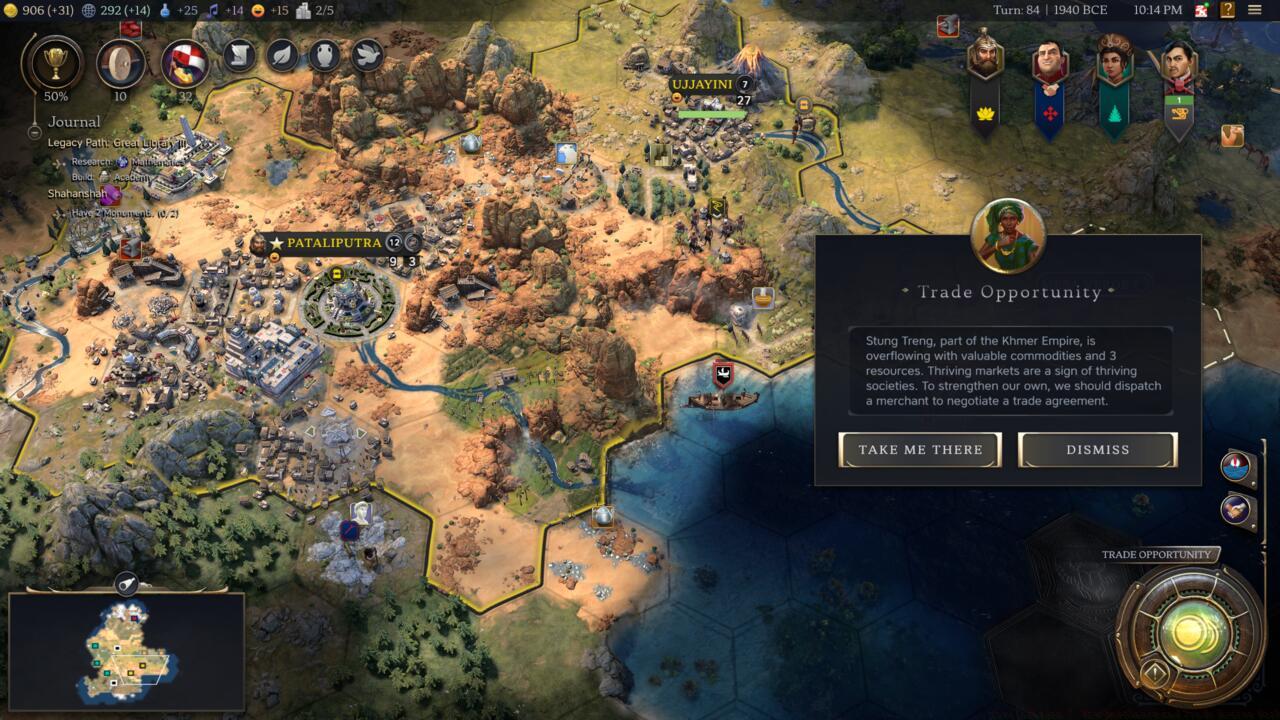
The message that grants you access to Merchants
Merchant availability typically emerges during the Antiquity Age’s midpoint, approximately 50% through this foundational era. The initial “Trade Opportunity” notification serves as your definitive signal that commercial expansion has become possible. This diplomatic communiqué highlights resource-abundant neighboring civilizations and explicitly recommends dispatching merchants to establish mutually beneficial trade relationships.
Upon receiving this notification, navigate to your capital’s production interface and locate the “Merchant” unit within available production options. Standard production requires 3-4 turns, while immediate acquisition costs approximately 400 gold. Both cities and towns support merchant procurement, offering strategic flexibility in unit deployment.
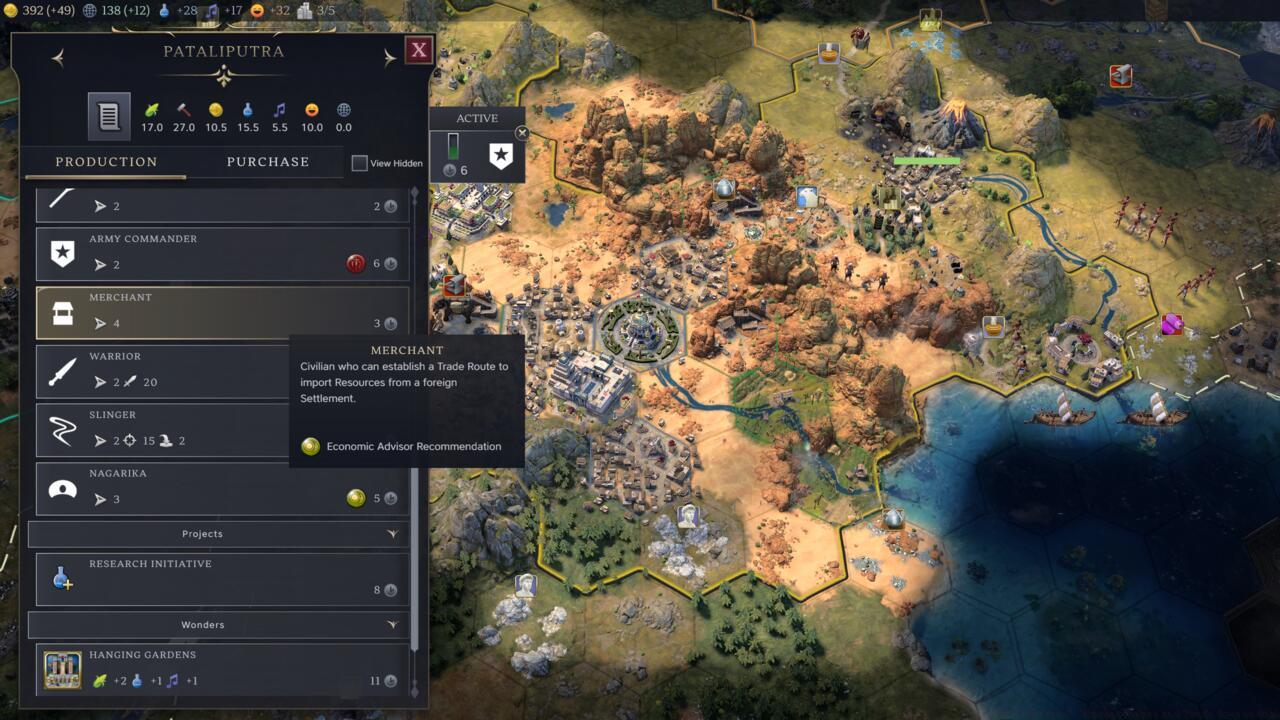
Producing a Merchant in Civilization VII
Following merchant production, strategic destination selection becomes paramount. Unit activation during your turn reveals all accessible trade routes, with availability directly correlating to discovered leaders and their established settlements throughout your exploration efforts.
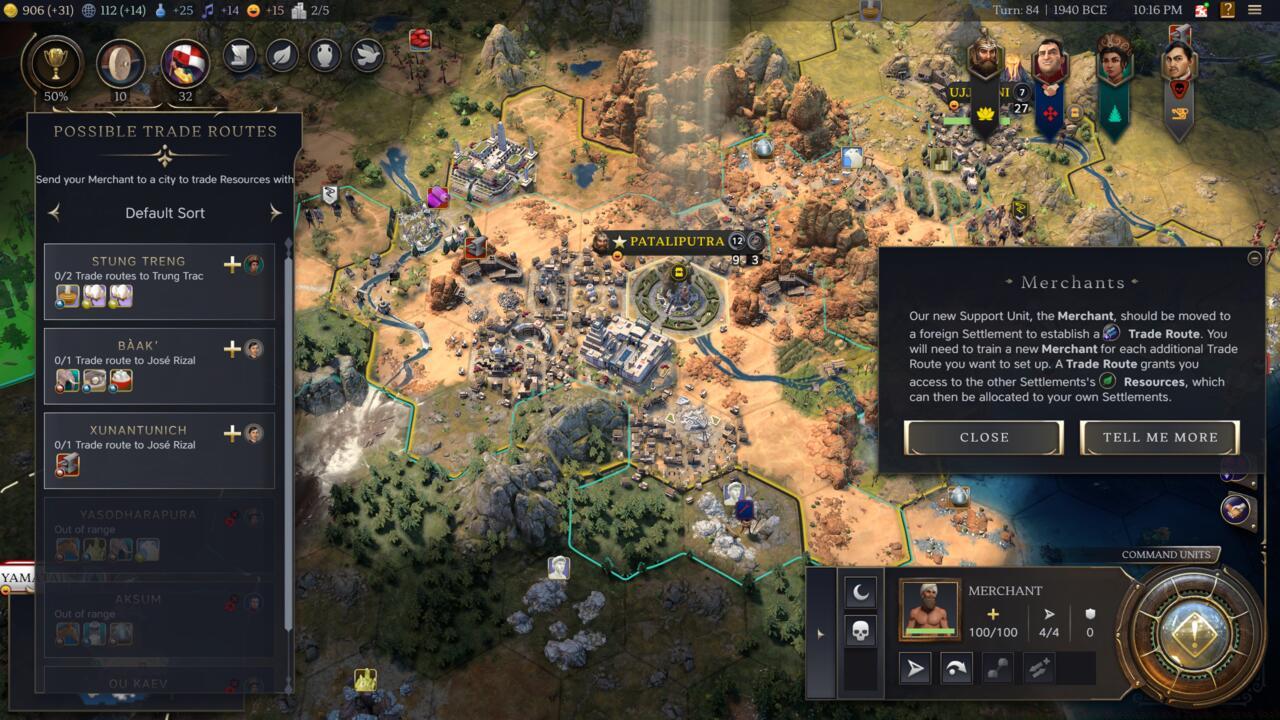
Your first look at the Merchant screen
During the merchant’s inaugural active turn, carefully evaluate potential trading partners based on resource offerings. While prioritizing settlements with diverse resource portfolios generally yields optimal returns, targeted route establishment for specific稀缺 resources can address immediate strategic needs. This specialization approach proves particularly valuable when pursuing specific technological advancements or addressing resource deficiencies.
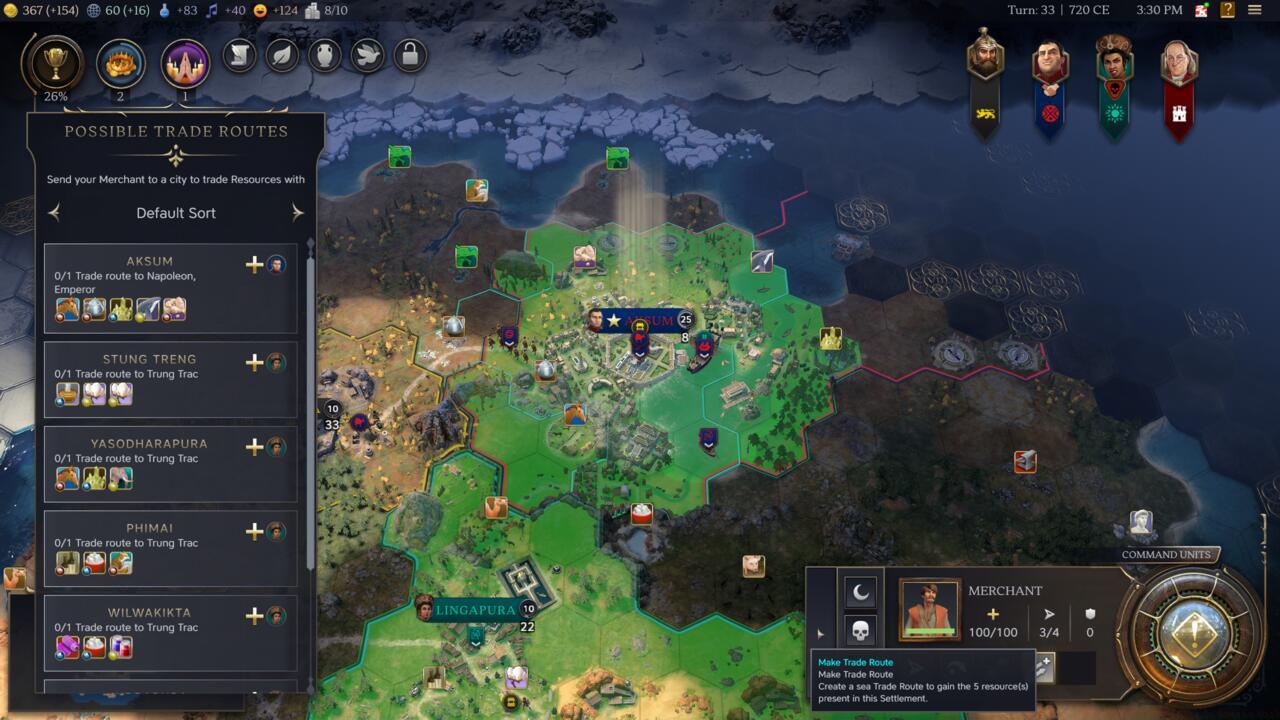
Choosing to establish a trade route to another settlement
Expanding your trade network necessitates continued cartographic exploration and diplomatic engagement with additional leaders. Merchants operate within defined operational radii from their deployment locations, making distributed production across multiple settlements a strategically sound approach for maximizing route diversity and geographic coverage.
Pro Tip: Establish merchants in coastal cities first, as they typically access both land and sea routes, effectively doubling potential trading opportunities compared to inland settlements.
Early Game Optimization: Focus your initial merchants on establishing routes with civilizations offering complementary resources. If your empire specializes in agricultural production, target partners with mineral or technological resources to create balanced economic development.
Mid-to-Late Game Scaling: As your empire expands, strategically position merchants in frontier settlements to access previously unreachable trading partners. This decentralized approach minimizes travel time and maximizes route efficiency.
Common Mistakes to Avoid: Novice players frequently concentrate merchants exclusively in their capital, severely limiting geographic reach. Another prevalent error involves ignoring the diplomatic relationship benefits that accrue from sustained trade partnerships, which can prevent costly military conflicts.
Strategic Insight: Trade routes generate ongoing relationship improvements with partner civilizations, effectively functioning as continuous diplomatic favor generation. This secondary benefit often proves as valuable as the primary resource transfer, particularly when navigating delicate political landscapes.
For comprehensive strategic guidance similar to what you’d find in a Complete Guide, consistently monitor relationship status with trading partners, as severed diplomatic ties immediately terminate associated trade routes.
Action Checklist
- Monitor for ‘Trade Opportunity’ notifications around Antiquity Age midpoint
- Produce merchant in capital (3-4 turns) or purchase for 400 gold
- Select merchant and evaluate available trade routes based on resource needs
- Establish route prioritizing either resource diversity or specific稀缺 materials
- Expand exploration to unlock additional trading partners and route options
- Deploy subsequent merchants in strategically positioned settlements for optimal coverage
No reproduction without permission:SeeYouSoon Game Club » Civilization 7: How Merchants And Trade Routes Work Master Civilization 7 trade mechanics with expert strategies for merchants and profitable routes