
TL;DR
- Travis Hunter leads with 84 OVR as a rare two-way player with exceptional versatility
- The 2026 rookie class features immediate starters across multiple positions with unique skill sets
- Strategic deployment of rookies can provide significant salary cap advantages in Franchise Mode
- Proper development planning can turn mid-70s rated players into 90+ OVR superstars
- Understanding hidden attributes and development traits is crucial for maximizing rookie potential
The highly anticipated Madden 26 rookie ratings have officially launched, introducing several immediate impact players who can transform your virtual franchise. EA Sports has carefully calibrated these ratings following the reveal of the prestigious 99 Club, creating one of the most balanced and exciting rookie classes in recent Madden history.
What makes this year’s rookie cohort particularly compelling is the exceptional depth across all positions. From game-changing defensive anchors to explosive offensive weapons, teams now have access to legitimate difference-makers who can contribute immediately. The standout feature this season is the inclusion of a truly unique two-position prospect, offering unprecedented strategic flexibility for creative team builders.
Below, we provide comprehensive analysis of the top 10 rookies by overall rating, including detailed breakdowns of their key attributes, development potential, and optimal usage scenarios to maximize their impact on your team’s success.
For additional Madden 26 rating insights and strategic guidance, explore these essential resources:
Leading this exceptional class is Jacksonville’s revolutionary talent Travis Hunter, whose 84 OVR rating reflects his unprecedented two-way capabilities. Selected second overall in the draft, Hunter possesses the rare ability to excel at both wide receiver and cornerback, offering franchise-altering versatility that can fundamentally change how you approach team construction and in-game strategy.
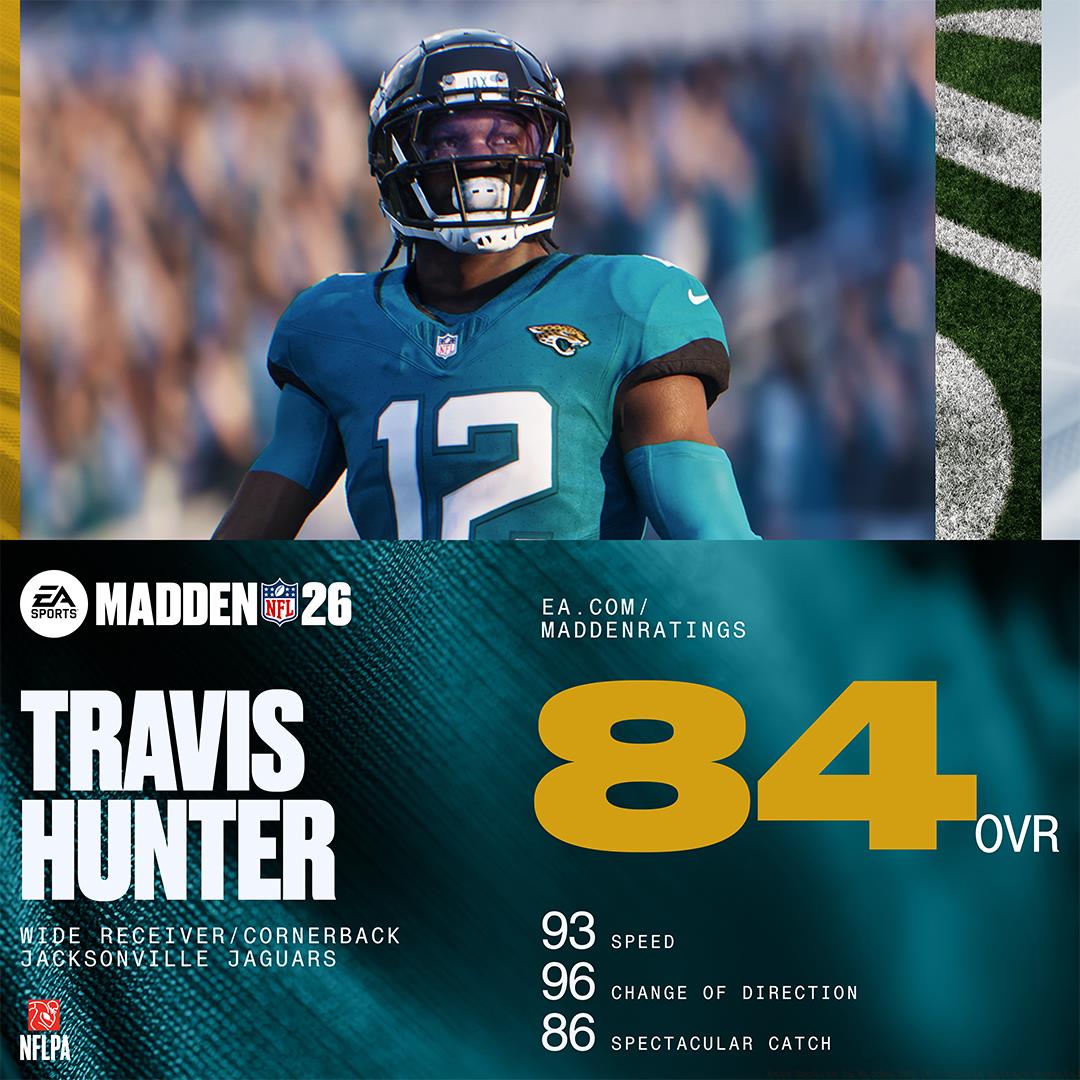
Travis Hunter’s dual-position capability makes him the most strategically valuable rookie in Madden 26.
Travis Hunter’s foundational attributes showcase his elite potential:
Following Hunter, Ashton Jeanty enters with an impressive 83 OVR rating, bringing a powerful running style complemented by exceptional receiving skills out of the backfield. His balanced attribute distribution makes him an immediate three-down back option for teams needing backfield stability.
Defensive standout Abdul Carter at 81 OVR provides immediate pass-rushing prowess with development traits suggesting rapid improvement. His combination of speed and power makes him particularly effective in blitz packages and contain situations.
Mason Graham’s 80 OVR rating as an interior defensive lineman reflects his advanced technique and run-stopping ability. His high strength rating and block-shedding skills make him an early candidate for defensive rookie of the year consideration.
The 79 OVR duo of Will Campbell and Jalon Walker offer contrasting skill sets – Campbell provides offensive line stability with excellent pass protection fundamentals, while Walker brings versatile linebacker capabilities with coverage skills unusual for his position.
Completing the top 10 are four 78 OVR prospects: Kenneth Grant (DT), Jahdae Barron (CB), Mykel Williams (DE), and Maxwell Hairston (CB). This cluster represents excellent value picks with specific specialized skills that can address targeted team needs without sacrificing long-term development potential.
Successfully integrating these rookies requires understanding both their immediate capabilities and long-term development curves. Travis Hunter’s dual-position functionality creates unique strategic advantages – you can deploy him as a WR3/CB4 hybrid, maximizing roster flexibility while conserving valuable salary cap space.
Franchise Mode Deployment Strategy: Begin by identifying which position better serves your team’s immediate needs, but regularly reassess based on injury situations and matchup advantages. Hunter’s versatility allows you to carry one less player at either receiver or cornerback, creating roster flexibility for specialized role players.
Ultimate Team Chemistry Optimization: Rookies often feature in promos and challenges, making them valuable for completing squad-building objectives while maintaining competitive lineups. Their lower initial costs provide excellent value during the early stages of Ultimate Team development.
Common Rookie Utilization Mistakes:
Progression Planning: Identify each rookie’s development trait (Normal, Star, Superstar) and allocate training resources accordingly. Players with Superstar development traits should receive priority in weekly training focus and in-game snaps.
Understanding the hidden progression mechanics is crucial for transforming these rookies into franchise cornerstones. Focus development resources on attributes that align with each player’s designated role rather than attempting balanced improvement across all categories.
Attribute Development Priority: For two-way players like Hunter, concentrate initially on the position where they’ll receive most snaps, then gradually build secondary position skills. This targeted approach accelerates overall rating growth while maintaining positional effectiveness.
Chemistry Building Strategies: Pair rookies with veteran mentors at their position to accelerate development curve progression. The mentorship system in Franchise Mode provides tangible attribute boosts and faster development trait upgrades.
Long-term Value Maximization: Monitor the progression milestones and adjust training focus based on performance thresholds. Players showing rapid improvement in key situational metrics often have hidden development accelerators.
Pro Tip: Utilize the practice mode to test rookies in various positions and situations before committing to their long-term development path. This experimental phase can reveal unexpected strengths or compatibility issues with your existing scheme.
For comprehensive guidance on building a complete championship-caliber team, explore our detailed strategy guide covering advanced tactics and meta-breaking approaches.
Action Checklist
- Evaluate team needs and identify which rookies address immediate roster gaps
- Assign initial positions for two-way players based on current roster weaknesses
- Create development plan focusing on 2-3 core attributes per rookie
- Implement mentorship pairings with veterans to accelerate development curves
- Monitor fatigue and performance metrics to adjust playing time and development focus
No reproduction without permission:SeeYouSoon Game Club » Best Rookies In Madden NFL 26 – Rookie Ratings Revealed Complete breakdown of Madden 26's top rookie ratings with expert analysis and team-building strategies