
TL;DR
- Master six distinct pass types: touch, bullet, lob, high, low, and throw away
- Learn precise button timing – tap vs hold vs quick tap techniques
- Understand situational usage for each pass type against different defensive schemes
- Avoid common mistakes like bullet passes into tight coverage or mistimed lob throws
- Implement advanced techniques like lead passing and trajectory manipulation
Elevating your quarterback performance in Madden NFL 26 requires mastering a diverse toolkit of passing techniques. While many players stick to basic throws, understanding the full spectrum of available passes can dramatically improve your offensive efficiency and scoring capability.
As a field general, you command multiple offensive options beyond simple passing – including quarterback scrambles, strategic throwaways, and calculated sack-taking to protect possession. However, the passing game remains your primary weapon, and strategic execution separates average quarterbacks from elite playmakers.
Madden 26 features a sophisticated passing system that enables precise ball placement and trajectory control. These mechanics allow you to optimize receiver positioning, maximize catch probability, and exploit defensive vulnerabilities. The game provides limited explicit instruction on these techniques, making this comprehensive guide essential for competitive play.
Quarterbacks command three primary passing categories complemented by specialized situational throws. The foundational passes include standard touch passes, high-arcing lob throws, and velocity-driven bullet passes. Additionally, you can execute precision high and low passes, plus emergency throwaway maneuvers. Each variation demands specific controller inputs and produces distinct ball flight characteristics.
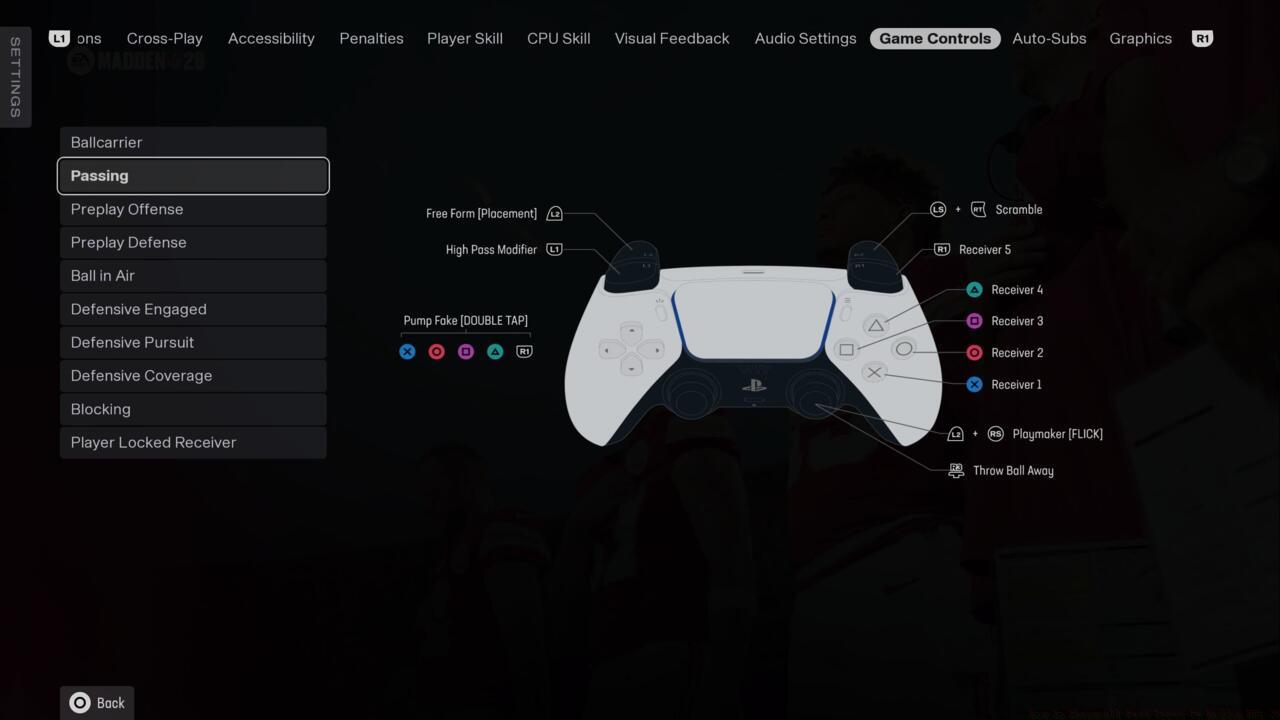
Visual reference for Madden 26’s comprehensive passing control scheme
The standard touch pass represents your balanced, all-purpose throwing option with moderate velocity and trajectory. Lob passes incorporate significantly higher arc, sacrificing speed for extended distance and receiver adjustment time. Conversely, bullet passes prioritize velocity above all, reaching targets rapidly but with reduced margin for error.
Specialized throwing techniques include high-point and low-trajectory passes that manipulate catch positioning. High passes elevate the target point above defenders, while low throws stay beneath coverage. The throwaway pass functions as your safety valve, intentionally grounding the ball to avoid turnovers when pressured.
Precise controller execution separates consistent passers from erratic throwers. Each pass type requires distinct timing and pressure sensitivity to achieve optimal results.
Touch passes demand quick, precise button taps with immediate release. This technique generates passes with natural arc and catch-friendly placement. Perfect execution involves tapping the receiver button firmly but briefly, almost like a quick press-and-release motion.
Bullet passing necessitates sustained button pressure throughout the throwing motion. Maintain receiver button depression until the quarterback completes his throwing animation for maximum velocity. However, excessive hold time can lead to overthrown passes.
Lob throws require rapid double-tap execution – essentially two quick successive presses. The timing between taps critically influences trajectory height, with tighter intervals producing lower arcs.

Demonstrating proper bullet pass technique against zone coverage
High-point passes combine receiver button input with simultaneous up-directional stick movement. This positions the catch point above trailing defenders, ideal for jump-ball situations.
Low trajectory throws mirror high passes but employ downward stick input. These work exceptionally well against deep safety coverage or for sideline throws.
Throwaway maneuvers utilize specific button combinations (typically L2/R2 + Square/X) to safely ground the ball when pressured.
Advanced Execution Techniques
Lead passing incorporates directional input during throws to position the ball ahead of moving receivers. This advanced technique requires anticipating receiver routes and defensive positioning.
Pass protection awareness significantly impacts throwing effectiveness. Identify blitz packages pre-snap and adjust your protection schemes accordingly. Hot route adjustments can create quick outlet options against pressure.
Timing-based passing leverages receiver separation windows. Optimal throws occur when receivers break from coverage, not necessarily when they’re initially open.
Strategic pass selection transforms your offensive approach from predictable to dynamic. Understanding when to deploy each passing type creates defensive mismatches and maximizes yardage gains.
Touch passes excel on intermediate routes (10-20 yards) against zone coverage. Their moderate trajectory allows receivers to adjust while maintaining reasonable speed. Perfect for curl routes, out patterns, and crossing routes over the middle.
Bullet passes dominate short-to-intermediate situations requiring quick delivery. Use them against blitz packages, on slant routes, and in tight-window throws where timing is critical.
Lob throws prove most effective on deep patterns (20+ yards) and fade routes. Their high arc provides receivers additional time to locate and position for the catch.
Defensive Scheme Exploitation
Against man coverage, high-point passes create advantageous jump-ball scenarios for taller receivers. Low throws work well against deep safety help, keeping the ball beneath coverage layers.
Third-down situations demand specific passing approaches. On third-and-medium (4-7 yards), bullet passes to slot receivers on quick outs provide reliable conversion options.
Red zone passing requires precision and trajectory manipulation. High passes to back-shoulder fades and low throws to drag routes become particularly effective inside the 20-yard line.
Advanced Game Situations
Two-minute drill scenarios prioritize clock management alongside completion probability. Quick bullet passes to boundary receivers who can get out of bounds preserve precious time.
Prevent defense scenarios (late-game leads) invite methodical touch passing and strategic ball placement away from defenders.
Weather conditions significantly impact passing effectiveness. Rain and wind conditions favor lower trajectory throws with reduced air time, making bullet and low passes more reliable.
For those mastering offensive strategies, our Complete Guide offers complementary tactical frameworks for overall game mastery.
Quarterback attributes influence passing effectiveness. Players with high Throw Power excel with bullet passes, while those with high Throw Accuracy perform better with touch and precision throws.
Action Checklist
- Practice touch pass timing in Skills Trainer for 15 minutes
- {‘step’: ‘2’, ‘title’: ‘Master bullet pass execution against blitz packages’, ‘difficulty’: ‘Intermediate’, ‘time_estimate’: ’20 minutes’}
- Experiment with high/low passes in red zone scenarios
- Implement lead passing techniques on crossing routes
- Analyze defensive coverages pre-snap to select optimal pass types
No reproduction without permission:SeeYouSoon Game Club » How To Throw All Pass Types In Madden NFL 26 Master Madden 26's passing mechanics with expert techniques, situational strategies, and advanced tips