
TL;DR
- Distant lands require reaching Exploration Age and specific tech unlocks like Cartography and Shipbuilding
- Use Continent Lens to identify true distant lands separated by deep ocean with unique resources
- Scout early but focus serious exploration after unlocking ocean-crossing capabilities
- Treasure fleets from distant lands accelerate Economic Victory progression
- Avoid wasting time on nearby continents that don’t meet distant land criteria
Mastering distant land exploration represents a critical strategic pivot in Civilization 7, marking your civilization’s transition from regional power to global contender during the Exploration Age.
Distant lands in Civilization 7 constitute territories beyond your starting continent that become accessible during the Exploration Age era. These newly discovered regions provide access to exclusive resources, enable treasure fleet expeditions, and serve as prerequisites for multiple Exploration Age Legacy Paths that shape your civilization’s development trajectory.
Our comprehensive Civilization 7 guide delivers actionable intelligence on strategic approaches to locating distant lands while clarifying the game’s sometimes ambiguous geographical terminology.
While initial continental discoveries might occur during Antiquity Age scouting expeditions, true distant lands require specific technological and era progression before delivering their full strategic benefits. Early sightings should be noted but not pursued aggressively until proper preparation is complete.

Before committing resources to transoceanic expeditions, you must achieve critical technological breakthroughs through targeted research investment in the Tech tree.
The essential technology pathway requires progressing through these research nodes:
Cartography represents the foundational breakthrough, enabling civilian units including scouts and settlers to traverse ocean terrain tiles that were previously impassable barriers.
Shipbuilding provides the subsequent advancement, allowing your units to cross oceanic terrain without suffering potential damage from turbulent seas and storm events that could cripple early expeditions.
Many players underestimate the research time required for these technologies. Plan for approximately 15-20 turns of focused research after entering the Exploration Age, depending on your science output and existing technological development.
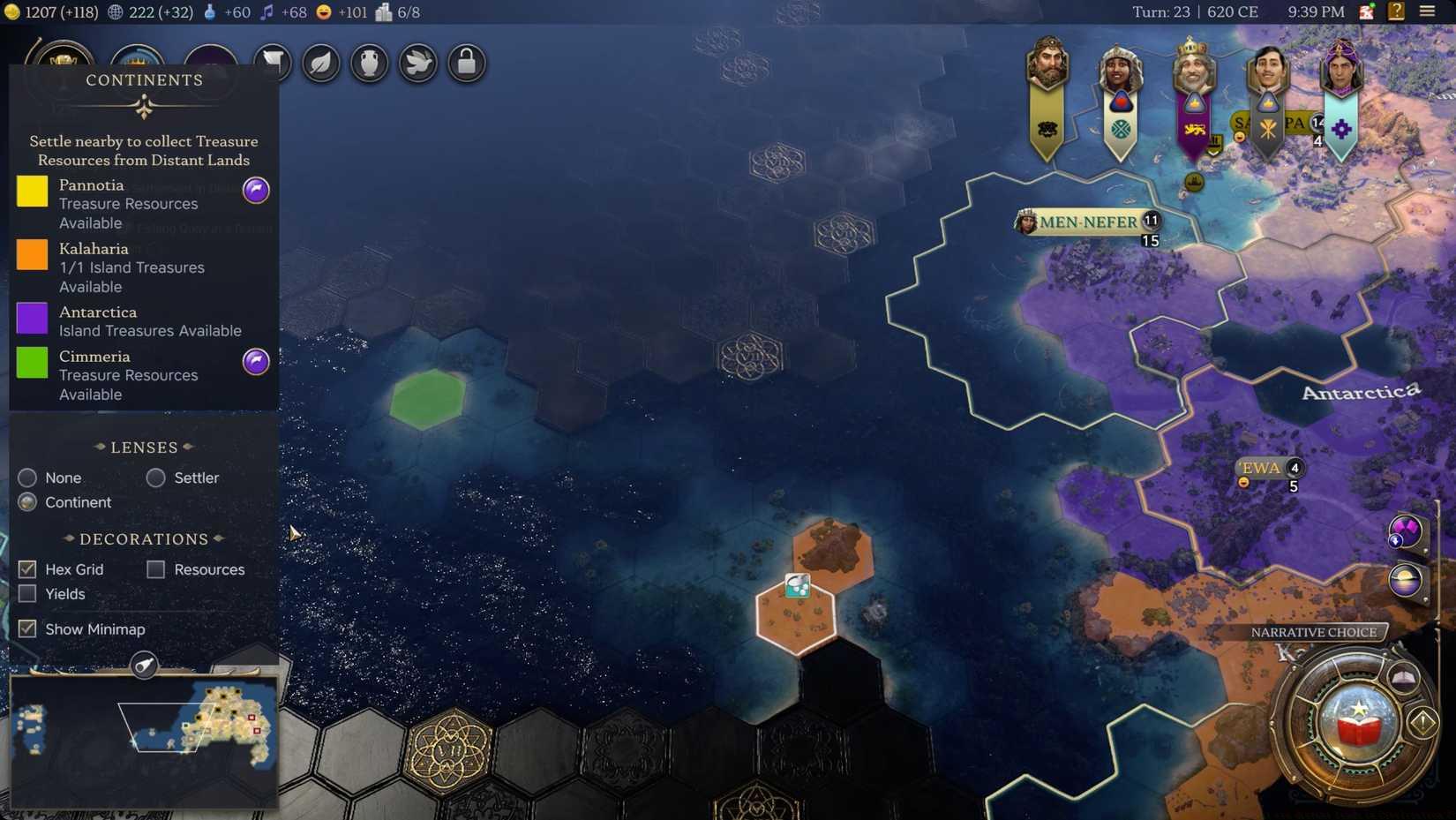
Image: Firaxis Games/2K Games via Polygon
Even after achieving oceanic crossing capability, correctly identifying what constitutes a genuine distant land remains challenging due to the game’s intentionally vague geographical definitions.
Common misconception: crossing minor geographical barriers like narrow rivers, inland lakes, or even substantial mountain ranges separating continents does not qualify as reaching distant lands, regardless of continental boundaries.
Authentic distant lands typically exist on separate continents divided by deep ocean biomes (visible as dark blue terrain tiles) and contain accessible new resources unavailable on your home continent. The strategic Continent Lens feature in your minimap interface provides color-coded continental mapping and indicates whether foreign continents contain Treasure Resources exclusive to distant territories.
Pro tip: Combine Continent Lens analysis with manual inspection of ocean tile coloration. Light blue coastal waters don’t qualify as separation barriers—only the distinctive dark blue of deep ocean tiles creates legitimate distant land separation.
Advanced players should also monitor for resource icons displaying golden borders, which often indicate treasure resources that only spawn in properly classified distant lands.
The synergistic application of continent identification and ocean navigation capabilities enables sophisticated exploration strategies that accelerate your progress toward multiple victory conditions.
Strategic combination of Continent Lens analysis with careful observation of dark blue ocean terrain tiles enables precise identification of legitimate distant lands, which subsequently facilitates treasure fleet generation and accelerates progression toward Economic Victory conditions.
Common strategic errors to avoid:
• Wasting early game turns exploring coastlines before Cartography research
• Mistaking nearby continents separated by shallow waters as distant lands
• Underestimating the naval escort requirements for settlers crossing dangerous waters
• Neglecting to establish forward bases for treasure fleet operations
Advanced optimization techniques:
• Research Mathematics before Shipbuilding to reduce naval unit production costs
• Position scouts on coastal tiles just before Cartography completes
• Establish embassies with coastal civilizations to share exploration visibility
• Prioritize distant lands with multiple treasure resources for maximum economic return
For comprehensive strategic guidance covering all game aspects, consult our Complete Guide to Civilization 7 mechanics and victory conditions.
Action Checklist
- Research Cartography technology in Exploration Age
- Upgrade to Shipbuilding for safe ocean crossing
- Use Continent Lens to identify separated continents
- Verify deep ocean separation (dark blue tiles)
- Establish treasure fleet operations from distant lands
No reproduction without permission:SeeYouSoon Game Club » What are distant lands in Civilization 7? Master Civilization 7 distant lands exploration with strategic tech unlocks and continent identification techniques