
TL;DR
- Honor acts as a secondary health bar in Trial of Sekhemas, calculated from Life + Energy Shield totals
- Once lost, Honor cannot be regenerated, making damage prevention absolutely critical
- Resistance values directly impact Honor damage taken – optimize gear before attempting
- Melee characters face significantly higher risk due to proximity requirements
- Strategic use of Boons and Relics can provide crucial Honor protection
The Honor system represents one of Path of Exile 2’s most challenging mechanics, exclusively appearing during the pivotal Trial of Sekhemas. This secondary health bar fundamentally changes how players approach combat and survival in this critical endgame content.
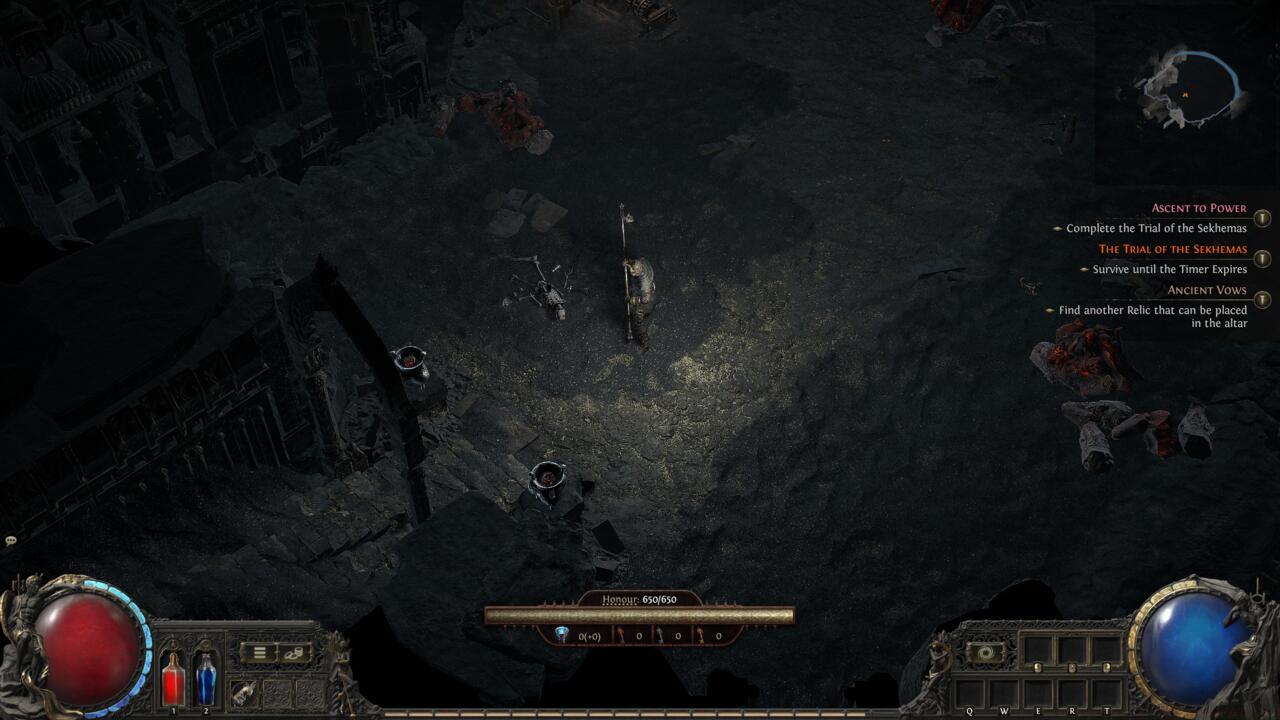
Your character’s maximum Honor capacity directly correlates with defensive stats
When you initiate the Trial of Sekhemas around Act 2’s midpoint, a distinctive new interface element materializes at your screen’s bottom edge. This Honor display provides real-time tracking of your current Honor reserves, maximum potential Honor, and trial-specific key indicators. While technically optional, completing this trial unlocks your class Ascendancy – a transformative power spike that completely redefines your build’s capabilities.
Your journey begins with Honor at maximum capacity, calculated by summing your total Life and Energy Shield values. For instance, a character boasting 300 Life and 200 Energy Shield would commence with 500 Honor points. Each enemy strike gradually depletes this reserve, operating independently from your primary health pool. Damage to Honor occurs concurrently with health damage, creating dual survival requirements.
The Trial of Sekhemas enforces a single-life rule, meaning failure occurs through either conventional death (zero health) or complete Honor depletion. Statistics show approximately 70% of failed attempts result from Honor exhaustion rather than health depletion, highlighting its critical importance.
Honor regeneration presents the system’s most punishing aspect – once depleted, recovery opportunities remain extremely limited throughout the trial duration. This design intentionally penalizes careless play and rewards precision combat execution.
Unlike health potions or natural regeneration, Honor lacks consistent recovery mechanisms. This creates dramatically different risk profiles for various character archetypes. Ranged specialists can maintain distance to minimize exposure, while melee combatants must master evasion techniques and perfect positioning to survive.
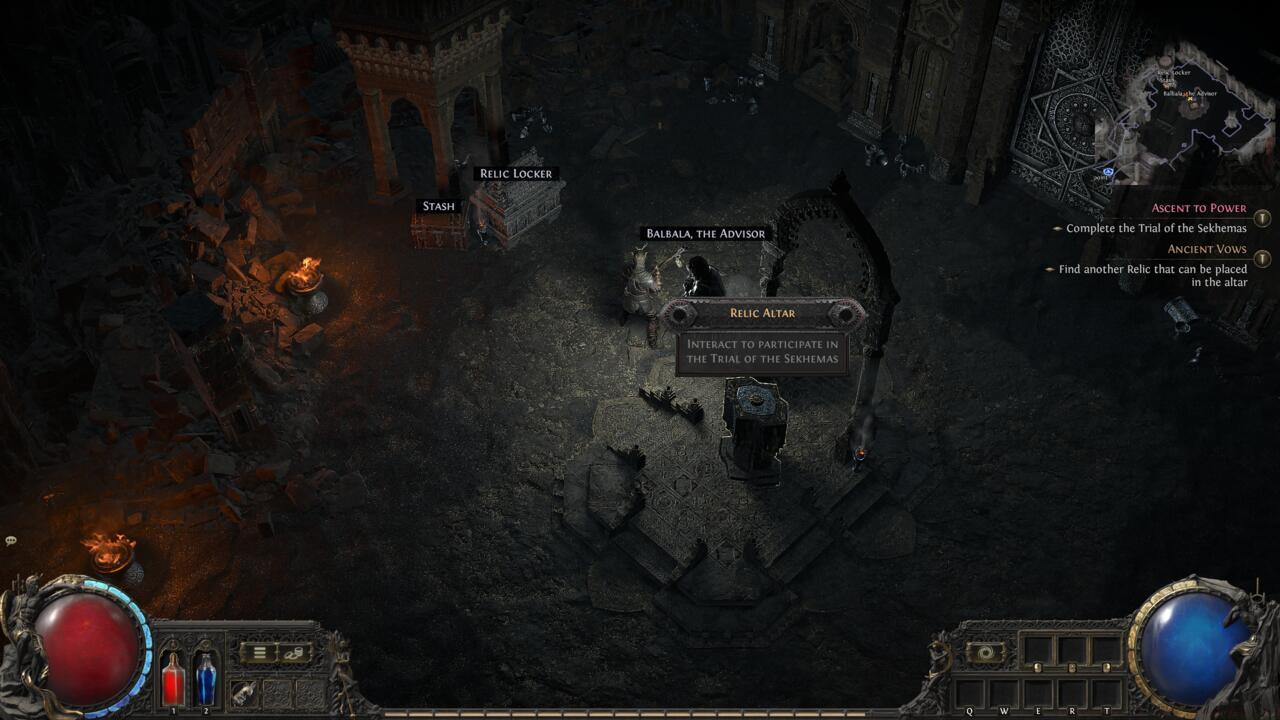
Vendor interactions provide limited Honor protection options
The merchant Balbala offers specialized Boons that can provide temporary Honor safeguards, though these come at significant resource costs. Strategic planning around these purchases often determines trial success versus failure.
Advanced players recommend treating Honor as a non-renewable resource pool. Every point of damage taken represents permanent capacity loss that cannot be reversed through conventional means. This mindset shift proves crucial for developing the disciplined playstyle required for Sekhemas mastery.
Honor damage calculation incorporates complex formulas tied to your defensive attributes. The quantity of Honor lost per attack depends on both the damage type encountered and your corresponding resistance values. Enemies exploiting your weakest resistances will inflict substantially greater Honor depletion.
For example, encountering chaos-based attacks with minimal chaos resistance results in devastating Honor losses. Conversely, well-protected elemental resistances significantly reduce Honor damage from fire, cold, or lightning assaults.
Strategic Relic selection can dramatically improve Honor survivability
Relics obtained during the trial provide specialized bonuses that can bolster your Honor defenses. These items might offer temporary damage absorption, resistance boosts, or conditional protection mechanisms.
Common player mistakes include underestimating Honor’s importance until it’s too late, attempting the trial with unbalanced resistances, and poor positioning that exposes characters to unnecessary damage. Melee specialists should particularly focus on attack animation recognition and dodge timing perfection.
Optimization strategies involve pre-trial gear adjustments to maximize both Life/Energy Shield totals and resistance coverage. Spending 10-15 minutes optimizing your defensive setup before attempting Sekhemas can double your survival chances. For comprehensive character building guidance, check our Class Selection Guide for optimal defensive configurations.
Advanced techniques include using environmental cover to break line-of-sight, baiting enemies into favorable positions, and understanding attack patterns to minimize exposure. Successful players typically complete the trial within 20-30 minutes with careful Honor management.
Action Checklist
- Calculate your max Honor (Life + Energy Shield) and ensure it exceeds 400+ for reasonable chances
- Balance all elemental and chaos resistances to at least 50% minimum
- Study enemy attack patterns in early trial sections to minimize unnecessary damage
- Purchase protective Boons from Balbala before engaging difficult encounters
- Position strategically to avoid simultaneous attacks from multiple enemies
No reproduction without permission:SeeYouSoon Game Club » Path Of Exile 2: Honor System Explained Master Path of Exile 2's Honor system with expert strategies for survival in the Trial of Sekhemas