
TL;DR
- Pointed Dripstone includes upward-pointing stalagmites and downward-pointing stalactites
- Dripstone Caves generate inland away from water sources in overworld biomes
- Stalagmites deal falling damage to entities and can be used in mob farms
- Stalactites drip water/lava and break when unsupported, creating natural hazards
- Combine four pointed dripstone to craft dripstone blocks for controlled growth
Pointed Dripstone represents one of Minecraft’s most fascinating geological formations, offering both practical utility and environmental hazards. These natural structures come in two distinct orientations that serve different purposes within your world. Understanding their fundamental properties is crucial for effective utilization.
Stalagmites extend upward from cave floors, creating natural spike traps that can injure unwary players and mobs. Their ceiling-hanging counterparts, stalactites, dangle downward and participate in unique liquid mechanics. Both variants spawn exclusively in specialized Dripstone Caves where they connect to foundational dripstone blocks.
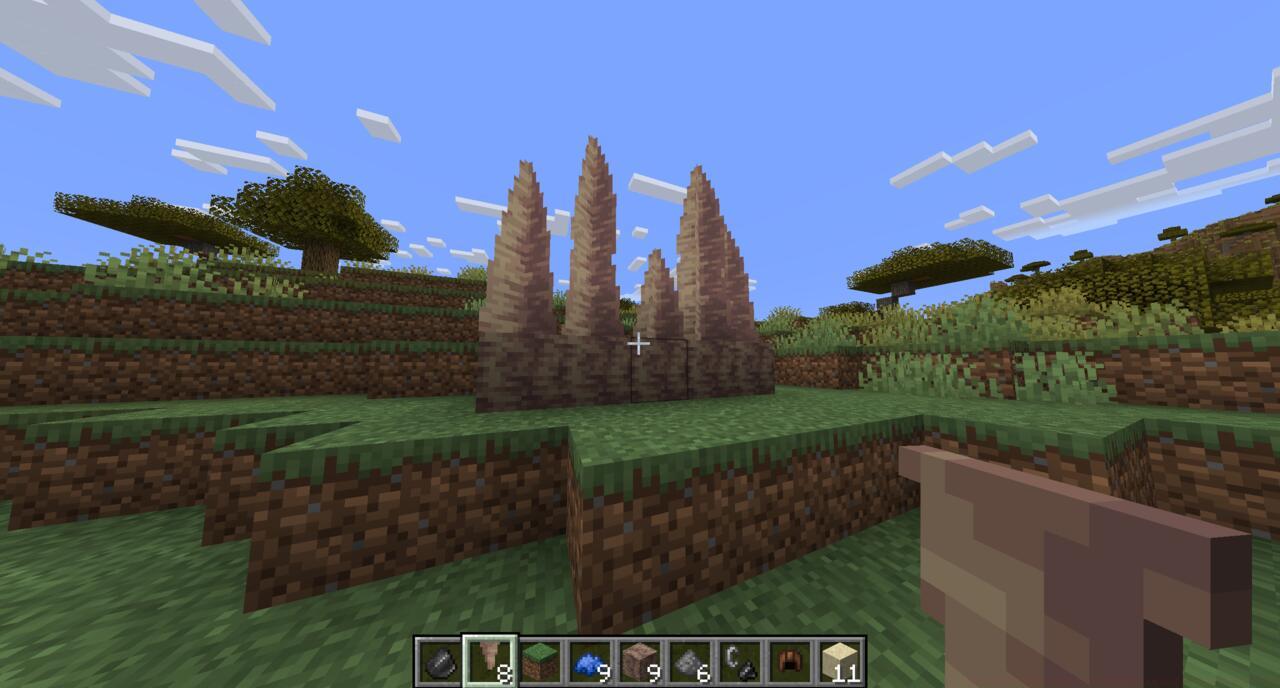
Stalagmites extend upward from cave floors, creating natural hazards
The growth mechanics involve dripstone blocks slowly generating pointed dripstone beneath them when positioned with adequate space. This natural formation process allows for both cave exploration and controlled farming operations once you understand the underlying principles.
Locating Dripstone Caves requires strategic exploration focused on inland regions away from aquatic environments. These specialized biomes generate throughout the overworld at various elevations but predominantly occur in dry, subterranean areas. Successful discovery involves systematic cave navigation rather than random digging.
Mining pointed dripstone demands careful tool selection—while any implement can harvest these formations, pickaxes provide significantly faster collection rates. Always carry multiple pickaxes when embarking on dripstone expeditions to maximize efficiency.
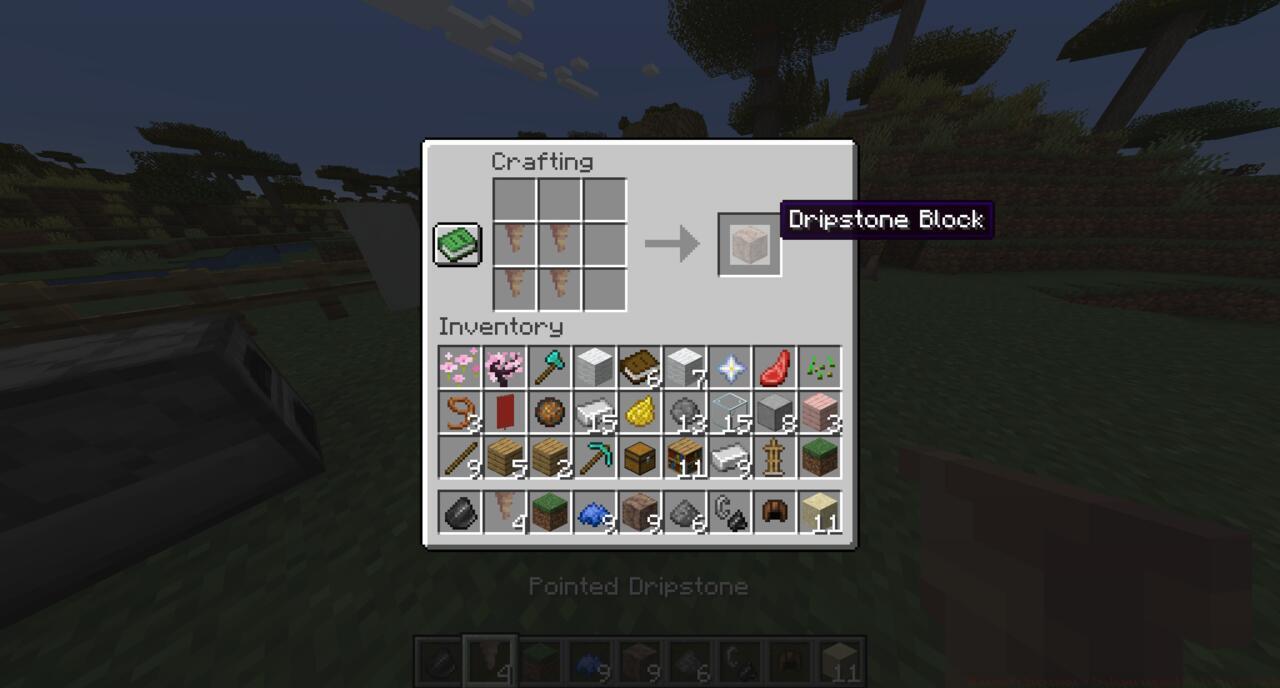
Crafting dripstone blocks enables controlled pointed dripstone cultivation
Crafting represents the sustainable approach to dripstone acquisition. Combining four pointed dripstone units at a crafting table produces one dripstone block, allowing you to establish renewable farming operations. This method provides complete control over placement and growth patterns.
Pro Tip: Create a dedicated dripstone farm near your base using collected blocks to generate an infinite supply. Position water sources above dripstone blocks to accelerate pointed dripstone formation beneath them.
Stalagmites serve as natural damage dealers within cave environments, inflicting falling damage to any entity landing on them. The damage scales with height—taller stalagmites cause more significant injury, making them effective passive defense systems.
Mob farming represents one of the most valuable stalagmite applications. Position these upward-pointing formations beneath mob spawners or in fall chambers to automatically eliminate hostile creatures and collect drops. This method requires precise placement but offers hands-free resource gathering.
Common Mistake: Players often underestimate stalagmite damage potential, leading to unexpected player deaths. Always approach unfamiliar stalagmite fields with caution and adequate health reserves.
Defensive perimeter construction utilizes stalagmites as natural spike traps around bases. When combined with water streams to direct mob movement, they create effective protection systems that operate without redstone components.
Stalactites participate in Minecraft’s unique liquid dripping system, gradually releasing water or lava droplets when positioned above these liquid sources. This mechanic enables automated farm designs and natural aesthetic features.
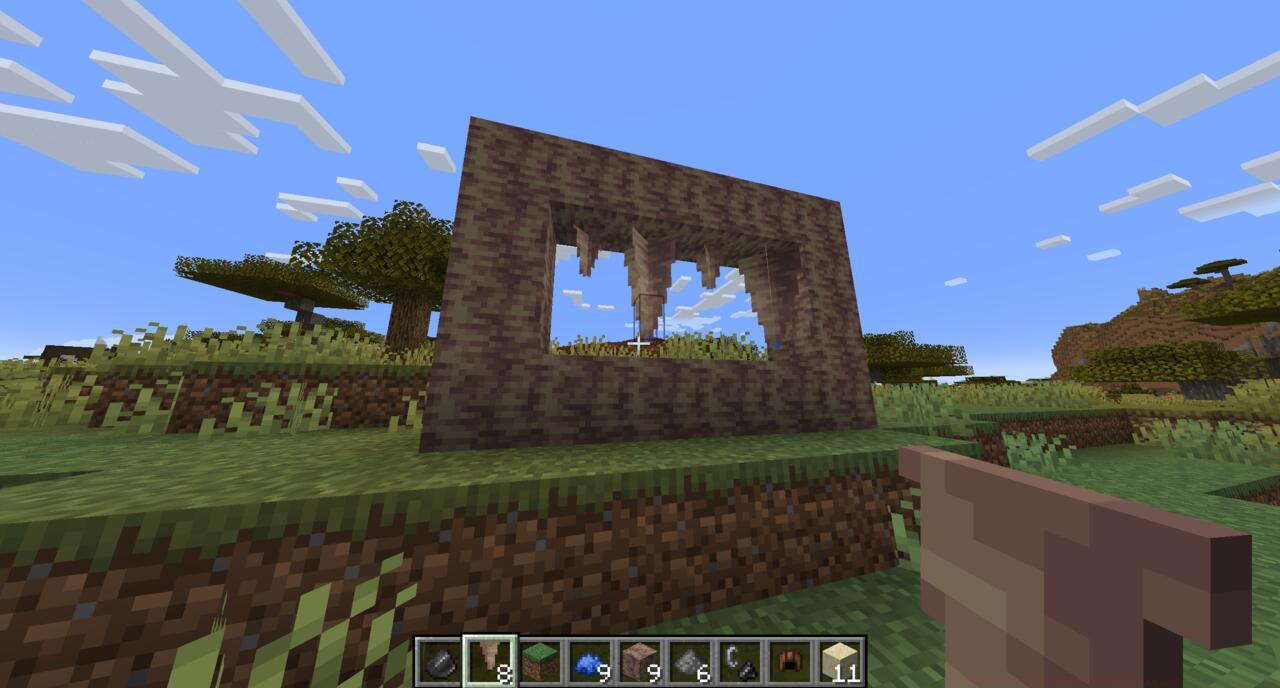
Stalactites suspended from ceilings participate in liquid dripping mechanics
These ceiling formations possess fragile structural integrity—when the supporting block breaks or receives block updates, stalactites detach and fall as entities. Falling stalactites deal impact damage to entities beneath them, creating dynamic environmental hazards.
Advanced farming designs leverage stalactite dripping to create automatic crop hydration systems or cauldron filling mechanisms. Position stalactites above farmland with water sources to maintain optimal growing conditions.
Optimization Tip: For maximum dripping efficiency, ensure stalactites connect directly to dripstone blocks with liquid sources immediately above. This configuration accelerates droplet production rates significantly.
Lava dripping applications include decorative lighting, mob burning traps, and cobblestone generators. However, exercise extreme caution as misplacement can create uncontrolled fire spread.
Action Checklist
- Explore inland cave systems to locate Dripstone Caves
- Mine pointed dripstone using pickaxes for maximum efficiency
- Craft dripstone blocks from four pointed dripstone units
- Design mob farm using stalagmites for automatic damage
- Create automated water system using stalactite dripping mechanics
No reproduction without permission:SeeYouSoon Game Club » Minecraft Dripstone – Stalagmites And Stalactites Guide Master Minecraft's Pointed Dripstone: Complete guide to finding, using, and optimizing stalactites and stalagmites