
TL;DR
- Bookshelves require 6 wood planks and 3 books, with books being the most challenging component to craft
- Proper bookshelf placement around enchanting tables enables maximum-level enchantments for gear
- Sugar cane farming and cow breeding provide sustainable resources for continuous bookshelf production
- Strategic bookshelf positioning follows specific block distance rules for optimal enchanting power
- Advanced players use bookshelves for decoration, redstone contraptions, and immersive library builds
Bookshelves serve multiple essential functions throughout your Minecraft journey, becoming increasingly valuable as you progress. While they’re commonly associated with late-game enchanting systems, understanding their mechanics early provides significant advantages for base development and resource planning.
These versatile blocks transition from decorative elements to functional power sources for your enchanting table. Even during initial base construction, learning bookshelf creation ensures you’re prepared for advanced gameplay mechanics that dramatically enhance your equipment capabilities.
The bookshelf crafting formula demands two distinct resource categories with varying acquisition difficulty. Wood planks represent the straightforward component, while books introduce complexity through multi-step production requiring specific biome resources.
Crafting Process:
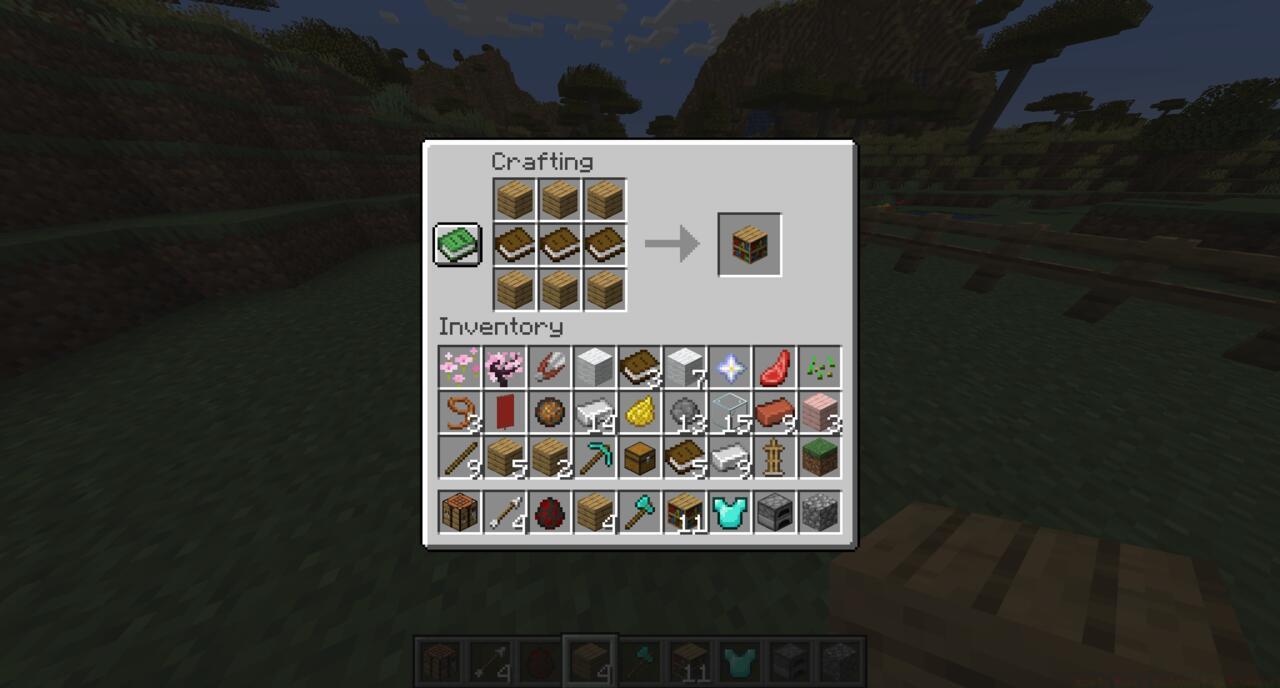
The crafting recipe for a bookshelf in Minecraft
Books present the primary crafting challenge, transforming simple wood collection into complex resource management. While planks become available within minutes of starting, books demand coordinated gathering from multiple sources and established production systems.
Paper creation requires sugar cane processing at crafting stations. Sugar cane appears as tall green stalks exclusively growing adjacent to water blocks, typically along riverbanks, swamp edges, or ocean shores. Establishing an automated sugar cane farm near your base ensures sustainable paper production. Leather acquisition involves hunting cows, horses, or llamas, with cow breeding farms offering the most reliable supply chain.
Combine one leather unit with three paper sheets at any crafting interface to produce a single book. Since each bookshelf consumes three books, calculate your material requirements based on planned enchanting setups. Experienced players stockpile these components for bulk bookshelf production, as optimal enchanting configurations require 15+ units.
Bookshelves primarily empower enchanting tables, enabling higher-tier enchantments for weapons, armor, and tools. Strategic placement around your enchanting station determines available enchantment levels, with improper configuration severely limiting options.
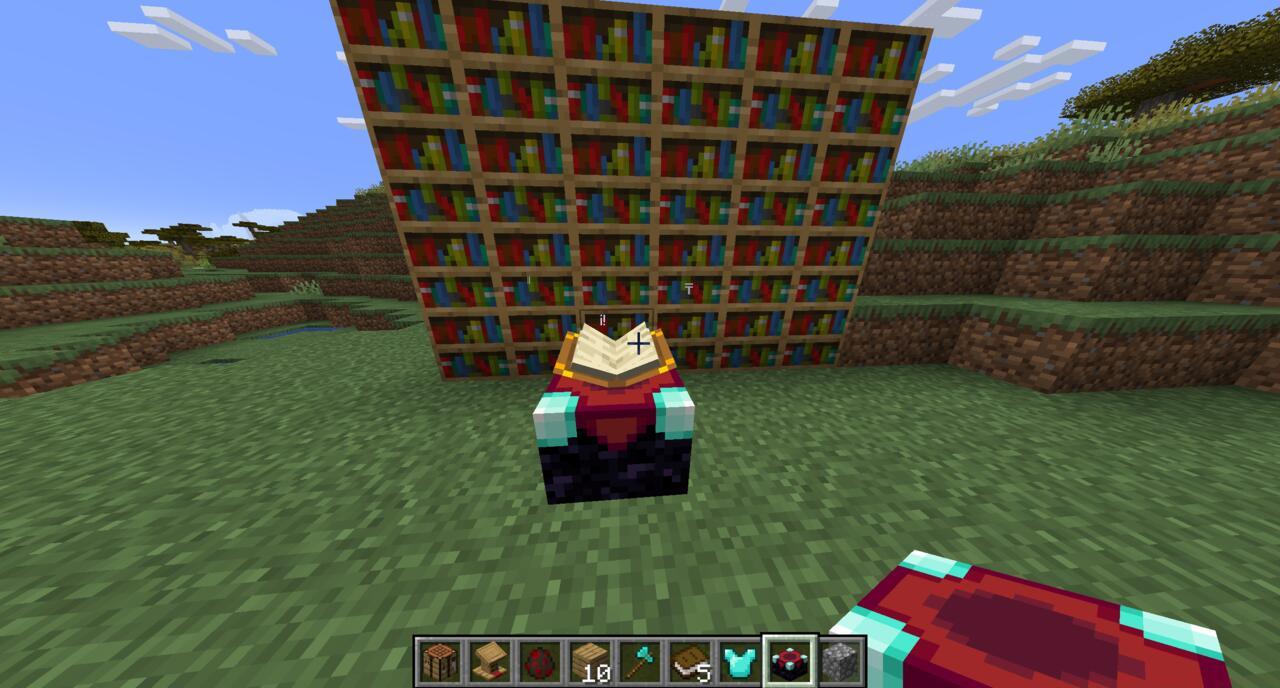
An Enchanting Table is designed to be surrounded by bookshelves
Optimal Placement Configuration: Surround your enchanting table with bookshelves positioned one block away on all sides, including corners. Maintain single-block accessibility by leaving one entrance space. Bookshelves must share the same level or be one block above the enchanting table, never below. Maximum power (level 30 enchantments) requires precisely 15 bookshelves with correct spacing.
Critical Distance Rules: Bookshelves must reside within 2 blocks horizontally and 1 block vertically from the enchanting table. Blocks placed directly adjacent to the table or bookshelves disrupt the magical connection.
Common Configuration Errors: Placing torches or other blocks between bookshelves and the enchanting table breaks the connection. Insufficient spacing (less than one block gap) prevents bookshelves from contributing to enchantment levels. Many players mistakenly believe more than 15 bookshelves provide additional benefits, but the game caps effectiveness at this threshold.
Beyond their enchanting functionality, bookshelves offer diverse creative possibilities for builders and redstone engineers. Their textured appearance and interactive properties make them valuable for immersive constructions beyond practical applications.
Decorative Building: Create authentic libraries, studies, and wizard towers using bookshelves as primary building materials. Combine with lecterns, writing tables, and lanterns for cohesive thematic spaces. Their combustible nature enables creative fireplace integrations and atmospheric lighting setups.
Redstone Applications: Bookshelves can function as decorative redstone circuit components in complex mechanisms. While not conductive themselves, their block form supports various contraption designs where aesthetics matter alongside functionality.
Strategic Considerations: Always craft extra bookshelves for enchanting table experimentation and decorative projects. Consider establishing dedicated sugar cane and leather farms early to support continuous production. For players focusing on equipment enhancement, prioritize bookshelf production once diamond tools become available.
Understanding bookshelf mechanics represents a crucial step in Minecraft mastery, bridging early survival with advanced gameplay systems. Whether optimizing enchantments or creating immersive builds, these versatile blocks deliver substantial value throughout your world exploration.
Action Checklist
- Establish sugar cane farm adjacent to water source
- Create animal pen for sustainable leather production
- Craft 3 books using 3 paper and 1 leather each
- Assemble bookshelf with 6 wood planks and 3 books
- Position 15 bookshelves one block from enchanting table
- Verify enchantment level 30 availability before spending experience points
No reproduction without permission:SeeYouSoon Game Club » How To Make A Bookshelf In Minecraft Master Minecraft bookshelf crafting for enhanced enchanting and advanced base building strategies