
TL;DR
- Taiga biomes offer spruce wood, unique mobs, and strategic building locations
- Navigate using biome borders, rivers, and structural indicators for efficient discovery
- Use ‘/locate biome taiga’ command for instant teleportation in creative modes
- Identify variants like Snowy Taiga and Old Growth Taiga for specialized resources
- Leverage villages and pillager outposts for immediate resource access
Minecraft’s Taiga biome stands out as a premier destination for survival players and builders alike, offering distinct advantages that make it worth seeking out. Unlike standard forests, this biome provides spruce trees that yield superior building materials with excellent aesthetic properties for construction projects.
The terrain features a distinctive green grass tint that creates visually appealing landscapes, while frequent water borders enhance both navigation and farming potential. Players can encounter diverse mob populations including wolves, foxes, and rabbits that provide unique taming opportunities and resource collection possibilities.
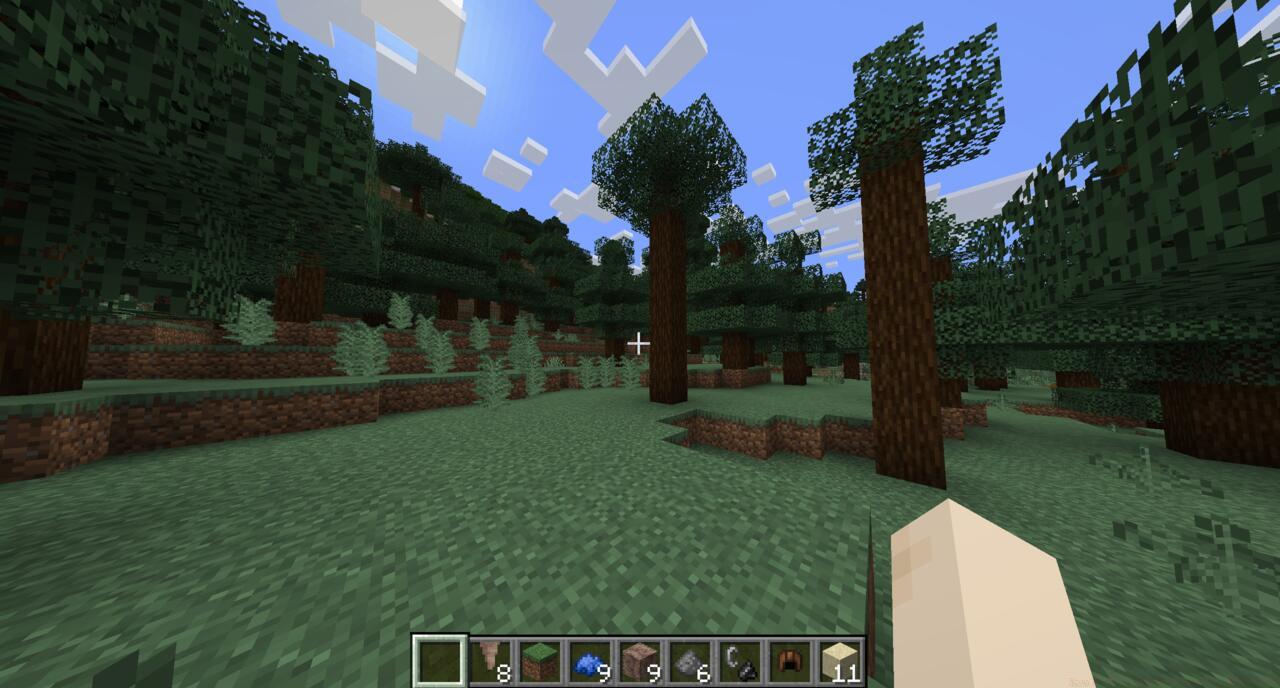
The Taiga biome in Minecraft
Strategic builders prioritize Taiga locations due to the abundant spruce wood supply and natural terrain variations that facilitate creative base designs. The biome’s common village spawns offer immediate access to beds, chests, and trading opportunities, significantly accelerating early-game progression.
Mastering Taiga biome discovery requires understanding Minecraft’s world generation patterns and recognizing key environmental indicators. While biomes generate randomly, consistent border relationships create predictable discovery pathways for experienced players.
Seasoned explorers watch for transitional zones where standard forests meet swamp areas, as these junctions frequently precede Taiga territories. River systems often serve as natural boundaries separating meadows from spruce-dominated landscapes, providing reliable navigation routes.
Variant biomes frequently cluster together, meaning locating a Snowy Taiga or Old Growth Taiga often indicates the presence of standard Taiga within reasonable exploration distance. The Snowy Taiga variant features snow-covered spruce trees and frozen terrain, while Old Growth Taiga presents mushroom-covered brown dirt blocks instead of standard grass.
Structural indicators provide the most reliable discovery method—villages and pillager outposts generate commonly in Taiga regions. Spotting these constructions from elevated positions can save hours of aimless wandering. For optimal efficiency, combine high-ground visibility with understanding of biome distribution algorithms.
Creative mode players and those seeking immediate access can utilize Minecraft’s command system for direct Taiga biome teleportation. This method bypasses exploration requirements but requires cheat-enabled worlds or server permissions.
The teleportation process involves precise command execution: First, press the ‘/’ key to activate the command console interface. Then input ‘/locate biome taiga’ exactly as specified—this command returns precise coordinates to the nearest Taiga biome instance.
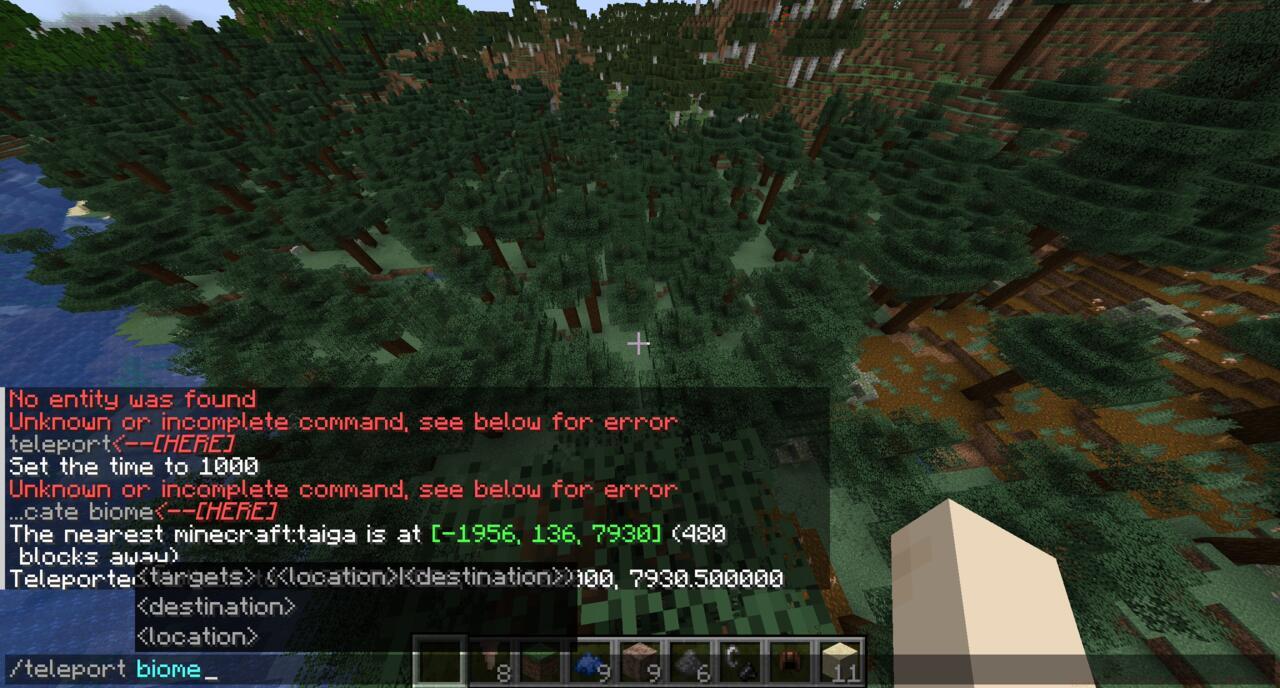
Teleporting directly to a Taiga biome
Advanced players can enhance this technique by combining biome location with direct teleportation using the ‘/tp’ command sequence. After obtaining coordinates via ‘/locate’, immediately execute ‘/tp [username] [x] [y] [z]’ for instant transportation. This method proves invaluable for speedrunners, content creators, and players focusing on specific building projects.
Common mistakes include incorrect command syntax and attempting teleportation in survival modes without proper permissions. Always verify game mode compatibility before attempting command-based navigation methods.
The Taiga biome’s resource profile makes it exceptionally valuable for sustained survival gameplay. Spruce trees generate abundantly, providing consistent wood supplies superior to oak for certain architectural styles due to their darker hue and straight trunk design.
Unique mob spawns include tameable wolves that offer companion and defense capabilities, plus foxes exhibiting distinctive behavioral patterns. Sweet berry bushes spawn naturally throughout the biome, offering renewable food sources and defensive perimeter capabilities when planted strategically.
Village structures in Taiga biomes feature unique architectural elements including lantern decorations and spruce-based building designs. These settlements provide immediate access to beds, crafting tables, and villager trading opportunities that can jumpstart technological progression.
Resource optimization strategies involve establishing spruce tree farms near village perimeters for efficient material collection. Advanced players should prioritize locating blacksmith buildings for potential diamond tool discoveries and weaponry enhancements.
Time estimates for comprehensive Taiga exploration range from 15-45 minutes depending on world size and spawn proximity. For players using teleportation commands, immediate access eliminates exploration time requirements entirely.
Action Checklist
- Scan horizon for village structures and pillager outposts while exploring
- Follow river systems while watching for spruce tree concentrations
- Use ‘/locate biome taiga’ command in creative mode for instant coordinates
- Identify and explore Taiga variants for specialized resources
- Establish spruce farm and secure village resources upon discovery
No reproduction without permission:SeeYouSoon Game Club » How To Find Taiga Biomes In Minecraft Master Taiga biome discovery with expert navigation strategies, teleportation commands, and resource optimization techniques