
TL;DR
- Dragonsplague is a contagious pawn-only disease that can wipe out entire settlements
- Infected pawns show red flickering eyes, coughing spells, and occasional command disobedience
- The calamity triggers when infected pawns rest at inns or player homes
- No traditional cures exist – only dismissal, pawn death, or disease transmission
- Use Eternal Wakestone or backup saves to recover from settlement-wide NPC deaths
Dragonsplague represents one of the most dangerous hidden mechanics in Dragon’s Dogma 2, capable of devastating your game progress without warning. This guide provides comprehensive strategies for identifying, managing, and preventing this catastrophic condition.
What is Dragonsplague?
Dragonsplague is a unique affliction that exclusively targets pawns in Dragon’s Dogma 2. The disease can infect any pawn regardless of origin—whether player-created companions or those designed by Capcom. Unlike conventional status ailments, Dragonsplague operates silently, often going undetected until it’s too late to prevent widespread destruction.
The Initial Warning System
Your first encounter with an infected pawn triggers an immediate game notification. This critical alert explains the contagious nature of Dragonsplague and warns about the potential “devastating calamity” that follows advanced infection stages. This warning serves as your primary defense mechanism against the disease’s progression.
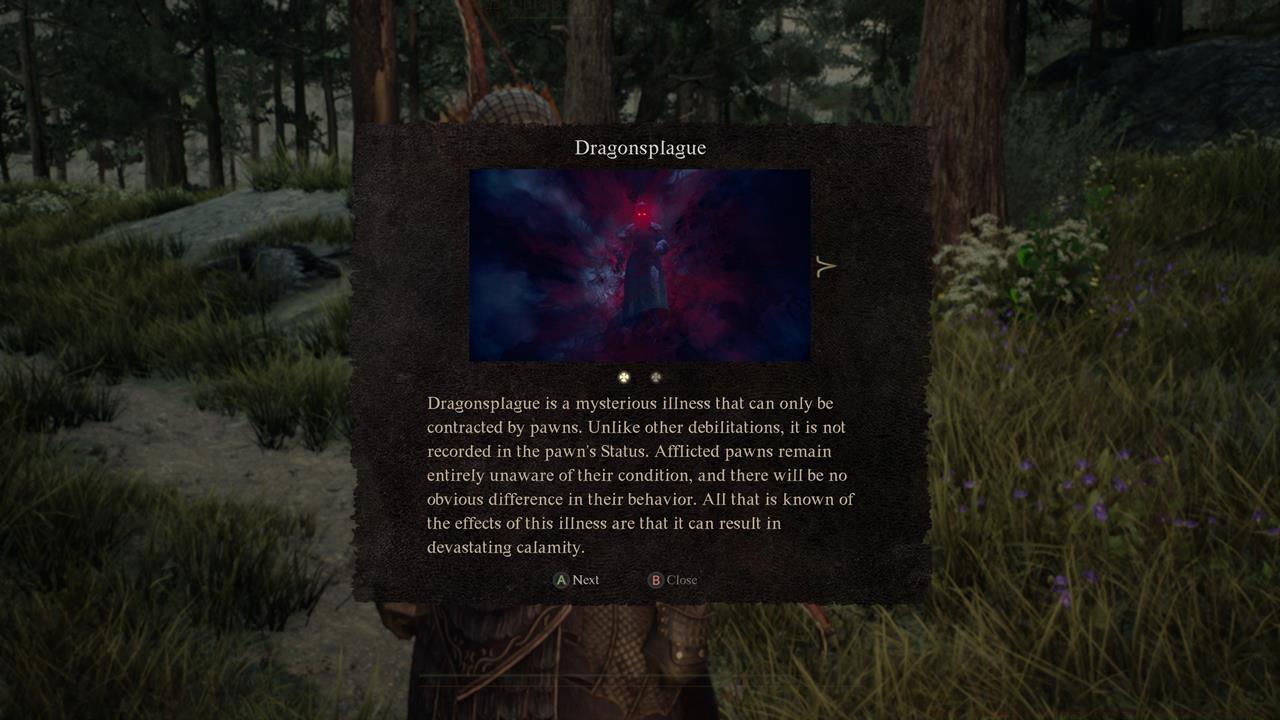
Beware once you see this pop-up message.
The initial pop-up notification provides your only direct confirmation of infection. However, several observable symptoms can help you identify contaminated pawns before catastrophe strikes.
Visual Indicators
- Red eyes – Infected pawns develop eerie crimson eyes that flicker rhythmically. This visual effect differs significantly from standard character creation options. During advanced infection stages, the red glow becomes permanent, signaling imminent disaster if you rest at accommodation.
- Ailments – When idle, contaminated pawns exhibit physical distress including coughing fits, spitting, and debilitating migraine episodes. Migraine animations last approximately 15 seconds, making them particularly noticeable during downtime.
Behavioral Changes
- Command disobedience – Selecting the “Wait” command (Right on D-pad or “4” on keyboard) may not produce expected results. However, this symptom remains inconsistent, as main pawns with advanced infection might still respond correctly to commands.

Our main pawn having migraines due to Dragonsplague.
Advanced Detection Techniques
Experienced players recommend implementing systematic pawn screening protocols. Before resting at any inn or player home, conduct thorough visual inspections of all party members. Pay particular attention to eye coloration and any unusual idle behaviors that might indicate early infection stages.
Not all pawns with red eyes suffer from Dragonsplague. Many players intentionally design companions with crimson eyes during character creation, creating potential confusion when attempting to identify genuine infections.
Character Creation vs Infection
When recruiting pawns within the Rift without receiving the initial infection warning, red-eyed companions likely result from aesthetic choices rather than disease.
Through extensive testing using backup saves, we recruited numerous red-eyed pawns without triggering infection notifications. The actual Dragonsplague warning eventually appeared when recruiting a pawn without any visible red eye coloration, demonstrating the disease’s deceptive nature.
Critical Recommendation: Avoid giving your main pawn red eyes during character creation. This precaution prevents confusion between cosmetic choices and genuine infection symptoms.


Pawns with red eyes. These are from character creation and not Dragonsplague.
Traditional curative items prove completely ineffective against Dragonsplague. Instead, implement these containment strategies to manage infection spread.
Disease Transmission Mechanics
Dragonsplague operates similarly to a biological hot potato game. The disease transmits between pawns through close contact, making rapid response essential for containment.
Effective Containment Methods
- Immediate dismissal – Quickly remove recently recruited infected pawns from your party. However, this method carries risk if transmission occurred before detection.
- Strategic forfeiture – Allow infected pawns to perish without revival. For main pawns, employ environmental hazards like deep water or controlled monster encounters. They automatically respawn when interacting with Riftstones.
- Controlled transmission – Intentionally expose uninfected pawns to transfer the disease away from critical companions. This approach requires careful management of subsequent infection stages.

The pawn wearing the same armor as our main character was the one who was infected when we recruited her. After waiting for a few days, she was cured because our main pawn caught the disease.
Ignoring infection warnings leads directly to catastrophic consequences. The terminal Dragonsplague stage triggers automatically when you rest at inns or player-owned residences.
Trigger Conditions
The calamity cutscene activates exclusively during rest at proper accommodations. Wilderness campsites provide safe alternatives that bypass the trigger mechanism entirely.
Preventive Measures
- Pre-rest screening – Thoroughly examine all pawns for symptoms before sleeping at inns. Remove potentially infected companions or ensure main pawn perish before resting.
- PC backup strategy – Maintain regular save file backups located at: C:Program Files (x86)Steamuserdata2054970remotewin64_save.
- Accommodation alternatives – Utilize campsites for safe recovery without triggering the disaster sequence.
During the calamity sequence, infected pawns’ eyes glow intensely before erupting in dark energy. They return to the rift while the settlement becomes filled with deceased NPCs, including quest-critical characters.
The settlement-wide devastation caused by Dragonsplague represents one of the most severe consequences in Dragon’s Dogma 2. However, several recovery methods exist to mitigate the damage.
NPC Revival Methods
- Eternal Wakestone – Journey to Sphinx shrines and successfully complete her challenges to obtain this powerful item. The Eternal Wakestone revives multiple NPCs simultaneously and unlocks the “Reaper’s Scorn” achievement. Consult our comprehensive guide for detailed strategies.
- Time-based recovery – Some community testing suggests waiting approximately 20 in-game days may revive certain NPCs. However, this method proves inconsistent, with critical characters like Sven and Waldhar often remaining deceased.
Backup Strategies
For PC players, maintaining regular backup saves provides the most reliable recovery option. This approach allows complete restoration of settlement populations without permanent progression loss.


Left: Almost everyone in Vernworth died; Right: Some people came back to life after we waited for a few days, but numerous others, including quest givers like Sven and Waldhar, stayed dead.
Dragonsplague represents a formidable challenge in Dragon’s Dogma 2. Implementing proactive detection and containment strategies prevents catastrophic settlement losses and maintains game progression integrity.
Action Checklist
- Screen all newly recruited pawns for red flickering eyes and coughing symptoms
- Avoid giving main pawn red eyes during character creation to prevent confusion
- Use wilderness campsites instead of inns when infection suspicion exists
- Maintain regular PC backup saves in the designated directory
- Acquire Eternal Wakestone from Sphinx challenges for emergency recovery
No reproduction without permission:SeeYouSoon Game Club » Dragon’s Dogma 2 – Dragonsplague Explained And How To Avoid It Complete guide to identifying, managing, and preventing the devastating Dragonsplague in Dragon's Dogma 2