
TL;DR
- Unlock Paragon system at level 50 via character panel’s Paragon tab
- Gain Paragon Points through XP to activate nodes and unlock additional boards
- Optimize attribute distribution (Strength, Intelligence, Willpower) for build synergy
- Level glyphs through Nightmare Dungeons to enhance their radius effects
- Plan board rotation early and avoid common stat allocation mistakes
Reaching level 50 marks a significant progression milestone in Diablo 4, automatically activating the sophisticated Paragon advancement framework. Consider your initial 49 levels as foundational character development, where you establish core combat abilities and passive enhancements. Beyond this threshold, all accumulated experience contributes directly to your Paragon progression, accessible through your character interface by navigating to the Abilities section and selecting the dedicated Paragon view.
Many players experience initial overwhelm when first encountering this complex system. The interface presents multiple interconnected mechanics that significantly impact your build’s endgame potential. Proper understanding from the outset prevents costly respec decisions later.
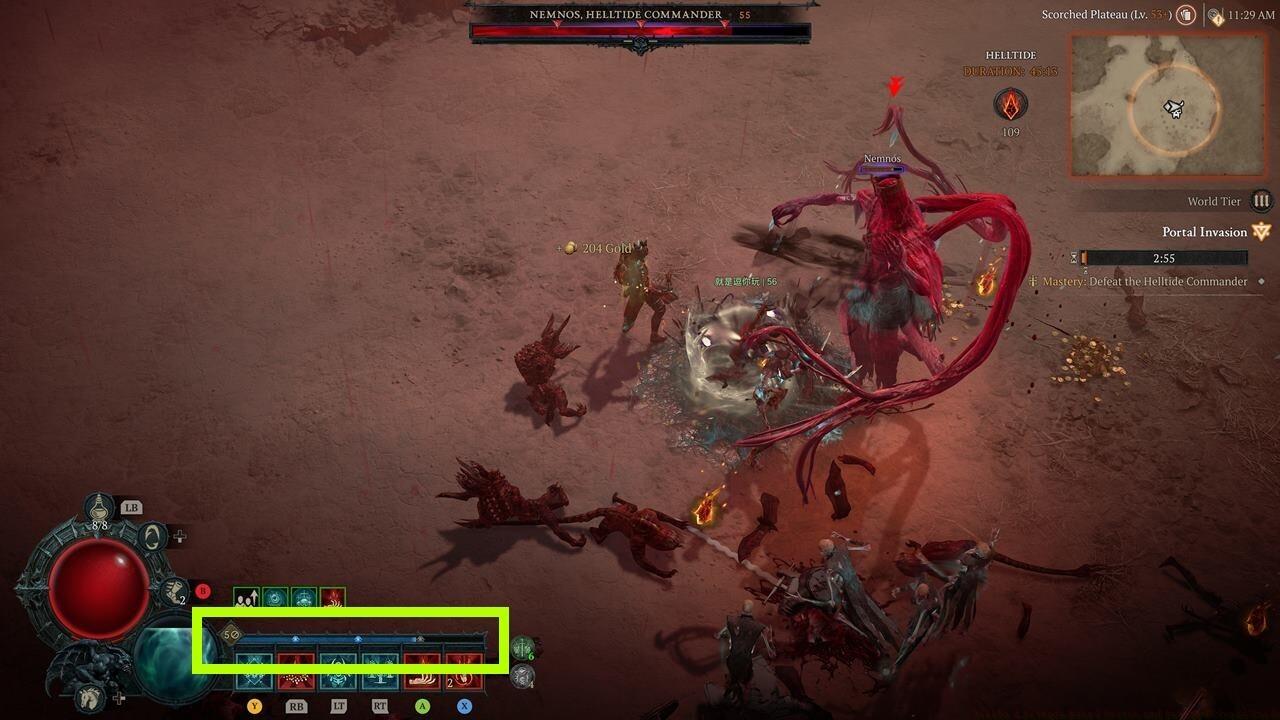
The Paragon leveling system is represented by a bar with small pips, denoting the thresholds where you’ll acquire a Paragon Point.
The progression indicator displays your post-level-50 experience accumulation through segmented markers. Each completed segment awards one Paragon Point, enabling activation of specific nodes within your current board configuration. Strategic point allocation becomes crucial as you advance through multiple interconnected boards.
Board attachment gates provide substantial attribute bonuses while unlocking additional specialized boards for your character. These gates typically require significant investment but offer powerful synergies for specific build archetypes. Early planning around gate placement prevents inefficient pathing later.
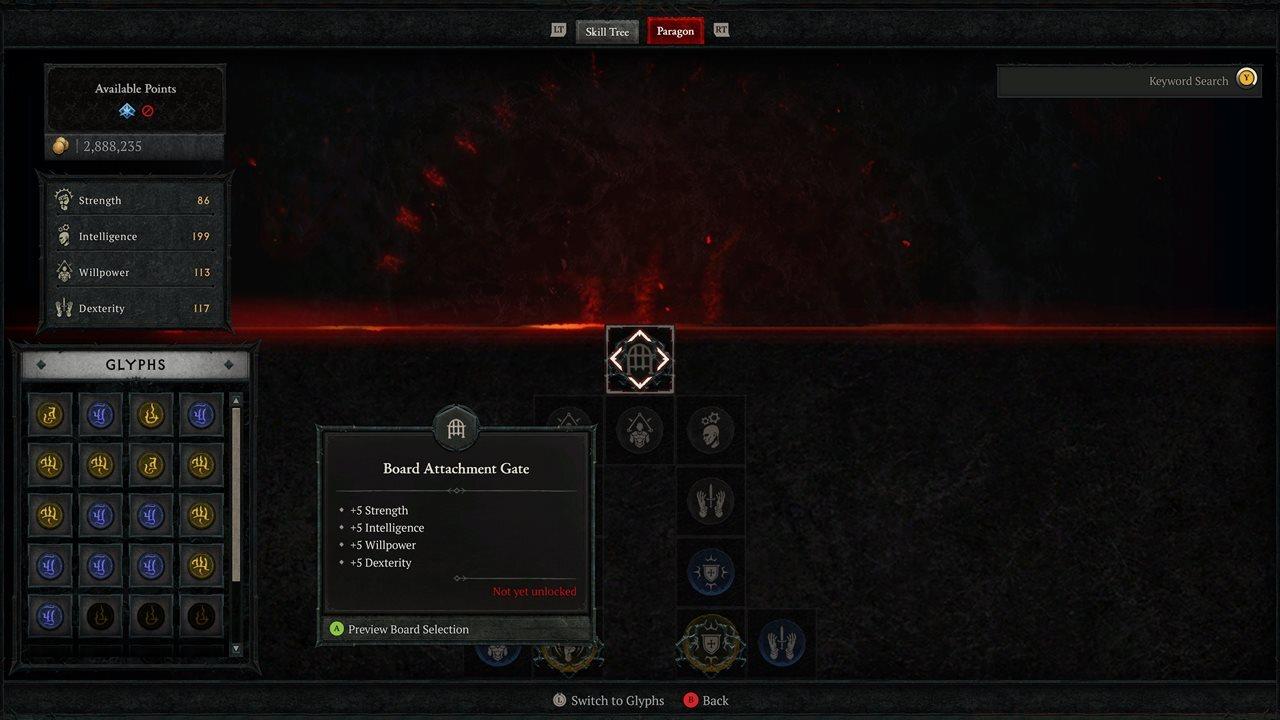
The Board Attachment Gate gives you a boost to all attributes, while also unlocking another board that you can use.
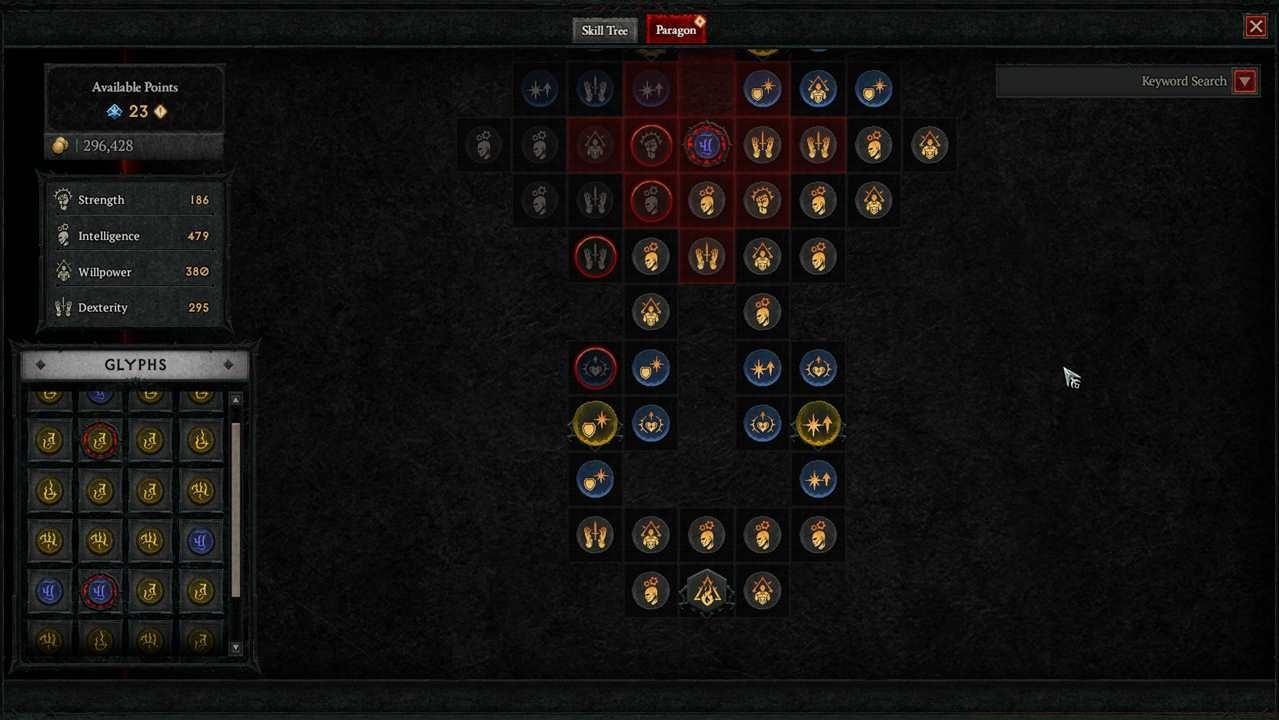
The Diablo 4 Paragon system is rather complex, and are generally tied to your attributes/stats.
Character attributes form the foundation of Paragon optimization, as numerous nodes provide bonuses based on specific stat thresholds or directly enhance these values. Different class specializations and build types prioritize distinct attribute combinations for maximum effectiveness.
- Strength – Boosts physical damage reduction through armor enhancement; crucial for melee-focused classes
- Intelligence – Amplifies all magical ability damage while improving elemental resistance across all damage types
- Willpower – Accelerates resource regeneration rates, increases healing effectiveness, and strengthens overpower attack potential
Understanding attribute soft caps and diminishing returns becomes essential for high-level optimization. Most specialized boards contain nodes requiring minimum attribute values to activate their full potential.
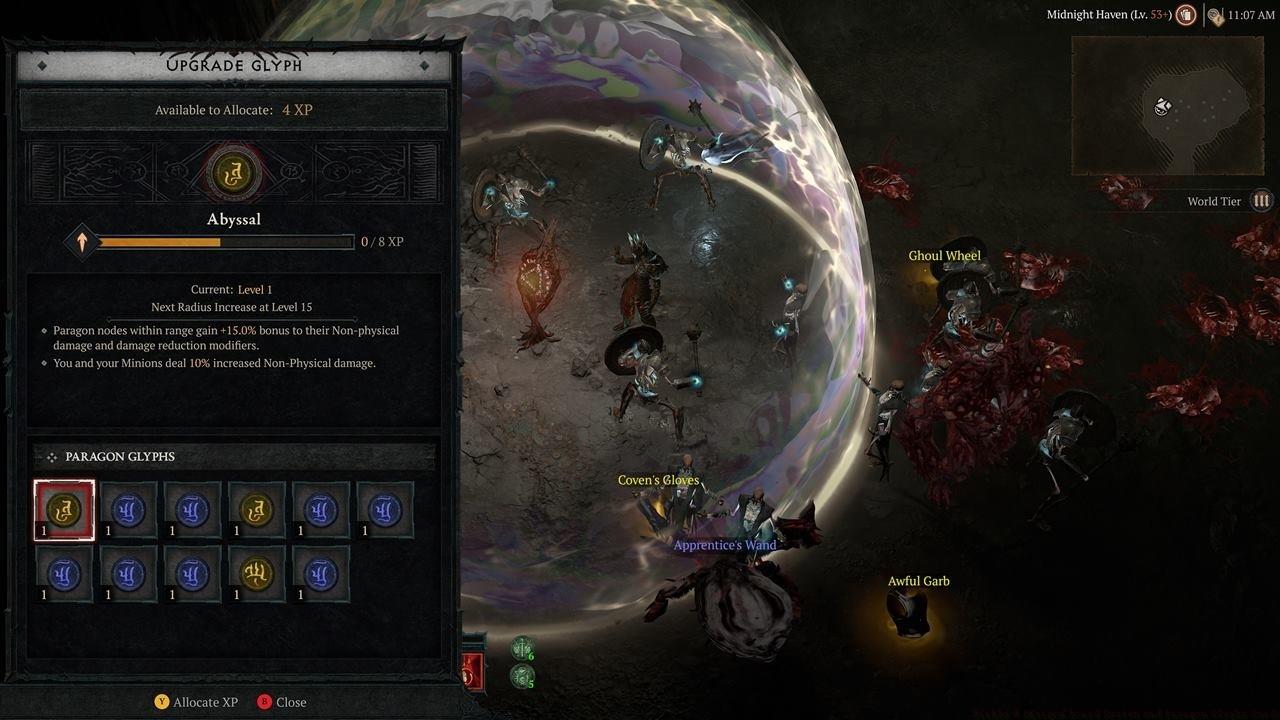
Complete Nightmare Dungeons so you can level up your Paragon Glyphs.
Glyph level advancement occurs exclusively through Nightmare Dungeon completion, with each successful run contributing experience toward your selected glyph’s progression. Higher glyph levels expand their effective radius, allowing them to influence more nodes within their area of effect.
Strategic glyph placement considers both current node benefits and future board expansion plans. A well-positioned high-level glyph can enhance multiple powerful nodes simultaneously, dramatically increasing your build’s effectiveness.
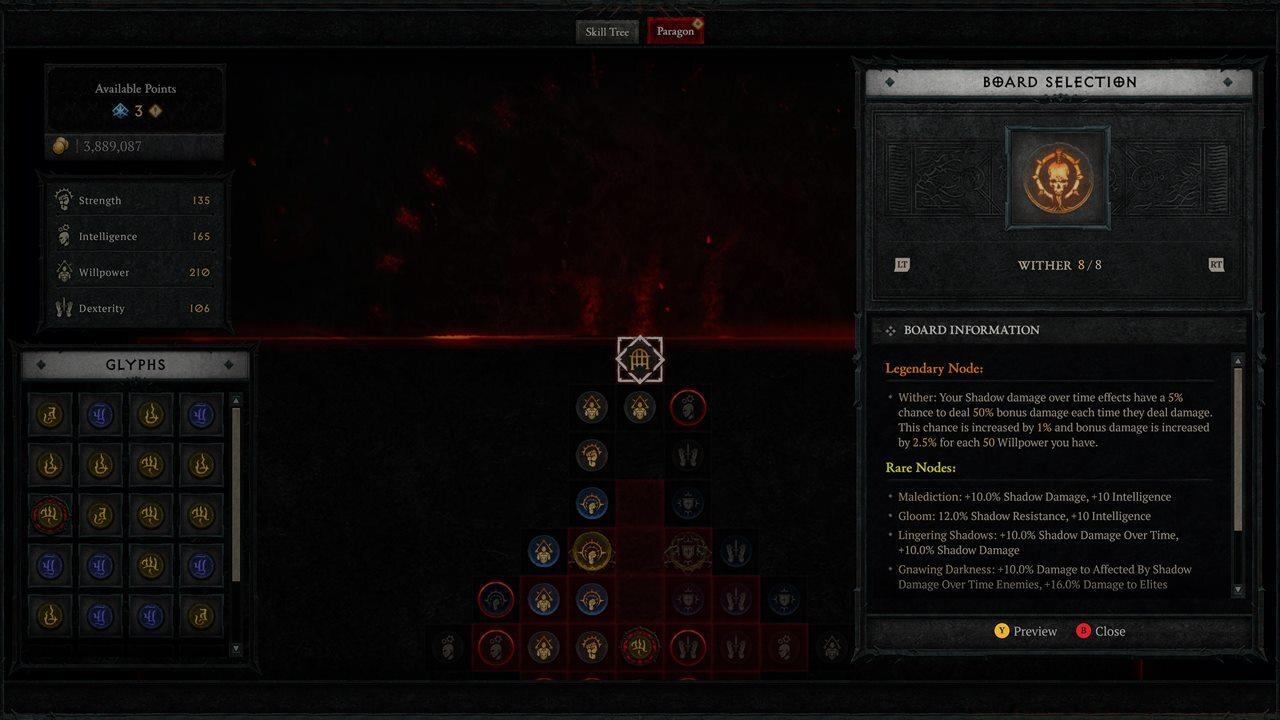
The Necromancer’s Wither Paragon Board has bonuses for Shadow damage.
Class-specific boards like the Necromancer’s Wither board contain specialized nodes catering to particular playstyles. Understanding these synergies early prevents mismatched investments that don’t complement your chosen specialization.
Many players prematurely attach additional boards before optimizing their primary board, wasting valuable Paragon Points on inefficient paths. Always maximize your current board’s potential before expanding to new ones, unless a specific gate offers immediate critical benefits.
Avoid distributing attribute points evenly across all stats; instead focus on your build’s primary requirements. Most effective specializations concentrate on two primary attributes while maintaining minimum thresholds for required nodes.
Plan your board rotation sequence during early Paragon levels rather than making reactive decisions. Certain board combinations provide exponential benefits when planned in advance. For comprehensive character planning, consult our Class Guide to understand fundamental specialization principles.
Glyph placement should consider both immediate benefits and future board development. A glyph that seems mediocre initially might become extremely powerful when its radius expands to include additional specialized nodes.
Regularly review your Paragon progression against your current build objectives. As you acquire new gear or adjust your playstyle, your Paragon board may require reconfiguration to maintain optimal performance.
Action Checklist
- Reach level 50 to unlock Paragon system and access via character panel
- Allocate Paragon Points strategically, prioritizing direct damage or survivability nodes first
- Focus attribute investment on your build’s primary stats (2-3 core attributes)
- Complete Nightmare Dungeons to level glyphs and expand their radius effects
- Plan board rotation sequence early and avoid premature additional board attachment
No reproduction without permission:SeeYouSoon Game Club » Diablo 4 Paragon Board System And Paragon Glyphs Guide Master Diablo 4's Paragon system with expert strategies for board navigation, glyph optimization, and endgame build enhancement