
TL;DR
- Gems provide different bonuses based on socket type: weapons, armor, or jewelry
- Five rarity tiers exist with upgrade system requiring gem combining
- Endgame Royal gems unlock after completing main story campaign
- Strategic gem placement can significantly boost character performance
- Gem vendors enable socket addition and rarity upgrades throughout Sanctuary
Diablo 4’s gem system delivers strategic depth through socket-dependent bonuses that vary dramatically based on equipment type. Understanding these mechanics is crucial for optimizing your character’s combat effectiveness throughout Sanctuary.
These valuable items represent a returning feature from previous Diablo titles, offering specialized enhancements when inserted into compatible gear sockets. You’ll discover them scattered throughout the world as random drops from defeated enemies, challenging bosses, and hidden treasure containers. While many discovered items come pre-equipped with sockets, jewelers can add this feature to socketless gear for a modest gold fee, expanding your customization options significantly.
The gem hierarchy spans five distinct rarity levels, with each tier providing progressively more powerful statistical improvements. Lower-tier gems offer modest enhancements, while elite-level variants deliver substantial combat advantages. Each gem type generates completely different effects depending on whether it’s placed in offensive, defensive, or accessory equipment slots, creating diverse build possibilities.
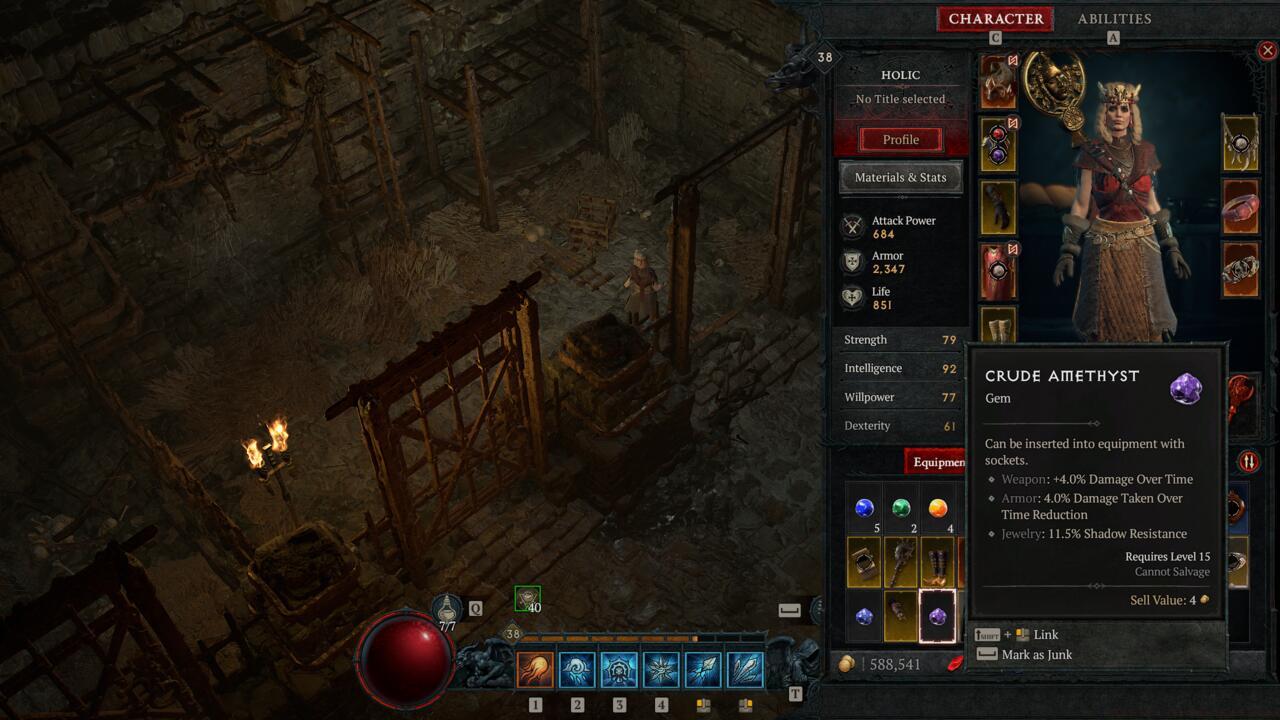
Amethyst – Specializes in damage-over-time effects and shadow resistance
During your initial campaign progression, you’ll primarily encounter Crude and Chipped gem varieties as world drops. The upgrade path begins with combining three Crude gems at a jeweler to create one Chipped version. Advancement continues through similar combining mechanics, though specific level requirements for higher tiers remain intentionally obscured to encourage exploration.
The pinnacle Flawless and Royal gem categories remain locked until you’ve conquered the main storyline with at least one character. This design ensures newcomers focus on core gameplay before engaging with advanced customization systems.
Each gem category serves distinct combat roles, with careful selection dramatically impacting your survival and damage output. Strategic gem placement becomes increasingly important as you approach endgame content and higher World Tiers.
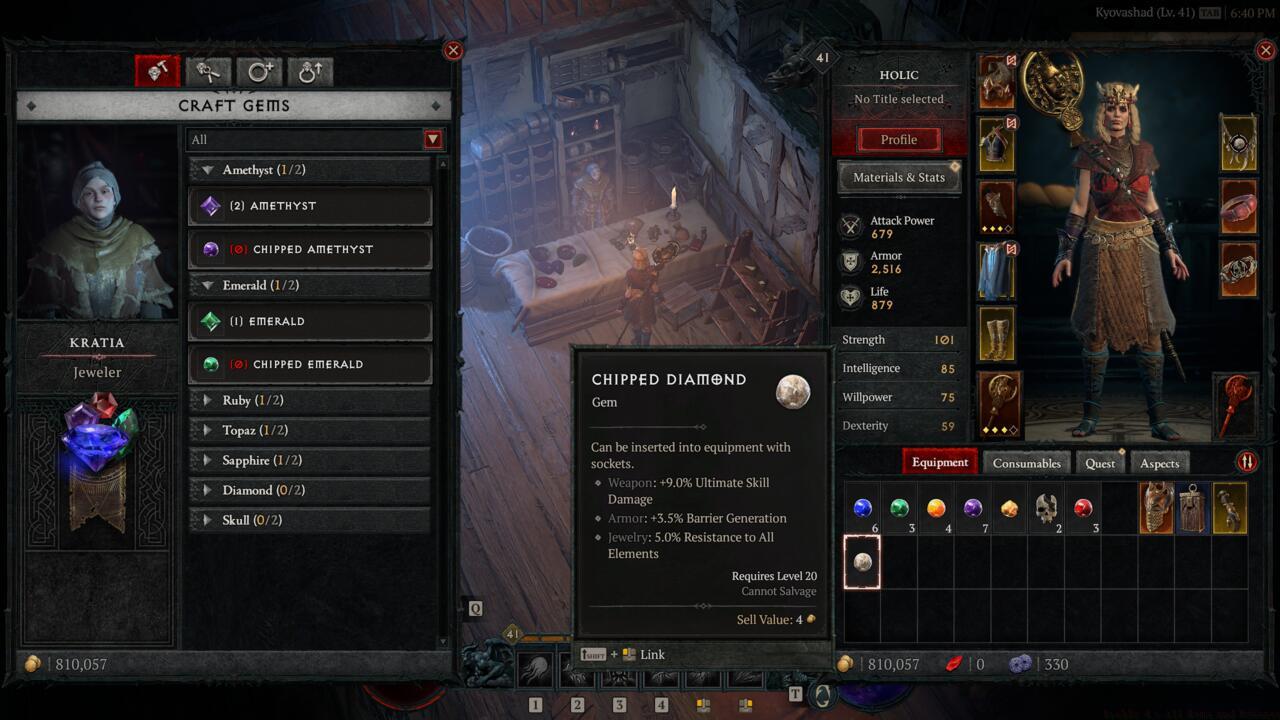
Diamond – Provides resistance to multiple elemental damage types
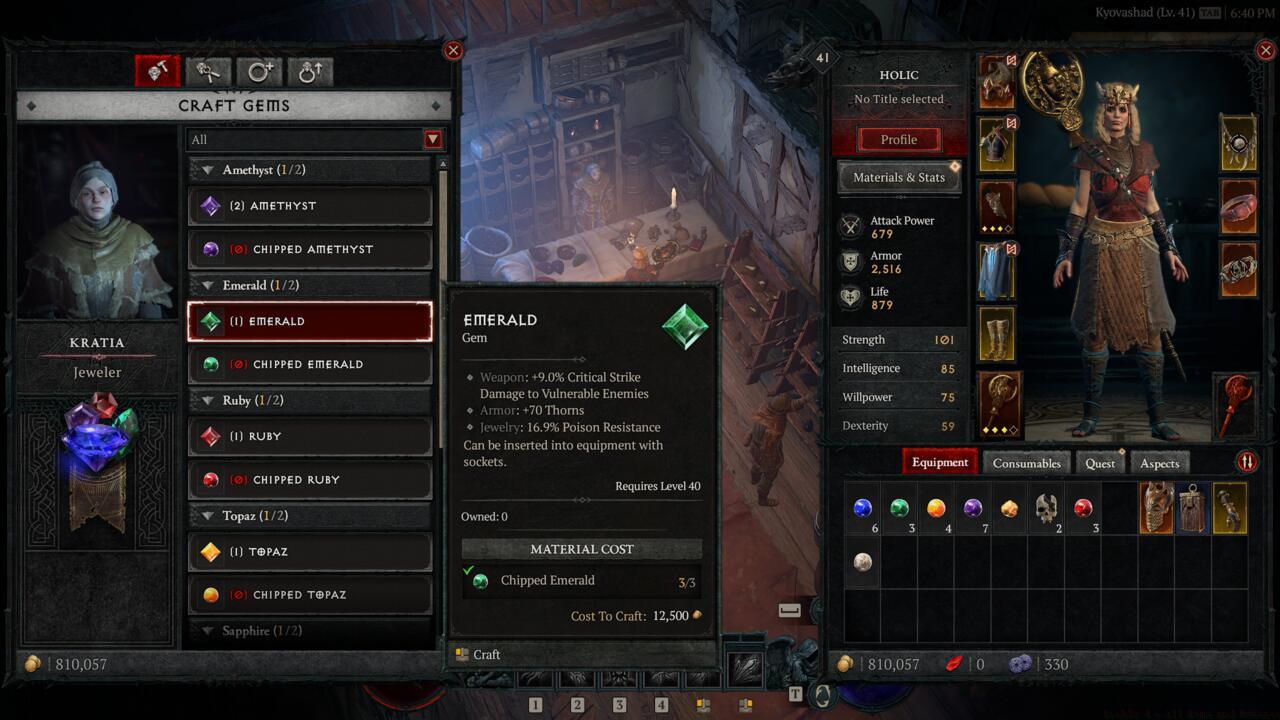
Emerald – Enhances critical strike effectiveness against vulnerable targets
Amethyst exemplifies the situational value of gem selection, offering damage-over-time amplification in weapons while providing corresponding damage reduction when placed in armor. This dual nature makes it particularly valuable for builds focusing on poison, bleed, or shadow damage mechanics.
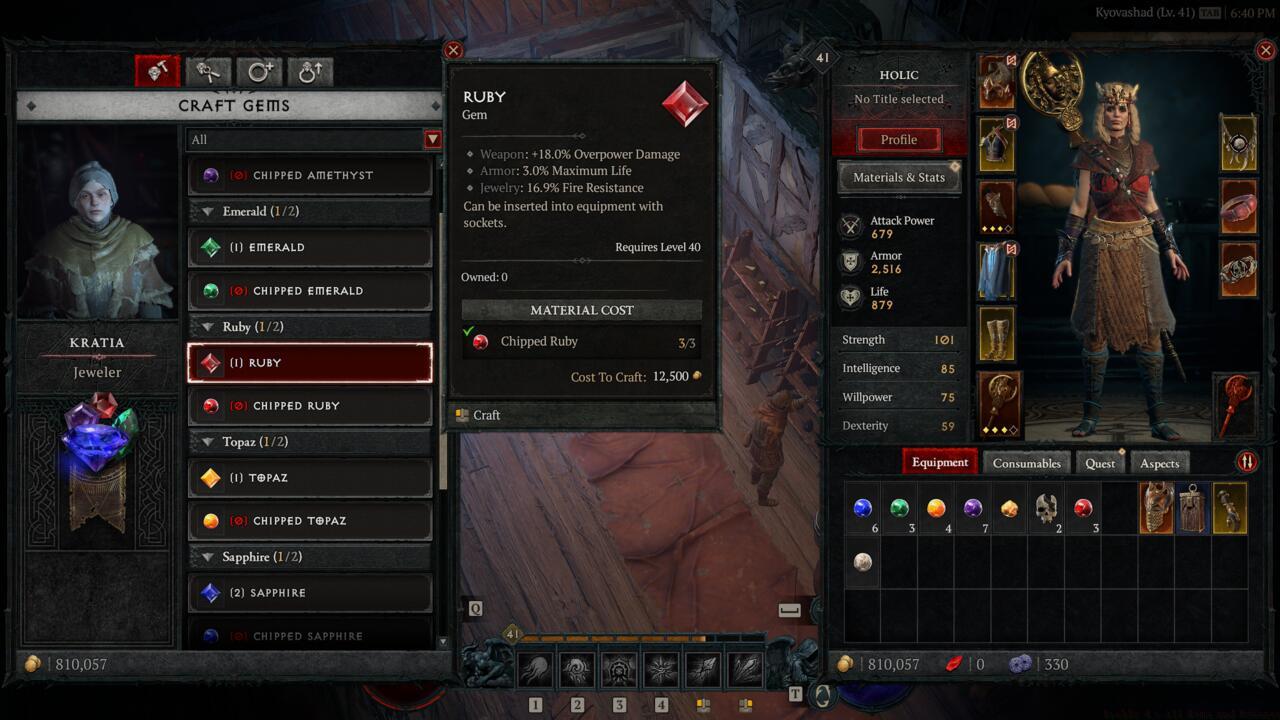
Ruby – Boosts maximum life and provides damage reduction benefits
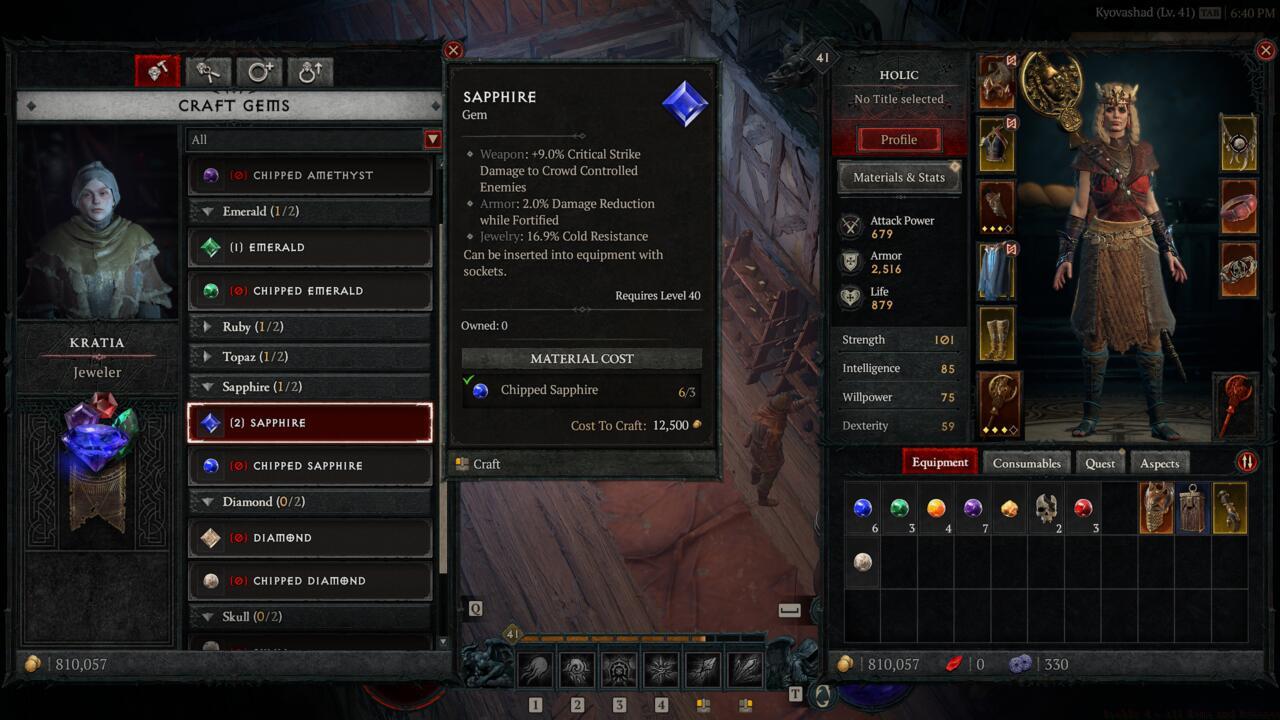
Sapphire – Enhances crowd control effectiveness and damage to controlled enemies
Understanding gem synergies with your chosen class and skills dramatically enhances performance. For example, Ruby’s health bonuses benefit tanky Barbarians, while Sapphire’s crowd control amplification pairs perfectly with Sorcerer freezing builds.
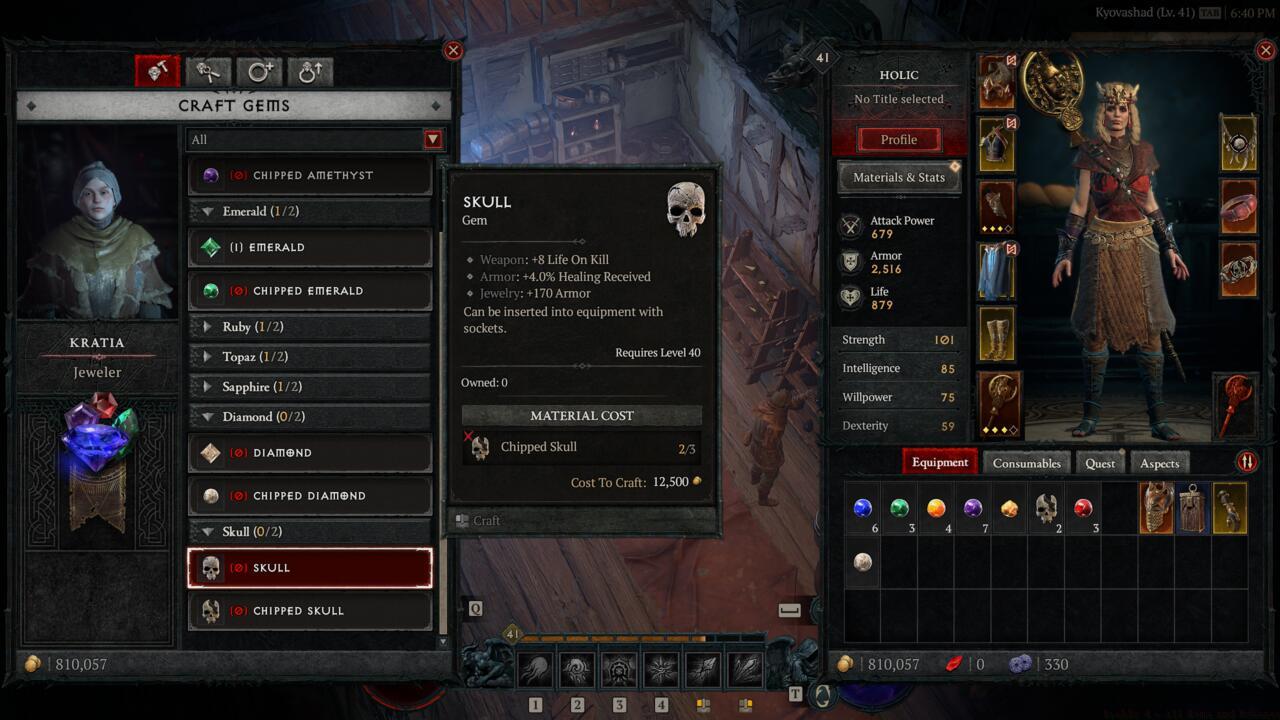
Skull – Provides life regeneration and healing effectiveness improvements
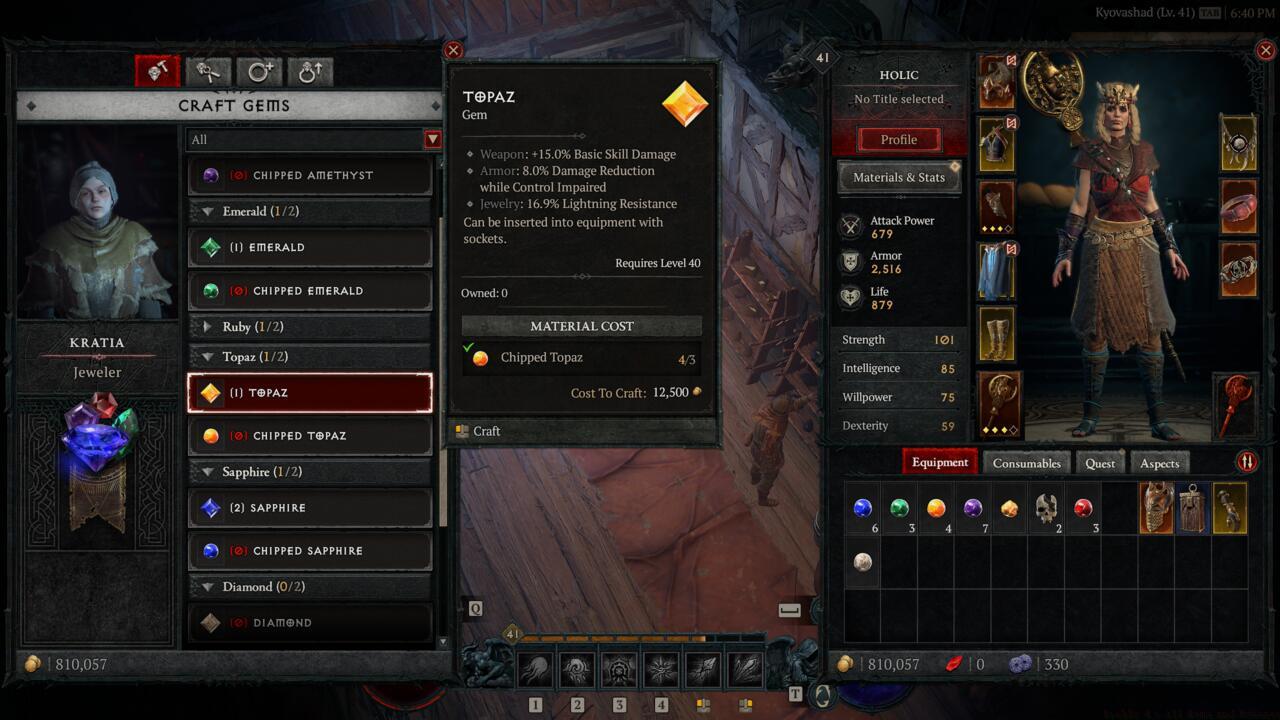
Topaz – Reduces damage while crowd controlled and boosts basic skill damage
Advanced players should consider gem combinations that complement their primary damage sources while covering defensive weaknesses. A glass cannon build might prioritize offensive gems in weapons while using defensive gems in armor to mitigate squishiness.
Mastering Diablo 4’s gem system requires understanding both the upgrade mechanics and strategic implementation across different gameplay phases. Proper gem management separates casual players from seasoned veterans.
The upgrade path follows a consistent pattern: three lower-tier gems combine to create one higher-tier variant. This resource-intensive process means you’ll need to carefully prioritize which gems to upgrade based on your current build requirements and future plans.
A common mistake involves upgrading gems too early in your progression. Since higher-tier gems have level requirements, premature upgrading can create powerful gems you cannot use until much later, wasting valuable resources that could enhance your current capabilities.
Optimal gem strategy varies by gameplay phase:
Early Game (Levels 1-50): Focus on socketing whatever gems you find rather than investing heavily in upgrades. Save your combining materials for when you acquire gear worth long-term investment.
Mid Game (World Tier 3): Begin strategic upgrades for your primary stats, prioritizing gems that complement your core build mechanics. This is when specialized gem effects start providing significant advantages.
End Game (World Tier 4): Maximize your gem quality to Royal tier for significant statistical improvements. At this stage, every percentage point matters for tackling nightmare dungeons and other high-level content.
Resource management becomes crucial—farm specific enemy types and areas known for gem drops when you need materials for upgrades. Efficient players target content that rewards their specific gem needs rather than relying entirely on random world drops.
Remember that gem removal is free, allowing you to experiment with different configurations as you acquire new gear. Don’t hesitate to reposition gems when you find equipment with better inherent stats or additional sockets.
Action Checklist
- Identify your build’s primary stats and damage types to select complementary gems
- Farm gems by targeting high-density enemy areas and opening all treasure containers
- Visit jewelers regularly to add sockets to high-stat gear and upgrade gem rarity
- Combine three lower-tier gems to create higher-tier versions as you progress
- Experiment with gem placement across different equipment types to maximize bonuses
No reproduction without permission:SeeYouSoon Game Club » Diablo 4 – All Gems And Bonuses Master Diablo 4 gem mechanics with socket bonuses, upgrade strategies, and build optimization tips