
TL;DR
- Three distinct Coach Archetypes (Motivator, Recruiter, Tactician) dictate your early-game advantages and coaching style
- Your initial Archetype choice unlocks specialized abilities but doesn’t limit long-term versatility
- Motivator excels at player development, Recruiter dominates talent acquisition, Tactician focuses on in-game strategy
- Advanced players should plan hybrid builds by unlocking secondary Archetype abilities strategically
- Avoid common mistakes like ignoring team needs and underestimating ability synergy requirements
Selecting the optimal Coach Archetype represents one of the most impactful decisions you’ll make when launching Dynasty mode in College Football 26. This choice fundamentally shapes your coaching identity and determines your strategic advantages throughout the season.
Dynasty mode stands as College Football 26’s premier franchise experience, placing you in complete control of a collegiate football program. You assume command over every critical aspect, from roster management and recruiting to game-day decisions and program development. At the outset, you’ll choose your institution and coaching role—either head coach or specialized coordinator positions focusing on offense or defense.
Opting for head coach responsibilities presents another crossroads: utilize the authentic real-world coach or craft a completely custom mentor. Creating your personalized coach grants extensive appearance customization similar to Road to Glory’s player creation system. However, this creative freedom introduces the crucial Archetype selection process, which significantly influences your coaching capabilities and program trajectory.
Veterans of College Football 25 will recognize the Archetype system, as it remains consistent in the latest installment. The three foundational coaching identities available are:
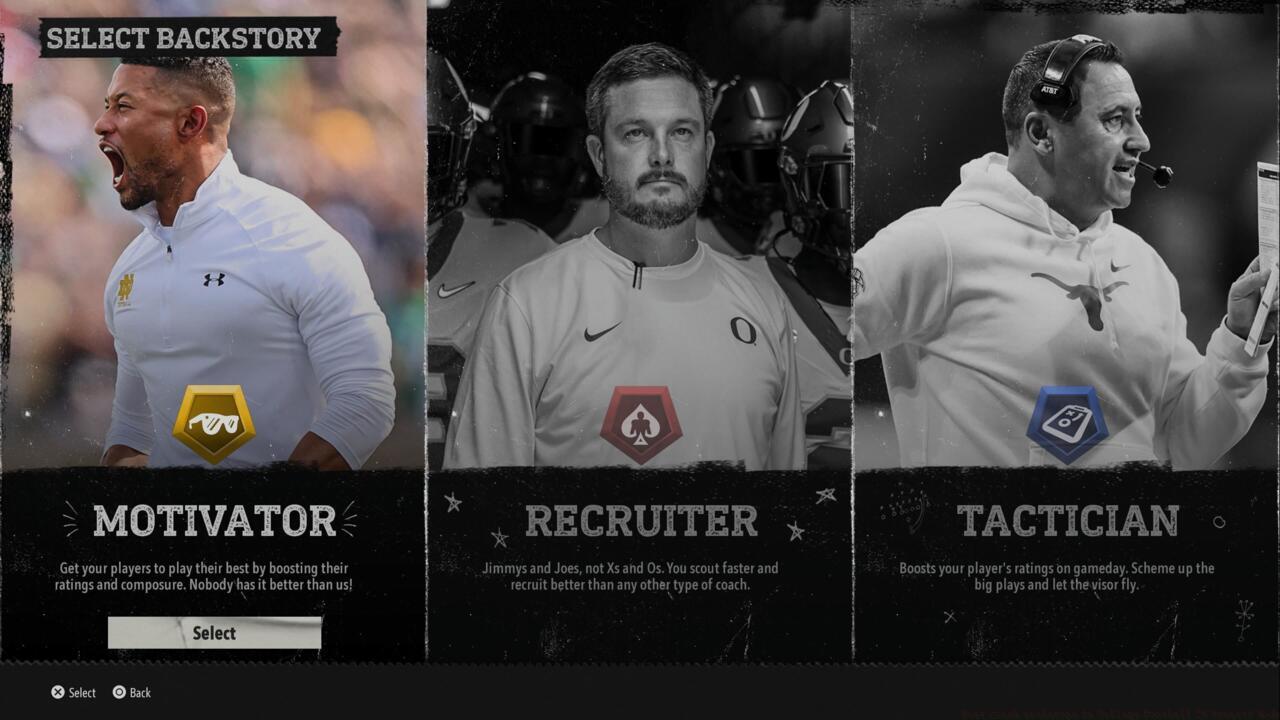
The three Coach Archetypes in Dynasty mode
Your Archetype selection dictates which coaching abilities become immediately accessible during the early stages of your Dynasty campaign. This decision critically influences both your on-field coaching philosophy and off-field program management strengths. Each Archetype provides distinct advantages that complement specific coaching styles and program-building approaches.
The coaching ability progression system in College Football 26 offers both specialization and flexibility. Every coaching ability carries a specific classification tied to one of the three Archetypes. Upon beginning your Dynasty journey, you immediately gain access to your chosen Archetype’s introductory coaching ability. As you accumulate experience and achievements, you can unlock additional abilities within your primary specialization.
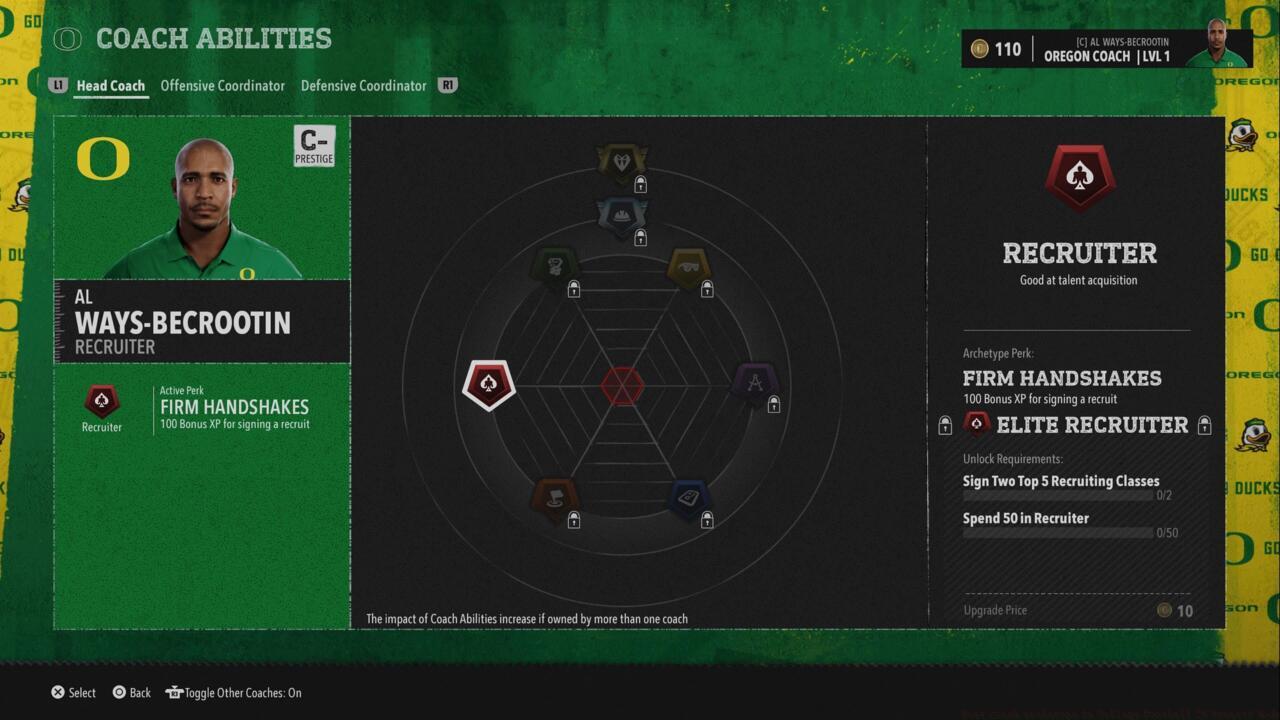
A look at the coaching abilities in Dynasty mode
Importantly, selecting one Archetype doesn’t permanently restrict your coaching development. The system permits unlocking abilities from alternative Archetypes, enabling you to evolve into a comprehensively skilled coach who can adapt to various program needs and challenges.
Motivator Archetype Deep Analysis: This coaching style excels at player development and morale management. Motivators typically see accelerated player attribute growth, reduced regression during off-seasons, and improved team chemistry. This approach works exceptionally well when rebuilding struggling programs or developing young rosters that require significant player improvement.
Recruiter Archetype Strategic Advantages: Specialists in talent acquisition, Recruiters gain significant bonuses during recruiting periods. They often secure additional recruiting visits, maintain stronger pipeline states, and experience less player decommitment. This Archetype proves invaluable when competing for elite prospects against established powerhouse programs.
Tactician Archetype Game-Day Dominance: These coaches shine during actual gameplay with enhanced play-calling options, superior adjustments, and strategic advantages. Tacticians can better exploit opponent weaknesses and maximize their roster’s performance through sophisticated game management.
Architect is one of the abilities you want to work towards
Hybrid Build Strategies: Advanced players often plan their progression to incorporate abilities from secondary Archetypes. For example, a Motivator primary might eventually unlock key Recruiter abilities to address talent acquisition needs, creating a well-rounded coaching profile that excels in both player development and recruitment.
Understanding the long-term implications of your Archetype selection requires strategic foresight. While immediate advantages are important, considering how your coach will develop over multiple seasons separates successful programs from stagnant ones.
Ability Unlock Sequencing: Plan your ability progression path early. If you start as a Recruiter but want tactical advantages, prioritize unlocking Tactician abilities that complement your recruitment strengths. This approach creates synergistic coaching capabilities rather than fragmented specializations.
Common Rookie Mistakes to Avoid: Many new coaches make critical errors in their Archetype selection. Avoid choosing based solely on personal preference without considering your program’s specific needs. A talent-deficient program might desperately need a Recruiter, while a roster-filled but underperforming team could benefit more from a Tactician.
Program-Building Timelines: Different Archetypes suit various rebuilding schedules. Motivators typically produce results over 2-3 seasons as players develop, while Recruiters might show immediate impact through elite recruiting classes. Tacticians can often produce quicker turnarounds through superior game management.
Recruitment vs Development Balance: Even if you don’t select Recruiter as your primary Archetype, consider unlocking at least one recruitment-focused ability early. The Class Guide principles of balanced development apply here—don’t neglect critical program functions regardless of your specialization.
Advanced Synergy Strategies: The most successful coaches identify ability combinations that create multiplicative effects. For instance, certain Motivator abilities that boost player development combined with specific Recruiter talents that improve scouting accuracy can dramatically accelerate program building.
Progression Planning: Map out your ability unlocks across multiple seasons. The Complete Guide to long-term planning emphasizes sequencing your progression to address immediate needs while building toward your ideal coaching profile. This approach mirrors the strategic planning required in our Weapons Unlock strategies—methodical, purposeful advancement toward defined objectives.
Action Checklist
- Analyze your program’s immediate needs—talent acquisition, player development, or tactical improvement
- Select primary Archetype based on program assessment (Motivator/Recruiter/Tactician)
- Plan 3-season ability unlock sequence incorporating secondary Archetype abilities
- Identify synergistic ability combinations between your primary and secondary specializations
- Adjust recruiting and development focus based on your Archetype’s inherent advantages
No reproduction without permission:SeeYouSoon Game Club » Best Coach Archetype In College Football 26 Dynasty Mode Master College Football 26 Dynasty mode with strategic Coach Archetype selection and advanced team-building tactics