
TL;DR
- Astarion requires strategic approval management through morally ambiguous choices
- Early game decisions significantly impact romance availability and progression speed
- Dark Urge characters naturally align with Astarion’s preferences and story arc
- Good-aligned players need specific workarounds to overcome approval challenges
- Relationship milestones unlock at specific approval thresholds with unique dialogue
While Astarion stands out as one of Baldur’s Gate 3’s most compelling romance options, successfully navigating his relationship path demands careful strategic planning and understanding of his unique personality mechanics. This vampire spawn companion presents a fascinating challenge that rewards players who appreciate complex character development.
The charismatic elven vampire Astarion has emerged as a fan-favorite companion, with voice actor Neil Newbon earning the Best Performance award at The Game Awards 2023 for his exceptional portrayal. However, his popularity contrasts sharply with the difficulty of romancing him, particularly for characters following traditional heroic or good-aligned paths. His approval system functions differently than most companions, requiring players to think beyond conventional morality.
Astarion’s character arc reveals gradual complexity, but securing his approval during early gameplay stages often proves counterintuitive. He typically responds favorably to morally questionable decisions and displays disapproval toward altruistic actions, creating significant challenges for players attempting to maintain positive karma while pursuing his romance route. This alignment makes him particularly compatible with Dark Urge characters, though strategic players can successfully romance him without completely abandoning ethical principles.
Mastering Astarion’s approval system begins with understanding his core motivations. As a vampire spawn who endured centuries of servitude, he values freedom, personal agency, and pragmatic survival above traditional morality. Early dialogue choices that demonstrate cruelty, sarcasm, or self-interest typically gain his favor.
Critical approval opportunities occur during these key moments: choosing sarcastic or aggressive dialogue options, displaying suspicion toward strangers, prioritizing personal gain over collective good, and expressing cynicism about heroic ideals. Supporting his autonomy in companion conversations and respecting his personal boundaries also contribute significantly to approval gains.
Strategic players should focus on these early interactions: the initial meeting where you can threaten him with a weapon, the conversation with the dying mind flayer where cruel options earn approval, and interactions with other companions where supporting his viewpoints strengthens your relationship. Remember that small, consistent approval gains throughout Act 1 create the foundation for romance availability.
Once you’ve established sufficient approval, Astarion’s romance progresses through distinct milestones that reveal his complex backstory and personality. The first major threshold occurs when you reach the tiefling party, where high enough approval unlocks his initial romance scene. Further progression depends on maintaining consistent approval through Acts 2 and 3.
Dark Urge characters experience natural synergy with Astarion’s narrative arc, as both grapple with themes of corruption, redemption, and personal agency. However, good-aligned players can employ specific workarounds: completing his personal quest while making choices that respect his autonomy, using deception in dialogue to appear more cynical than your character actually is, and balancing morally good main story decisions with smaller, Astarion-friendly choices in side interactions.
Key relationship developments include his personal quest resolution, the confrontation with Cazador, and late-game conversations about your future together. Each milestone requires careful dialogue choices that acknowledge his trauma while supporting his growth.
Many players struggle with Astarion’s romance due to these frequent errors: consistently choosing obviously good-aligned options without balancing with his preferences, missing early approval opportunities that lock out romance options later, and failing to trigger critical conversation flags at camp. Understanding these pitfalls significantly improves success rates.
Optimization strategies include: focusing on sarcastic dialogue options that amuse him without being outright evil, completing his personal quest with choices that prioritize his agency, and using long rests frequently to ensure camp conversations trigger properly. Advanced players can maximize approval by combining specific class abilities with dialogue choices that align with his worldview.
For players seeking comprehensive Complete Guide approaches to complex game systems, similar strategic thinking applies to mastering Astarion’s romance mechanics. Time investment typically ranges from 15-20 hours of gameplay to reach major romance milestones, depending on how efficiently you manage approval opportunities.
How To Romance Astarion in Baldur’s Gate 3
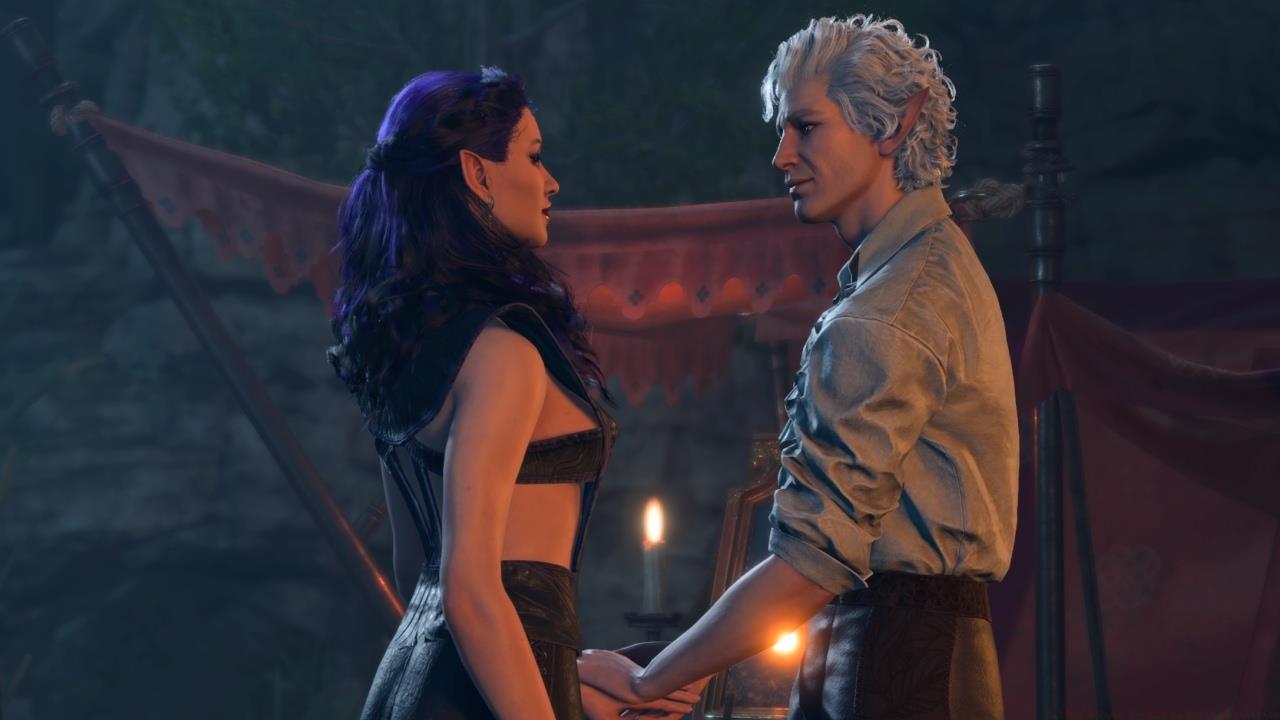
Astarion’s complex background and deceptive personality create a romantic path that demands strategic thinking but delivers exceptional narrative payoff.
Romancing Astarion represents one of Baldur’s Gate 3’s most intricate relationship arcs, requiring players to navigate his traumatic history while managing his evolving moral compass. This guide provides comprehensive strategies for building a meaningful connection with the vampire spawn while avoiding common pitfalls that can derail your romance progression.
Recruitment
Unlike companions found aboard the Nautiloid, Astarion requires post-crash recruitment on the shoreline near The Grove. His initial location places him at map coordinates X: 170, Y: 287, where he’s confronting an Intellect Devourer near a damaged stasis pod.
When approaching Astarion, prepare for skill checks that determine his willingness to join. Successfully assisting him with the creature encounter followed by passing persuasion checks secures his place in your party. Pro tip: Characters with high Charisma or proficiency in Deception/Intimidation will find this recruitment significantly easier.
Approval and disapproval
Astarion’s approval system presents unique challenges, particularly during early gameplay stages. He consistently favors sarcastic responses, intimidation tactics, and transactions with clear personal benefit, while strongly opposing altruistic actions without compensation.
His aversion to displays of vulnerability and limited empathy for enslaved individuals creates interesting narrative tension, especially considering his own 200-year enslavement. However, players don’t need to embrace complete moral bankruptcy to win his affection, as his preferences undergo significant evolution throughout the narrative arc.
For instance, rescuing a child from serpent danger in Act 1 triggers disapproval, yet by Act 3, he supports assisting another child facing maternal tragedy.
Act 1: Love at first bite
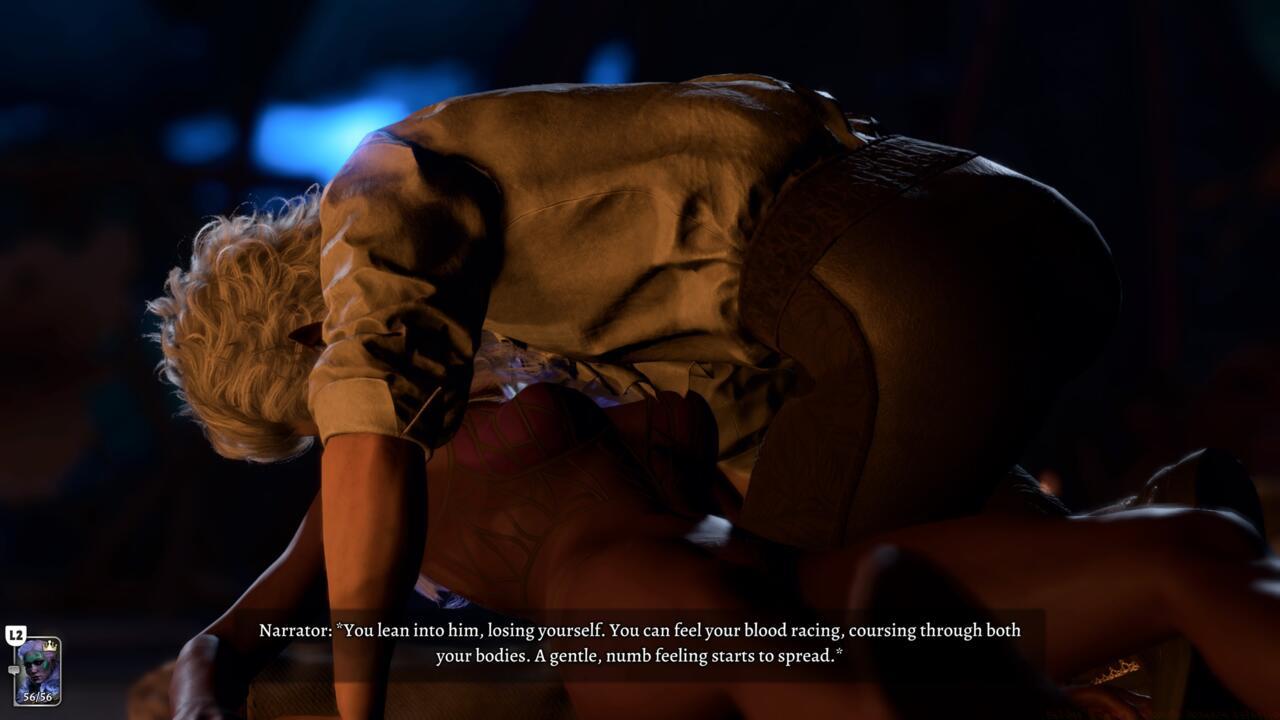
Permitting Astarion’s nocturnal feeding provides substantial relationship and combat advantages.
During initial long rest sequences, Astarion approaches your bedroll seeking sustenance. When discovered, he reveals his vampiric nature and requests permission to feed. Granting this request represents one of Act 1’s most effective approval-building opportunities.
The Grove
While earning Astarion’s approval proves challenging, avoiding his disapproval presents greater difficulty. He opposes Grove preservation and tiefling refugee assistance, while favoring alliance with Minthara’s goblin forces—a decision carrying severe narrative consequences including potential permanent departure of multiple companions.
Strategic party management offers solutions: temporarily dismissing Astarion to camp prevents disapproval accumulation during humanitarian actions. Alternatively, controlling Astarion directly when performing good deeds makes him perceive these actions as his own initiatives.
The Necromancy Of Thay
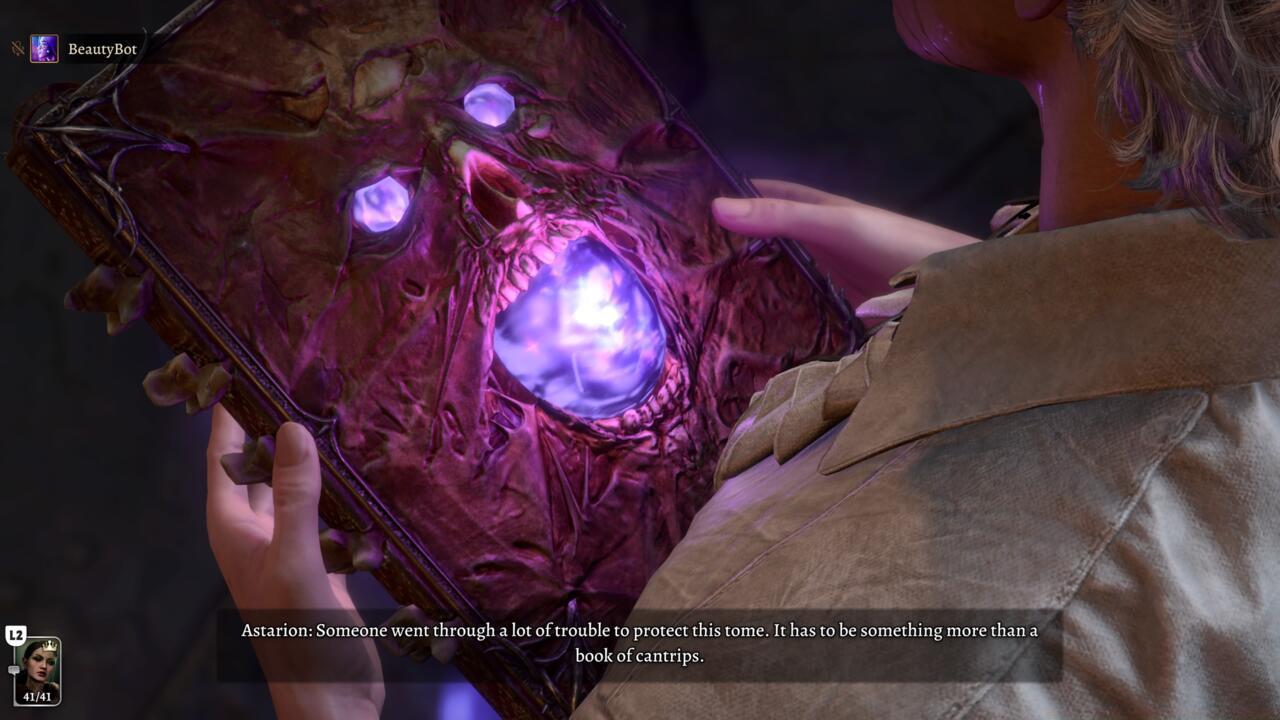
Acquiring The Necromancy Of Thay for Astarion delivers significant approval gains without requiring morally questionable actions.
This ancient magical grimoire resides in the Blighted Village’s abandoned apothecary structure adjacent to the fast-travel waypoint.
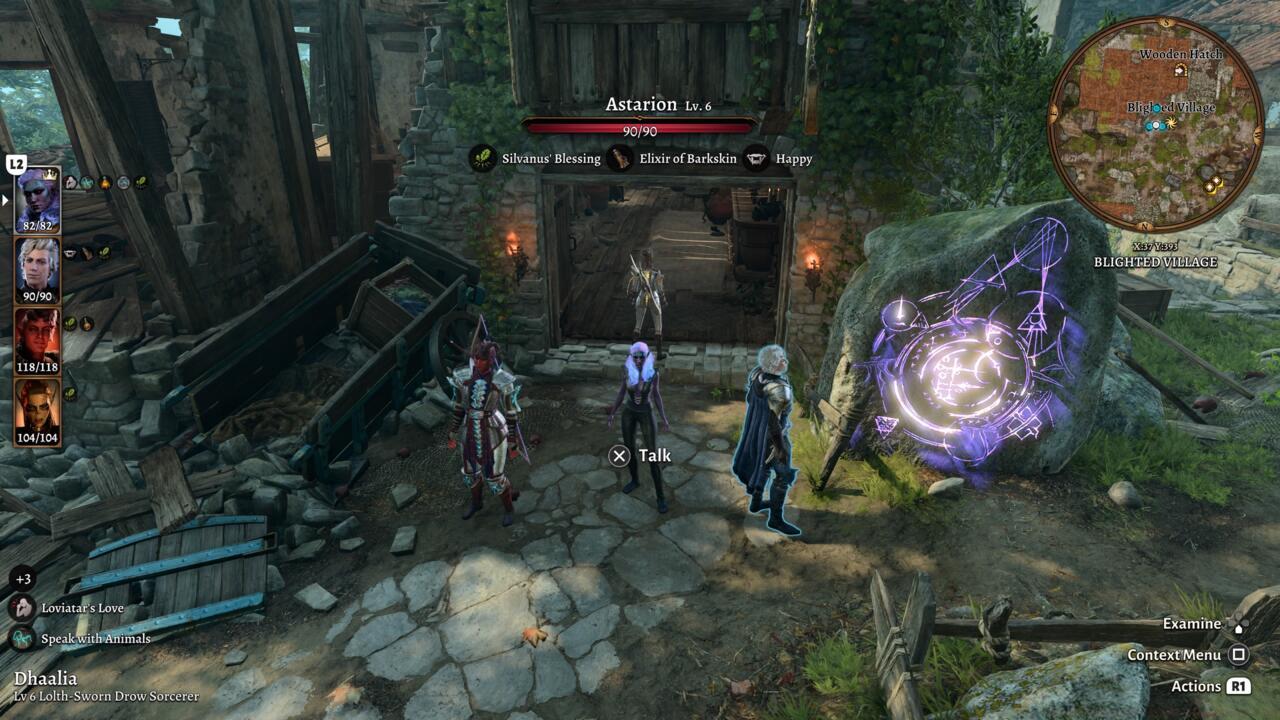
The structure housing The Necromancy of Thay sits immediately beside the Blighted Village transportation point.
Navigate to the basement trapdoor behind the counter (X: 33, Y: 380), locate the concealed lever (X: -704, Y: -354) to access the secret chamber containing the caged book.
Gandrel
Near the hag’s teahouse entrance in Sunlit Wetlands, encounter Gandrel—a Gur tribe monster-hunter specifically targeting Astarion. Granting Astarion permission to eliminate this threat provides 10 approval points, matching the Necromancy of Thay reward.
The tiefling party
Once achieving sufficient approval levels, Astarion proposes an evening together. Accepting this invitation and permitting additional biting during the encounter further increases relationship progression.
Act 2: Scars and shadows
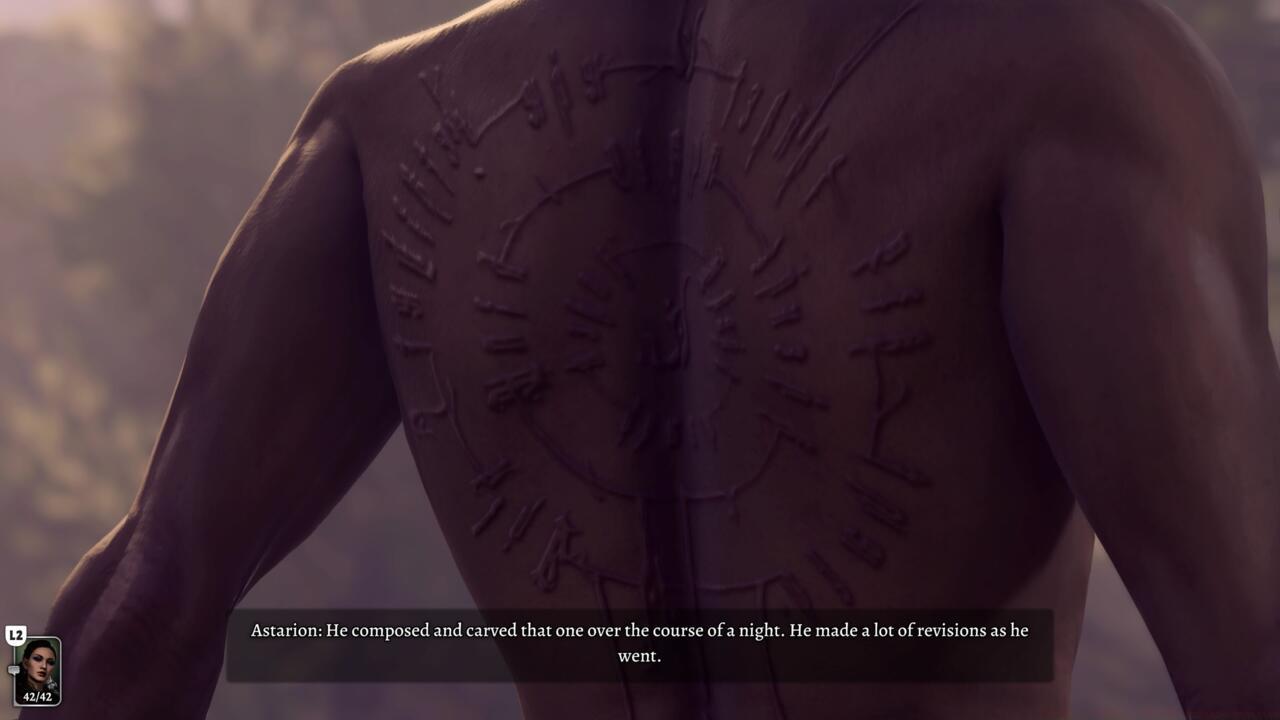
Understanding the significance of Astarion’s back scars becomes crucial for romance advancement during this middle act.
Following intimate encounters with Astarion, players can inquire about the intricate scarring on his back. He reveals these markings constitute a poetic inscription carved by his former master, vampire lord Cazador Szarr.
Kill Yurgir
Journey to the map’s northwestern region to discover the Grand Mausoleum waypoint (X: -171 Y: 79), triggering Raphael’s appearance and the subsequent orthon elimination requirement for scar translation.
When confronting Yurgir, players face multiple resolution options: direct combat, sparing, or persuasion toward self-destruction. The confrontation proves particularly demanding on elevated difficulty settings, yet sparing Yurgir causes Raphael to refuse translation services, immediately terminating the romance progression.
Moonrise Towers
At Moonrise Towers, encounter drow alchemist Araj Oblodra offering stat-enhancing potions in exchange for Astarion’s bite. Respecting Astarion’s bodily autonomy by informing Araj that he determines his own actions earns 5 approval points, with an additional 5 points gained by reassuring Astarion he needn’t perform unwanted actions.
Act 3: Fate at the Gate
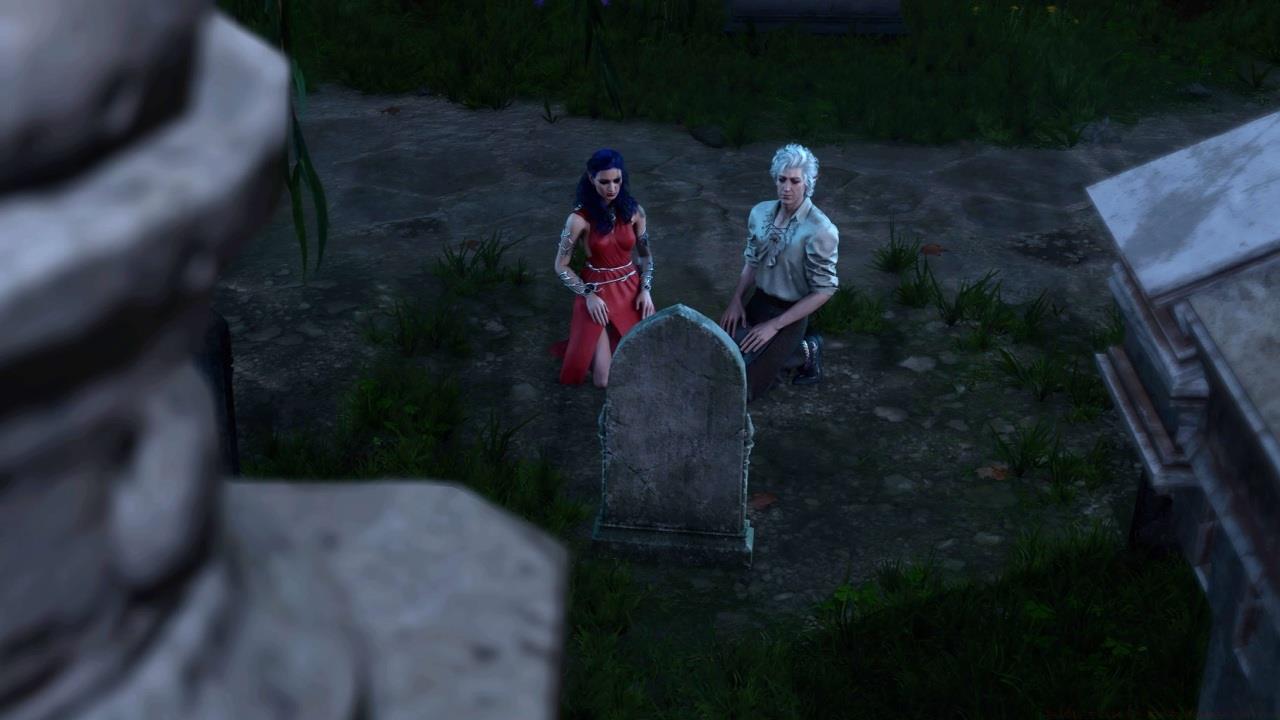
The concluding act unveils comprehensive truths about Astarion’s history, with player decisions shaping his ultimate destiny.
Continuing the romance requires completing Astarion’s companion quest, The Pale Elf, culminating in the inevitable confrontation with Cazador.
Fraygo’s Flophouse
Upon reaching Wyrm’s Crossing, investigate Fraygo’s Flophouse opposite Sharess’ Caress near the South Span waypoint (X: 15 Y: 74). Interaction with Astarion’s vampire spawn siblings on the second floor reveals Cazador’s ascension ritual location.
Ascended Astarion & Cazador
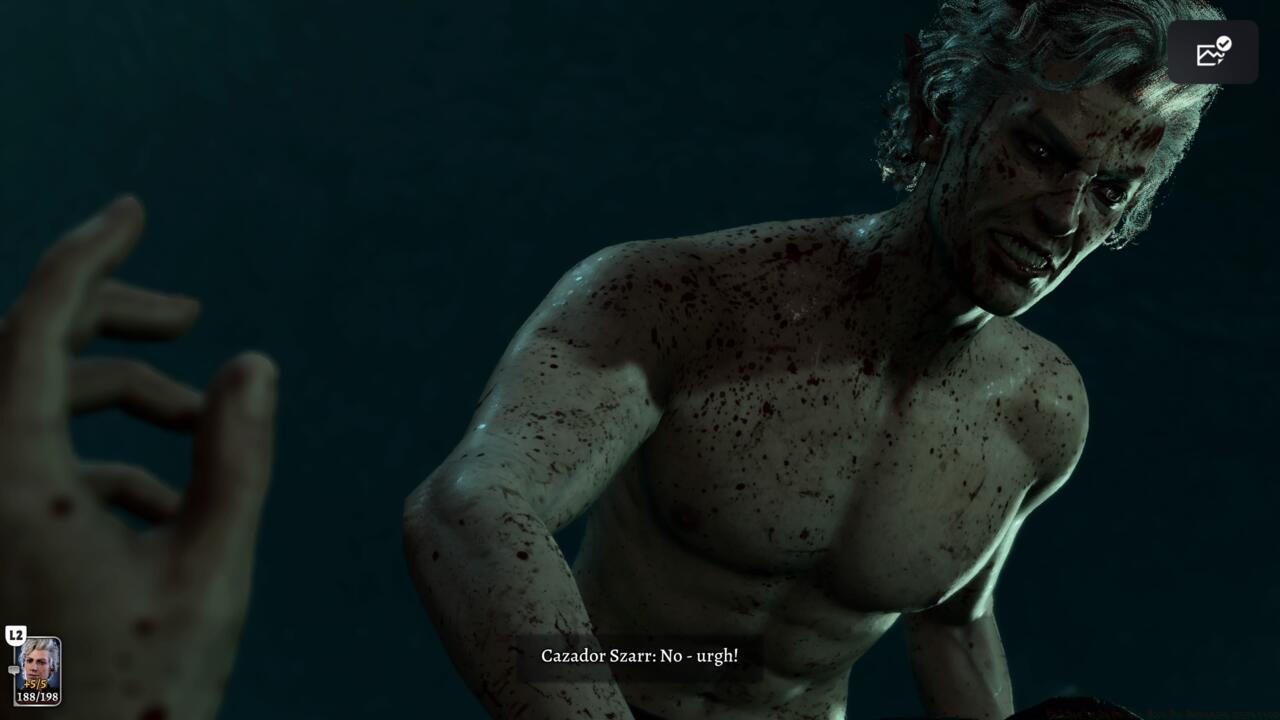
Astarion’s personal narrative concludes with a pivotal decision regarding Cazador’s ascension ceremony.
Players permitting Astarion’s ascension gain access to enhanced combat capabilities, but this choice fundamentally alters his personality and necessitates sacrificing 7,000 innocent souls.
Ascended Astarion demonstrates intense power hunger and offers to transform his romantic partner into a vampire spawn. However, this transformation establishes complete control dynamics, eliminating personal autonomy. Refusing this offer after permitting ascension results in immediate relationship termination with threatening implications.
For players seeking Astarion’s positive character resolution, preventing the ascension ritual and persuading him against assuming Cazador’s position achieves this outcome. Following emotional processing, he expresses gratitude and guides you to his gravesite for an optional romantic scene, officially cementing your relationship status.
Romances with Non-Origin Characters and NPCs
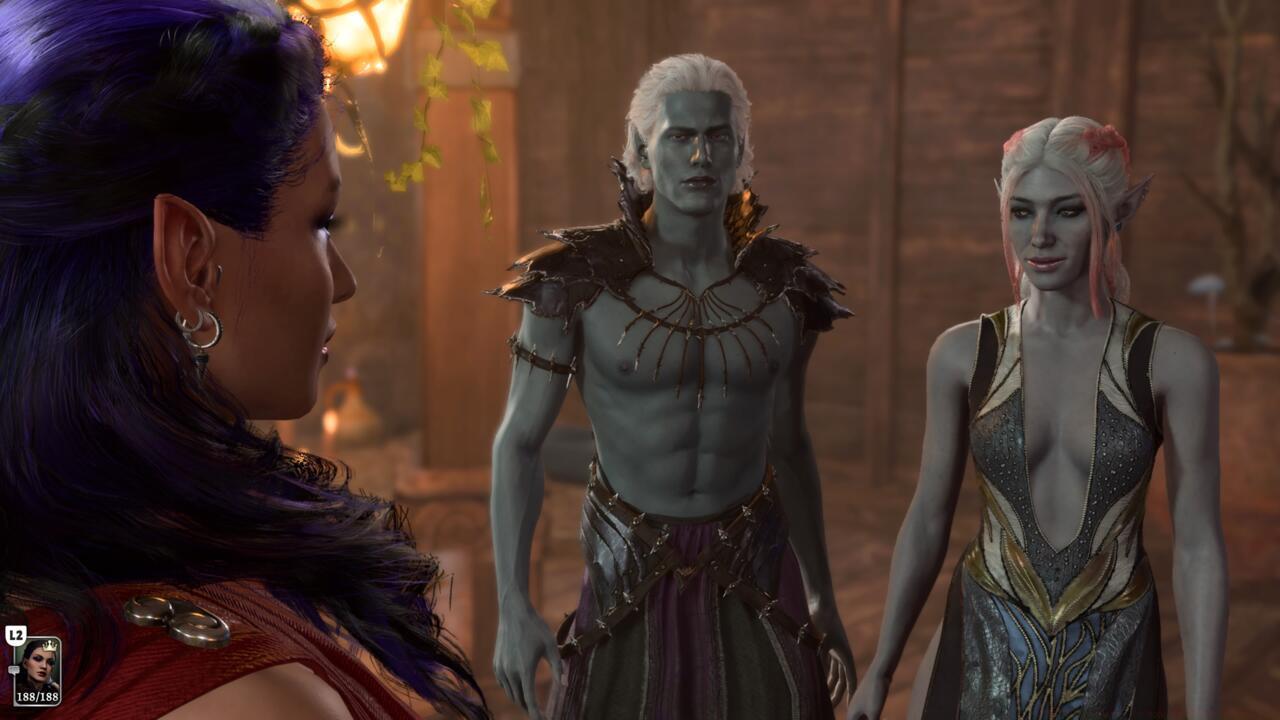
Astarion’s reactions to alternative romantic encounters vary significantly based on player decision-making.
- Drow twin scene: Players can engage in a single encounter with Astarion and drow twins at Sharess’ Caress during Act 3. He participates only post-Cazador’s demise, and the scene impacts approval only through coercion or rejection after expressed interest.
- Emperor romance: Interestingly, players romancing The Emperor always get discovered by companions during rest periods. Despite visible discomfort from party members, Emperor romance discovery doesn’t affect companion approval ratings.
- Halsin romance: When Halsin proposes polyamorous arrangements, discussing this with Astarion reveals his conditional acceptance, though some players report experiencing guilt due to his contradictory behavior regarding sexual freedom exploration.
- Mizora romance: Similar to Emperor encounters, Mizora romantic interactions guarantee discovery by your primary partner. Astarion responds with curiosity rather than anger, while Wyll understandably disapproves of intimacy with his infernal patron.
Navigating Astarion’s intricate romantic storyline presents one of Baldur’s Gate 3’s most layered companion experiences. His complex background as a vampire spawn and deceptive personality creates a relationship dynamic that demands strategic decision-making but delivers exceptional narrative payoff for dedicated players.
Unlike more straightforward romances, Astarion’s path requires careful attention to approval triggers and story progression across all three acts. Successfully completing his romance unlocks unique dialogue options, special cutscenes, and character development moments that significantly enhance your overall gaming experience.
Your journey with Astarion begins immediately after the Nautiloid crash, where strategic recruitment timing is crucial. Unlike companions found aboard the ship, Astarion requires specific post-crash location knowledge for successful acquisition.
Locate him precisely at map coordinates X: 170, Y: 287 near the coastline, positioned beside an abandoned stasis pod from the wreckage. He’ll be confronting an Intellect Devourer creature when you arrive, requesting assistance through dialogue interaction. Successfully passing the required skill check during this encounter unlocks his companion recruitment option.
Early approval building focuses on supporting his self-interested perspective and engaging with vampire-related content. Key moments include handling the Necromancy of Thay book discovery, interacting with Gandrel the monster hunter, and making specific choices during the tiefling celebration event.
Act 2 represents the critical development phase where your relationship with Astarion either solidifies or deteriorates permanently. This segment introduces relationship-defining choices that determine romance viability through the game’s conclusion.
The confrontation with Yurgir provides a pivotal character growth opportunity. Your decisions during this encounter significantly impact Astarion’s personal journey and how he perceives your partnership. Strategic dialogue choices here can substantially increase approval ratings.
Moonrise Towers serves as the primary location for advancing romantic progression through intimate conversations and shared experiences. This is where Astarion begins revealing deeper aspects of his personality and past trauma.
The concluding act brings Astarion’s personal storyline to its dramatic climax at Fraygo’s Flophouse, where relationship-defining choices create permanent consequences. Your approach to his personal quest determines the ultimate romance outcome.
The Ascension storyline involving Cazador represents the narrative peak of Astarion’s character arc. Your decisions here determine whether he achieves vampire ascension or finds redemption through alternative means.
This segment demands careful consideration of moral implications and long-term relationship dynamics. The choices made during the Cazador confrontation lock in your romance conclusion and cannot be reversed post-decision.
Mastering Astarion’s romance requires understanding nuanced approval mechanics beyond surface-level interactions. Consistently choosing dialogue options that align with his self-preservation philosophy and supporting his autonomy generates the most reliable approval gains.
Common mistakes include being overly altruistic in his presence, refusing vampire-related story content, and missing critical relationship triggers in Act 2. These errors can permanently lock players out of romance progression without obvious warning signs.
For players struggling with approval building, focusing on morally ambiguous quest solutions and demonstrating pragmatic decision-making typically yields better results than pure evil or purely good approaches.
During your exploration of ancient ruins, you’ll eventually discover a mystical mirror that blocks your path. Choosing to intimidate this magical barrier earns Astarion’s immediate respect, as he harbors deep-seated issues with reflective surfaces. Progress deeper into the underground complex to locate a caged ancient tome protected by sophisticated traps. After disabling the security measures and unlocking the container, retrieve the forbidden text. Astarion will demonstrate keen interest in the volume, so avoid the destructive option. Instead, return to the surface world and navigate to the well positioned opposite the apothecary shop (X: 23 Y: 398). Descend into the well to access a lightless cavern blanketed in thick spider silk.
After eliminating the arachnid inhabitants occupying the subterranean chamber, thoroughly search the area for valuable items. Be particularly vigilant for an amethyst-hued gemstone that becomes accessible post-combat. Merge this crystal with The Necromancy Of Thay tome. Successfully complete the subsequent ability checks, prompting Astarion to volunteer as the book’s custodian. Transferring ownership provides substantial relationship advancement, and contrary to repeated warnings about the volume’s extreme cursed nature, no detrimental gameplay effects result from this transfer. Astarion can actually acquire permanent combat enhancements by successfully interpreting the complete text during later quest stages.
Approaching the hag’s residence in the Sunlit Wetlands, adventurers may encounter Gandrel, a monster-hunter belonging to a nomadic Gur community. Unfortunately for Astarion, the specific creature Gandrel pursues happens to be Astarion himself. Provided he’s previously disclosed his vampiric nature to your character (and you haven’t betrayed this confidence to Gandrel, which would damage trust), Astarion will eventually request permission with “May I?” Authorizing Astarion to eliminate Gandrel yields an additional 10 approval points, matching the reward from the Necromancy of Thay exchange.
Depending on your strategic approach to relationship building, the initial romantic encounter might occur significantly before the tiefling celebration (we successfully activated this scene well before investigating Kagha in the marshlands). Regardless of timing, once your approval rating reaches sufficient levels, conversing with Astarion triggers an invitation for shared evening activities. Accepting this proposal generates additional approval, and selecting the bite permission option provides extra relationship advancement.
Understanding the significance of Astarion’s distinctive back markings proves crucial for successful romantic pursuit.
Should players engage in intimate relations with Astarion, they gain the opportunity to inquire about his dorsal scars the following morning. Astarion reveals these markings constitute poetic verses inscribed upon his flesh by his former master, the vampire aristocrat Cazador Szarr. Based on character race, class specialization, and successful skill check execution, adventurers might even decode the linguistic system employed in the composition. Later, players can provide Astarion visual representation of his scars, since he lacks reflective capability. Nevertheless, the enigma of his scars persists until Act 2, when a familiar Infernal visage materializes in the Shadow-Cursed Lands, proposing scar interpretation assistance. Regrettably, this service isn’t offered gratuitously.
Journey to the northwestern map extremity, where you’ll unlock the Grand Mausoleum fast-travel point (X: -171 Y: 79) and initiate a cinematic sequence featuring the devil Raphael. This entity cautions about the perilous creature—an orthon—lurking within Thorm Mausoleum’s depths. With Astarion present, he’ll petition Raphael for scar translation services. Raphael consents exclusively if the party eliminates Yurgir, the previously mentioned orthon.
Upon accessing Yurgir’s domain, players face multiple resolution options: direct combat, peaceful resolution, or persuasive manipulation leading to self-destruction. The battle presents significant challenges, particularly on elevated difficulty settings, but sparing Yurgir causes Raphael to renege on his scar translation promise. Consequently, Astarion terminates the romantic relationship. The optimal approach involves convincing Yurgir to eliminate himself, enabling continued romance development with Astarion and providing future alliance possibilities against more formidable adversaries. Following Yurgir’s disposition, complete an extended rest period to trigger Raphael’s reappearance for scar interpretation.
When arriving at Moonrise Towers, adventurers meet Araj Oblodra, a drow alchemist. She provides race-specific potions for each party member, but also proposes creating a unique elixir that permanently enhances one character statistic… in exchange for compelling Astarion to bite her. Being a vampire spawn, Astarion lacks transformation capabilities, and Araj clarifies her motivation stems from completing a personal bucket list item rather than seeking vampiric power. Informing Araj that Astarion maintains personal autonomy earns 5 approval points, and advising Astarion against unwanted actions generates another 5 approval points. Ultimately, he declines Araj’s proposition.
Act 3 unveils the comprehensive reality of Astarion’s history, with player decisions dictating his ultimate destiny. The choices made during critical story moments determine whether he achieves personal liberation, falls back into destructive patterns, or finds some middle path toward redemption. Understanding the psychological underpinnings of his character reveals why certain decisions carry more weight than others in shaping his narrative conclusion.
Choosing to enable Astarion’s ritual completion grants him formidable combat enhancements, yet this decision carries severe narrative consequences that fundamentally reshape his character arc. The ascension process demands the permanent sacrifice of seven thousand innocent lives, creating an ethical crossroads that tests your party’s moral compass. When Astarion undergoes this transformation, he becomes consumed by power hunger, mirroring the worst traits of his former master Cazador. The ascended version will proposition his romantic partner with vampire spawn transformation, presenting it as a gift while obscuring the loss of personal agency this entails.
Accepting his offer establishes a master-servant dynamic where your character becomes subservient to Astarion’s commands, eliminating any pretense of equal partnership. Should you decline the transformation after supporting his ascension, Astarion terminates the relationship immediately with threatening undertones, asserting his authority to claim whatever he desires. This personality shift demonstrates how completely the ritual corrupts his original character, replacing his developing empathy with Cazador’s manipulative tendencies. The combat advantages must be weighed against these permanent character alterations.
For players seeking Astarion’s most positive character resolution, preventing the ascension ritual becomes essential. This path requires persuasive dialogue choices that appeal to his emerging humanity rather than his hunger for power. After the failed ritual, Astarion experiences genuine emotional processing and growth, eventually expressing gratitude for your intervention in his self-destructive trajectory.
The post-ritual character development includes a poignant gravesite visit that serves as both closure for his past and foundation for his future. An optional romance scene at this location solidifies your relationship status, with Astarion’s dialogue and greetings reflecting this new commitment level. This organic relationship progression contrasts sharply with the forced dynamics of the ascension path, offering more authentic emotional payoff for invested players.
- Drow twin scene analysis: This Act 3 encounter at Sharess’ Caress becomes available only after Cazador’s defeat, representing Astarion’s exploration of newfound sexual autonomy. However, careful observation reveals his underlying discomfort despite surface-level participation. The scene’s conclusion features narrative text indicating Astarion’s psychological dissociation, suggesting this may not represent healthy boundary establishment. Approval changes occur only if you pressure him against stated preferences or reject his expressed interest.
- Emperor romance dynamics: Engaging with The Emperor inevitably results in companion discovery, though surprisingly without approval penalties from any party members. Astarion’s neutral reaction to this unconventional liaison demonstrates his evolving perspective on relationships and personal freedom.
- Halsin polyamory options: When discussing Halsin’s proposition with Astarion, he consents enthusiastically while voicing insecurities about being replaced. Despite some players reporting guilt over his occasionally contradictory responses, the encounter doesn’t impact approval metrics, allowing exploration of polyamorous dynamics within established relationships.
- Mizora’s risky liaison: Similar to the Emperor scenario, Mizora romantic encounters guarantee discovery by your primary partner. Astarion responds with curiosity rather than jealousy, requesting detailed accounts of the experience. Wyll, however, registers understandable disapproval given Mizora’s role as his infernal patron.
These optional scenes provide character depth exploration without mechanical punishment, though their emotional resonance varies significantly based on your roleplaying preferences and character investment level.
Action Checklist
- Choose sarcastic/cynical dialogue options in early interactions
- Support Astarion’s viewpoints in companion disputes and personal quests
- Balance main story good decisions with Astarion-friendly side choices
- Trigger camp conversations frequently through regular long resting
- Complete his personal quest with choices that respect his autonomy and growth
- Recruit Astarion on the beach near The Grove coordinates X: 170, Y: 287
- Allow Astarion to bite you during long rests for approval and combat benefits
- Complete The Necromancy of Thay quest and give the book to Astarion
- Eliminate Yurgir to enable Raphael’s scar translation
- Complete Cazador confrontation and prevent ascension ritual
- Recruit Astarion immediately post-crash using coordinates X:170, Y:287
- Build early approval through supportive dialogue and vampire story engagement
- Navigate critical Act 2 decisions at Moonrise Towers carefully
- Make final relationship determination during Cazador confrontation in Act 3
- Complete Necromancy of Thay quest with gem combination and skill checks
- Handle Gandrel encounter with strategic dialogue choices
- Achieve high approval threshold to trigger romance initiation
- Navigate Raphael’s bargain and Yurgir confrontation successfully
- Complete Act 3 story decisions determining Astarion’s ultimate fate
- Save before the Cazador confrontation to test different dialogue outcomes
- Choose persuasion options appealing to Astarion’s humanity rather than fear or power
- Monitor approval through companion reactions and camp dialogue for relationship progression cues
- Complete personal quests before pursuing optional romance scenes for optimal context
- Document emotional responses to different choices for future playthrough optimization
No reproduction without permission:SeeYouSoon Game Club » Baldur’s Gate 3 – How To Romance Astarion