
TL;DR
- Master the Driver-Blade relationship for optimal weapon and ability access
- Strategically manage Party Gauge for revives and devastating Chain Attacks
- Optimize auto-attack positioning and Art timing for maximum efficiency
- Learn advanced cancel techniques to dramatically increase damage output
- Coordinate Blade Combos and elemental affinities for combat superiority
Xenoblade Chronicles 2 presents players with an exceptionally deep combat system featuring multiple interconnected mechanics that create a rewarding experience once mastered. The learning curve can be steep, as the game delivers numerous tutorials that disappear once dismissed, leaving only limited reference materials available through merchants later in the game. For players who tend to skim through instructional content, several fundamental concepts may be overlooked, leading to frustration in mid-to-late game encounters.
To address these learning challenges, we’ve created this comprehensive breakdown of combat terminology and mechanics designed to accelerate your mastery. This guide provides not only the basics but also advanced optimization strategies that the in-game tutorials often omit.
Xenoblade Chronicles 2 continues to be available exclusively on Nintendo Switch. For broader context, consider reading our Complete Guide to understanding complex game systems across different titles.
Your combat team comprises two distinct character types: Drivers and Blades. Drivers represent the primary characters you directly control during battles—though you’ll typically command just one of the three party members, with AI controlling the remaining allies. There is one significant exception to this control scheme that we’ll explore in detail later.
Blades serve as power sources for Drivers, determining which weapons and combat abilities become available. Each Blade possesses an elemental affinity—a crucial characteristic that becomes particularly important when executing Blade Combos and initiating Chain Attacks, which we’ll examine thoroughly in subsequent sections.
During active combat, you can switch between your current Driver’s equipped Blades (either two or three, depending on your progression through the story). However, this switching isn’t instantaneous; each Blade features an associated cooldown meter that gradually refills over time. Unlike Drivers, Blades lack health bars and remain immune to direct enemy damage, functioning instead as persistent combat enhancements.
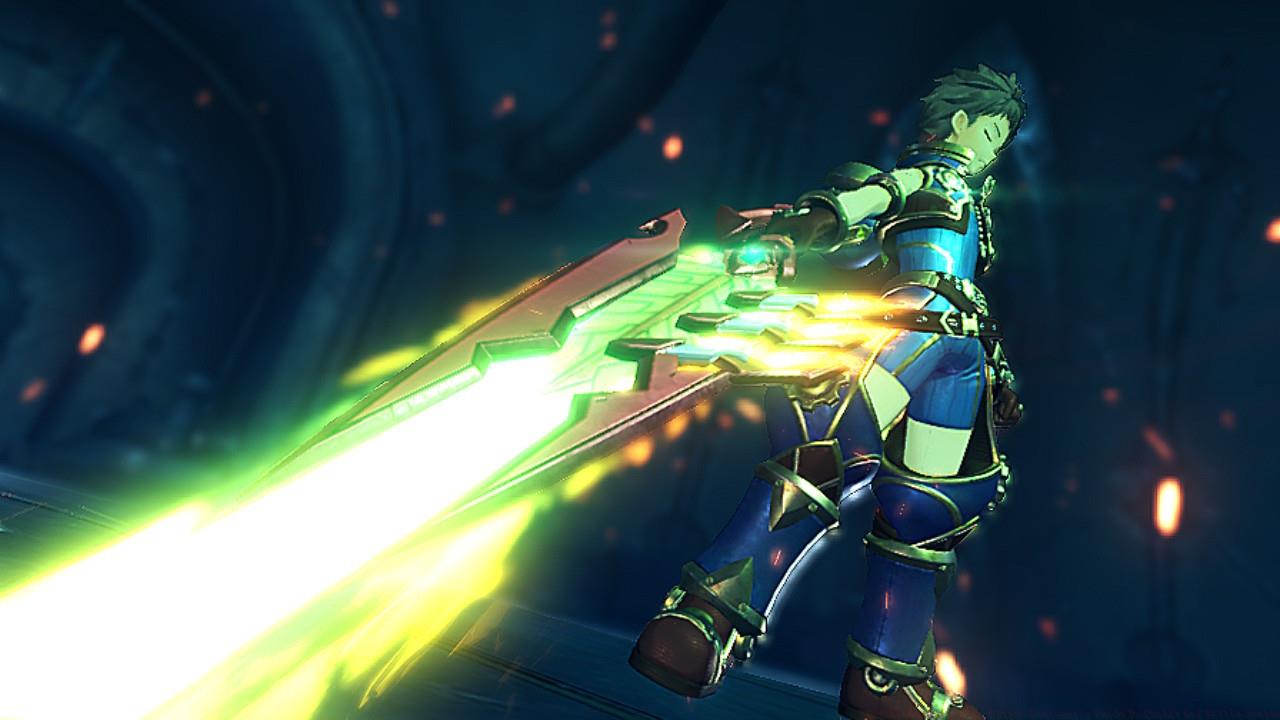
Located in the screen’s upper-left corner, the Party Gauge accumulates as you deal damage to enemies and perform advanced combat maneuvers. Divided into three distinct segments, you can expend individual portions to resurrect fallen companions. Alternatively, consuming the entire filled meter enables you to unleash a powerful Chain Attack—a game-changing mechanic we’ll analyze in depth shortly.
Strategic Party Gauge management represents one of the most critical skills for mastering Xenoblade Chronicles 2 combat. Many players make the mistake of using revival segments too hastily, leaving themselves unable to execute decisive Chain Attacks during critical battle moments. Optimal play involves balancing immediate survival needs with preserving meter for offensive opportunities.
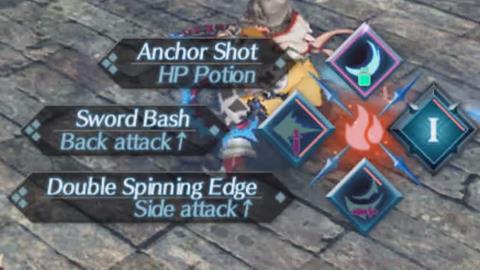
When positioned within engagement range of an enemy, Drivers automatically initiate basic attacks. Maintaining proper positioning represents the sole requirement for triggering these auto-attacks, which progressively charge the meters surrounding ability icons that represent various Arts.
Once an Art’s meter becomes fully charged through auto-attacks, you can activate it. Arts encompass offensive strikes, defensive maneuvers, and restorative abilities, with most including secondary effects such as enemy toppling or generating healing items upon successful execution.
Your available Arts repertoire depends entirely on the weapon type of your currently active Blade. This means different Blades sharing identical weapon types will provide the same Art selections, which remain fixed and unchangeable. While each Blade offers four potential Arts, you’re limited to equipping only three simultaneously, requiring strategic selection based on your current combat needs and party composition.
Many newcomers underestimate the importance of positioning during auto-attacks. Standing at optimal distances—typically just outside melee range—can significantly increase attack frequency and thus Art charge rates. For deeper weapon mechanics, explore our Weapons Unlock guide for cross-game comparison of weapon systems.
Canceling represents one of the most powerful yet underutilized techniques in Xenoblade Chronicles 2. By executing Arts immediately after auto-attack animations begin, you can significantly reduce Art cooldown times and increase overall damage output. Mastering cancel techniques typically requires 2-3 hours of dedicated practice but can double your combat effectiveness when perfected.
Special attacks become available once you’ve built sufficient charge through successful Art usage and combo execution. These powerful abilities often turn the tide of difficult encounters when timed appropriately against enemy vulnerabilities.
Blade Combos involve chaining specific elemental sequences to create powerful field effects and set up devastating Chain Attacks. Understanding elemental affinities and their interactions is essential for maximizing damage potential and controlling battle flow.
Chain Attacks enable your entire party to unleash a coordinated assault when the Party Gauge is completely filled. Properly executed Chain Attacks can eliminate even the most formidable opponents when combined with properly sequenced Blade Combos. For character-specific strategies, our Class Guide offers insights into role specialization that apply across multiple game systems.
Advanced players should focus on synchronizing Driver Combos (break-topple-launch-smash) with Blade Combos for maximum damage multiplication. The most common mistake involves neglecting elemental sequencing, which can reduce potential damage by 40-60% in extended engagements.
Action Checklist
- Practice Blade switching during combat to understand cooldown timing
- Master cancel techniques by timing Arts immediately after auto-attacks
- Learn elemental sequences for optimal Blade Combo execution
- Practice Party Gauge management, balancing revives with Chain Attack preservation
- Optimize Art selection based on weapon types and party composition
No reproduction without permission:SeeYouSoon Game Club » Xenoblade Chronicles 2 Tips: Beginner’s Guide To Combat And Battle System Master Xenoblade Chronicles 2 combat with advanced strategies, common pitfalls, and optimization techniques