
TL;DR
- Choose Community servers with ‘beginner’ tags to avoid experienced player predation
- Gather wood efficiently using rocks initially, then upgrade to hatchets for faster collection
- Build bases in hidden locations and craft sleeping bags immediately for respawn points
- Avoid nighttime illumination and maintain stealth to prevent detection by hostile players
- Implement proper storage systems and base upkeep to protect valuable resources
Rust presents a steep learning curve for newcomers, which is why we’ve assembled this comprehensive survival guide to help beginners navigate the treacherous early hours successfully.
When entering any survival-crafting game environment, players require substantial guidance to survive their initial night, not to mention subsequent wilderness challenges. Rust stands out as exceptionally harsh toward new players, lacking extensive in-game tutorial systems. While occasional friendly veterans might offer assistance, more frequently you’ll encounter predatory players seeking easy targets. If you want to maximize enjoyment during your first Rust sessions, you’ve found the perfect resource. Our expert-curated beginner strategies will establish solid foundations in this demanding survival experience.
Originally launched in 2013 on PC, Rust has expanded to include last-generation and current-generation console platforms. Whether you’re joining the established PC community or entering the console ecosystem, our essential survival techniques will help you endure the critical first days and nights.
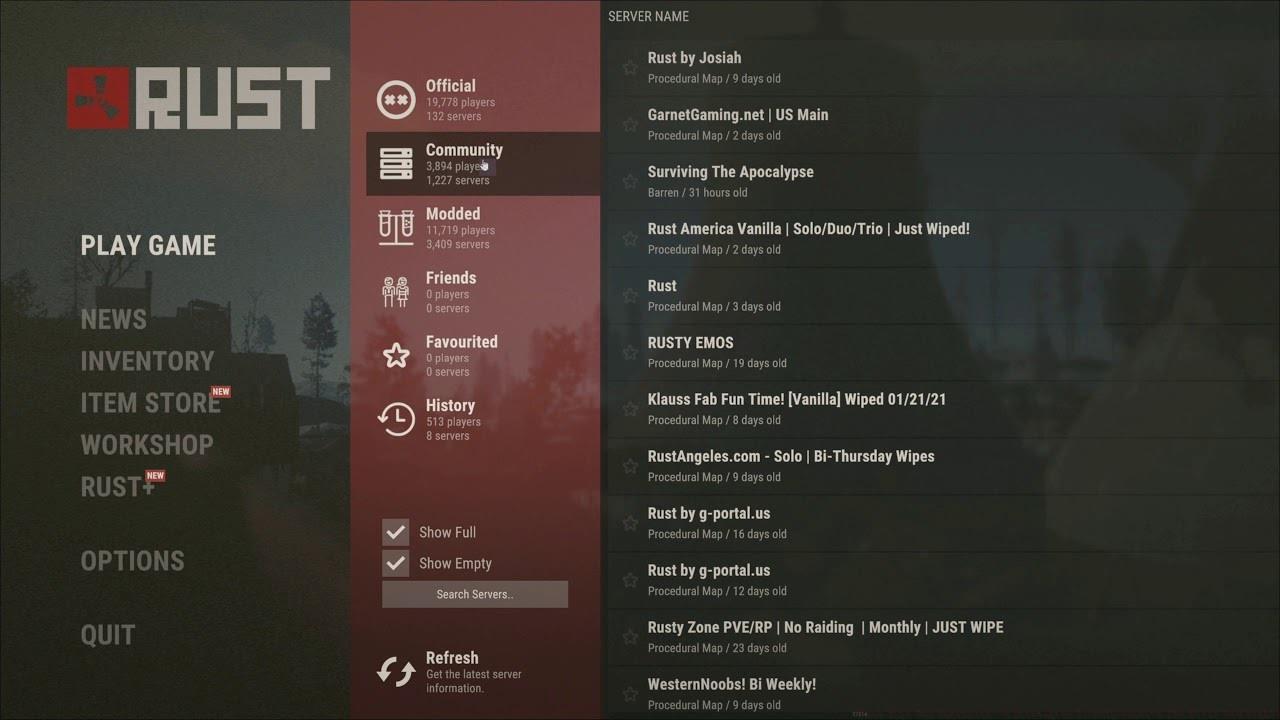
Strategic server selection dramatically impacts your survival chances and overall experience quality.
Rust primarily functions as an online multiplayer experience. Although players can modify files to create private servers for solo or offline play, most won’t explore this technical route. Consequently, server choice represents one of your initial critical decisions when launching Rust. The game features three primary server categories displayed on the interface’s left panel: Official, Community, and Modded servers, each presenting distinct advantages and disadvantages.
Many players instinctively browse Official servers initially, but this approach often proves detrimental. These long-established servers typically contain concentrated populations of seasoned veterans who frequently exhibit hostility toward newcomers. A superior alternative involves exploring the Community section, where players establish servers for specific purposes. This area includes a search function at the screen’s bottom where entering tags like “beginner” reveals optimal starting environments. Naturally, if you prefer intense challenge scenarios, hardcore or Official servers might align with your preferences.
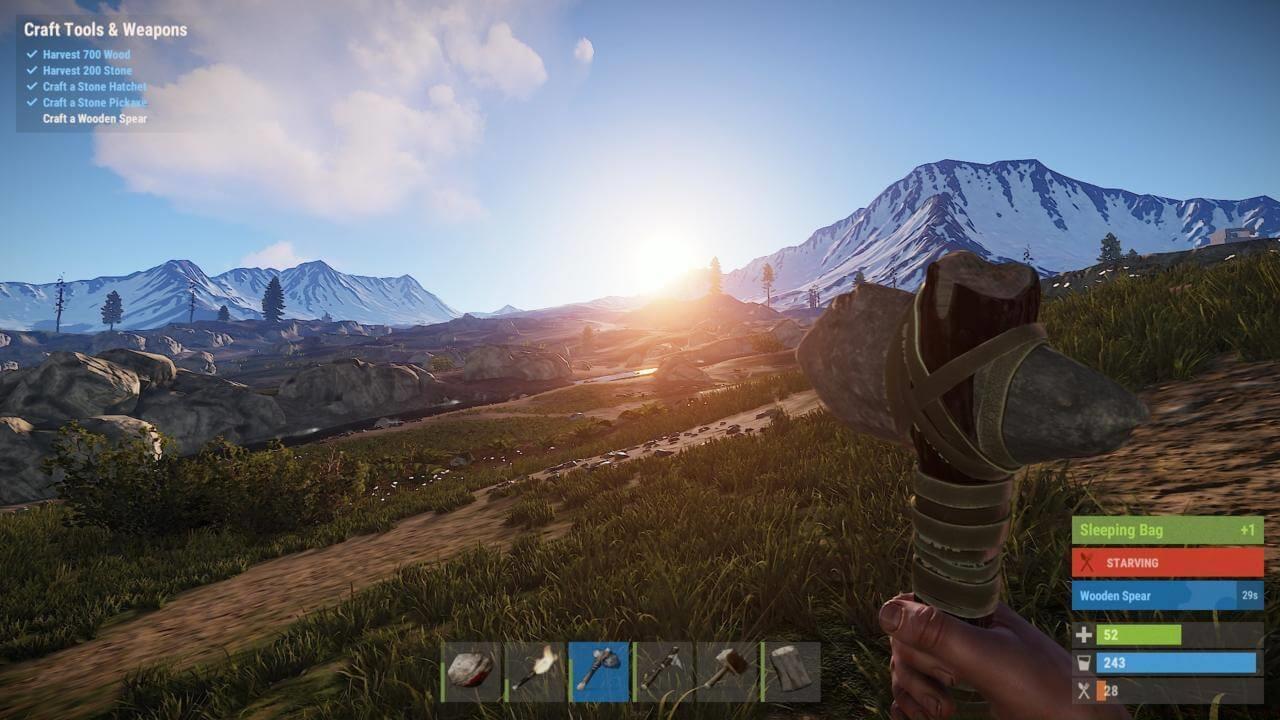
Wood serves as your primary early-game resource, essential for shelter construction and basic survival tools.
Wood represents the most crucial early-game resource in Rust, serving as the exclusive material for initial base construction while also being necessary for storage containers and campfires. To harvest wood, you’ll initially require basic implements like rocks. Even these primitive tools enable tree striking to obtain modest wood quantities. Upon accumulating 100 wood units and 75 metal fragments, you can manufacture hatchets, significantly accelerating wood acquisition rates.
As you advance through Rust’s progression systems, you’ll discover that various tree species yield different wood amounts, while superior hatchets produce increased wood plank quantities per tree felling. For beginners, focus on utilizing rocks or basic hatchets while harvesting sufficient trees to construct your initial shelter.
Strategic striking with primitive tools can optimize your initial resource gathering efficiency.
Strategic base placement significantly influences your long-term survival prospects and resource security.
Base location selection critically impacts your Rust survival experience. Optimal positioning involves concealed areas away from high-traffic zones like monuments and resource-rich regions. Consider proximity to essential resources while maintaining discreet visibility from common player pathways. Elevated positions offering panoramic visibility combined with natural terrain protection often provide ideal building sites.
Sleeping bags establish vital respawn locations, preventing complete progress loss upon death.
Crafting sleeping bags immediately upon gathering sufficient resources represents one of your highest priority tasks. These items create designated respawn points, eliminating the frustration of restarting from random beach spawn locations. Position multiple sleeping bags strategically throughout your territory to maintain operational continuity during hostile encounters.
Nighttime illumination dramatically increases detection risk, making stealth and darkness your survival allies.
Avoiding nighttime illumination constitutes essential survival strategy. Light sources like campfires and torches create visible beacons attracting unwanted attention from distant players. During darkness, prioritize stealth movement and utilize natural cover rather than artificial lighting. Moonlit nights often provide sufficient visibility for navigation while maintaining concealment advantages.
Efficient resource gathering requires strategic prioritization and methodology refinement. Focus on collecting materials immediately necessary for current objectives rather than hoarding indiscriminately. Implement systematic gathering routes that maximize resource yield while minimizing exposure time in dangerous areas.
Regular base maintenance prevents structural decay and ensures long-term habitat security.
Base maintenance represents an ongoing necessity in Rust. Structures gradually deteriorate without proper upkeep, potentially collapsing entirely. Regularly monitor your base’s condition and allocate resources for necessary repairs to maintain structural integrity.
Strategic resource gathering prevents over-encumbrance while ensuring you have essential materials when needed.
Strategic material collection involves gathering only essential resources aligned with your immediate goals. Over-collection increases inventory management challenges while providing limited practical benefits. Focus on materials directly supporting your current construction projects and survival needs.
Proper valuables protection requires sophisticated storage solutions and strategic concealment methods.
Protecting valuable assets demands implementation of secure storage systems and strategic concealment approaches. Utilize hidden compartments, false walls, and distributed storage locations to safeguard your most precious resources from raiding parties.
Action Checklist
- Select Community server with ‘beginner’ tags using search functionality
- Gather 200+ wood using rocks, then craft hatchet for improved efficiency
- Build 2×1 starter base in concealed location with storage box
- Craft and place sleeping bag inside base as respawn point
- Establish resource gathering route avoiding high-traffic areas
- Implement base upkeep system and create hidden loot room
No reproduction without permission:SeeYouSoon Game Club » Rust Tips For Beginners: 9 Strategies To Help Survive The First Few Nights Essential Rust survival strategies for beginners to master the brutal multiplayer environment