
Master Raccoon Logic’s vibrant sequel with exploration strategies, combat tips, and upgrade optimization
Game Overview and Core Experience
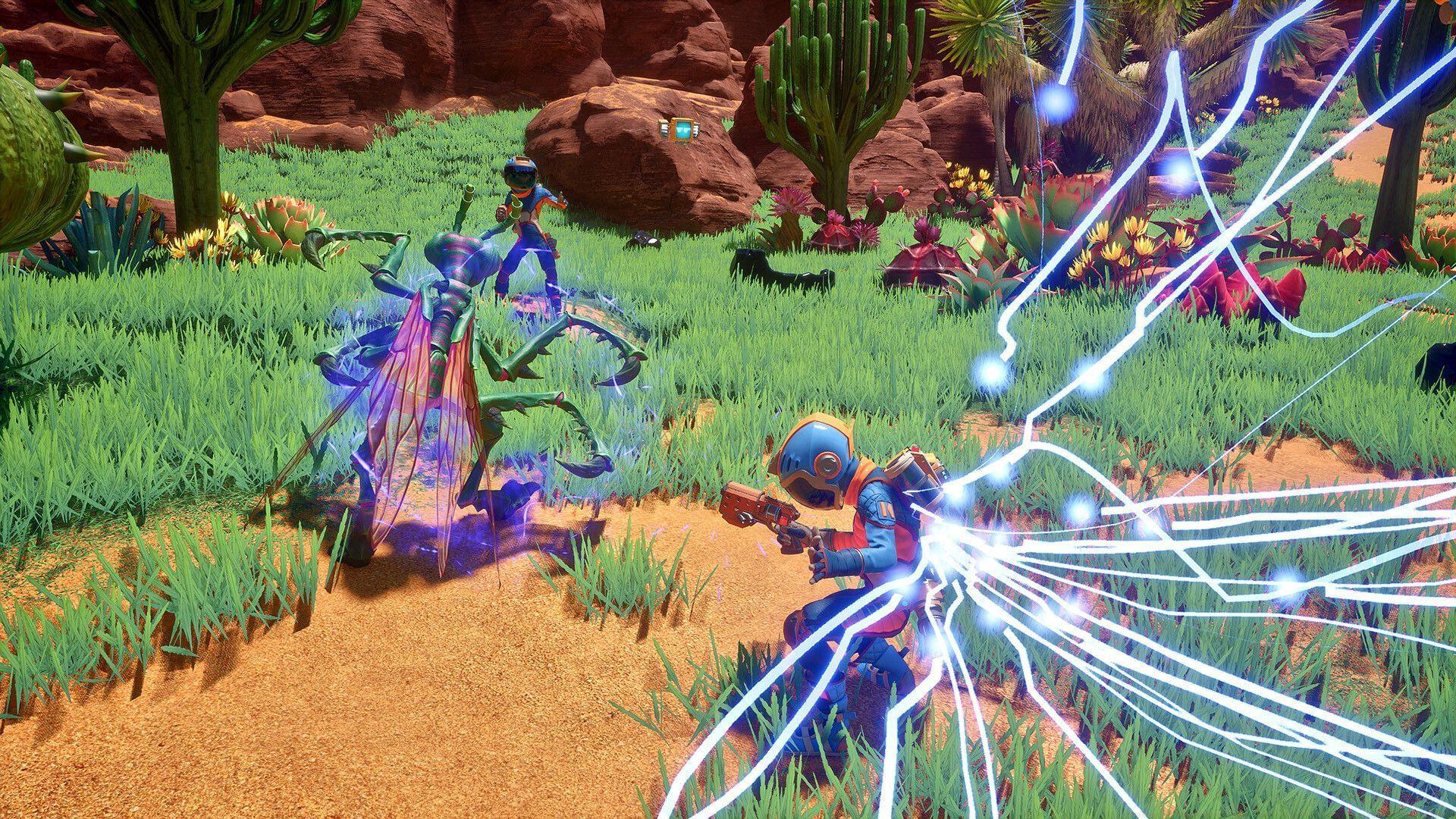
Raccoon Logic Studios delivers an expansive intergalactic sequel that builds substantially upon Journey to the Savage Planet’s foundation. This vibrant space-faring adventure continues the franchise’s signature satirical take on corporate greed within a dystopian future dominated by profit-driven megacorporations. While maintaining the original’s cartoonish aesthetic and irreverent tone, the developers have implemented meaningful expansions to both scale and gameplay depth that transform the experience.
The narrative maintains its predecessor’s lighthearted approach to storytelling, employing corporate extremism as its central satirical target. Players encounter constant parody through absurd advertisements for useless products and corporate propaganda that mocks real-world consumer culture. While some may find the humor overly explicit in its delivery, the writing consistently reinforces the game’s thematic foundation about capitalism’s excesses.
Three primary narrative arcs drive player engagement throughout the campaign:
- Locate scattered ship components and engineering tools to construct your escape vessel
- Assist a disillusioned Alta employee seeking retribution against their former employer
- Aid an enigmatic extraterrestrial entity with its mysterious planetary predicament
For optimal story progression, prioritize the ship construction objectives initially, as these unlock essential mobility upgrades that facilitate later quest completion. The employee revenge storyline provides valuable insight into the game’s corporate satire, while the mysterious ally thread offers the most substantial narrative payoff for dedicated players.
Essential Gear and Progression Systems
Your interstellar adventurer begins with fundamental equipment: a temperature-sensitive blaster pistol prone to overheating and a double-jump capability for evasion and platform navigation. The equipment arsenal expands significantly through exploration, with the multi-purpose scanner serving as your most vital tool for environmental analysis and codex completion. Additional specialized gear includes the versatile Whip (functioning as both weapon and grappling hook) and the Power Hose for deploying various liquid-based effects against hostile fauna.
Resource acquisition follows the established formula from the original title, requiring extensive mineral collection scattered across planetary surfaces and obtained as drops from defeated creatures. These materials fuel the non-linear upgrade system, where players strategically allocate resources to unlock enhanced capabilities. The Survey function remains essential for efficient resource tracking, emitting directional pings toward nearby collectibles when activated.
Also Read: How to get Printer Slurries and where to use it in Revenge of the Savage Planet
Collectible distribution throughout the environments includes multiple progression-critical items: Orange Goo permanently boosts health and stamina metrics, Printer Slurry currencies unlock equipment upgrades, Supply Crates contain advanced technological blueprints, and cosmetic customization items provide visual personalization. The sheer volume of concurrent objectives can initially overwhelm players, necessitating strategic prioritization.
Side missions diversify the gameplay experience through activities like planetary selfie location hunting and ethically-questionable synthetic food testing on indigenous wildlife. These satirical quests deliberately parody corporate practices like animal testing while providing substantive rewards. Between expeditions, your home base offers decorative customization using tickets discovered in planetary crates, though these aesthetic enhancements provide purely cosmetic value.
Pro Tip: Focus on Scanner and Whip upgrades before investing in combat enhancements, as these tools dramatically improve resource acquisition efficiency and navigation capabilities, creating a positive feedback loop for progression.
Planetary Exploration and World Design
Completionists must embrace the game’s Metroidvania-inspired design philosophy, where obtaining new equipment enables access to previously unreachable areas. Strategic backtracking becomes essential for comprehensive exploration, rewarding thorough players with hidden upgrades and narrative content. This progression gating ensures that tool acquisition directly translates to expanded exploration capabilities.
The diverse planetary environments truly distinguish this sequel, with each celestial body offering unique visual identities and gameplay challenges. From the dense forests of Stellaris Prime to Xephyr’s sprawling deserts, Zenethian Rift’s frozen tundras, and Quasadron IX’s expansive savannahs, every location features meticulously crafted density across visual design, gameplay mechanics, and enemy ecosystems. The environmental variety extends from harmless indigenous creatures to formidable predatory beasts requiring strategic engagement.
Navigation incorporates multiple movement mechanics including organic platform bouncing, underwater cavern exploration, and vertical traversal challenges. An optional fifth celestial location ties directly into one narrative thread, reserved exclusively for players committed to exhaustive environmental scrutiny. Each primary planet hosts distinct flora and fauna populations alongside unique environmental challenges that test different player skills.
Upgrade integration across planetary exploration remains crucial for maximizing discovery potential. Equipment obtained on earlier worlds frequently unlocks hidden pathways and resources on subsequent planets, emphasizing the interconnected nature of your interstellar journey. This design ensures that progression feels continuous rather than segmented, with each new tool expanding your overall exploratory capacity.
Exploration Strategy: When entering new biomes, prioritize scanning unfamiliar flora and fauna before engagement—many species have hidden vulnerabilities that become apparent only through analysis, saving valuable resources in combat encounters.
Combat Mechanics and Advanced Tactics
Environmental interactions significantly enhance both exploration and combat encounters. Defeated aliens typically erupt in slippery green blood pools that affect movement physics, while other environmental fluids impose various status effects like movement impairment. Strategic players can leverage elemental combinations for tactical advantages, such as igniting oil-coated enemies using fiery vegetation or exploiting electrical conductivity in watery environments.
The Whip tool extends beyond traversal utility, enabling capture of smaller or incapacitated creatures for additional research credits. This mechanic introduces strategic considerations during encounters, though the fundamental combat system reveals noticeable limitations upon extended engagement. The incorporation of creature capture provides intermittent combat variety but cannot fully compensate for the repetitive core mechanics.
Your primary firearm remains fundamentally basic throughout the adventure, despite upgrade options for firing speed, damage output, charged shots, and reload efficiency. The repetitive nature of combat becomes particularly evident during extended play sessions, with the charged shot’s vulnerability window creating significant defensive gaps during intense engagements. Enemy attack hitboxes occasionally demonstrate inconsistency, making preemptive elimination the optimal strategy when possible.
Certain combat challenge scenarios deliberately prevent this cautious approach, forcing players into close-quarters engagements that highlight the combat system’s weaknesses. The mandatory return trips to headquarters for narrative progression—watching corporate videos or reading mission emails—further disrupt gameplay flow, creating pacing inconsistencies that detract from the exploration-focused core experience.
Combat Optimization: Master the dodge-roll timing to create safe windows for charged shots, and prioritize upgrades that reduce blaster cooldown to minimize vulnerability periods. Against aggressive enemies, use the environment to create bottlenecks rather than engaging in open areas.
Technical Performance and Co-op Features
Powered by Unreal Engine 5, Revenge of the Savage Planet delivers crisp visual presentation amplified by its vibrant color palette and stylized aesthetic. The graphical performance generally satisfies, though technical imperfections occasionally surface through buggy map markers and rare geometry entrapment incidents requiring menu resets. Performance consistency fluctuates based on onscreen activity density, particularly when numerous decorative items populate your home base.
The orchestral soundtrack complements the pulpy science fiction atmosphere effectively, though repetitive combat melodies eventually wear thin during extended play sessions. Atmospheric sound design otherwise maintains high quality standards, enhancing immersion across diverse planetary environments. The inclusion of cooperative multiplayer—supporting both online and split-screen formats—enables shared interstellar exploration with a partner.
Revenge of the Savage Planet successfully evolves the franchise foundation through meaningful expansion rather than revolutionary overhaul. The enlarged planetary environments provide substantial vertical and horizontal exploration opportunities, while new alien species, equipment upgrades, and environmental challenges ensure consistent engagement throughout the journey.
The experience excels during unfettered exploration sequences where the vibrant worlds become interactive zoos for player experimentation, but stumbles during forced combat scenarios that highlight the simplistic battle mechanics. Despite these limitations, the adventure delivers satisfying content for both franchise newcomers and series veterans.
Also Read: How to capture creatures in Revenge of the Savage Planet
Platform(s): PC, PS5, Xbox Series X|S
Developer(s): Raccoon Logic Studios
Publisher(s): Raccoon Logic Studios
Release Date: May 8, 2025
Performance Tip: On PC, adjust shadow quality settings first if experiencing frame rate issues—this provides the most significant performance improvement with minimal visual compromise, especially in decorated home base areas.
No reproduction without permission:SeeYouSoon Game Club » Revenge of the Savage Planet review – A wild interplanetary ride of insanity Master Raccoon Logic's vibrant sequel with exploration strategies, combat tips, and upgrade optimization