
TL;DR
- Assign combat-focused Pals to your base using the Palbox for automatic defense against invaders
- Unlock and construct Alarm Bells, defensive walls, traps, and gun emplacements from the Technology menu
- Monitor raid notifications to identify enemy types and prepare specific counter-strategies
- Position defensive structures strategically to create choke points and overlapping fields of fire
- Balance your Pal workforce between production tasks and combat readiness for optimal base efficiency
Establishing robust fortifications for your homestead is crucial for survival in Palworld’s unpredictable environments.
Palworld, now available on PS5 following its successful PC and Xbox releases, primarily emphasizes exploration and discovery gameplay. However, periodic security threats necessitate implementing comprehensive defensive measures to protect your investments. This guide details proven methodologies for securing your base against various raid scenarios.
Raids occur at irregular intervals throughout your Palworld journey, typically activating when your character remains within the base perimeter. The game provides advance warnings about approaching hostile forces, with specific notifications indicating the composition of incoming threats. Understanding these alerts enables targeted preparation:
- Migrating Pal Herds – Signals the arrival of typically passive creatures turned aggressive, often herbivorous species like Relaxaurus that may overwhelm defenses through numbers.
- Feral Beast Attacks – Indicates the approach of predatory Pals such as Direhowls that specialize in rapid strikes and targeting vulnerable structures.
- Organized Human Assaults – Announcements specify faction affiliations like Syndicate troops, indicating coordinated attacks requiring different defensive approaches.


Your base can get attacked by all sorts of hostiles, including Direhowls (left) and Syndicate operatives (right).
Implementing effective base security involves two complementary approaches: strategic Pal deployment and physical fortification construction. The foundational defense mechanism relies on assigning multiple Pals to guard duties through the Palbox interface. Any Pal assigned to your base automatically engages hostile entities entering the designated perimeter, providing immediate response capabilities.
Critical considerations for Pal assignment include combat specialization matching against expected threats and maintaining adequate coverage across your base’s vulnerable points. Unlike the manual combat required during exploration, base-assigned Pals operate autonomously when invaders breach your territory.
Common mistakes players make include assigning exclusively production-focused Pals or failing to maintain a balanced roster of combat-capable creatures. For optimal results, designate at least 30-40% of your base Pals as dedicated defenders, prioritizing species with area attacks or high durability against the raid types you most frequently encounter.
Your base can get attacked by all sorts of hostiles, including Direhowls (left) and Syndicate operatives (right).
Building comprehensive base protection requires unlocking specific blueprints from the Technology menu. These defensive structures provide layered security that complements your Pal defenders:
- Alarm Bell (unlocked at level 4) – Construction requires 5x Paldium Fragment and 20x Stone. This crucial installation enables tactical control over your Pals’ response protocols, allowing you to switch between heightened alert status for maximum combat efficiency and work-focused modes during peaceful periods.
- Defensive Walls – Create perimeter barriers that funnel enemies into kill zones while protecting vital structures from ranged attacks.
- Traps and Gun Emplacements – Deploy area denial systems that automatically engage hostiles, with mounted weapons enabling your Pals to utilize firearms against advancing foes.
Strategic placement of defensive structures significantly enhances their effectiveness. Position gun emplacements with overlapping fields of fire covering common approach routes, and use walls to create choke points where traps become most effective. Advanced players often implement multi-layer defensive rings, with outer walls slowing enemies while inner defenses deliver concentrated firepower.
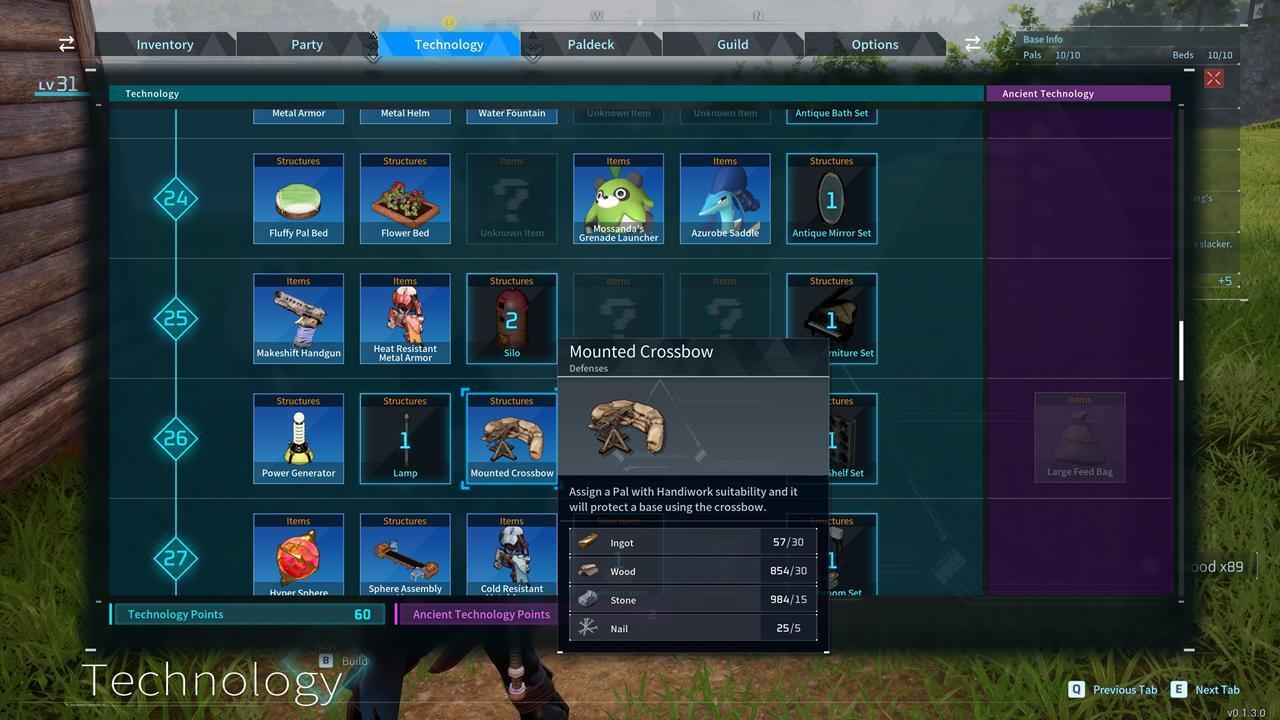
Weapon and gun emplacements allow Pals to shoot advancing foes.
Resource allocation for defense construction should prioritize essential structures first. Begin with perimeter walls and an Alarm Bell, then gradually add gun emplacements and traps as resources permit. Remember that well-positioned basic defenses often outperform poorly placed advanced structures.
Experienced players can implement sophisticated defense strategies that maximize protection while minimizing resource expenditure. Terrain utilization represents a frequently overlooked aspect—building your base in naturally defensible locations like plateaus or peninsulas reduces the perimeter requiring fortification.
Consider implementing shift systems for your Pals, rotating combat-focused creatures during high-risk periods while maintaining production efficiency during safer times. This approach requires careful monitoring of raid patterns and maintaining a larger roster of trained Pals.
For comprehensive gameplay mastery, consult our Complete Guide for additional strategic insights that apply across different game scenarios.
Defensive structure maintenance is equally important—damaged walls and traps require prompt repair to maintain integrity. Regularly inspect your defenses after each raid and allocate necessary repair materials accordingly.
Action Checklist
- Assign 3-4 combat-specialized Pals to your base via Palbox
- Unlock and construct Alarm Bell at Technology Level 4
- Build perimeter walls to create defined defensive boundaries
- Position gun emplacements to cover primary approach routes
- Analyze raid notification patterns to anticipate specific threats
No reproduction without permission:SeeYouSoon Game Club » Palworld – How To Defend Your Base From Raids Master Palworld base defense with strategic Pal assignments, fortification tactics, and raid preparation techniques