
Master the latest Overwatch 2 Season 17 changes with comprehensive patch analysis, hero strategies, and optimization tips
Season 17 Overview and Key Additions
The Overwatch 2 Season 17 update marks a substantial evolution of the game’s ecosystem, with developers delivering comprehensive patch notes that reshape competitive dynamics. This seasonal refresh introduces transformative content designed to engage both casual players and competitive enthusiasts. Beyond surface-level additions, Season 17 fundamentally alters gameplay through systemic changes that require strategic adaptation.
Season 17’s headline features include two strategically distinct maps: Esperança for the Push game mode and Samoa Volcano for Control. These environments aren’t merely aesthetic additions—they introduce new tactical considerations with unique sightlines, chokepoints, and environmental hazards that will influence hero selection and team composition. The map designs encourage different engagement patterns than previous seasons, requiring players to develop fresh positioning strategies.
For collectors and cosmetic enthusiasts, Season 17 breaks precedent by releasing both Mythic skins simultaneously at launch. Players can immediately access D.Va’s tiger spirit thematic skin or wield Reaper’s twin terror weapons without waiting for Battle Pass progression. This approach represents a significant shift in Blizzard’s cosmetic distribution strategy, potentially indicating future seasonal structures. Additional visual customization arrives through Overwatch Academy, 8-bit retro, and Sakura blossom themes across the Battle Pass tiers.
Core Gameplay System Adjustments
Season 17 implements foundational changes that affect all heroes and playstyles. The damage role passive healing reduction increases from 25% to 30%, creating greater pressure on support players to manage healing output while making securing eliminations more critical for damage dealers. This adjustment subtly shifts the balance of power in team fights, rewarding aggressive playstyles that can capitalize on reduced enemy sustain.
The base health regeneration timer extends from 5 to 6 seconds, a seemingly minor change with significant tactical implications. This extension reduces the effectiveness of passive regeneration strategies and increases the value of dedicated healing sources. Players must now exercise greater caution when disengaging from combat, as the longer recovery window creates vulnerability periods that opponents can exploit.
These systemic changes work in concert to accelerate gameplay pacing while increasing the skill ceiling for proper resource management. Successful teams will need to coordinate aggression windows more precisely and develop clearer communication around enemy health states. The adjustments particularly impact heroes who rely on sustain-through-damage mechanics or self-healing abilities.
Hero-Specific Balance Changes Analysis
Commanding Shout – Ability 1
- Junker Queen overhealth increased from 175 to 200.
- Allied overhealth increased from 50 to 75.
- Duration for self-reduced from 5 to 4 seconds.
- Allied duration increased from 3 to 4 seconds.
- Overhealth conversion rate increased from 40% to 50%.
Junker Queen’s Commanding Shout receives multifaceted adjustments that shift her from a selfish brawler toward a more team-oriented tank. The increased overhealth values (200 for self, 75 for allies) provide substantial damage absorption during engagements, while the standardized 4-second duration for all recipients simplifies timing coordination. The 50% overhealth conversion rate enhancement makes her shout more efficient at turning temporary health into sustained advantage.
Nanite Repair – Major Perk
- Healing per second increased from 50 to 75.
This 50% healing increase significantly boosts survivability for heroes with Nanite Repair, particularly during extended engagements. The enhanced sustain allows for more aggressive positioning and creates windows for riskier plays that previously would have been untenable.
Graviton Crush – Minor Perk
- Damage dealt over time increased from 30% to 40% of maximum health.
- Movement speed increased from 15% to 25%.
- Model and hit volume size reduced by 10%.
Graviton Crush becomes substantially more threatening with both increased damage output and improved mobility. The 10% size reduction provides subtle survivability benefits by making the hero slightly harder to hit, creating interesting risk-reward dynamics during ability activation.
Weapon and Ability Adjustments
Tri-Shot – Primary Fire
- Spread decreased from 1.4 to 1.1 degrees.
The reduced spread on Tri-Shot weapons increases effective range and improves consistency at medium distances. This adjustment rewards precision aiming and makes these weapons more viable in open-space engagements where spread previously limited effectiveness.
Helix Shields – Minor Perk
- Shield health regeneration triggers when landing direct hits with rockets.
This change creates synergistic gameplay between offensive actions and defensive maintenance. Players must now balance aggressive rocket usage with shield preservation, adding strategic depth to resource management during combat.
Hellfire Shotguns – Primary Fire
- Damage per pellet increased from 5.4 to 5.75 (108 to 115 per volley).
The damage increase brings Hellfire Shotguns closer to viability in close-quarters scenarios. While still requiring precise positioning to maximize effectiveness, the additional damage per volley reduces the number of shots needed to secure eliminations.
Stim Pack – Major Perk
- On PC platforms, Stim Pack default button changed from “Next Weapon” to “Equip Weapon 1.”
This control scheme adjustment addresses accessibility concerns and reduces accidental activations. Players should take time to familiarize themselves with the new binding to ensure muscle memory adaptation doesn’t hinder performance during critical moments.
Support Role Enhancements
Cleansing Grasp – Minor Perk
- Life Grip cooldown is reduced by 4 seconds if a debuff is cleansed.
This change rewards proactive support play and precise timing of Life Grip usage. Successful cleanses now provide tangible cooldown reduction, encouraging supports to monitor enemy ability usage and coordinate with teammates about impending debuffs.
Crossfade – Ability 1
- Base healing increased from 16 to 20 health per second.
The 25% healing increase on Crossfade’s base output significantly improves passive sustain during team fights. This adjustment makes aura-based healing more competitive with targeted healing abilities, particularly during mobile engagements where maintaining direct line of sight proves challenging.
Biotic Grasp – Secondary Fire
- Healing per second increased from 70 to 80.
- Increased converted damage from 30% to 40%.
These dual enhancements strengthen the risk-reward dynamic of Biotic Grasp. The increased healing output provides better emergency sustain, while the enhanced damage conversion rewards aggressive positioning and accurate secondary fire usage against enemy targets.
Competitive System Updates
- Competitive Ranks have been reset with everyone restarting at Rookie 1.
- Players who reach Epic Rank for the first time in the Tank Role can still earn the Epic Elite Orisa skin.
- Players who reach Epic Rank for the first time in the Damage Role can still earn the Epic Elite Genji skin.
- Players who reach Epic Rank for the first time in the Support Role can still earn the Epic Elite Moira skin.
- Players who reach All-Star Rank will earn the Legendary All-Star Mercy skin and the Legendary All-Star Juno skin.
The seasonal rank reset provides fresh competitive opportunities for all players, regardless of previous season performance. Starting at Rookie 1 eliminates placement anxiety and creates a uniform progression experience across the player base. The preservation of Epic Elite skin rewards for first-time achievers ensures that seasonal cosmetic goals remain attainable despite the reset.
The All-Star Rank reward structure introduces compelling incentives for top-tier competitive performance. The dual skin reward (Mercy and Juno) represents increased value for achieving the highest competitive tiers, potentially driving increased engagement with ranked play throughout the season.
Practical Tip: Use the rank reset as an opportunity to experiment with different heroes or playstyles during your initial placement matches. The fresh MMR calculation provides slightly more flexibility in the early season, allowing you to establish new performance baselines without being heavily constrained by previous season data.
New Maps and Environmental Strategy
- Esperança has been added as a new Push game mode map.
- Samoa Volcano has been added as a new Control game mode map.
Esperança introduces a European-inspired urban environment with narrow streets, vertical elements, and strategic high ground positions. Early testing suggests the map favors heroes with mobility advantages and area denial capabilities. The Push robot path includes several chokepoints that can be exploited with well-timed ultimate abilities.
Samoa Volcano presents a tropical volcanic setting with dynamic environmental hazards and open sightlines. The Control points feature unique elevation changes and cover arrangements that reward positional awareness and team coordination. The volcanic aesthetic includes visual effects that can occasionally obscure sightlines, adding an additional layer of environmental awareness requirement.
Common Mistake: Many players initially underestimate the importance of map-specific positioning on new environments. Take time in custom games or practice ranges to familiarize yourself with key locations, health pack placements, and engagement distances before jumping into competitive matches on these new maps.
Stadium Forge: Build Creation and Management
- Use this new feature to create builds and save them to easily access later, from any Stadium game.
- Stadium Armory has been updated to support additional example builds and offer quick access to your saved builds with a new tabbed view.
- Access the new Stadium Forge from the Stadium Practice Range.
- Save up to 10 builds per hero.
- Access quick actions from the build list to order your builds, share, edit, duplicate or delete.
- Name and describe your builds, to easily find them later.
- You can share your custom builds with others by generating a share code. Share codes are good for up to a year.
- You can copy Example Builds to your saved list and make modifications.
- You can copy builds from any player in Stadium games, allowing you to review or edit them later in the Stadium forge.
- You can copy builds from Stadium replays.
- Save builds you have in-progress from any Stadium game.
The Stadium Forge represents a paradigm shift in how players approach hero customization and strategy sharing. The ability to save 10 builds per hero facilitates situational loadout management—you can maintain separate builds for different maps, team compositions, or playstyles without needing to reconstruct them each session.
The share code system with one-year validity enables community knowledge sharing at unprecedented scale. Top players can distribute optimized builds that less experienced players can immediately implement, potentially accelerating the meta evolution process. The ability to copy builds from any player in Stadium games creates learning opportunities through observation and adaptation.
Optimization Tip: Create specialized builds for specific scenarios rather than general-purpose loadouts. Consider developing separate builds for offense/defense, different map types, or counter-picks against particular enemy compositions. Use descriptive naming conventions that will remain meaningful weeks or months later when you revisit your saved builds.
Enhanced Example Builds and Categories
- New example builds have been added for all 21 heroes.
- Example builds have been expanded from 9 items to 12.
- Example builds now have Early, Late and Flex categories for items, giving players more insight into when to purchase.
The expansion from 9 to 12 items in example builds provides more comprehensive starting templates that better reflect optimized late-game configurations. The additional items help new players understand complete build pathways rather than partial suggestions that require supplemental decision-making.
The Early, Late, and Flex categorization system represents a significant educational advancement. Early items focus on establishing baseline effectiveness, Late items represent power spikes or situational responses, and Flex items accommodate adaptive play based on match circumstances. This structure helps players develop purchasing discipline and understand item timing priorities.
Practical Tip: When studying example builds, pay particular attention to the Flex category items. These represent the most situational choices and understanding when to select each Flex option will improve your adaptive gameplay. Consider which enemy heroes or compositions would prompt you to choose each Flex item during an actual match.
Stadium System Expansion
- Stadium is now supported in Custom Games.
- Choose from a variety of options to customize your Stadium games.
- Starting in Season 17, you can now earn progress toward Drives from Stadium games.
The integration of Stadium into Custom Games opens creative possibilities for community events, tournaments, and practice scenarios. Organizers can now design tailored Stadium experiences with specific rulesets, hero restrictions, or modified parameters that suit their particular needs.
The ability to earn Drive progress from Stadium games creates meaningful reward pathways for players who prefer this game mode. This integration helps legitimize Stadium as a core component of the Overwatch 2 experience rather than a peripheral activity, potentially increasing its player population and competitive viability.
Common Mistake: Many players overlook the customization options available in Stadium Custom Games. Take time to explore the various parameters you can adjust—these can create unique practice scenarios that target specific skills or help you prepare for particular competitive situations more effectively than standard matches.
Quality of Life Improvements
- An all-new implementation of aim down sights has been added for Ana and Ashe
- Nearby allies will now smoothly fade in and out when your camera collides with them
- Reduced the size of Pro, All-Star and Legend ranked progression bands
The redesigned aim down sights implementation for Ana and Ashe addresses long-standing community feedback about scoping mechanics. Early testing suggests improved responsiveness and visual clarity during scope transitions, particularly during rapid target acquisition scenarios.
The ally fade system represents a subtle but impactful visual improvement that reduces camera obstruction during clustered team fights. This change helps maintain situational awareness when positioning in close proximity to teammates, particularly for heroes who rely on precise targeting or skill shots.
The reduction in high-tier ranked progression band sizes creates more granular skill differentiation at the top competitive levels. This adjustment should result in more balanced matches within Pro, All-Star, and Legend tiers by reducing the skill variance within each band.
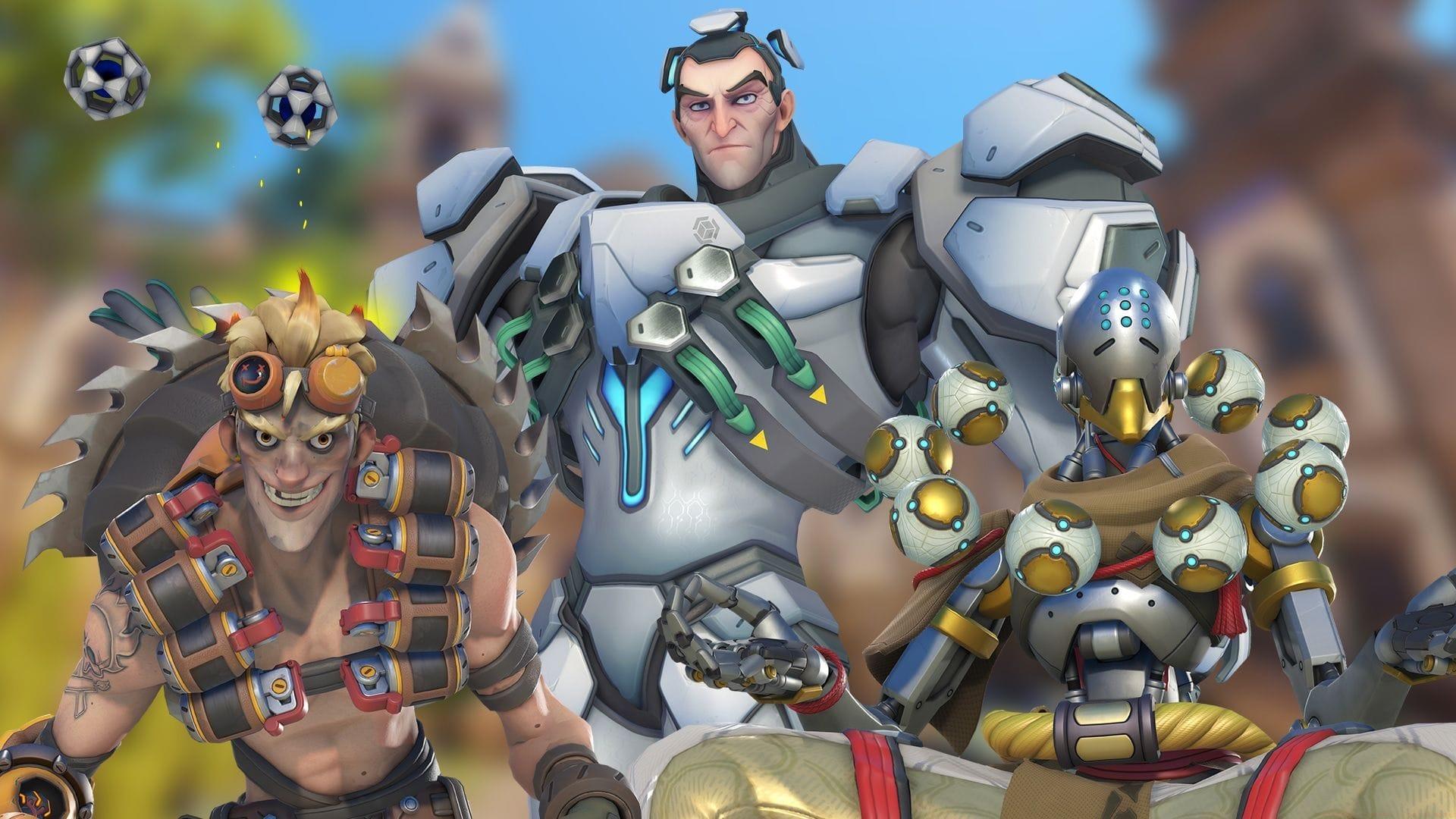
New Stadium Heroes: Sigma, Junkrat, and Zenyatta
Season 17 introduces three heroes to the Stadium roster, each bringing unique mechanics and strategic possibilities:
Sigma enters Stadium with gravitational manipulation capabilities that enable area control and displacement tactics. His Hyperspheres provide consistent area damage, while Accretion offers crowd control opportunities. The Experimental Barrier creates dynamic positioning options that can shield allies or cut off enemy sightlines.
Junkrat brings explosive area denial and trap mechanics that excel in confined spaces. His Frag Launcher’s bouncing projectiles enable unconventional angles of attack, while Steel Traps create zone control opportunities. Concussion Mine provides both mobility and displacement capabilities.
Zenyatta offers harmonious support through Orb management and transcendent healing. His Harmony and Discord Orbs enable targeted support and amplification, while Transcendence provides emergency team sustain. The Orb of Destruction charges for burst damage potential against key targets.
Optimization Tip: When playing these new Stadium heroes, focus on mastering their unique mechanics before attempting complex combos. Sigma’s barrier management, Junkrat’s trap placement patterns, and Zenyatta’s orb priority decisions each require dedicated practice to execute effectively under pressure.
Bug Fixes and Stability Improvements
The Season 17 patch addresses numerous technical issues that affected gameplay consistency and user experience:
- Fixed an issue where the matchmaker would often backfill players into matches that were not near their MMR and causing the match to become imbalanced.
- Fixed an issue where Ana’s mythic weapon did not change color based on healing or damaging an enemy.
- Fixed an issue where Cassidy’s Deadeye did not properly account for Hazard’s Spike Guard ability.
- Fixed an issue where Cassidy’s Deadeye failed to shoot through breakable objects.
- Fixed multiple hero-specific ability interactions and scaling issues affecting D.Va, Kiriko, Mei, Reaper, Zarya, and other heroes.
The matchmaker adjustment represents a significant quality-of-life improvement that should reduce frustration from unbalanced backfill situations. By ensuring backfilled players more closely match the ongoing game’s MMR range, matches should maintain competitive integrity even when players leave.
The various hero-specific fixes address inconsistencies that affected ability performance, visual feedback, and statistical calculations. These corrections help ensure that hero mechanics function as intended, reducing unexpected outcomes during critical gameplay moments.
Thus concludes the Overwatch 2 Season 17 patch notes. The new seasonal update has added tons of content for the title, and players are bound to have a blast exploring all of its offerings.
No reproduction without permission:SeeYouSoon Game Club » Overwatch 2 Season 17 patch notes Master the latest Overwatch 2 Season 17 changes with comprehensive patch analysis, hero strategies, and optimization tips