
Discover Minecraft 1.18’s transformative terrain updates, enhanced dangers, and strategic mob spawning changes for better gameplay
Introduction: Minecraft’s Evolution Through Major Updates
Minecraft’s groundbreaking Caves & Cliffs Part 2 update has officially launched across both Java and Bedrock platforms, fundamentally transforming the game’s terrain generation systems. This comprehensive guide examines how version 1.18 reshapes your Minecraft experience from the ground up.
The arrival of Minecraft’s Caves & Cliffs Part 2 represents Mojang’s most ambitious terrain overhaul, creating landscapes that feel both familiar and astonishingly new while maintaining the core survival mechanics that define the game.Minecraft’s
enduring popularity stems from its strategic update cycle that revitalizes specific game systems based on community feedback. Previous transformative updates like Update Aquatic completely redesigned ocean mechanics, Village and Pillage enhanced NPC interactions and settlement dynamics, while the Nether Update provided compelling reasons to venture into previously underutilized dimensions. The Caves & Cliffs Part 1 release served as an appetizer, introducing new blocks and creatures while the comprehensive world generation changes underwent final development. Now with 1.18 fully deployed, players can experience the complete vision Mojang envisioned for Minecraft’s underground and mountainous regions.
World Generation Overhaul: Height, Depth, and Biome Revolution
 Mojang
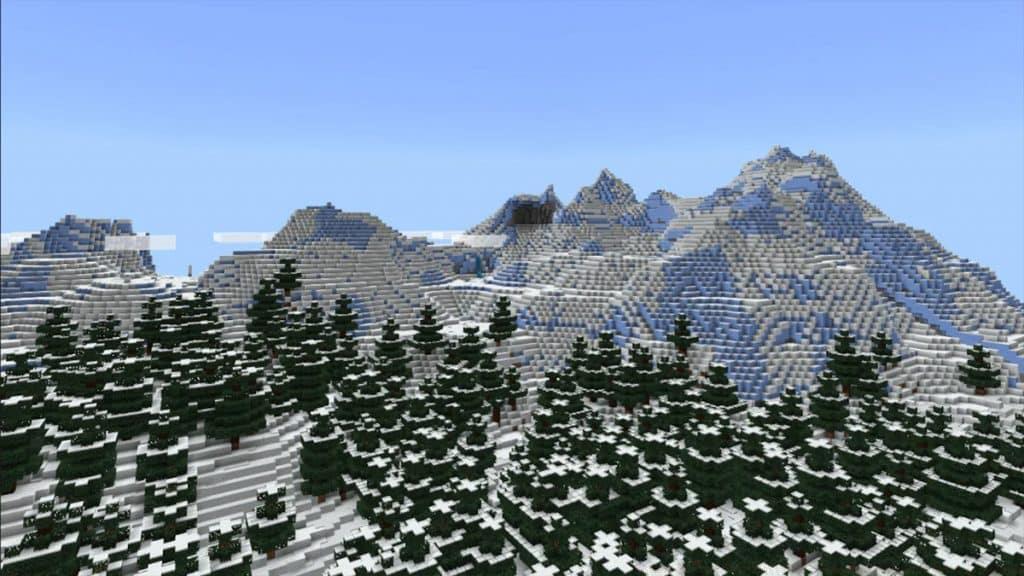
Minecraft 1.18’s new Frozen Peaks mountain biome showcasing dramatic verticality True to its naming convention, Minecraft 1.18 concentrates on completely reimagining cave networks and mountain ranges through revolutionary generation algorithms. The most immediately noticeable change involves the expanded vertical dimensions – both maximum world height and depth have increased by 64 blocks, creating unprecedented building opportunities and exploration challenges. Mountain formations now reach build height limits with diverse new biome classifications including Meadow, Grove, Snowy Slopes, Lofty Peaks, and Snow Capped Peaks, each with distinct environmental characteristics and resource distributions.
Mountain Exploration: Rewards, Risks, and Survival Tactics
The redesigned mountain ranges present breathtaking vistas and abundant mineral wealth including iron, coal, and emerald deposits concentrated in specific elevation bands. However, these visually stunning landscapes conceal significant dangers that require careful navigation. The enhanced verticality introduces substantial fall damage risks from sheer cliff faces, while high-altitude regions feature snow trap mechanics that can immobilize and freeze unprepared adventurers. Advanced players should master the art of controlled descent using water buckets, hay bales, or strategically placed ladders to mitigate elevation hazards.
Common Mistake: Many players underestimate the temperature mechanics in high-elevation biomes. Always equip leather armor in snowy regions to prevent freezing damage, and carry plenty of food to regenerate health from incidental fall damage during climbs.
Cave Systems Redesigned: Underground Exploration Transformed
The most dramatic improvements emerge underground where completely reworked cave generation creates vast subterranean networks that dwarf previous iterations. Gone are the repetitive winding tunnels of uniform dimensions – instead, explorers encounter enormous cavern systems featuring underground lakes, lush cave biomes with unique vegetation, and dramatically increased resource concentrations. These expansive underground spaces fundamentally change exploration pacing, allowing for more organic navigation while simultaneously creating significantly more spawning territory for hostile entities.
Exploration Strategy: When venturing into new cave systems, establish temporary safe rooms with beds and storage every 50-75 blocks to secure progress. Mark your path with torches on the right-hand side to ensure easy navigation back to the surface, and always listen for ambient dripping sounds that indicate nearby water sources or lava falls.
Hostile Mob Spawning: Light Level Changes and Strategic Implications
Mojang implemented crucial adjustments to hostile mob spawning mechanics in version 1.18 that significantly impact both exploration and base defense strategies. Creepers, Zombies, Skeletons, and Spiders now exclusively spawn in absolute darkness (light level 0), making unlit cave systems considerably more hazardous while reducing base security requirements. Previously, these entities could appear on blocks with light levels up to 7, necessitating extensive illumination around player constructions. The revised spawning parameters create a more balanced risk-reward dynamic for underground exploration while streamlining surface base protection.
 Mojang
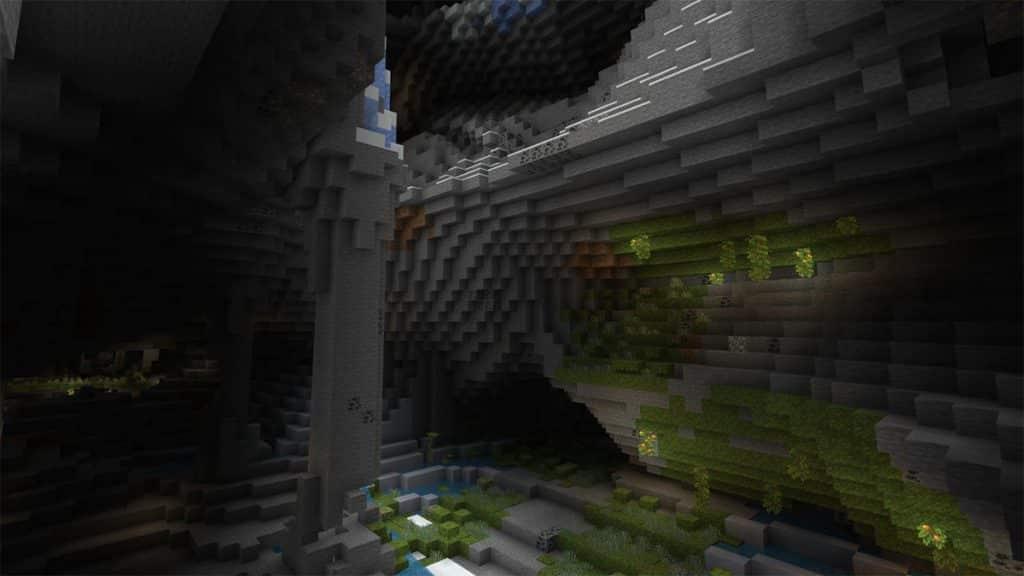
Minecraft 1.18’s expansive underground caverns demonstrating new spawning territory Lighting Optimization: While base perimeter lighting requirements have decreased, strategic torch placement remains crucial in cave systems. Focus illumination efforts on choke points and resource-rich areas rather than attempting to light entire caverns. Consider carrying a stack of jack-o-lanterns for permanent light sources in frequently visited underground locations.
The Caves & Cliffs Part 2 update is now accessible across both Minecraft Java and Bedrock editions, with seamless integration for pre-existing worlds generating new terrain in unexplored chunks. For enhanced gameplay experiences, investigate optimized world seeds specifically designed for 1.18’s terrain generation, and monitor official channels for subsequent updates and technical guidance.
No reproduction without permission:SeeYouSoon Game Club » Minecraft’s Caves & Cliffs part 2 update overhauls world generation Discover Minecraft 1.18's transformative terrain updates, enhanced dangers, and strategic mob spawning changes for better gameplay