
Master Ready or Not’s Low Ready system for tactical movement speed and positioning advantages
Understanding the Low Ready System
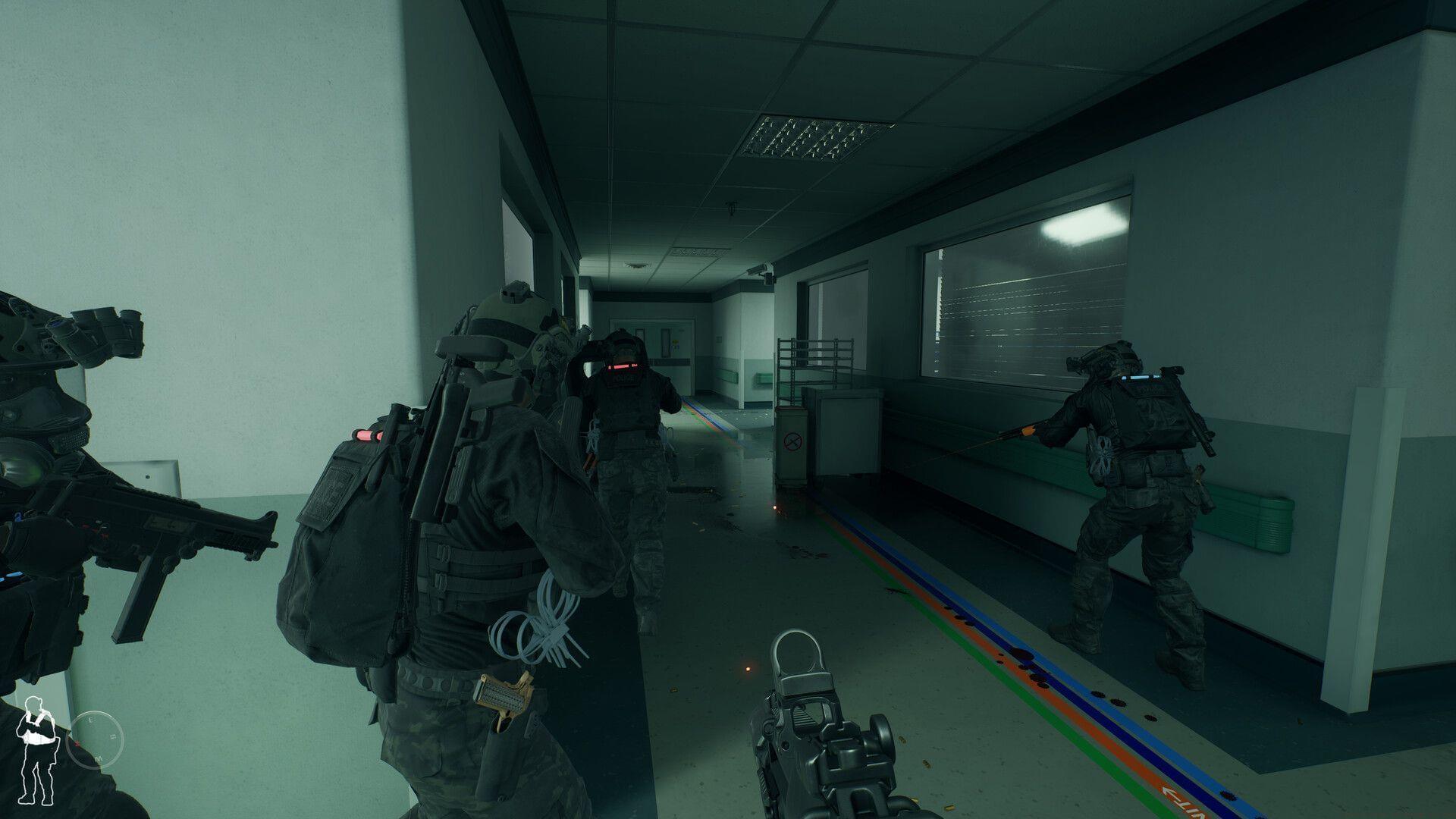
Unlike conventional first-person shooters that feature dedicated sprint buttons, Ready or Not employs a more realistic approach to movement mechanics. The game prioritizes tactical positioning over rapid mobility, creating a more methodical and strategic gameplay experience that rewards careful planning over reflexive actions.
The Low Ready system represents a middle ground between walking and running – your operator lowers their weapon to a ready position that allows for quicker movement while maintaining some degree of readiness. This creates a unique risk-reward dynamic where increased mobility comes at the cost of slower target acquisition when transitioning to aimed fire.
What makes this system particularly innovative is how it reinforces the game’s core tactical philosophy. Rather than enabling players to sprint recklessly through environments, it encourages thoughtful movement patterns and situational awareness, making each positioning decision meaningful to your team’s success.
Activation and Customization
Engaging Low Ready mode requires pressing the Home key by default – a control scheme that many players find initially unintuitive. When activated, your character visibly lowers their firearm to a carry position, signaling the transition to increased movement capability.
The default Home key placement often proves awkward during intense gameplay moments, leading many experienced operators to remap this function to more accessible keys. Popular alternatives include:
Customization extends beyond simple key rebinding. Advanced players often create layered control schemes that integrate Low Ready with other movement functions, such as combining it with leaning mechanics for rapid corner transitions. The key is finding a configuration that feels natural and doesn’t interfere with your ability to quickly return to aimed fire when needed.
Read more: Ready or Not S rank guide
Gear Impact on Movement Speed
Your equipment loadout dramatically influences movement effectiveness in Low Ready mode. The game employs a realistic weight system where every piece of gear affects your mobility, creating meaningful trade-offs between protection and speed.
Strategic loadout planning becomes essential for optimizing Low Ready effectiveness. If your role requires rapid repositioning or flanking maneuvers, prioritize lighter armor and compact weapons. For defensive positions or breaching roles where mobility is less critical, heavier protection may justify the speed penalty.
Advanced players often create specialized loadouts for specific map types and mission objectives. A hostage rescue scenario might favor speed-focused gear, while a barricaded suspect situation could warrant heavier protection for sustained engagements.
Tactical Application and Timing
Mastering Low Ready requires understanding when increased mobility provides tactical advantages versus when it creates vulnerability. The system’s effectiveness hinges entirely on situational awareness and proper timing.
Optimal usage scenarios include:
High-risk situations to avoid Low Ready:
The weapon transition delay creates a critical vulnerability window – typically 0.5-1 second depending on weapon type – where you cannot accurately engage targets. This makes proper Low Ready discipline essential for survival in high-stakes scenarios.
Also read: How to use voice chat in Ready or Not?
Advanced Movement Strategies
Beyond basic Low Ready usage, experienced operators develop sophisticated movement techniques that integrate this system with other tactical elements. These advanced strategies separate competent players from truly effective team members.
Team Coordination Techniques:
Map-Specific Applications:
The most successful operators treat Low Ready not as a simple movement tool but as an integral component of their overall tactical approach. By weaving it strategically into their gameplay rhythm, they maintain optimal positioning without compromising readiness when threats materialize unexpectedly.
For more articles related to Ready or Not, follow Sportskeeda:
No reproduction without permission:SeeYouSoon Game Club » How to run in Ready or Not Master Ready or Not's Low Ready system for tactical movement speed and positioning advantages