
TL;DR
- Four permanent vault locations plus mobile armored trucks require different strategic approaches
- Thermite explosives are essential for breaching, with multiple acceleration methods available
- Strategic team roles dramatically increase success rates and loot acquisition efficiency
- Alarm systems trigger NPC guards and attract enemy players, requiring defensive preparations
- Advanced techniques include weak spot targeting and coordinated multi-thermite deployment
Fortnite’s Chapter 6 Season 2 introduces a completely revamped vault system that operates on fundamentally different principles compared to previous iterations. Unlike the Chapter 4 mechanics where keys were readily available, these new secure facilities demand tactical planning and explosive entry methods.
The seasonal transition from winter operations to high-stakes heist gameplay brings four strategically positioned vaults across the battle royale landscape. Each facility contains premium armaments, advanced gadgets, and the newly introduced Dill Bit currency system for acquiring legendary and mythic weaponry from specialized vendors.
Current intelligence confirms four primary vault installations at fixed coordinates, with each appearing consistently in every match cycle. This predictability allows for advanced route planning, though the exceptional quality of contained loot—including substantial gold reserves and exclusive Chapter 6 Season 2 armaments—makes strategic selection crucial. Targeting vaults positioned farthest from the Battle Bus trajectory often provides the clearest infiltration opportunities.
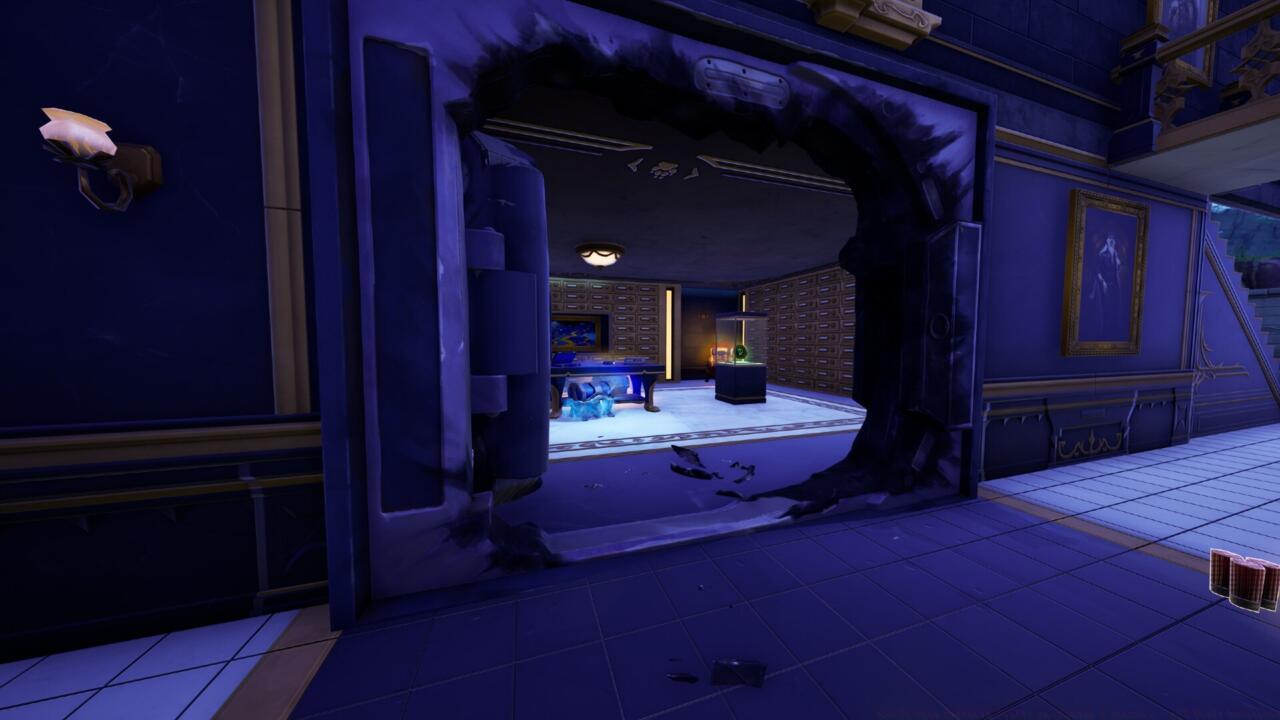
The inside of one of Fortnite’s new vaults
Beyond the stationary facilities, mobile armored transport vehicles function as roving vaults requiring identical breaching protocols. These convoy targets introduce dynamic engagement scenarios where interception timing becomes as critical as entry methodology.
Successful vault penetration in this season demands aggressive entry techniques centered around thermite compound deployment. These incendiary devices serve as the exclusive entry mechanism, obtainable through enemy eliminations, chest discoveries, or specialized heist duffel bags commonly located near vault installations.
Once thermite acquisition is secured and target identification confirmed via prominent mini-map indicators, deployment initiates the complex entry sequence. Placement directly on vault doors or adjacent surfaces triggers the thermal disintegration process, simultaneously activating security protocols that summon guard reinforcements and alert nearby combatants to your position.

One of Fortnite’s new vaults being blown open
The breaching mechanism operates through four distinct thermal weak points encircling the door’s central axis. As the thermite compound activates, these vulnerable zones illuminate crimson, indicating progressive structural compromise. The standard thermal cycle requires approximately 45-60 seconds for complete penetration, though advanced techniques can reduce this timeframe significantly.
Acceleration methodologies include supplementary thermite deployment and precision targeting of glowing weak spots with ballistic weapons. Each additional thermite application reduces total breach time by roughly 15 seconds, while accurate weak point engagement can shave off an additional 5-10 seconds per successful strike sequence.
Common tactical errors include inadequate perimeter security during the extended breach duration and insufficient thermite reserves for accelerated entry. Experienced teams typically maintain at least three thermite units per vault attempt to ensure operational flexibility.
Coordinated team operations dramatically enhance vault heist success probabilities through specialized role distribution. The most effective squads typically organize around four distinct operational functions: breacher, security, scout, and loot specialist.
The breacher role focuses exclusively on thermite management and entry acceleration, requiring proficiency with explosive mechanics and timing optimization. This position should maintain constant communication regarding breach progress and resource status.
Security personnel establish defensive perimeters to neutralize spawned NPC guards and deter approaching enemy squads. Optimal positioning involves elevated vantage points with clear sightlines to approaching avenues while maintaining cover from multiple angles.
Scout operatives provide early warning intelligence and route reconnaissance, monitoring player movement patterns and identifying potential ambush scenarios. Their strategic positioning often determines whether the team extracts successfully with acquired resources.
Loot specialists prioritize inventory management and rapid acquisition, ensuring valuable items are secured within the limited vulnerability window following successful entry.
Advanced coordination techniques include staggered thermite deployment to maintain continuous thermal pressure while conserving resources, and rotating security positions to prevent enemy flanking maneuvers. Teams that master these specialized roles typically achieve 70% higher success rates in contested vault scenarios compared to unstructured approaches.
Successful extraction protocols involve predetermined rally points and diversionary tactics to confuse pursuing opponents. The strategic principles of coordinated team movement apply directly to post-heist evasion strategies.
Action Checklist
- Scout vault locations relative to Battle Bus trajectory and select most isolated target
- Secure minimum three thermite units through enemy engagement or container searches
- Assign specialized team roles (breacher, security, scout, loot specialist)
- Establish perimeter security before initiating breach sequence
- Deploy initial thermite and accelerate breach through weak point targeting
- Execute coordinated loot acquisition and implement extraction evasion tactics
No reproduction without permission:SeeYouSoon Game Club » How To Open Fortnite Vaults In Chapter 6 Season 2 – All Vault Locations Master Fortnite's heist season with expert vault strategies, team roles, and loot optimization techniques