
TL;DR
- Clothing production is essential for upgrading Burgage Plots and settlement levels
- Leather is the most straightforward clothing material to produce for beginners
- Goat Shed backyard extensions provide hides that tanneries convert to leather
- Marketplace connectivity ensures clothing reaches all eligible Burgage Plots
- Advanced players can explore linen and yarn production for settlement optimization
Elevate your villagers’ standard of living beyond basic survival in Manor Lords by mastering clothing production systems. Proper attire management directly impacts settlement development and citizen satisfaction.
Your medieval community members in Manor Lords possess multiple essential requirements that demand attention for prosperous growth. Among these necessities, clothing stands out as a critical component that affects both practical needs and social standing. This comprehensive guide details efficient methods for establishing robust textile manufacturing operations.
Clothing provisions become relevant through the marketplace stall supply system in Manor Lords, which focuses on finished products available for purchase. Successfully meeting clothing demands enables crucial Burgage Plot enhancements and settlement tier progression, unlocking advanced building options and increased population capacity.
When examining level 1 Burgage Plots, you’ll identify the clothing stall supply prerequisite. This condition requires establishing a marketplace vendor offering any of these materials: linen, leather, or yarn. Each option presents distinct production challenges and resource requirements.
Among the three primary clothing materials, leather manufacturing offers the most accessible entry point for new settlement managers due to its straightforward production chain and minimal infrastructure demands.
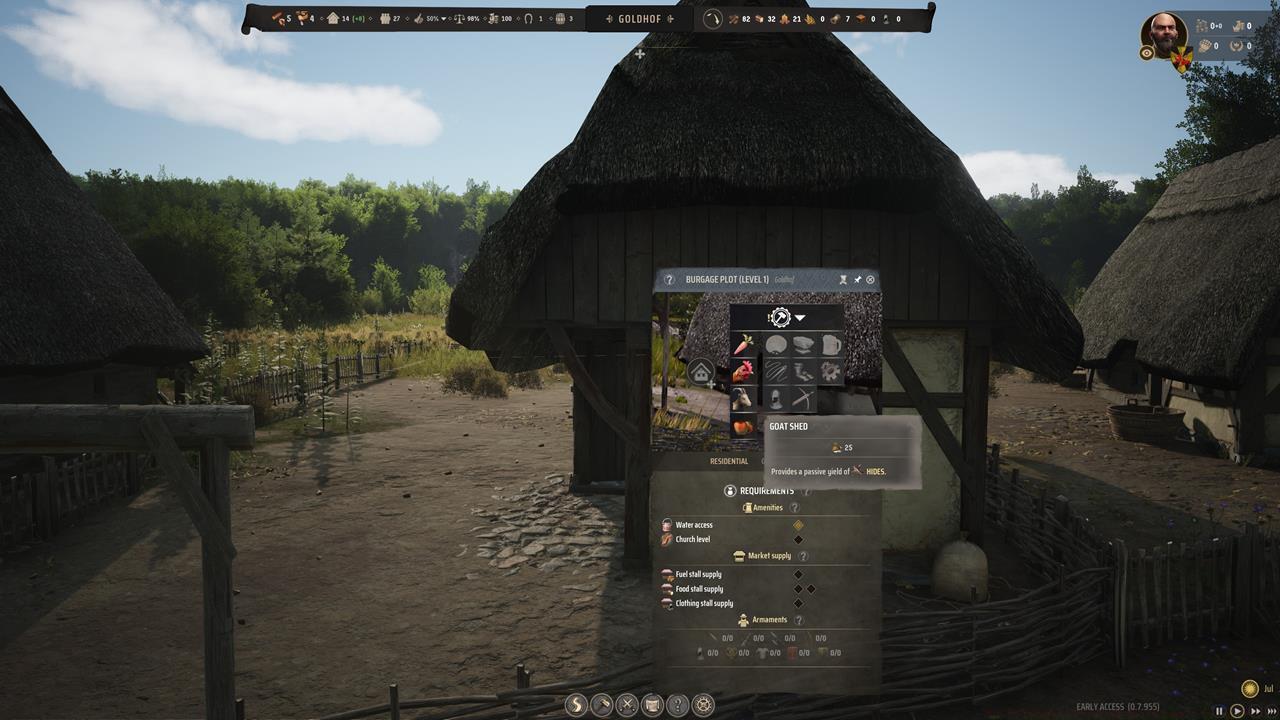
The Goat Shed backyard extension provides a reliable source of hides for leather production, making it an essential early-game investment.
- Choose a level 1 Burgage Plot and access the backyard extension interface using the construction tool (represented by hammer and gear symbolism)
- Implement the Goat Shed addition, requiring an investment of 25 Regional Wealth units. This agricultural extension continuously generates raw hides through passive husbandry operations
- Navigate to Construction → Industry categories and erect the Tannery structure. This processing facility demands 4 timber units for completion
- The Tannery facility transforms raw hides into finished leather goods. The household operating this establishment will autonomously establish a marketplace stall distributing leather products
- Ensure comprehensive marketplace access connects to all level 1 Burgage Plots throughout your settlement. This network connectivity fulfills the clothing supply prerequisite efficiently
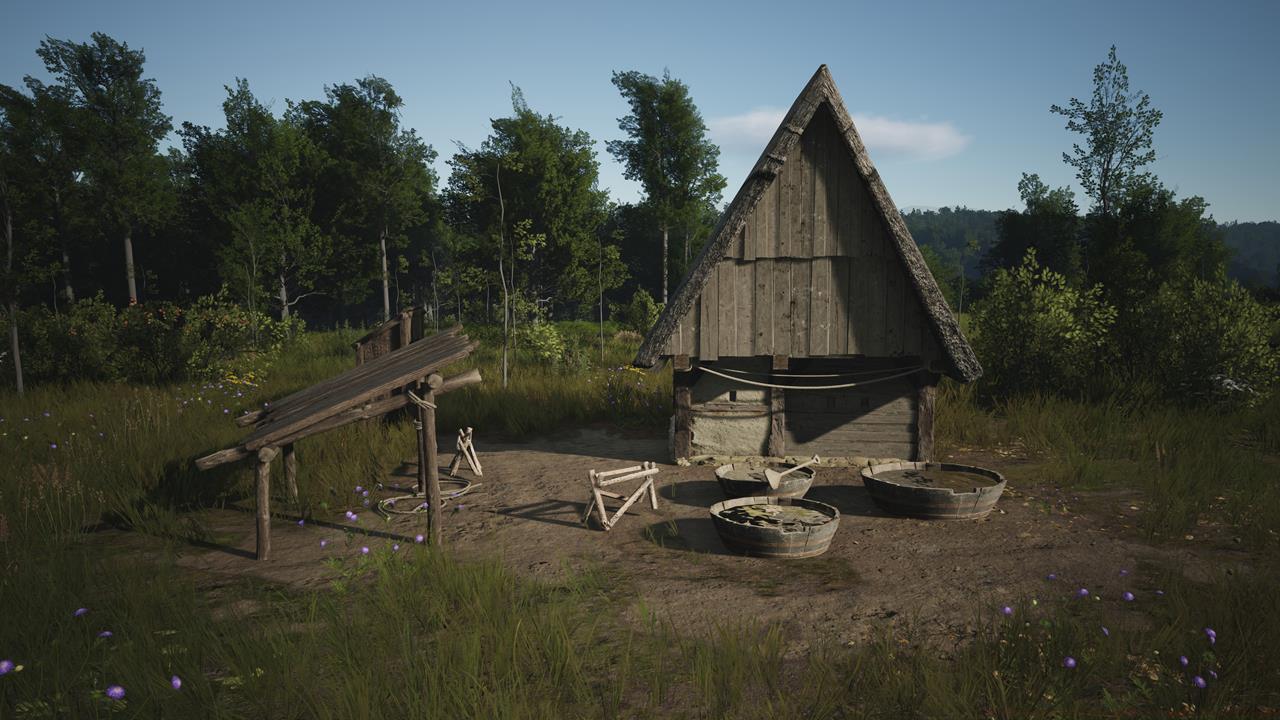
Leather processed at the Tannery serves multiple purposes, including footwear manufacturing that provides essential protection for your working villagers.
While leather provides the simplest manufacturing path, experienced players should consider diversifying their clothing production to optimize settlement efficiency and prepare for advanced development stages.
Linen Production: Requires establishing a Flax Farm for raw material cultivation, followed by construction of a Weaver’s Workshop for processing. This two-stage production chain demands more planning but offers superior scalability for growing settlements.
Yarn Alternatives: Sheep Farm backyard extensions produce wool that can be transformed into yarn at a Spinning Mill. This option provides excellent cold-weather protection for villagers in northern territories.
Common Production Mistakes: Many players underestimate the space requirements for efficient clothing manufacturing. Ensure adequate Burgage Plot sizes for backyard extensions and position tanneries strategically to minimize transportation time between production stages.
Optimization Strategy: For maximum efficiency, establish clothing production clusters near marketplace centers. This reduces the distance workers must travel between their homes, workplaces, and sales locations, significantly boosting overall productivity.
Advanced Tip: Once you’ve mastered basic clothing production, consider exploring Class Guide principles that can be adapted to specialized labor allocation in your settlement’s textile industry.
Action Checklist
- Identify level 1 Burgage Plots requiring clothing supply and plan backyard extension placement
- Construct Goat Shed extensions (25 Regional Wealth each) to generate raw hides
- Build Tannery using 4 timber units to process hides into leather
- Verify marketplace connectivity reaches all Burgage Plots to satisfy clothing requirements
- Monitor leather production rates and adjust workforce allocation as needed for optimal output
No reproduction without permission:SeeYouSoon Game Club » How To Increase Clothing Store Supply In Manor Lords Master clothing production in Manor Lords to upgrade settlements and satisfy villager fashion needs efficiently