
Mastering the Demon Prince encounter with advanced tactics, phase analysis, and fire negation strategies for Nightreign success
Understanding the Demon Prince Encounter
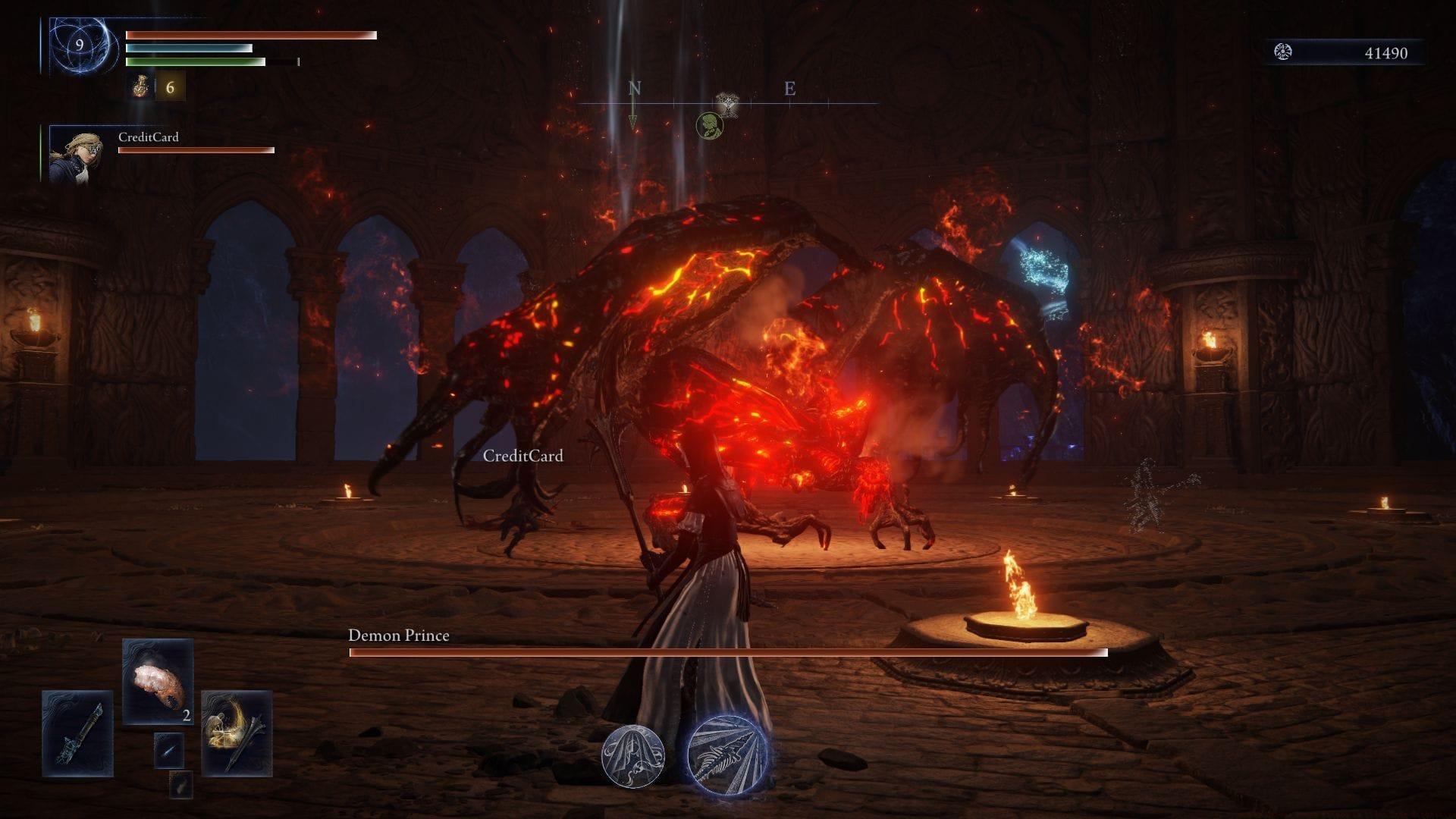
The Demon Prince represents one of Elden Ring Nightreign’s most formidable nocturnal challenges. This terrifying entity materializes exclusively during Night 2, but only if you’ve successfully conquered both the Demon in Pain and Demon from Below during the previous night cycle. As the ring contraction commences on Night 2, this colossal boss emerges within the northern citadel, demanding a battle to the death in its massive arena.
Upon reaching the citadel stronghold, the Demon Prince manifests in one of two distinct forms, each preserving unique movesets from its predecessor demons. While both variants share foundational attack patterns, the Forsaken Hollows DLC introduces exclusive abilities that demand specialized countermeasures for each incarnation.
Shared Attack Patterns and Countermeasures
Both Demon Prince manifestations employ several universal offensive techniques that require immediate recognition and response. The Claw Strikes and Flying Slam constitute his primary close-range threats. These appropriately named assaults involve either frontal or sweeping claw swipes that demand constant lateral movement when engaging at melee distance.
The Flying Slam operates as a devastating area-of-effect assault where the prince propels himself skyward before crashing down with explosive impact. While theoretically vulnerable during ascent, this brief window rarely justifies engagement risk—prioritize evacuation from the impact zone instead. Similarly, his Overhead Slam sees him raising both arms heavenward before hammering the terrain with tremendous force, creating shockwaves that radiate outward.
Elemental manifestations include two distinct flame-engulfed limb attacks. When his right arm ignites, he generates a lava trajectory that inflicts terrain-based damage to anyone crossing its path. Left arm ignition triggers subterranean fireball deployment that detonates after brief delays, requiring spatial awareness and timed evasion.
Additional universal threats include aerial ascent accompanied by ascending flame waves and ground-to-air claw strikes that erupt volcanic pools. Mastering these shared patterns provides the foundation for confronting either variant successfully.
Version-Specific Attack Breakdown
The Demon from Below incarnation ranks among Nightreign’s most challenging nocturnal encounters. This variant charges destructive energy before unleashing a Fire Beam that traverses the entire arena in zigzag patterns, striking anyone along its path. This maneuver repeats three times before culminating in a concentrated frontal beam discharge.
Supplementing this deadly technique, he executes a Flying Claw Rake that strikes the ground from above, generating multiple lava geysers across the battlefield. His aerial Fireball assault involves launching explosive projectiles earthward after takeoff, creating dangerous blast zones upon impact.
The Demon in Pain manifestation employs comparatively simpler but equally dangerous techniques. His primary unique attack involves arm elevation to conjure two massive fire orbs that discharge smaller projectiles in randomized trajectories. His secondary technique sees him raining fire by projecting continuous streams skyward that cascade down across wide areas.
Strategic priority should focus on encountering the Demon in Pain variant whenever possible. The Demon from Below’s superior area-denial capabilities and aerial dominance present significantly greater evasion challenges, particularly his unpredictable Fire Beam pattern that can decimate unprepared parties.
Advanced Combat Strategies
Fundamental strategy revolves around positioning mastery and role delegation. Execute rear assaults while the Demon Prince focuses on teammates, employing distraction tactics where one player draws aggression while others exploit back-attack opportunities. This positioning proves particularly effective during his successive claw combos, where his rear quadrant remains completely secure for counterattacks.
During aerial phases, immediately retreat beyond area-effect boundaries while monitoring his attack telegraphing. Ranged specialists should capitalize on these airborne moments to inflict damage from safety, particularly when he initiates fire rain maneuvers that leave him temporarily stationary and vulnerable.
Fire negation preparation proves absolutely essential. Given all demon variants primarily deal flame-based damage, equipping appropriate relics, talismans, and utilizing protective incantations dramatically increases survivability. Consider incorporating Flame Protect Me incantations, Fireproof Dried Liver consumables, and armor with high fire resistance into your preparation regimen.
Advanced teams should designate specific roles: bait specialists with high mobility and evasion, damage dealers focusing on vulnerability windows, and support players providing healing and buffs. Communication and coordinated positioning transform this overwhelming encounter into a manageable tactical exercise.
Optimization and Pro Tips
Superior gear selection significantly impacts Demon Prince engagement outcomes. Prioritize weapons with inherent fire damage reduction or those dealing thrust/pierce damage that exploit demonic vulnerabilities. Weapons like the Siluria’s Tree or any spear-class armaments allow maintaining safe distance while dealing consistent damage.
Critical timing windows occur during his fire rain animation (approximately 3-4 seconds) and after completing multi-attack combos when he experiences brief recovery periods. These moments permit aggressive engagement before resetting to defensive positioning.
Common execution errors include overcommitting during unclear attack patterns, misjudging AOE radii, and inadequate fire resistance preparation. Novice players frequently fail to recognize attack telegraphing, particularly the subtle arm movements indicating flame-based attacks.
For solo practitioners, spirit ash summons that draw aggression (like Mimic Tear or Greatshield Soldiers) provide crucial breathing space. Multiplayer parties should establish clear communication protocols for signaling phase transitions and critical attacks.
Remember that persistence and pattern recognition ultimately triumph over brute force. Each defeat provides learning opportunities to refine your approach against this demanding nocturnal adversary.
No reproduction without permission:SeeYouSoon Game Club » How to defeat Demon Prince in Elden Ring Nightreign Mastering the Demon Prince encounter with advanced tactics, phase analysis, and fire negation strategies for Nightreign success